I burned the crust of my first few attempts at rustic pumpkin sourdough bread with pepitas and sage so badly that I considered giving up baking it altogether. Honestly, I wasn’t even sure if pumpkin belonged in a sourdough loaf — it felt like a wild idea that might never work. The dough was too sticky, the timing off, and the pepitas kept dropping right into the oven, making a mess. But slowly, after many tries, I realized that the trick wasn’t just in the ingredients but in respecting the dough’s pace and learning when to fold in those pepitas and sage leaves just right. The aroma of sage and pumpkin roasting in that sourdough crust is unlike anything else I’ve baked. It’s rustic but comforting, like a warm sweater for your taste buds.
What really surprised me was how this bread became my go-to when I wanted something seasonal but not overly sweet — perfect for a breakfast toast or alongside a bowl of soup. The pepitas add this satisfying crunch that I never knew I was missing, and the sage brings an herbaceous depth that feels both fresh and earthy. I never thought I’d be this attached to a loaf of bread — but here we are. This recipe stuck because it’s honest, a little imperfect, and so deeply satisfying in its flavor and texture. I hope you find the same quiet joy in baking and eating it.
Why You’ll Love This Recipe
Making rustic pumpkin sourdough bread with pepitas and sage isn’t just about baking — it’s about creating something that feels genuinely comforting and a bit special. Here’s why this recipe has earned its spot in my kitchen:
- Quick & Easy: While sourdough can seem intimidating, this recipe comes together in a manageable timeline, with most of the work being hands-off fermentation and resting. It fits well into a busy schedule.
- Simple Ingredients: You don’t need fancy or hard-to-find ingredients. Pumpkin puree, pepitas, fresh sage, and your trusty sourdough starter are all you need. Most of these are pantry staples or easy seasonal finds.
- Perfect for Fall and Winter: This bread feels like the season wrapped up in a loaf — ideal for cozy breakfasts, hearty sandwiches, or alongside a bowl of that creamy roasted butternut squash soup I love making when the weather turns chilly.
- Crowd-Pleaser: Whether for family breakfasts or casual get-togethers, the nutty pepita crunch and the fragrant sage keep everyone coming back for more.
- Unbelievably Delicious: The combination of the sourdough tang, the subtle sweetness of pumpkin, and the savory notes from sage makes it a unique loaf that’s anything but ordinary.
What sets this recipe apart is the way the pumpkin keeps the crumb moist without weighing it down, paired with the pepitas’ crunch and the sage’s herbal brightness. It’s not just another pumpkin bread or a run-of-the-mill sourdough — it’s a loaf that feels thoughtfully crafted, with layers of flavor that unfold bite after bite. Plus, if you’re into baking, there’s something incredibly satisfying about mastering the art of folding in pepitas and sage without collapsing your dough. It’s the kind of bread that makes you pause and appreciate the simple pleasures of well-made homemade food.
What Ingredients You Will Need
This rustic pumpkin sourdough bread recipe keeps things straightforward with wholesome ingredients that deliver a bold flavor and satisfying texture without fuss. Most are pantry staples, with fresh seasonal touches.
- Sourdough starter (active and bubbly): The backbone of the bread, providing that signature tang and natural rise.
- All-purpose flour: I recommend King Arthur for consistent results, but any good quality brand works.
- Whole wheat flour: Adds a nutty depth and structure; you can use spelt for a lighter alternative.
- Pumpkin puree (canned or homemade): Choose unsweetened, smooth pumpkin puree (not pumpkin pie filling). It adds moisture and subtle sweetness.
- Water (room temperature): Hydrates the dough and helps develop gluten.
- Salt (fine sea salt): Enhances flavor and controls fermentation.
- Pepitas (raw pumpkin seeds): Adds crunch and nutty flavor; lightly toast before folding in for extra aroma.
- Fresh sage leaves: Roughly chopped; brings an earthy, herbaceous note that balances the sweetness of pumpkin.
- Olive oil (optional): A tablespoon can be added to enrich the dough but isn’t necessary.
Substitution tips: Use almond flour or gluten-free blend for a gluten-free twist, but expect a denser loaf. Swap fresh sage for dried if needed, but fresh really makes a difference here. If you’re out of pepitas, sunflower seeds or toasted walnuts work well too.
Equipment Needed
- Mixing bowls: Large glass or stainless steel bowls are best for dough mixing and proofing.
- Dutch oven or heavy oven-safe pot with lid: Essential for baking to get that crisp, rustic crust. If you don’t have one, a baking stone with steam trays can work.
- Dough scraper: Makes handling sticky sourdough much easier. I use a plastic one, but metal works fine.
- Kitchen scale: For precise ingredient measurements—trust me, it’s worth it for reliable bread.
- Proofing basket or bowl lined with a tea towel: Helps the dough keep its shape during the final rise.
- Sharp serrated bread knife: For slicing the finished loaf cleanly without squashing it.
Budget-friendly alternatives often involve using a glass casserole dish with a lid if you don’t have a Dutch oven. Also, a clean kitchen towel works great for proofing if you don’t have a banneton. I learned that the hard way, and it’s absolutely fine!
Preparation Method
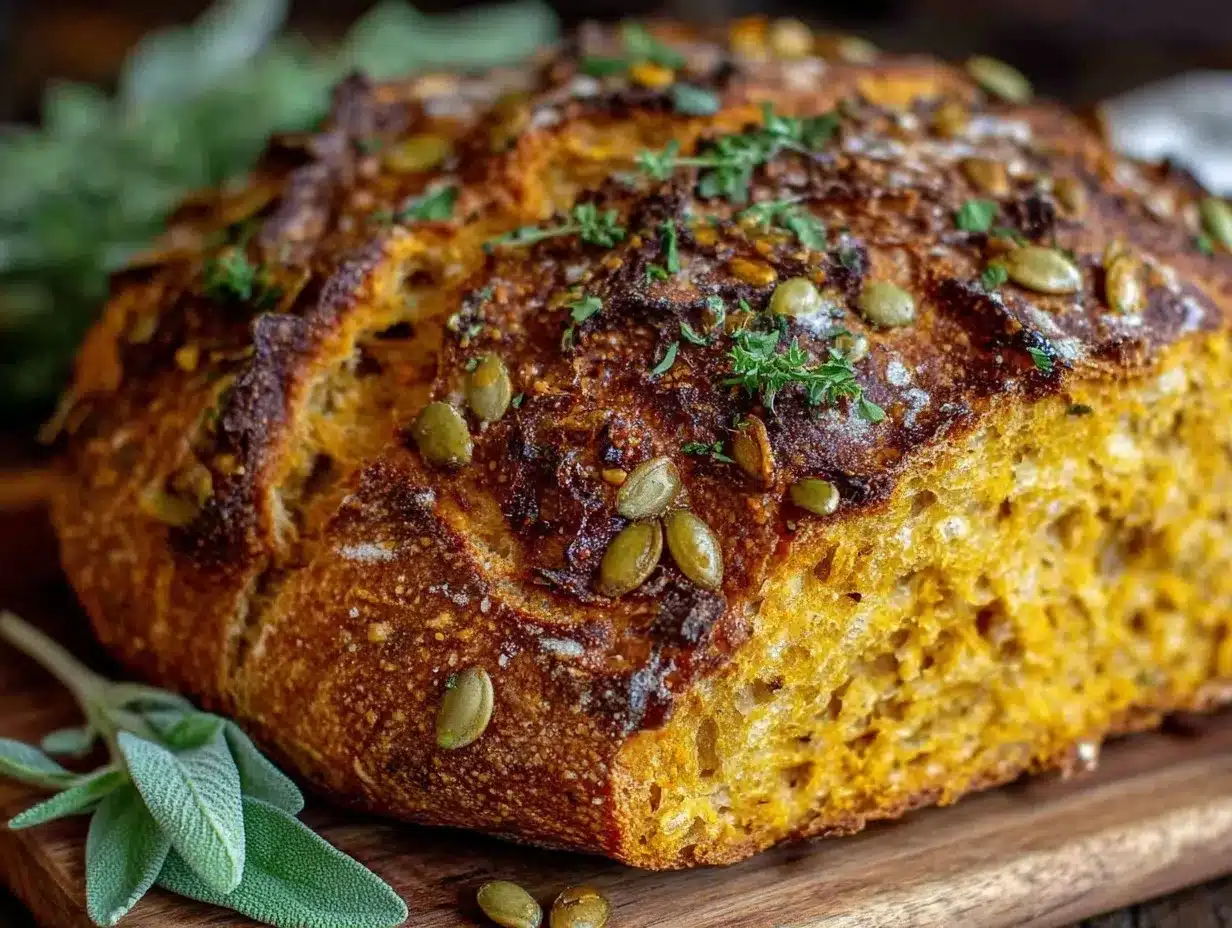
- Feed your sourdough starter: Make sure it’s active and bubbly, about 4–6 hours before starting. You’ll need 100g (3.5 oz) for this recipe.
- Mix dry ingredients: In a large bowl, combine 400g (3 1/4 cups) all-purpose flour, 100g (3/4 cup) whole wheat flour, and 10g (2 tsp) fine sea salt.
- Add pumpkin puree and water: Stir in 150g (2/3 cup) pumpkin puree and 250g (1 cup) room temperature water. Mix until just combined—dough will be sticky and shaggy.
- Incorporate sourdough starter: Add the 100g active starter and mix thoroughly until the dough forms a sticky mass.
- Bulk fermentation: Cover the bowl with a damp towel or plastic wrap. Let it rest at room temperature for 3 hours, performing 3 sets of stretch and folds every 30 minutes during the first 1.5 hours to build gluten.
- Toast pepitas and prepare sage: While dough ferments, toast 60g (1/2 cup) raw pepitas in a dry pan over medium heat for 3-4 minutes until fragrant and slightly browned. Roughly chop 12 fresh sage leaves.
- Fold in pepitas and sage: After bulk fermentation, gently fold toasted pepitas and sage into the dough without deflating it.
- Shape the dough: Transfer dough onto a lightly floured surface. Shape it into a tight round loaf, tucking edges underneath. Place it seam-side up into a well-floured proofing basket or bowl lined with a clean towel.
- Final proof: Cover and let rise for 2-3 hours at room temperature or overnight in the refrigerator (8-12 hours) for better flavor development.
- Preheat oven: Place Dutch oven with lid inside and preheat to 475°F (245°C) for at least 30 minutes before baking.
- Score and bake: Carefully invert dough onto parchment paper. Score the top with a sharp knife or lame to allow expansion. Transfer dough on parchment into the hot Dutch oven. Cover and bake for 20 minutes.
- Finish baking: Remove lid and bake for another 20-25 minutes, until crust is deep golden brown and crisp.
- Cool: Transfer bread to a wire rack. Let cool completely before slicing to allow crumb to set.
Pro tip: Avoid rushing the bulk fermentation and proofing stages; patience here is what makes that perfect crumb and crust. If your dough feels too sticky, resist the urge to add too much flour—just work with wet hands and a dough scraper.
Cooking Tips & Techniques
Getting rustic pumpkin sourdough bread just right takes a bit of practice, but these tips make it easier:
- Hydration matters: Pumpkin adds moisture, so you’ll want your dough a bit wetter than usual. This helps create an open crumb but requires gentle handling.
- Stretch and folds: These build gluten strength; don’t skip them. You’ll notice the dough smooth out and become less sticky after each set.
- Don’t over-knead: Sourdough depends on slow fermentation and gentle gluten development. Overworking the dough can lead to a tough loaf.
- Temperature control: Keep your kitchen between 70-75°F (21-24°C) for best fermentation. Too warm, and the dough can overproof; too cold, and it slows down too much.
- Scoring skill: A quick, confident slash helps the bread expand properly. Use a sharp blade and a swift motion.
- Steam is key: Baking in a covered Dutch oven traps steam, creating a crust that’s crunchy and caramelized. If you don’t have one, adding a pan of hot water to your oven helps.
- Learn from your first bake: My early loaves were dense or had thick crusts. With each bake, I adjusted water, timing, and folding. It’s part of the process—don’t get discouraged.
Variations & Adaptations
One of the joys of this rustic pumpkin sourdough bread recipe is how easy it is to tweak for your preferences or dietary needs:
- Flavor twists: Swap sage for rosemary or thyme for a different herbal profile. Add a teaspoon of cinnamon or nutmeg to the dough for a subtle warm spice.
- Seed swaps: If you’re not a fan of pepitas, try sunflower seeds, toasted walnuts, or even chopped pecans for crunch.
- Gluten-free: Use a gluten-free flour blend and xanthan gum, but expect a denser loaf. No sourdough starter? Try a yeast-based pumpkin bread for a quicker alternative.
- Seasonal swaps: In spring, fold in fresh chopped chives or green garlic instead of sage. For winter, add dried cranberries or raisins for a hint of sweetness.
- Personal tried variation: I once added a swirl of caramelized onions and sage to a batch — it was a game changer, especially alongside a bowl of creamy white bean chili, much like the creamy slow cooker white chicken chili I often make.
Serving & Storage Suggestions
This pumpkin sourdough shines best served slightly warm or at room temperature. Toast thick slices and spread with butter or cream cheese for breakfast. It’s also fantastic alongside hearty fall and winter soups. Try it with a bowl of creamy roasted butternut squash soup for a perfectly cozy meal.
Store the bread wrapped loosely in a clean kitchen towel or paper bag at room temperature for up to 3 days. Avoid plastic bags, which soften the crust. For longer storage, slice and freeze bread in sealed bags for up to 2 months.
To reheat, toast slices or warm the whole loaf wrapped in foil at 350°F (175°C) for 10-15 minutes. The flavors mellow and meld overnight, so if you can, wait a day before slicing.
Nutritional Information & Benefits
This rustic pumpkin sourdough bread offers both flavor and some nutritional perks. Pumpkin puree is rich in vitamin A and fiber, while pepitas bring healthy fats, magnesium, and zinc. The sourdough fermentation process improves digestibility and may reduce gluten content compared to commercial breads.
Estimated per slice (1/12 loaf): around 150 calories, 4g protein, 2g fiber, and 5g fat. It’s a wholesome choice for those wanting a seasonal bread that pairs well with both savory and sweet toppings.
Gluten-free adaptations are possible, but this recipe shines with wheat flour for that classic sourdough texture. If you have allergies, swap pepitas with seeds or nuts that suit you.
Conclusion
Rustic pumpkin sourdough bread with pepitas and sage isn’t just a loaf — it’s a little project that rewards patience and care with a truly special flavor experience. Whether you’re new to sourdough or an old hand, this recipe invites you to slow down and enjoy the process, then reap the benefits of a crusty, moist, and herbaceous bread that feels like fall in every bite.
Feel free to tweak the herbs, seeds, or spices to fit your tastes. That’s the beauty of homemade bread — it’s yours to make uniquely yours. I love coming home to the smell of this bread baking, knowing it’s going to be the perfect partner to a hot meal or a simple breakfast toast.
If you try it, I’d love to hear how your loaf turns out or any variations you come up with. Baking bread is better when shared, even if just in stories and photos. Happy baking!
FAQs
Can I use canned pumpkin pie filling instead of pumpkin puree?
No, canned pumpkin pie filling contains added sugars and spices that will affect the bread’s flavor and texture. Use plain, unsweetened pumpkin puree for best results.
How do I know when the sourdough bread is fully baked?
The crust should be a deep golden brown and crisp. Tap the bottom of the loaf; it should sound hollow. Internal temperature should reach about 205°F (96°C) if you use a thermometer.
Can I make this bread without a Dutch oven?
Yes, you can bake it on a preheated baking stone or sheet pan. Add a pan with hot water to the oven to create steam for a better crust.
How long can I store the bread after baking?
Stored properly at room temperature in a towel or paper bag, it will keep for about 3 days. For longer storage, freeze sliced bread for up to 2 months.
Is it necessary to toast the pepitas before adding them?
Toasting pepitas enhances their nutty flavor and crunch, but it’s optional. Raw pepitas work fine if you’re short on time.
Pin This Recipe!
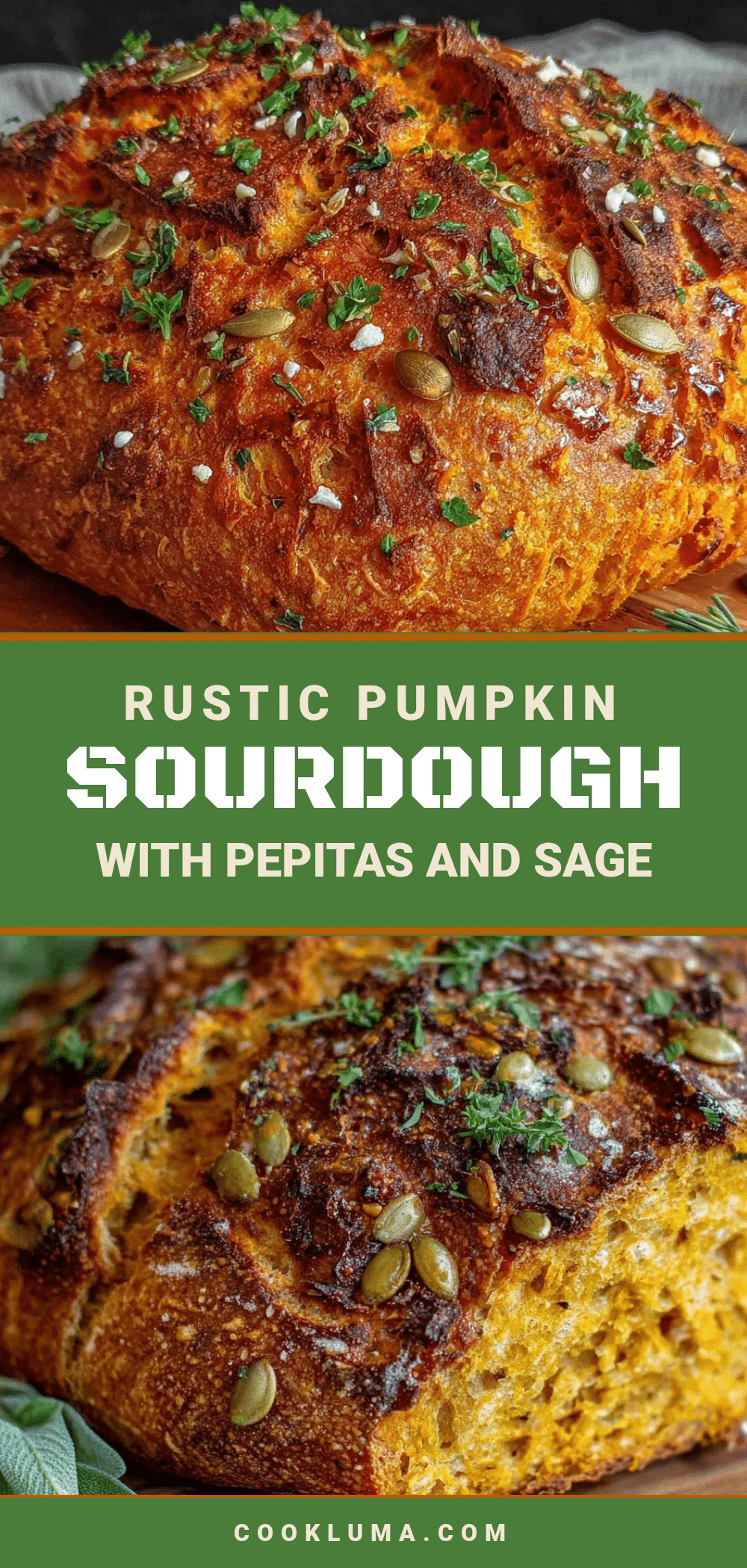
Rustic Pumpkin Sourdough Bread Recipe with Pepitas and Sage

A comforting and rustic sourdough bread featuring moist pumpkin puree, crunchy toasted pepitas, and fresh sage for an herbaceous depth. Perfect for fall and winter breakfasts or alongside soups.
- Prep Time: 15 minutes (plus starter feeding time)
- Cook Time: 45 minutes
- Total Time: 4 hours 15 minutes (including bulk fermentation and proofing; longer if proofed overnight)
- Yield: 1 loaf (12 slices) 1x
- Category: Bread
- Cuisine: American
Ingredients
- 100g (3.5 oz) active sourdough starter
- 400g (3 1/4 cups) all-purpose flour
- 100g (3/4 cup) whole wheat flour
- 150g (2/3 cup) pumpkin puree (unsweetened, not pumpkin pie filling)
- 250g (1 cup) room temperature water
- 10g (2 tsp) fine sea salt
- 60g (1/2 cup) raw pepitas (toasted)
- 12 fresh sage leaves, roughly chopped
- 1 tablespoon olive oil (optional)
Instructions
- Feed your sourdough starter and ensure it is active and bubbly, about 4–6 hours before starting.
- In a large bowl, mix 400g all-purpose flour, 100g whole wheat flour, and 10g fine sea salt.
- Add 150g pumpkin puree and 250g room temperature water to the dry ingredients and mix until just combined; dough will be sticky and shaggy.
- Incorporate 100g active sourdough starter into the dough and mix thoroughly until sticky mass forms.
- Cover the bowl with a damp towel or plastic wrap and let rest at room temperature for 3 hours, performing 3 sets of stretch and folds every 30 minutes during the first 1.5 hours.
- While dough ferments, toast 60g raw pepitas in a dry pan over medium heat for 3-4 minutes until fragrant and slightly browned. Roughly chop 12 fresh sage leaves.
- After bulk fermentation, gently fold toasted pepitas and sage into the dough without deflating it.
- Transfer dough onto a lightly floured surface and shape into a tight round loaf, tucking edges underneath.
- Place shaped dough seam-side up into a well-floured proofing basket or bowl lined with a clean towel.
- Cover and let rise for 2-3 hours at room temperature or refrigerate overnight (8-12 hours) for better flavor.
- Preheat oven to 475°F (245°C) with a Dutch oven and lid inside for at least 30 minutes.
- Carefully invert dough onto parchment paper, score the top with a sharp knife or lame.
- Transfer dough on parchment into the hot Dutch oven, cover, and bake for 20 minutes.
- Remove lid and bake for another 20-25 minutes until crust is deep golden brown and crisp.
- Transfer bread to a wire rack and let cool completely before slicing.
Notes
Avoid rushing bulk fermentation and proofing stages for best crumb and crust. Use wet hands and a dough scraper to handle sticky dough instead of adding extra flour. Toast pepitas for enhanced flavor but optional. Use a pan of hot water in oven if no Dutch oven is available to create steam.
Nutrition
- Serving Size: 1 slice (1/12 of loa
- Calories: 150
- Fat: 5
- Fiber: 2
- Protein: 4
Keywords: pumpkin sourdough bread, rustic bread, pepitas, sage, fall bread, homemade sourdough, seasonal bread, pumpkin bread, artisan bread