There’s this moment when I realize my throat feels scratchy, and instead of reaching for whatever’s in the medicine cabinet, my brain goes straight to elderberry syrup. I want that rich, tart, cozy flavor right now, with the warm hug of cinnamon and the zing of ginger—because honestly, if I’m going to do something for my immune system, it might as well taste good. And here’s the kicker: I have everything in my kitchen except the elderberries, which I keep frozen year-round just for this. Making this homemade elderberry syrup with cinnamon and ginger feels less like a chore and more like a little ritual now, something I do to take care of myself, quietly and with intention.
The syrup itself smells like autumn in a bottle—the spicy cinnamon and fresh ginger swirling with deep purple elderberries. It’s not just about fighting off the sniffles, though. It’s the way it tastes, that sharp-sweet balance, that makes me want to keep it around even when I’m perfectly healthy. I remember the first time I made this recipe; I was skeptical about simmering the berries and spices together. But as the kitchen filled with that fragrant steam, I knew I’d found something worth keeping in my natural remedy toolkit. It’s not just a syrup; it’s a comfort, a preventative, and a little homemade luxury all at once.
This elderberry syrup recipe stuck with me because it’s simple, honest, and surprisingly flexible. I’ve shared it with friends who swear by it during cold season, and it’s become a staple in my own pantry, like the way I keep a batch of quick zesty cowboy caviar ready for summer gatherings. It’s that kind of recipe that fits quietly into your life, ready to boost your immunity without fuss or nonsense. I trust it because it tastes like health, not medicine, and that’s why it’s worth making and keeping close.
Why You’ll Love This Recipe
This healthy homemade elderberry syrup with cinnamon and ginger isn’t your run-of-the-mill store-bought version. I’ve made plenty of elderberry syrups, and this one stands out because it’s:
- Quick & Easy: Ready in about 30 minutes, perfect for those moments when you want to be proactive but don’t have hours to spare.
- Simple Ingredients: No weird additives or preservatives—just real elderberries, cinnamon sticks, fresh ginger, and a natural sweetener like raw honey or maple syrup.
- Perfect for Immunity Boosting: Elderberries are famous for their antiviral properties, and combined with the anti-inflammatory qualities of ginger and cinnamon, this syrup packs a powerful punch.
- Crowd-Pleaser: This isn’t just medicine; it’s syrup you’ll want to drizzle over pancakes, add to hot tea, or even mix into cocktails.
- Unbelievably Delicious: The blend of tart elderberries with warm spices creates a flavor that feels both comforting and fresh—something you’ll actually look forward to taking.
What sets this recipe apart is the balance. Some elderberry syrups taste overly sweet or one-note. Here, the cinnamon’s woodsy depth and ginger’s sharpness play perfectly against the berries’ fruity tang. I’ve even swapped in a bit of fresh garlic and herbs in my savory cooking, so adding real, fresh ingredients in this syrup just feels right. It’s the kind of homemade remedy that makes you close your eyes and savor the flavor, not just gulp it down.
Ingredients Needed
This recipe uses straightforward, wholesome ingredients that come together to create bold flavor and immune-boosting benefits. Most are pantry staples or easy to find at health food stores, and you can adapt based on what’s in season or on hand.
- Dried or fresh elderberries: 1 cup (about 120g dried or 2 cups fresh/frozen) – I personally prefer dried elderberries for convenience and shelf life; just make sure they’re from a trusted brand like Herbalist’s Choice.
- Cinnamon sticks: 2 whole sticks – adds warmth and a subtle sweetness without overpowering.
- Fresh ginger root: 2 tablespoons, peeled and sliced – provides a fresh, spicy zing and anti-inflammatory benefits.
- Raw honey or pure maple syrup: ½ to ¾ cup (120-180 ml) – adjust sweetness to taste; raw honey is my go-to for its natural enzymes, but maple syrup works well for a vegan option.
- Water: 4 cups (950 ml) – to simmer the elderberries and spices.
- Optional: A pinch of ground cloves or black pepper – for a little extra warmth and immune support.
For substitutions: if you don’t have cinnamon sticks, ground cinnamon (1 teaspoon) can work but might make the syrup a bit cloudy. Fresh ginger can be swapped for 1 teaspoon ground ginger, though fresh is always better if you can manage it. And if you’re after a thicker syrup, you can simmer a bit longer or add a splash of lemon juice to brighten the flavor after cooking.
Equipment Needed
- Medium saucepan: A 3- to 4-quart (3-4 liter) pot works best for simmering the syrup evenly.
- Fine mesh strainer or cheesecloth: Essential for straining out the elderberries and spices to get a smooth syrup.
- Measuring cups and spoons: For accurate ingredient measurements.
- Glass jar or bottle: A clean, airtight container for storing the syrup in the fridge. I like using a sterilized mason jar for easy pouring and shelf life.
- Wooden spoon or heatproof spatula: For stirring gently during simmering.
If you don’t have a fine mesh strainer, a clean kitchen towel or coffee filter can work in a pinch, though it takes longer to strain. I once used a tea infuser for the cinnamon and ginger—it’s a handy tip if you want less cleanup. For budget-friendly options, any basic saucepan and a sieve you already own will do just fine.
Preparation Method
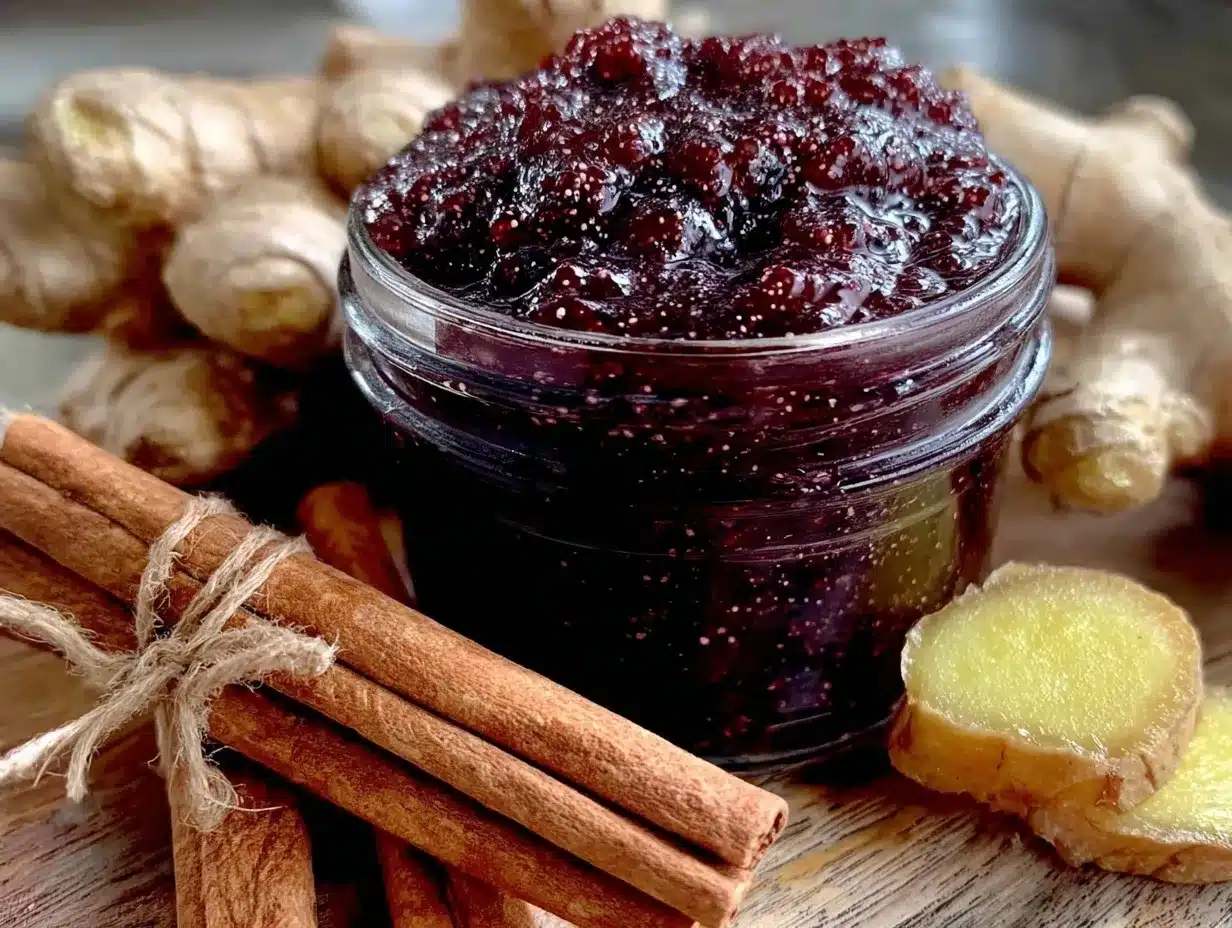
- Combine Ingredients: Pour 4 cups (950 ml) of water into your saucepan. Add 1 cup dried elderberries (or 2 cups fresh/frozen), 2 cinnamon sticks, and 2 tablespoons sliced fresh ginger.
- Simmer: Bring the mixture to a boil over medium-high heat. Once boiling, reduce heat to low and let it simmer gently for 45 minutes. You’ll notice the liquid turning a deep purple color and the kitchen filling with the spicy aroma of cinnamon and ginger.
- Strain the Syrup: Remove the saucepan from heat. Using a fine mesh strainer or cheesecloth, strain the liquid into a clean bowl or jug. Press lightly on the solids to extract as much juice as possible—but don’t force it or you might get bitter flavors.
- Sweeten: While the liquid is still warm (not boiling hot), stir in ½ to ¾ cup (120-180 ml) raw honey or maple syrup. Adjust sweetness to taste. Stir well until fully combined.
- Cool and Store: Let the syrup cool to room temperature before transferring it to a glass jar or bottle. Seal tightly and refrigerate. It should keep for up to 3 weeks.
- Use: Take 1 tablespoon daily as a preventative during cold season, or up to 3 tablespoons a day if you’re feeling under the weather. You can also add it to tea or drizzle over oatmeal for a delicious boost.
Preparation tip: Don’t rush the simmering step; that slow extraction is what packs the syrup with flavor and nutrients. If you find the syrup too thick after cooling, just stir in a splash of water to loosen it up. I’ve had batches turn out slightly different depending on the elderberry batch, so tasting as you go is key.
Cooking Tips & Techniques
One thing I’ve learned is that patience is essential with elderberry syrup. If you try to speed things up, you’ll lose the depth of flavor that makes it so comforting. Simmer gently rather than boiling hard—vigorous boiling can dull the taste and even bring out bitterness.
Another tip: always strain carefully. Elderberries have tiny seeds and skins that can make your syrup gritty if you’re not thorough. Using cheesecloth or a fine strainer twice can make the difference between silky syrup and something less pleasant.
Don’t add the honey until the syrup is warm, not hot. High heat can kill the beneficial enzymes in raw honey. I’ve learned this the hard way after a batch lost some of its sweetness and aroma.
For consistency, measure your ingredients precisely. I keep a kitchen scale handy because the weight of dried elderberries can vary a lot. Also, fresh ginger’s potency depends on its age; fresher is more pungent, so adjust accordingly.
Finally, multitask by making this syrup while prepping other dishes. I often simmer it while chopping veggies for a crunchy broccoli salad or baking something sweet like double chocolate zucchini bread. It’s a great way to maximize kitchen time.
Variations & Adaptations
This elderberry syrup recipe is pretty forgiving and easy to tweak:
- Spice it Up: Add a pinch of ground cloves or black pepper for extra immune support and a little warmth kick.
- Sweetener Swap: Use maple syrup for a vegan-friendly option, or coconut sugar dissolved in warm water if you want less sweetness.
- Flavor Twist: Toss in a few slices of fresh turmeric root with the ginger for additional anti-inflammatory power and a golden hue.
- Alcohol Infusion: For a longer shelf life, you can steep the elderberry mixture in brandy or vodka after simmering, turning it into a medicinal tincture.
- Thicker Syrup: Simmer longer to reduce the liquid further, or add a teaspoon of lemon juice to brighten and help preserve.
I once tried blending in a bit of fresh orange zest, and it added a lovely citrus brightness that balanced the earthy elderberry flavor beautifully. It’s a personal favorite for when I want something a little lighter but still comforting.
Serving & Storage Suggestions
This syrup is best served chilled or at room temperature. I love stirring a tablespoon into hot water or herbal tea—cinnamon and ginger naturally make it cozy. You can also drizzle it over your morning yogurt or oatmeal for a sweet-tart boost.
Store the syrup in an airtight jar in the refrigerator, where it will keep for up to three weeks. For longer storage, freeze in ice cube trays and thaw individual cubes as needed. Just remember, freezing might slightly alter the texture, but the flavor stays intact.
Reheating gently on the stove or in warm water works best—avoid microwaving, which can heat unevenly and affect the honey’s quality. Over time, the flavors meld and deepen, so if you can wait a day or two before using it, the syrup gets even better.
Nutritional Information & Benefits
One tablespoon (15 ml) of this elderberry syrup generally contains about:
| Calories | 50-60 |
|---|---|
| Carbohydrates | 14g (mostly natural sugars) |
| Vitamin C | High (from elderberries) |
| Antioxidants | Rich (due to elderberries and spices) |
Elderberries are packed with antioxidants and vitamins that support the immune system. Cinnamon and ginger bring anti-inflammatory compounds that help reduce cold symptoms and improve circulation. This syrup is naturally gluten-free and can be made vegan by choosing maple syrup instead of honey.
I’ve found that incorporating this syrup into my routine during cold season helps me feel more resilient, not just because of its nutritional benefits but also because it’s a tasty, easy-to-take remedy that feels more like a treat than medicine.
Conclusion
Making healthy homemade elderberry syrup with cinnamon and ginger isn’t just about fighting off colds—it’s about taking a moment to nourish yourself in a simple, delicious way. This recipe is straightforward, uses ingredients you can trust, and fits easily into busy days.
Feel free to tweak the sweetness or spices to make it truly yours. I love having a batch ready in my fridge, especially knowing it’s a remedy I made with my own hands, not something I grabbed off a shelf. It’s that quiet reassurance that health can be homemade.
If you try this syrup, I’d love to hear how you customize it or how it fits into your wellness routine. Sharing those little kitchen stories is what makes cooking so rewarding.
Frequently Asked Questions
Can I use fresh elderberries instead of dried?
Yes, fresh or frozen elderberries work well. Use about double the volume (2 cups fresh/frozen to 1 cup dried) since dried elderberries are more concentrated.
How long does homemade elderberry syrup last?
Stored in the refrigerator in a sealed jar, it lasts about 3 weeks. You can freeze it for longer storage.
Is elderberry syrup safe for children?
Generally, yes, but consult your pediatrician for children under one year old or if there are any health concerns.
Can I add other spices or flavors?
Absolutely! Cloves, black pepper, turmeric, or even citrus zest can complement the flavor and add health benefits.
What’s the best way to take elderberry syrup?
Take 1 tablespoon daily as a preventative or up to 3 tablespoons during illness. It’s great stirred into tea, mixed with water, or drizzled over breakfast foods.
Pin This Recipe!
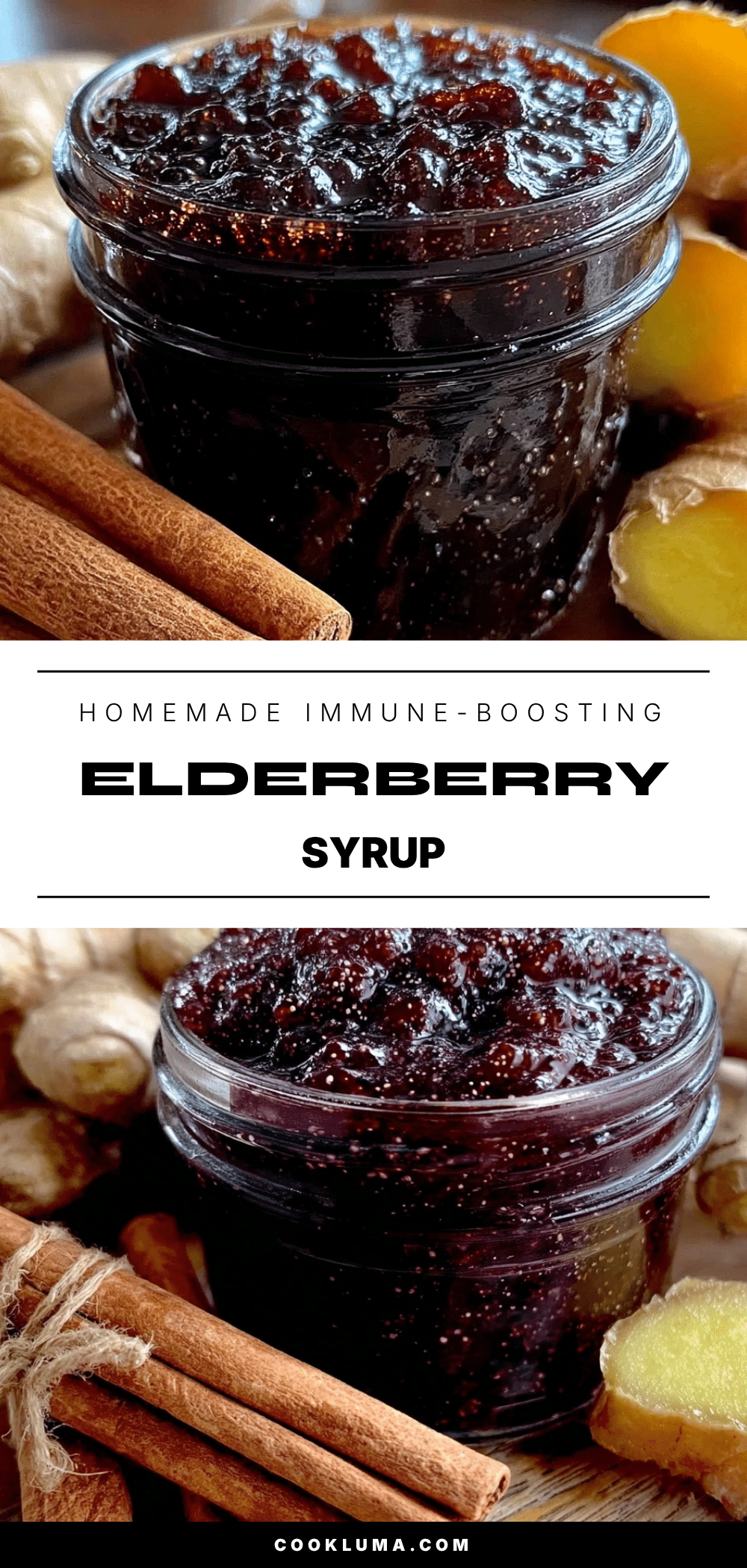
Healthy Homemade Elderberry Syrup Recipe with Cinnamon and Ginger for Immunity Boost
A simple, immune-boosting elderberry syrup infused with cinnamon and ginger, perfect for cold season and everyday wellness. This syrup balances tart elderberries with warm spices and natural sweeteners for a delicious, healthful treat.
- Prep Time: 10 minutes
- Cook Time: 45 minutes
- Total Time: 55 minutes
- Yield: About 1 ½ cups syrup (approximately 12 servings of 1 tablespoon each) 1x
- Category: Health Remedy, Syrup
- Cuisine: American
Ingredients
- 1 cup dried elderberries (about 120g) or 2 cups fresh/frozen elderberries
- 2 whole cinnamon sticks
- 2 tablespoons fresh ginger root, peeled and sliced
- ½ to ¾ cup raw honey or pure maple syrup (120–180 ml), adjust sweetness to taste
- 4 cups water (950 ml)
- Optional: pinch of ground cloves or black pepper
Instructions
- Pour 4 cups (950 ml) of water into a medium saucepan. Add 1 cup dried elderberries (or 2 cups fresh/frozen), 2 cinnamon sticks, and 2 tablespoons sliced fresh ginger.
- Bring the mixture to a boil over medium-high heat. Once boiling, reduce heat to low and simmer gently for 45 minutes until the liquid turns deep purple and aromatic.
- Remove from heat and strain the liquid through a fine mesh strainer or cheesecloth into a clean bowl or jug. Press lightly on solids to extract juice without forcing bitterness.
- While the liquid is warm (not boiling hot), stir in ½ to ¾ cup raw honey or maple syrup. Adjust sweetness to taste and stir until fully combined.
- Let the syrup cool to room temperature, then transfer to a sterilized glass jar or bottle. Seal tightly and refrigerate. Syrup keeps up to 3 weeks.
- Use 1 tablespoon daily as a preventative or up to 3 tablespoons during illness. Can be added to tea, oatmeal, or drizzled over pancakes.
Notes
Do not add honey to boiling syrup to preserve enzymes; add when warm. Simmer gently to avoid bitterness. Strain carefully to remove seeds and skins. Adjust sweetness and spices to taste. For thicker syrup, simmer longer or add lemon juice. Store refrigerated up to 3 weeks or freeze in ice cube trays for longer storage.
Nutrition
- Serving Size: 1 tablespoon (15 ml)
- Calories: 5060
- Carbohydrates: 14
Keywords: elderberry syrup, immunity boost, cinnamon, ginger, homemade syrup, natural remedy, antiviral, anti-inflammatory, elderberries, raw honey, maple syrup


