I burned the gochujang sauce not just once, but twice before figuring out it’s all about the heat control. Honestly, I never thought I’d be the kind of person who’d get hooked on a Korean bibimbap rice bowl. For years, I stuck to the classic beef stir-fries and fancied myself a simple dinner kind of cook. But this Easy Korean Ground Beef Bibimbap Rice Bowl changed that perspective — though it came with a few crispy, smoky mishaps along the way.
One evening, I was juggling dinner and emails, tossing whatever was in the fridge into a bowl, and that’s when this recipe was born. The sizzle of the ground beef with garlic and soy hit my nostrils just right, the colors of the fresh veggies reminding me that dinner doesn’t have to be complicated or boring. It’s funny how the first few attempts had me thinking I preferred the burnt edges (they add crunch, right?), but now I appreciate the balance of flavors and textures—the soft rice, the savory beef, and the punch of the sauce.
That first time I actually nailed the timing and flavors, I realized this wasn’t just a quick dinner hack but something that sticks with you. It’s simple yet feels like you put in so much more effort than you actually did. And you know what? It’s become one of those meals I come back to when I crave comfort without the fuss. This recipe isn’t fancy, but it’s honest, fast, and packed with personality.
Sometimes the best recipes come from those little kitchen fails, and this Easy Korean Ground Beef Bibimbap Rice Bowl is proof. It’s the kind of dish that lets you savor every bite, and somehow, the story behind it makes it taste even better.
Why You’ll Love This Recipe
This Easy Korean Ground Beef Bibimbap Rice Bowl isn’t your average weeknight meal—it’s a bowl full of flavor and ease that’s been tested in my own bustling kitchen. After several kitchen experiments and a few smoky evenings, I refined this recipe to hit just the right notes every single time.
- Quick & Easy: Ready in under 30 minutes, it’s perfect for those nights when time is tight but hunger is not.
- Simple Ingredients: Most of these ingredients are pantry staples or fresh veggies you can swap based on what’s in your fridge.
- Perfect for Weeknight Dinners: It’s hearty enough to satisfy but light enough to keep you energized for the rest of your evening.
- Crowd-Pleaser: From picky kids to adventurous adults, everyone seems to love the mix of savory beef and vibrant veggies.
- Unbelievably Delicious: The balanced seasoning with a touch of sweet, salty, and spicy makes this far from a bland rice bowl.
What sets this recipe apart is the way the ground beef is seasoned and cooked—no dry or tough bites here. The quick stir-fry method locks in juiciness, and the homemade sauce (that I’ve tweaked after plenty of tastings) is just right—not too fiery, but with enough kick to keep things interesting. Plus, the way the veggies are prepped and arranged gives you that satisfying variety of texture in every spoonful.
This recipe reminds me a little of the Fresh Quinoa and Kale Power Bowl I tried last summer—simple ingredients, big flavors, and easy assembly. It’s the kind of meal that feels like a treat but doesn’t leave you juggling a million pots and pans.
What Ingredients You Will Need
This recipe uses simple, wholesome ingredients that come together to deliver bold flavor and satisfying texture without fuss. Most of them are easy to find at your local grocery store or might already be sitting in your pantry.
- Ground Beef (80/20): About 1 pound (450g), for juicy, flavorful meat. I prefer grass-fed beef when possible for better taste.
- Cooked White Rice: 3 cups (about 600g) — freshly cooked or leftover works perfectly.
- Gochujang (Korean Chili Paste): 2 tablespoons — the heart of the sauce, providing that signature spicy, sweet depth.
- Soy Sauce: 2 tablespoons — opt for low-sodium to control saltiness.
- Sesame Oil: 1 tablespoon — adds a toasty richness that’s essential here.
- Garlic: 3 cloves, minced — fresh garlic packs more punch than pre-minced.
- Ginger: 1 teaspoon, grated — lifts the beef with a subtle zing.
- Brown Sugar: 1 tablespoon — balances the spicy and salty notes in the sauce.
- Carrots: 1 large, julienned or grated — for crunch and color.
- Spinach: 2 cups, lightly sautéed or steamed — adds freshness and earthiness.
- Cucumber: 1 small, thinly sliced — cool and crisp contrast.
- Green Onions: 2 stalks, sliced — for a mild onion flavor and freshness.
- Eggs: 2 large, fried sunny-side up (optional but highly recommended for that creamy richness).
- Sesame Seeds: 1 teaspoon, toasted — for garnish and nuttiness.
If you want to swap the ground beef for ground turkey or chicken, that works too—just watch the cooking time to prevent drying out. For a vegetarian twist, crumbled tofu or mushrooms can step in nicely. When selecting gochujang, try brands like Chung Jung One for authentic flavor, but feel free to adjust the quantity to your spice tolerance.
Equipment Needed
Making this Easy Korean Ground Beef Bibimbap Rice Bowl doesn’t require fancy tools, which is great for casual cooks like me. Here’s what you’ll want on hand:
- Large Skillet or Nonstick Pan: For cooking the ground beef evenly without sticking.
- Medium Saucepan: To cook or reheat rice, unless you have a rice cooker (which is a great investment if you make rice often).
- Mixing Bowls: For prepping veggies and mixing the sauce.
- Knife and Cutting Board: Sharp knife makes quick work of slicing and julienning veggies.
- Spatula or Wooden Spoon: To stir the beef and sauce without scratching your pan.
If you don’t have a rice cooker, a heavy-bottomed pot with a tight-fitting lid works fine—you just have to keep an eye on the water ratio and timing. For toasting sesame seeds, a small dry skillet does the trick, but you can skip it if you’re short on time. I’ve found that using a cast-iron skillet gives the beef a nice sear, but a good nonstick pan will do just fine and make cleanup easier.
Preparation Method
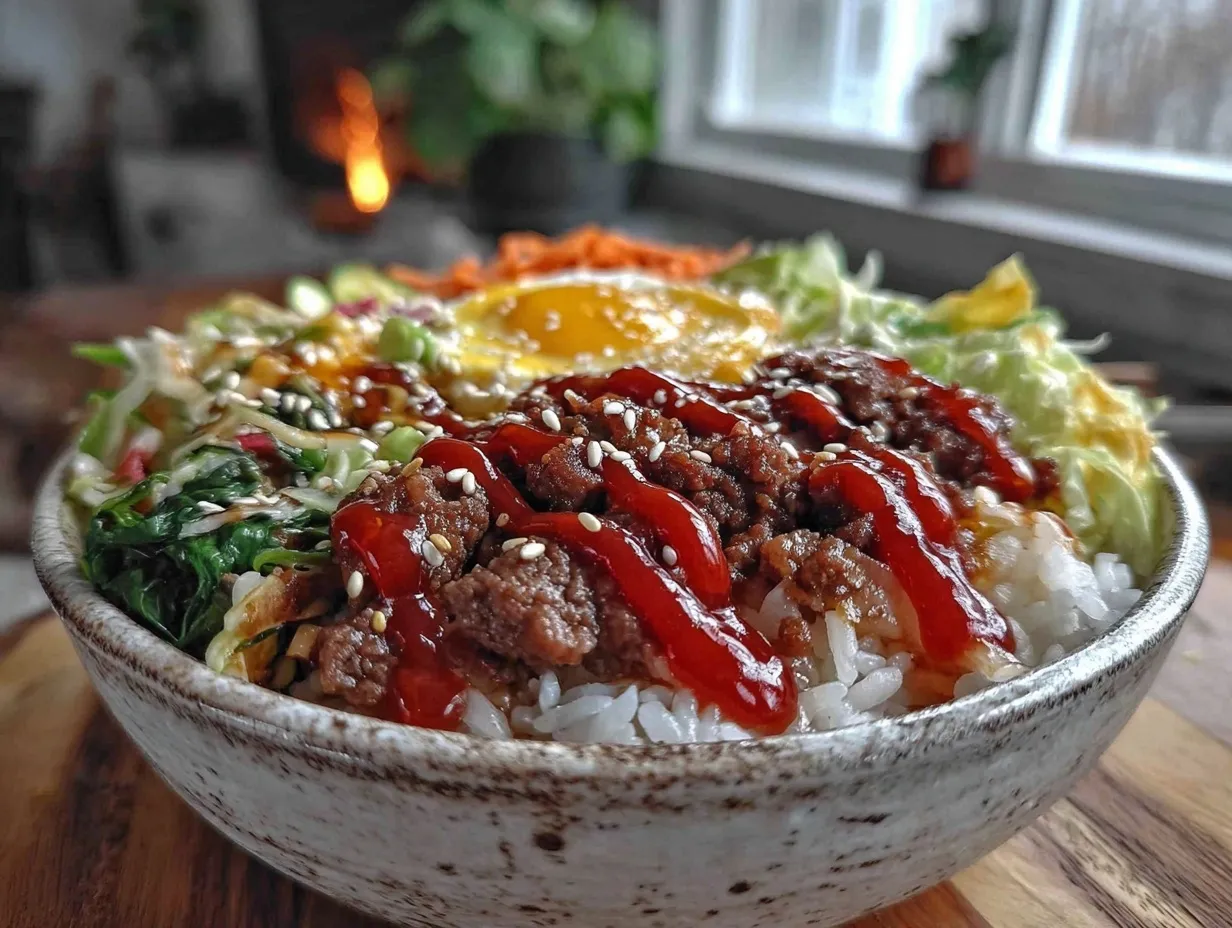
- Prepare the Rice (15-20 minutes): If you don’t have leftover rice, rinse 1.5 cups (about 300g) of white rice under cold water until the water runs clear. Cook it with 1.75 cups (415ml) of water in a saucepan with a tight lid. Bring to a boil, then reduce heat to low and simmer for 15 minutes. Turn off the heat and let it steam, covered, for another 10 minutes. Fluff with a fork.
- Make the Sauce: In a small bowl, mix together 2 tablespoons gochujang, 2 tablespoons soy sauce, 1 tablespoon brown sugar, 1 tablespoon sesame oil, minced garlic, and grated ginger. Stir until smooth. Set aside.
- Cook the Ground Beef (8-10 minutes): Heat a large skillet over medium heat. Add the ground beef and break it up with a spatula. Cook until it starts to brown, about 4 minutes. Pour in half the sauce and stir well. Continue cooking until the beef is fully cooked and the sauce has thickened slightly, about 4-5 more minutes. Taste and adjust seasoning if needed.
- Prep the Veggies: While the beef cooks, julienne or grate the carrot, thinly slice the cucumber and green onions. Quickly sauté spinach in a small pan with a splash of water and a pinch of salt until just wilted, about 1-2 minutes.
- Fry the Eggs (optional): In a nonstick pan, heat a teaspoon of oil over medium heat. Crack the eggs and cook sunny-side up until whites are set but yolks still runny, about 3-4 minutes.
- Assemble the Bowls: Divide the warm rice between two bowls. Arrange the cooked ground beef, carrots, spinach, cucumber, and green onions in sections on top of the rice. Place a fried egg in the center if using. Drizzle any remaining sauce over the bowl and sprinkle with toasted sesame seeds.
- Serve: Encourage mixing everything together before eating to enjoy the full flavor and texture combination. Add extra gochujang or soy sauce if desired.
If the sauce seems too thick while cooking, splash in a bit of water to loosen it. Keep an eye on the heat to prevent burning the sauce — those smoky bits I mentioned earlier come from rushing this step. When sautéing spinach, don’t overcook; a quick wilt keeps its vibrant color and nutrients.
Cooking Tips & Techniques
One thing I learned the hard way is that ground beef can quickly go from juicy to dry if the pan’s too hot or if you overcook it. Medium heat is your best friend here, letting the beef brown nicely without losing moisture. Stir gently to keep some texture instead of smashing it into a paste.
When mixing the sauce, balance is key. If you find it too spicy, a touch more brown sugar or a drizzle of honey softens the heat without losing the authentic flavor. I also like to toast sesame seeds lightly before sprinkling over the bowl; it adds a subtle nuttiness that often surprises guests.
Multitasking helps—while the rice cooks, you can prep the sauce and veggies. This keeps the whole process under 30 minutes, which is a game-changer on busy nights. And honestly, don’t skip the egg! The creamy yolk transforms the entire bowl, making it feel indulgent in the simplest way.
One of my favorite hacks is using leftover rice. It holds together better and gets a lovely slightly crispy texture when warmed up, which adds a nice contrast to the tender beef and fresh veggies. For even faster prep, pre-chopped veggies from the store work fine, though fresh always wins for flavor.
Variations & Adaptations
This Easy Korean Ground Beef Bibimbap Rice Bowl is flexible enough to suit many tastes and dietary needs. Here are some ways I’ve adapted it:
- Vegetarian Version: Swap ground beef for crumbled firm tofu or cooked mushrooms. Season the tofu with the same sauce and pan-fry until golden.
- Grain Alternatives: Use brown rice, quinoa, or even quinoa for a power bowl twist. They add different textures and nutritional profiles.
- Mild Flavor: Reduce gochujang and add a bit more brown sugar or honey to tame the spice for kids or sensitive palates.
- Extra Veggies: Add sautéed mushrooms, bell peppers, or shredded cabbage to boost volume and variety. It’s a great way to use whatever’s in the fridge.
- Low-Carb Option: Skip the rice and serve over cauliflower rice or leafy greens for a lighter meal.
I once tried this bowl with a quick mango salsa on the side inspired by the spicy tamarind chili mango margarita flavors, and it added a surprisingly fresh brightness that played well against the savory beef.
Serving & Storage Suggestions
Serve your Korean Ground Beef Bibimbap Rice Bowl warm, right after assembling, for the best flavor and texture combo. It’s perfect as a standalone meal but pairs well with light sides like a crisp cucumber salad or even some quick pickled radishes to cut through the richness.
If you’re making this ahead, store components separately in airtight containers: rice, cooked beef, and veggies. This keeps textures fresh and avoids sogginess. Refrigerate for up to 3 days.
To reheat, gently warm the beef and rice in a skillet or microwave until steaming hot. Add fresh or quickly sautéed veggies before serving. If you like, crack a fresh egg on top after reheating for that extra touch.
Flavors tend to meld beautifully when stored, so leftovers can taste even better the next day. Just remember to freshen up the greens or add a sprinkle of sesame seeds before serving.
Nutritional Information & Benefits
This Easy Korean Ground Beef Bibimbap Rice Bowl offers a balanced meal packed with protein, fiber, and healthy fats. A typical serving provides approximately 550-600 calories, depending on rice and egg inclusion, with around 30 grams of protein from the beef and eggs combined.
The fresh vegetables contribute vitamins A and C, while the sesame oil adds heart-healthy fats. Gochujang contains fermented chili paste, which some studies suggest may support digestion and metabolism.
For those watching carbs, swapping white rice for quinoa or cauliflower rice lowers the glycemic impact. This recipe can easily fit gluten-free diets by choosing tamari instead of soy sauce.
I appreciate how this dish balances comfort and nutrition—a meal that satisfies hunger without feeling heavy or overly processed.
Conclusion
This Easy Korean Ground Beef Bibimbap Rice Bowl has earned its place in my weeknight rotation because it hits the sweet spot between convenience and flavor. It’s the kind of recipe you can tweak endlessly yet still come back to the original and love it every time.
Don’t be afraid to play with the ingredients or spice level to make it your own—it’s forgiving and versatile that way. Personally, I love how the runny egg yolk and toasted sesame seeds bring everything together into a comforting, soulful bowl.
If you’ve never tried a bibimbap rice bowl before, this is a friendly, approachable version that doesn’t overwhelm or require exotic ingredients. And if you’re looking for more dishes that blend simple ingredients with bold flavors, the Korean BBQ Bulgogi Lettuce Wraps are another favorite to keep in your recipe book.
I’d love to hear how you make this recipe yours—drop a comment below or share your twists. Cooking is better when we share the journey, after all.
FAQs
What can I substitute for ground beef in this bibimbap bowl?
You can use ground turkey, chicken, tofu, or mushrooms as alternatives. Just adjust cooking times and seasoning to suit the protein or vegetable choice.
How spicy is this dish, and can I make it milder?
The gochujang sauce adds moderate heat, but you can reduce the amount or add extra brown sugar or honey to dial down the spice for a gentler flavor.
Can I prepare the ingredients ahead of time?
Yes! Cook the beef and rice in advance and store separately. Prep veggies ahead but keep fresh ingredients like cucumber sliced just before serving to retain crunch.
Is this recipe gluten-free?
It can be, if you use gluten-free soy sauce or tamari. Regular gochujang often contains barley, so check labels or find gluten-free versions if needed.
What’s the best way to reheat leftovers without drying out the meat?
Warm the beef gently in a skillet with a splash of water or broth to keep it moist. Microwave with a cover also works, but avoid overheating to prevent dryness.
Pin This Recipe!
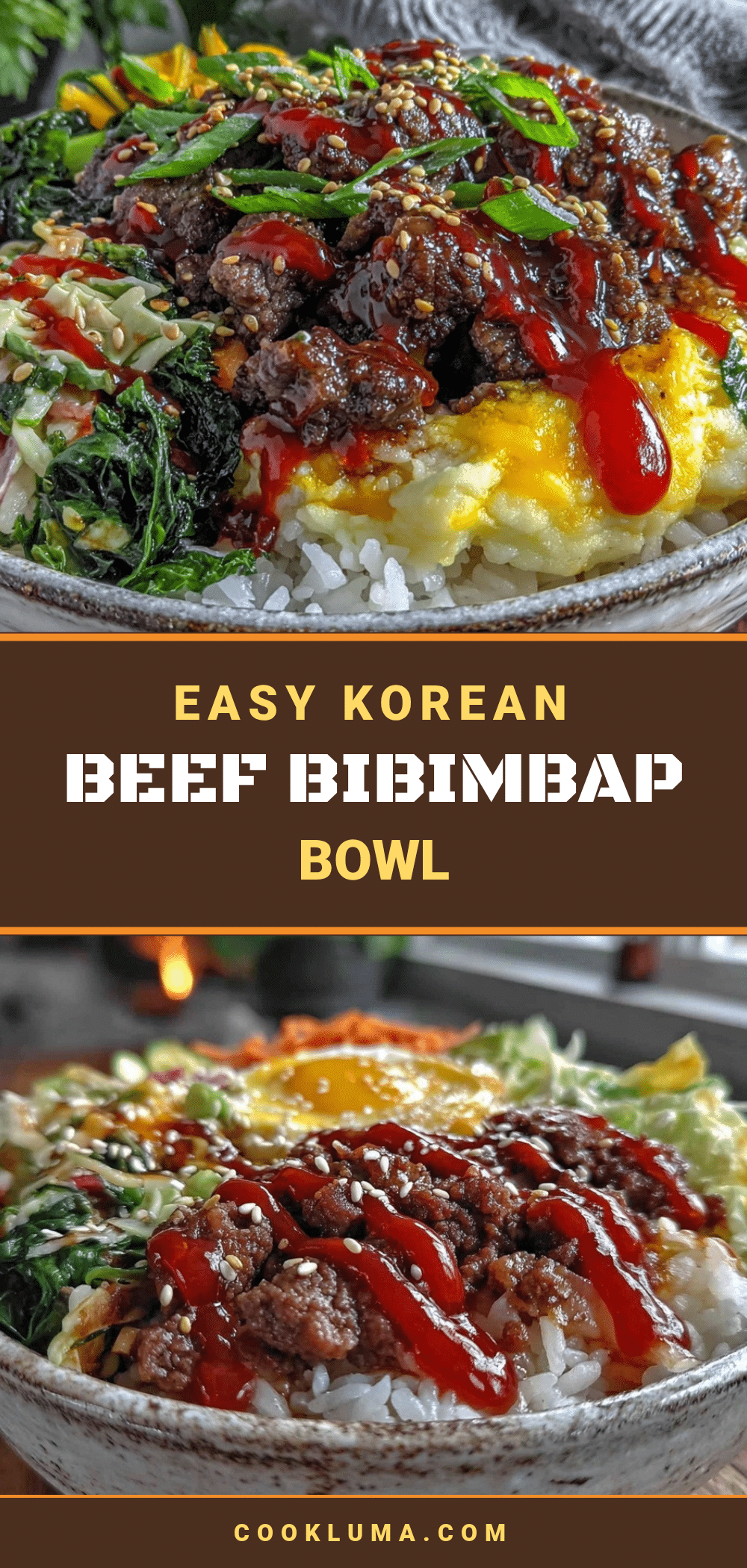
Easy Korean Ground Beef Bibimbap Rice Bowl
A quick and flavorful Korean bibimbap rice bowl featuring seasoned ground beef, fresh veggies, and a spicy-sweet gochujang sauce, perfect for weeknight dinners.
- Prep Time: 10 minutes
- Cook Time: 20 minutes
- Total Time: 30 minutes
- Yield: 2 servings 1x
- Category: Main Course
- Cuisine: Korean
Ingredients
- 1 pound (450g) ground beef (80/20)
- 3 cups (about 600g) cooked white rice
- 2 tablespoons gochujang (Korean chili paste)
- 2 tablespoons low-sodium soy sauce
- 1 tablespoon sesame oil
- 3 cloves garlic, minced
- 1 teaspoon grated ginger
- 1 tablespoon brown sugar
- 1 large carrot, julienned or grated
- 2 cups spinach, lightly sautéed or steamed
- 1 small cucumber, thinly sliced
- 2 stalks green onions, sliced
- 2 large eggs, fried sunny-side up (optional)
- 1 teaspoon toasted sesame seeds
Instructions
- Prepare the Rice (15-20 minutes): Rinse 1.5 cups (about 300g) of white rice under cold water until the water runs clear. Cook with 1.75 cups (415ml) of water in a saucepan with a tight lid. Bring to a boil, reduce heat to low, and simmer for 15 minutes. Turn off heat and let steam, covered, for another 10 minutes. Fluff with a fork.
- Make the Sauce: In a small bowl, mix 2 tablespoons gochujang, 2 tablespoons soy sauce, 1 tablespoon brown sugar, 1 tablespoon sesame oil, minced garlic, and grated ginger until smooth. Set aside.
- Cook the Ground Beef (8-10 minutes): Heat a large skillet over medium heat. Add ground beef and break it up with a spatula. Cook until it starts to brown, about 4 minutes. Pour in half the sauce and stir well. Continue cooking until beef is fully cooked and sauce thickens slightly, about 4-5 more minutes. Taste and adjust seasoning if needed.
- Prep the Veggies: Julienne or grate the carrot, thinly slice cucumber and green onions. Quickly sauté spinach in a small pan with a splash of water and a pinch of salt until just wilted, about 1-2 minutes.
- Fry the Eggs (optional): Heat a teaspoon of oil in a nonstick pan over medium heat. Crack eggs and cook sunny-side up until whites are set but yolks still runny, about 3-4 minutes.
- Assemble the Bowls: Divide warm rice between two bowls. Arrange cooked ground beef, carrots, spinach, cucumber, and green onions in sections on top of rice. Place fried egg in the center if using. Drizzle remaining sauce over the bowl and sprinkle with toasted sesame seeds.
- Serve: Mix everything together before eating to enjoy full flavor and texture. Add extra gochujang or soy sauce if desired.
Notes
Control heat carefully when cooking the sauce to avoid burning. Use leftover rice for a slightly crispy texture. Toast sesame seeds lightly for added nuttiness. Swap ground beef with ground turkey, chicken, tofu, or mushrooms for variations. Use gluten-free soy sauce or tamari to make it gluten-free. Don’t skip the fried egg for creamy richness.
Nutrition
- Serving Size: 1 bowl (half of the
- Calories: 575
- Sugar: 8
- Sodium: 700
- Fat: 30
- Saturated Fat: 10
- Carbohydrates: 45
- Fiber: 4
- Protein: 30
Keywords: Korean, bibimbap, ground beef, rice bowl, quick dinner, easy recipe, gochujang, weeknight meal


