There used to be a tiny French restaurant tucked behind a bookstore on 12th Street that made the most incredible mulled wine. When they closed—suddenly, with a handwritten sign taped to the door—I honestly felt a little lost. That steaming mug of spiced red wine had become my whole winter ritual. After seven tries—one of which tasted like cough syrup, let me tell you—I finally got it.
This quick mulled wine with orange and cinnamon sticks is that exact memory in a mug. The smell alone—orange zest hitting warm wine, cinnamon unfurling through the kitchen—brings me right back to that little corner spot with the cracked wooden tables. I mean, I spent months trying to figure out what made theirs so good. Was it the wine? The ratio of spices? The way they got the orange flavor without bitterness?
Turns out, it was simpler than I thought. No fancy techniques, no obscure ingredients. Just the right balance and a little patience. This version comes together in under twenty minutes, which means you can have that cozy café feeling on a random Tuesday night. Maybe you’ve been there—chasing a flavor from a place that no longer exists. This one’s for you.
Why You’ll Love This Recipe
This isn’t just another mulled wine recipe. After testing this with friends, neighbors, and even my picky sister-in-law (who “doesn’t like warm drinks”), I can tell you this one hits different. Here’s why it works:
- Quick & Easy : Ready in under 20 minutes, which means you can whip this up even on a busy weeknight when you just need something warm and comforting.
- Simple Ingredients : You probably already have most of these in your pantry. No hunting down obscure spices or special bottles of wine.
- Perfect for Entertaining : A big pot of this makes any gathering feel instantly special. Guests always crowd around the stove when they smell it.
- Crowd-Pleaser : Even people who say they don’t like red wine end up asking for a second cup. It’s that good.
- Unbelievably Aromatic : The combination of orange, cinnamon, and cloves fills your whole house with the coziest scent imaginable.
What makes this different from every other mulled wine recipe out there? It’s the technique. Most recipes just dump everything in a pot and heat it up. I learned the hard way that timing matters. Adding the orange slices too early makes them bitter. Boiling the wine kills the flavor. This version respects the ingredients and gives you the best possible result with minimal effort.
Honestly, this recipe is the kind that makes you close your eyes after the first sip. It’s comfort in a mug—warming, spiced, and just sweet enough. Perfect for unwinding after a long day, impressing last-minute guests, or making a regular Tuesday feel like a celebration.
What Ingredients You Will Need
This recipe uses simple, mostly pantry-friendly ingredients that come together to create something truly special. The key is choosing the right wine and fresh spices—it makes all the difference.
- 1 bottle (750 ml) dry red wine (I recommend a medium-bodied wine like Merlot, Zinfandel, or Cabernet Sauvignon—nothing too expensive, just something you’d enjoy drinking)
- 1 large orange (look for one with bright, firm skin—you’ll be using both the zest and the juice)
- 3 cinnamon sticks (use whole sticks, not ground cinnamon—ground will make the wine cloudy and gritty)
- 4 whole cloves (a little goes a long way—too many and it tastes like holiday potpourri)
- 3 tablespoons honey or maple syrup (start with less and adjust to your taste; I prefer honey for its floral notes)
- 2 star anise pods (optional but highly recommended—adds that subtle licorice warmth that makes mulled wine so complex)
- 1/4 cup brandy or orange liqueur (optional, for a little extra warmth and depth—Grand Marnier works beautifully)
A few notes on ingredients. For the wine, don’t use anything labeled “cooking wine”—it’s salty and awful. Just grab a bottle you’d happily drink for under $15. I’ve had great results with Bogle Merlot and Cupcake Red Velvet, but honestly, any dry red works. The sweetness comes from the honey and orange, so you don’t want a sweet wine to begin with or it’ll be cloying.
For the orange, wash it well since you’ll be using the peel. If you can find organic oranges, even better—conventional ones sometimes have a waxy coating that doesn’t dissolve well in hot liquid. And please, please use whole spices. I know ground cinnamon is easier, but it turns the wine into a murky mess. The whole spices infuse gently and strain out cleanly.
If you’re out of honey, brown sugar or regular white sugar works fine. Maple syrup adds a slightly different flavor—still delicious, just a little more woodsy. And if you don’t have star anise, don’t stress. The recipe still works beautifully with just cinnamon and cloves.
Equipment Needed
You don’t need much for this recipe, which is part of why I love it. Here’s what you’ll need:
- Large saucepan or Dutch oven (at least 3-quart capacity—you need room for the wine and all the spices to mingle)
- Vegetable peeler or zester (for getting strips of orange peel without the bitter white pith)
- Wooden spoon (for stirring—metal can sometimes react with the wine and affect the flavor)
- Fine-mesh strainer (for straining out the spices before serving—unless you don’t mind fishing out cloves with your teeth)
- Mugs or heatproof glasses (warm them up with hot water first so your mulled wine stays hot longer)
- Measuring cups and spoons (I know, obvious, but you’d be surprised)
If you don’t have a fine-mesh strainer, you can use a regular colander lined with cheesecloth or even a clean paper towel. I’ve done it in a pinch and it works fine. And if you’re making this for a party, a slow cooker works great for keeping it warm—just transfer the strained wine to the slow cooker on the “warm” setting.
I picked up my favorite Dutch oven at a thrift store for eight dollars, and it’s been making mulled wine for five winters now. You really don’t need fancy equipment here. Just a pot and a strainer, and you’re golden.
Preparation Method

Let me walk you through this step by step. I’ve made this so many times I could do it in my sleep, but I still remember messing it up the first few tries. Follow these steps and you’ll nail it on your first go.
- Prep the orange (2 minutes). Wash your orange thoroughly. Using a vegetable peeler, remove long strips of the orange peel—try to get just the orange part, not the white pith underneath, which is bitter. Once you’ve got about 4-5 good strips, slice the orange in half and juice it. You’ll need about 3 tablespoons of fresh orange juice. Set the peel strips and juice aside separately.
- Combine the base (1 minute). Pour the entire bottle of red wine into your saucepan. Add the orange juice, honey (start with 2 tablespoons), cinnamon sticks, cloves, and star anise if using. Drop in the strips of orange peel. Don’t add the orange slices yet—I learned this the hard way. Whole slices release pith bitterness if they simmer too long.
- Heat gently (10-12 minutes). Place the pot over medium-low heat. You want to warm the wine slowly—never let it boil. Boiling evaporates the alcohol and concentrates the acidity, leaving you with a harsh, unbalanced drink. Watch for tiny bubbles around the edges of the pot, and steam rising steadily. That’s your sweet spot. Stir occasionally with your wooden spoon to help the honey dissolve.
- Taste and adjust (1 minute). After about 10 minutes, the kitchen should smell incredible. Ladle a small amount into a cup and taste it. This is where you adjust. Need more sweetness? Add the remaining tablespoon of honey. Want more spice? Let it simmer another 2-3 minutes. Want it boozier? Now’s the time to stir in the brandy or orange liqueur.
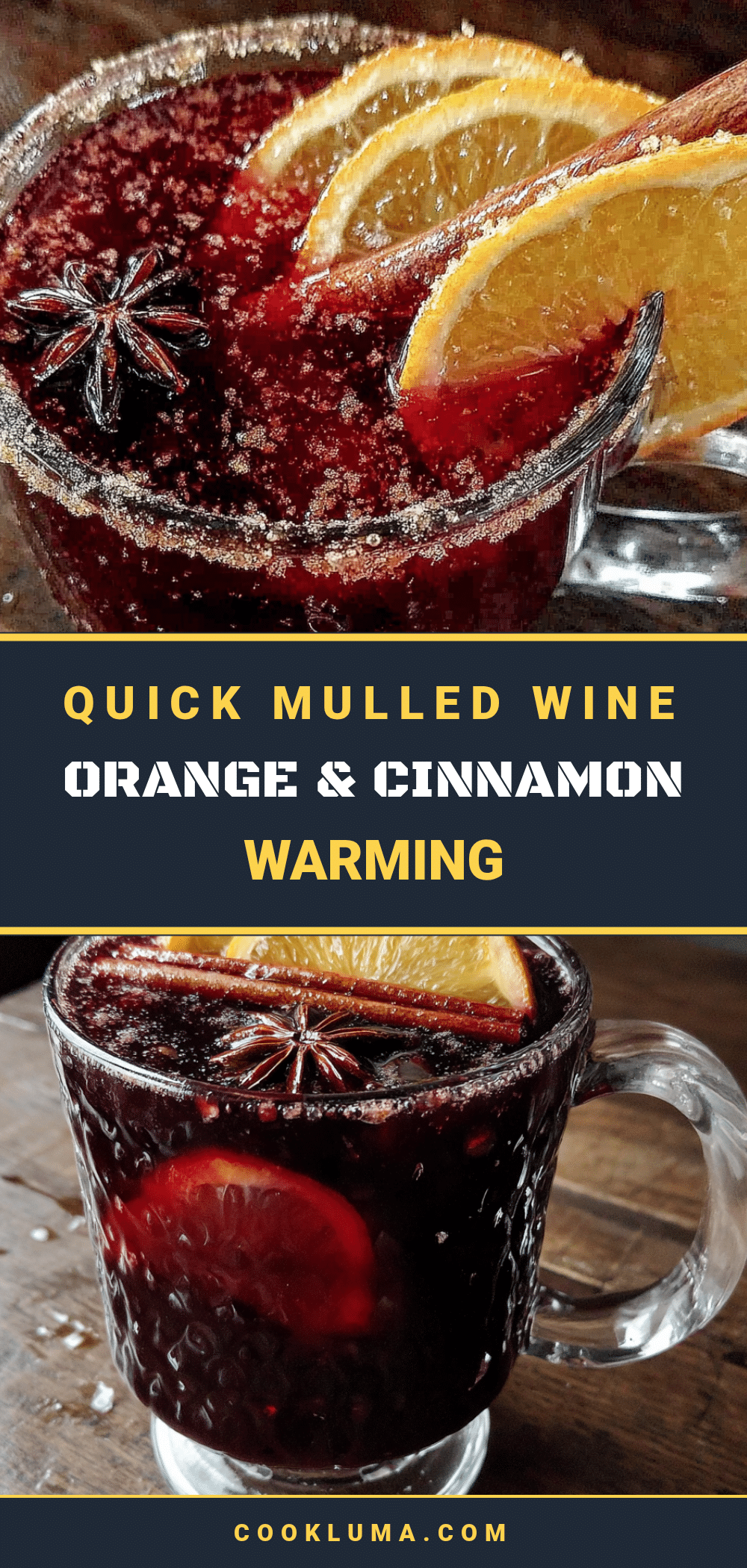
- Strain and serve (2 minutes). Place your fine-mesh strainer over a large heatproof measuring cup or directly over mugs. Pour the mulled wine through the strainer to catch all the spices and orange peel. Discard the solids. Ladle the warm wine into mugs. If you want to be fancy, garnish each mug with a fresh cinnamon stick and a thin slice of orange.
A few things I’ve learned along the way. The wine will look slightly darker and more opaque than when you started—that’s normal, it’s just picked up color from the spices. If you’re serving this at a party, you can keep it warm in a slow cooker on the “warm” setting for up to 2 hours. Just don’t leave it on “high” or the wine will eventually start to boil and lose its charm.
Also, don’t skip the straining step. I know it’s an extra dish to wash, but biting into a whole clove is not the experience you want. Trust me on this one.
Cooking Tips & Techniques
After making this quick mulled wine with orange and cinnamon sticks more times than I can count, I’ve picked up a few tricks that make a real difference.
Don’t boil the wine. This is the number one mistake people make. I did it my first time and ended up with something that tasted like cheap sangria left in a hot car. Wine changes flavor when it boils—the alcohol evaporates, the acidity concentrates, and you lose all those delicate fruit notes. Keep it at a gentle simmer. If you see actual bubbles breaking the surface, turn the heat down.
Use a vegetable peeler, not a knife, for the orange peel. A knife can easily cut too deep and bring along that bitter white pith. A peeler gives you thin, even strips with minimal pith. I learned this after ruining my second batch with bitter orange flavor. Now I peel like I’m making a cocktail garnish.
Toast your spices first. This is a pro tip I picked up from a chef friend. Before adding the spices to the wine, toss them in a dry pan over medium heat for about 30 seconds until they smell fragrant. It wakes up the essential oils and gives you a deeper, more complex flavor. Totally optional, but worth the extra minute.
Make a big batch and save the leftovers. This recipe doubles beautifully. I often make a double batch on Sunday and keep it in the fridge for up to 5 days. The flavors actually get better after a day or two. Just reheat gently on the stove or in the microwave—never boil it again.
Strain twice if you’re serving guests. Once through a coarse strainer, then again through a fine-mesh one. It catches those tiny spice particles that can make the wine look cloudy. Your guests will think you’re a professional.
Variations & Adaptations
One of the best things about this quick mulled wine recipe is how flexible it is. Here are some variations I’ve tried and loved:
Spiced Apple Mulled Wine : Replace half the red wine with unfiltered apple cider. Add a sliced apple along with the orange peel. The apple flavor is subtle but adds a lovely autumn note. I made this for a Halloween party and it disappeared in twenty minutes.
White Mulled Wine : Use a dry white wine like Sauvignon Blanc or Pinot Grigio instead of red. Skip the cloves (they can overwhelm white wine) and add a vanilla bean or a teaspoon of vanilla extract. The result is lighter, more delicate, and surprisingly delicious. My friend who “doesn’t do red wine” asked for the recipe.
Non-Alcoholic Version : Substitute the wine with a good quality red grape juice or a blend of pomegranate and cranberry juice. Add an extra tablespoon of honey since juice is less rich than wine. Simmer with the same spices. It’s perfect for kids, pregnant friends, or anyone avoiding alcohol. I’ve served this alongside the real thing and people couldn’t tell the difference.
Spicier Version : Add a thin slice of fresh ginger and a small dried chili to the spice mix. The ginger adds warmth, and the chili gives a subtle heat that builds slowly. My brother-in-law loves this version—he calls it “mulled wine with a kick.”
Citrus Medley : Use half an orange and half a lemon or blood orange. The lemon adds brightness, and blood orange gives the wine a beautiful ruby color. I made this for a Christmas brunch and it looked stunning in clear glass mugs.
Serving & Storage Suggestions
This mulled wine is best served warm, right after straining. I like to warm my mugs first by filling them with hot water for a minute, then dumping the water out before pouring the wine. It keeps the drink hot longer and makes the experience feel more special.
For presentation, garnish each mug with a fresh cinnamon stick and a thin slice of orange. If you’re feeling fancy, add a star anise pod perched on the rim. The visual is gorgeous—deep ruby wine with golden spices floating on top.
This wine pairs beautifully with cheese plates, roasted nuts, dark chocolate, or simple butter cookies. I also love serving it alongside a cheese board with sharp cheddar, creamy brie, and dried figs. The sweetness of the wine balances the saltiness of the cheese perfectly.
Storing leftovers: Let the mulled wine cool completely, then transfer to an airtight container (I use a mason jar). Store in the refrigerator for up to 5 days. The flavors actually deepen and meld together overnight, so day-two mulled wine is often even better than day-one.
Reheating: Pour the desired amount into a saucepan and warm over low heat. Do not boil. You can also microwave individual servings in 30-second bursts, stirring between each. If the wine has been in the fridge for a few days, you might notice some sediment settling at the bottom—that’s just spice particles, perfectly normal. Give it a stir before reheating.
Freezing: You can freeze mulled wine in ice cube trays for later use. Pop a few cubes into a glass of regular wine for a quick flavor boost, or thaw and reheat for an instant drink. I do this during the holidays so I always have some on hand for unexpected guests.
Nutritional Information & Benefits
Here’s the approximate nutritional breakdown for one serving (about 6 ounces, without optional brandy):
- Calories: 175
- Carbohydrates: 18g
- Sugar: 14g (from honey, orange juice, and wine)
- Alcohol: Approximately 12% ABV (varies by wine)
While mulled wine isn’t exactly health food, it does have some surprising benefits. Red wine contains resveratrol, an antioxidant linked to heart health. The cinnamon in this recipe has anti-inflammatory properties, and cloves are packed with antioxidants too. The orange provides a nice dose of vitamin C, which is always welcome during cold and flu season.
This recipe is naturally gluten-free, dairy-free, and vegan (if you use maple syrup instead of honey). For a lower sugar version, reduce the honey to 1 tablespoon or use a sugar-free sweetener. The wine itself contains minimal sugar, so most of the sweetness comes from what you add.
I personally love that this drink feels like a treat but isn’t loaded with artificial ingredients or excessive sugar. It’s the kind of indulgence that actually makes you feel warm and nourished, not sluggish and guilty. Everything in moderation, right?
Conclusion
This quick mulled wine with orange and cinnamon sticks has become my go-to winter ritual. It’s the thing I make when I need to slow down, when friends drop by unexpectedly, or when I just want my house to smell like the holidays. After chasing that memory of the little French restaurant for so long, I’m honestly glad I finally figured it out—because now I can share it with you.
The best part is how easy it is. Twenty minutes, one pot, and you’ve got something that tastes like you spent all afternoon on it. That’s my favorite kind of recipe—the one that makes you look like a hero without actually working like one.
I’d love to hear how yours turns out. Did you add your own twist? Try a different wine? Forget to strain it and end up with a mouthful of cloves? (Been there.) Drop a comment below and let me know. And if you love this recipe as much as I do, share it with someone who needs a little warmth in their life.
Here’s to cozy nights, good wine, and recipes that feel like coming home.
Frequently Asked Questions
Can I make this mulled wine in a slow cooker?
Absolutely. Combine all ingredients in a slow cooker and cook on low for 2-3 hours. Switch to the “warm” setting for serving. This is perfect for parties since it stays warm for hours without risk of boiling.
What’s the best wine for mulled wine?
A dry red wine like Merlot, Zinfandel, or Cabernet Sauvignon works best. Don’t use anything too expensive—the spices will mask subtle flavors. A $10-15 bottle is perfect. Avoid sweet wines or “cooking wine” at all costs.
Can I use ground spices instead of whole?
You can, but I don’t recommend it. Ground cinnamon and cloves turn the wine cloudy and gritty. Whole spices infuse gently and strain out cleanly. If you only have ground spices, use half the amount and strain through a coffee filter.
How do I make this non-alcoholic?
Substitute the red wine with an equal amount of red grape juice, pomegranate juice, or a blend of both. Add an extra tablespoon of honey since juice is less complex than wine. Simmer with the same spices for 15 minutes. It’s delicious and family-friendly.
Can I make this ahead of time for a party?
Yes! Make the mulled wine up to 2 days in advance, strain it, and store it in the refrigerator. Reheat gently on the stovetop or in a slow cooker before serving. The flavors actually improve after a day in the fridge.
Pin This Recipe!
Quick Mulled Wine Recipe with Orange and Cinnamon

This quick mulled wine with orange and cinnamon sticks is the perfect winter warmer, ready in under 20 minutes. It’s a cozy, aromatic drink that brings back memories of a tiny French restaurant, made simple with pantry-friendly ingredients.
- Prep Time: 5 minutes
- Cook Time: 12 minutes
- Total Time: 17 minutes
- Yield: 4 servings 1x
- Category: Beverage
- Cuisine: European
Ingredients
- 1 bottle (750 ml) dry red wine (Merlot, Zinfandel, or Cabernet Sauvignon)
- 1 large orange
- 3 cinnamon sticks
- 4 whole cloves
- 3 tablespoons honey or maple syrup
- 2 star anise pods (optional)
- 1/4 cup brandy or orange liqueur (optional)
Instructions
- Prep the orange: Wash the orange thoroughly. Using a vegetable peeler, remove long strips of the orange peel, avoiding the white pith. Slice the orange in half and juice it to get about 3 tablespoons of juice. Set the peel strips and juice aside separately.
- Combine the base: Pour the entire bottle of red wine into a large saucepan or Dutch oven. Add the orange juice, honey (start with 2 tablespoons), cinnamon sticks, cloves, and star anise if using. Drop in the strips of orange peel. Do not add orange slices yet.
- Heat gently: Place the pot over medium-low heat. Warm the wine slowly, never letting it boil. Look for tiny bubbles around the edges and steady steam. Stir occasionally with a wooden spoon to help the honey dissolve. Heat for 10-12 minutes.
- Taste and adjust: After about 10 minutes, ladle a small amount into a cup and taste. Add more honey if needed, let it simmer longer for more spice, or stir in the brandy or orange liqueur for extra warmth.
- Strain and serve: Place a fine-mesh strainer over a large heatproof measuring cup or directly over mugs. Pour the mulled wine through the strainer to catch all spices and orange peel. Discard the solids. Ladle the warm wine into mugs. Garnish with a fresh cinnamon stick and a thin slice of orange if desired.
Notes
Do not boil the wine, as it will evaporate the alcohol and concentrate the acidity. Use whole spices instead of ground to avoid a cloudy, gritty texture. For a non-alcoholic version, substitute red wine with red grape juice or a blend of pomegranate and cranberry juice. Leftovers can be stored in the refrigerator for up to 5 days and flavors improve overnight.
Nutrition
- Serving Size: 6 ounces
- Calories: 175
- Sugar: 14
- Sodium: 10
- Carbohydrates: 18
Keywords: mulled wine, quick mulled wine, spiced wine, winter drink, holiday drink, orange cinnamon wine, easy mulled wine