My neighbor Carol wasn’t trying to impress me. I’d stopped by to borrow a corkscrew before a dinner party, and the smell hit me before I even got through her screen door. Warm, savory, almost buttery — but it wasn’t butter. It was something deeper, earthier, with a whisper of pine and a sharp, nutty finish. She was pulling a sheet pan out of the oven, and the top of it was this glorious, dimpled landscape of golden brown, speckled with green and pale yellow. “Oh, that’s just focaccia,” she said, waving her hand like she’d reheated a frozen pizza. “I had some leftover starter.”
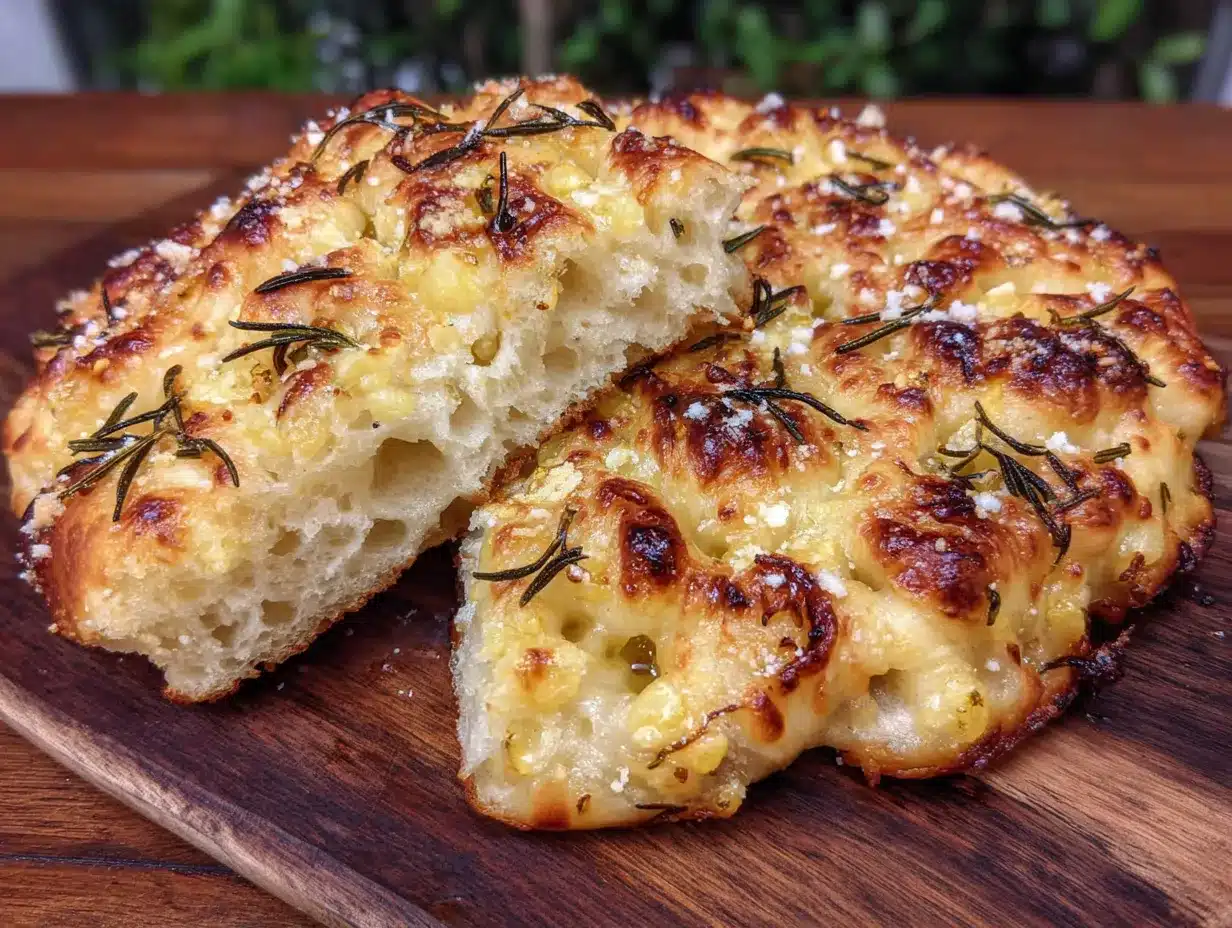
I stood there, corkscrew forgotten, staring at this bread. I mean, I’d made focaccia before. Flat, oily, kind of sad focaccia. This was different. The crust crackled when she set the pan on the stove. The crumb underneath looked soft and pillowy, full of tiny, irregular holes. And the smell — rosemary and garlic and something almost cheesy — just hung in the air. She cut me a piece while I was still holding the corkscrew, and that first bite? Honestly, I almost cancelled my dinner party. This bread was the main event.
Carol’s focaccia wasn’t just good. It was the kind of bread that makes you close your eyes and go quiet for a second. And she made it look like nothing. That’s the thing about the best cooks — they don’t know they’re doing anything special. They just have a feel for it. I asked her for her “recipe,” which was really just a handful of gestures and “a little of this, a little of that.” It took me three tries to get it right, but now? This rosemary parmesan sourdough focaccia is my go-to for feeding a crowd. Maybe you’ve been there — standing in someone’s kitchen, watching them be casually brilliant, and thinking, I need to learn how to do that.
Why You’ll Love This Recipe
Let me tell you why this isn’t just another focaccia recipe. First off, the sourdough starter does all the heavy lifting. It adds a subtle tang and an incredible, airy texture that you just can’t get with commercial yeast alone. The fermentation process also makes the bread easier to digest — a little bonus your gut will thank you for.
- Perfect for a Crowd: This recipe bakes in a half-sheet pan, giving you a generous 12 to 16 servings. It’s the ideal bread for dinner parties, potlucks, or holiday gatherings.
- Simple, Pantry Ingredients: Flour, water, olive oil, salt, rosemary, and parmesan. You probably already have most of these on hand. No fancy grocery trips needed.
- Make-Ahead Friendly: The dough can be mixed the day before and cold-fermented in the fridge. This actually improves the flavor and gives you more flexibility when hosting.
- Unbelievably Delicious: The combination of fragrant rosemary, salty parmesan, and that perfect sourdough tang is next-level comfort food. The crust is crisp, the interior is soft and chewy, and the olive oil pools in all the right places.
- Crowd-Pleaser: I’ve served this at everything from casual barbecues to formal Thanksgiving dinners. It disappears every single time. Kids love the cheesy top, and adults appreciate the sophisticated flavor.
What makes this recipe different from the rest? It’s the technique. We’re using a high-hydration dough (that’s a fancy way of saying lots of water) and a series of stretch-and-folds to develop gluten without heavy kneading. This creates that signature open crumb and airy texture. Plus, the parmesan isn’t just sprinkled on top — we incorporate some into the dough itself, so every bite has that savory, umami kick.
This isn’t just good bread. It’s the kind that makes you look like a hero at your own party. It’s the bread that gets talked about for weeks after. And honestly? It’s surprisingly easy to pull off.
What Ingredients You Will Need
This recipe uses simple, wholesome ingredients to deliver that perfect balance of tangy, savory, and herbaceous flavor. Most of these are pantry staples, which makes this focaccia incredibly accessible. Here’s what you’ll need and why each ingredient matters.
For the Dough:
- 500 grams (about 4 cups) bread flour — I recommend King Arthur or Bob’s Red Mill for their higher protein content, which gives better gluten development. All-purpose flour works in a pinch, but the texture won’t be quite as chewy.
- 400 grams (about 1 2/3 cups) lukewarm water — The water temperature should be around 80°F (27°C). Too hot and you’ll kill the wild yeast in your starter. Too cold and fermentation will be sluggish.
- 150 grams (about 3/4 cup) active sourdough starter — This should be bubbly and doubled in size. If your starter is sluggish, feed it 8-12 hours before mixing. A ripe starter is the heart of this bread.
- 10 grams (about 2 teaspoons) fine sea salt — Don’t skip the salt! It controls fermentation and strengthens the gluten structure. I prefer fine sea salt because it dissolves more evenly than kosher salt.
- 30 grams (about 2 tablespoons) extra-virgin olive oil — Use a good quality oil here. It adds flavor and tenderness to the dough. Save your really fancy finishing oil for drizzling on top later.
- 50 grams (about 1/2 cup) finely grated parmesan cheese — I like to use a microplane to grate it super fine. It dissolves into the dough better. Avoid the pre-shredded stuff in bags — it doesn’t melt as smoothly.
For the Topping:
- 60 grams (about 1/4 cup) extra-virgin olive oil — This is for the pan and the dimpling step. Don’t be shy with it. Focaccia is meant to be generous with oil.
- 2 tablespoons fresh rosemary, finely chopped — Fresh is non-negotiable here. Dried rosemary is too woody and can be overpowering. I grow a bush in my backyard, but grocery store bunches work great too.
- 50 grams (about 1/2 cup) coarsely grated parmesan cheese — This goes on top for that gorgeous, golden, crispy crust. Use a box grater for a more textured finish.
- Flaky sea salt (like Maldon) for finishing — This is optional but highly recommended. Those little bursts of saltiness are what make focaccia addictive.
- Optional: 2-3 cloves garlic, thinly sliced — If you want to take it over the top, press a few garlic slices into the dough before baking. They caramelize beautifully.
Substitution Notes:
- For a gluten-free version, use a high-quality 1:1 gluten-free flour blend. The texture will be denser, but still delicious. You may need to add a bit more water.
- No sourdough starter? You can use 1 teaspoon active dry yeast mixed with 100 grams of the water and 100 grams of the flour, and let it sit for 15 minutes. It won’t have the same tang, but it will still be great.
- Dairy-free? Use a good vegan parmesan or nutritional yeast for a similar savory note. The texture will be slightly different, but still tasty.
- Feel free to swap rosemary for other herbs like thyme, oregano, or even dried herbes de Provence.
Equipment Needed
You don’t need a professional bakery setup for this, but a few key tools make the process much smoother. Here’s what I use every time.
- A large mixing bowl — I prefer a wide, shallow bowl for easier stretch-and-folds. My go-to is a 5-quart ceramic bowl. Glass or stainless steel works too, but avoid plastic as it can retain odors.
- A half-sheet pan (18×13 inches) — This is the standard size for a crowd. If you only have a 9×13 baking dish, you can use it, but the focaccia will be thicker and need a few extra minutes of baking time.
- A bench scraper or dough scraper — This is invaluable for handling the sticky, high-hydration dough. It saves your knuckles and your countertops. A metal one costs about $8 and lasts forever.
- A kitchen scale — I cannot stress this enough. Baking by weight is more accurate than by volume, especially with sourdough. A simple digital scale is a game-changer.
- A spray bottle filled with water — This creates steam in the oven during the first few minutes of baking, which helps the crust stay crisp and the interior stay soft. If you don’t have one, you can toss a few ice cubes onto the bottom of the oven.
- Plastic wrap or a large reusable bowl cover — For covering the dough during bulk fermentation. A damp kitchen towel works too, but plastic wrap keeps the moisture in better.
- Optional: A stand mixer with a dough hook — You can absolutely mix and knead this by hand, but a mixer makes it faster. I usually do it by hand because I find it meditative.
Budget-friendly tip: You don’t need a fancy proofing basket or linen. A simple bowl and a clean kitchen towel work perfectly. The sheet pan is your biggest investment, but it’s a versatile tool you’ll use for everything from roasting vegetables to baking cookies.
Preparation Method
This is the heart of the recipe. Follow these steps carefully, and you’ll be rewarded with a focaccia that rivals anything from a fancy bakery. The key is patience — good bread takes time.
- Mix the dough (Day 1, morning or evening): In your large mixing bowl, combine the bread flour and finely grated parmesan. Whisk them together to distribute the cheese evenly. In a separate measuring cup, whisk together the lukewarm water and the active sourdough starter until the starter is mostly dissolved. Pour the wet ingredients into the dry, and add the salt and 30 grams of olive oil. Use a dough scraper or your hand to mix until no dry flour remains. The dough will be very sticky and shaggy — that’s exactly what we want. Cover the bowl with plastic wrap and let it rest for 30 minutes. This is called the autolyse, and it starts the gluten development process.
- Perform the stretch-and-folds (first 2 hours): Over the next 2 hours, you’ll perform a series of 4 stretch-and-folds, spaced 30 minutes apart. To do a stretch-and-fold: wet your hand slightly (the dough is sticky), reach under one side of the dough, stretch it up as far as it will go without tearing, and fold it over the top. Rotate the bowl a quarter turn and repeat. Do this 4 times total (one full rotation). After the 4th stretch-and-fold, the dough should feel smoother and more elastic. Cover the bowl again.
- Bulk fermentation (8-12 hours at room temperature, or 24 hours in the fridge): After the stretch-and-folds, let the dough rest, covered, at room temperature (around 70°F/21°C) for 8-12 hours. The dough should double in size and have lots of bubbles on the surface and sides. If you’re planning ahead, you can put the covered bowl in the refrigerator for up to 24 hours. The cold fermentation actually improves the flavor, giving it a more pronounced sourdough tang. For a dinner party, I often mix the dough the morning before and let it cold-ferment overnight.
- Prepare the pan (Day 2, about 3 hours before baking): Pour the 60 grams of olive oil into your half-sheet pan. Use your hands to spread it evenly, coating the bottom and sides. Gently coax the dough out of the bowl and onto the oiled pan. Try not to deflate it too much — you want to preserve those beautiful gas bubbles. Let the dough rest for 30 minutes, uncovered, to relax the gluten.
- Stretch and dimple (30 minutes later): After the rest, use your fingertips to gently stretch the dough to the edges of the pan. If it resists, let it rest another 10 minutes and try again. The dough should fill the pan evenly. Now comes the fun part — dimpling! Use your fingertips to press deep indentations all over the surface of the dough, right down to the bottom of the pan. The oil should pool up in these dimples. This is what creates the classic focaccia texture. Sprinkle the chopped rosemary, the coarsely grated parmesan, and a generous pinch of flaky sea salt over the top. Gently press a few garlic slices into the dimples if you’re using them.
- Final proof (1.5 to 2 hours): Cover the pan loosely with plastic wrap or a clean kitchen towel. Let it proof at room temperature until the dough is puffy and jiggly. It should look like a soft pillow. When you gently poke it, the indentation should spring back slowly. This usually takes about 1.5 to 2 hours, but it can vary depending on your room temperature. Be patient — under-proofed focaccia will be dense.
- Preheat the oven (30 minutes before baking): About 30 minutes before you’re ready to bake, position a rack in the middle of your oven and preheat it to 450°F (232°C). If you have a baking stone or steel, place it on the rack to preheat as well. This helps create a crisp bottom crust.
- Bake (25-30 minutes): Just before placing the pan in the oven, spray the top of the focaccia lightly with water from your spray bottle. This creates steam. Place the pan on the preheated stone or directly on the rack. Bake for 25-30 minutes, rotating the pan halfway through, until the top is deep golden brown and the bottom is crisp. The internal temperature should be around 200°F (93°C). If the top is browning too quickly, tent it loosely with foil for the last 5 minutes.
- Cool and serve: Remove the pan from the oven and let the focaccia cool in the pan for 5 minutes. Then, use a thin spatula to transfer it to a wire rack. Resist the urge to cut it immediately — it needs to cool for at least 20 minutes to set the crumb. If you cut it too soon, it will be gummy. Serve warm or at room temperature.
Sensory cues to look for: During the dimpling stage, you should hear a soft squelch as your fingers hit the oil. The dough should feel like a waterbed — soft, jiggly, and alive. When the focaccia comes out of the oven, it should make a hollow sound when you tap the bottom. The aroma of rosemary and parmesan will fill your entire kitchen.
Cooking Tips & Techniques
I’ve made this focaccia at least two dozen times, and I’ve learned a few things the hard way. Here are my best tips to save you from my mistakes.
Use a kitchen scale. I know I’ve said this before, but it bears repeating. Measuring flour by volume (cups) is wildly inconsistent. One person’s “cup” can be 20% more than another’s. This high-hydration dough is forgiving, but accuracy matters. A $15 scale will transform your baking.
Don’t rush the bulk fermentation. This is the most common mistake. The dough needs time to develop flavor and structure. If your kitchen is cold (below 68°F/20°C), the fermentation will take longer. I once tried to speed it up by putting the bowl in a warm oven, and I ended up with a soupy, over-fermented mess. Trust the process, not the clock. Look for visual cues: the dough should be doubled, bubbly, and slightly domed on top.
Be generous with the olive oil. Focaccia is not the place to be stingy. The oil is what gives it that crisp, almost fried crust and that tender crumb. When you dimple the dough, you should see pools of oil. If the pan looks dry, add a little more. I once skimped on the oil, and the focaccia came out dry and tough. Never again.
Dimple with confidence. Don’t be gentle. Press your fingertips all the way down to the bottom of the pan. The dimples are what trap the oil and create those signature crispy, chewy pockets. If you just press lightly, the oil will just sit on top and the bread won’t have that classic focaccia texture.
Rotate the pan halfway through baking. Most ovens have hot spots. Rotating the pan ensures even browning. I forgot to do this once, and one end of my focaccia was dark brown while the other was pale. It still tasted good, but it looked lopsided.
Let it cool completely (or at least mostly). I know it’s tempting to tear into it while it’s hot, but the crumb needs time to set. If you cut it too soon, the steam will escape and the bread will be gummy. I’ve made this mistake many times. Let it rest for at least 20-30 minutes. Your patience will be rewarded with a perfect, airy texture.
Multitask efficiently. While the dough is doing its final proof, use that time to prep the rest of your meal. Set the table, make a salad, or pour yourself a glass of wine. The active work in this recipe is minimal, but the waiting time is a great opportunity to get other things done.
Variations & Adaptations
This recipe is a fantastic base for experimentation. Once you’ve mastered the basic technique, feel free to play around. Here are some of my favorite variations.
Roasted Garlic and Thyme Focaccia: Instead of rosemary, use 2 tablespoons of fresh thyme leaves. Roast a whole head of garlic (cut the top off, drizzle with olive oil, wrap in foil, and bake at 400°F for 40 minutes). Squeeze the soft cloves out and dot them over the dough before dimpling. The roasted garlic becomes sweet and jammy — it’s incredible.
Tomato and Basil Focaccia: After dimpling, press 1 cup of halved cherry tomatoes into the dough. Sprinkle with fresh basil leaves before baking. The tomatoes burst in the oven, creating little pockets of sweetness. This is my go-to summer version when tomatoes are at their peak.
Everything Bagel Focaccia: Skip the rosemary and parmesan. After dimpling, brush the top with a beaten egg white and sprinkle generously with everything bagel seasoning (sesame seeds, poppy seeds, dried garlic, dried onion, and salt). This is a huge hit with kids and at brunch gatherings.
Olive and Sun-Dried Tomato Focaccia: Fold 1 cup of chopped Kalamata olives and 1/2 cup of chopped sun-dried tomatoes into the dough during the first stretch-and-fold. The briny olives and sweet tomatoes add a Mediterranean twist. This pairs beautifully with a simple Greek salad.
Dairy-Free Version: Replace the parmesan in the dough with 2 tablespoons of nutritional yeast for a cheesy, umami flavor. Omit the parmesan topping entirely, or use a vegan parmesan alternative. The texture will be slightly different, but it’s still delicious.
Spicy Focaccia: Add 1 teaspoon of red pepper flakes to the dough along with the salt. After baking, drizzle with honey and a pinch more red pepper flakes for a sweet-heat combination that’s absolutely addictive. I made this for a Super Bowl party, and it was gone in minutes.
Serving & Storage Suggestions
This focaccia is incredibly versatile. Here’s how to serve it and keep it fresh.
Serving Temperature: Focaccia is best served warm or at room temperature. If you’re serving it at a party, I recommend baking it a few hours ahead and letting it cool on a wire rack. Then, just before serving, reheat it in a 350°F (175°C) oven for 5-7 minutes. This restores the crisp crust. Avoid the microwave — it will make the bread soggy.
Presentation Tips for Hosting: Cut the focaccia into squares or rectangles, not wedges. Squares are easier to handle and look more uniform on a platter. Arrange them on a wooden board or a large platter, and serve with a bowl of good olive oil and balsamic vinegar for dipping. A small dish of flaky sea salt on the side is a nice touch. For a dinner party, I like to cut the focaccia into long, thin strips and serve them as breadsticks alongside a bowl of marinara or roasted red pepper dip.
What to Serve Alongside: This focaccia is a natural partner for soups and stews. It’s perfect for dipping into a hearty minestrone or a creamy tomato basil soup. It also shines alongside a big, colorful salad — think arugula with shaved parmesan, lemon vinaigrette, and toasted pine nuts. For a more substantial meal, serve it with a charcuterie board, grilled vegetables, or a simple pasta dish. The possibilities are endless.
Storage Instructions: Store leftover focaccia in an airtight container at room temperature for up to 3 days. Do not refrigerate it — the cold temperature will dry it out and make it stale. If you have a lot of leftovers, the best option is to freeze it.
Freezing Instructions: Let the focaccia cool completely. Cut it into individual squares. Wrap each square tightly in plastic wrap, then place them in a freezer-safe zip-top bag. They’ll keep for up to 3 months. To reheat, unwrap a square and toast it directly in a toaster oven, or place it on a baking sheet in a 350°F (175°C) oven for 5-7 minutes. It comes out almost as good as fresh.
How Flavors Develop: Honestly, focaccia is often even better the next day. The flavors have time to meld and mellow. The rosemary and parmesan become more integrated, and the tang from the sourdough becomes more pronounced. I’ve been known to make a double batch just so I can enjoy the leftovers.
Nutritional Information & Benefits
While I wouldn’t call focaccia a health food, it does have some redeeming qualities. The sourdough fermentation process makes the bread easier to digest and lowers its glycemic index compared to bread made with commercial yeast. This means it won’t spike your blood sugar as dramatically.
Estimated Nutritional Values (per serving, assuming 16 servings):
| Nutrient | Amount |
|---|---|
| Calories | 220-250 |
| Total Fat | 10-12g |
| Saturated Fat | 2-3g |
| Carbohydrates | 28-32g |
| Fiber | 1-2g |
| Protein | 6-8g |
| Sodium | 350-400mg |
Health Benefits of Key Ingredients:
- Olive Oil: Rich in monounsaturated fats and antioxidants. It’s a heart-healthy fat that also adds incredible flavor.
- Rosemary: Contains antioxidants and anti-inflammatory compounds. It’s also been linked to improved digestion.
- Parmesan: A good source of calcium and protein. A little goes a long way in terms of flavor.
- Sourdough Starter: The fermentation process breaks down phytic acid, making the minerals in the flour more bioavailable. It also produces beneficial lactic acid bacteria.
Dietary Considerations: This recipe contains gluten and dairy (parmesan). It is not suitable for celiac disease or a dairy allergy without modifications. For a dairy-free option, see the variations section. For a gluten-free option, use a high-quality gluten-free flour blend, though the texture will be denser.
I personally love that this bread feels indulgent but isn’t loaded with sugar or processed ingredients. It’s real food made from simple, wholesome components. And when you’re feeding a crowd, that feels good.
Frequently Asked Questions
Can I use active dry yeast instead of sourdough starter?
Absolutely. If you don’t have a sourdough starter, you can use 1 teaspoon (about 3 grams) of active dry yeast. Mix it with 100 grams of the lukewarm water and 100 grams of the flour, let it sit for 15 minutes until frothy, then add it to the rest of the ingredients. The flavor won’t be as tangy, but the texture will still be excellent. You may need to reduce the bulk fermentation time since yeast works faster than a sourdough starter.
Why is my focaccia dense and not airy?
This is usually a sign of under-fermentation. The dough needs enough time to develop gas bubbles. Make sure your sourdough starter is active and bubbly before you begin. Also, ensure you’re giving the dough enough time during bulk fermentation — it should double in size. If your kitchen is cold, it might take 12-14 hours. Don’t rush it.
Can I make this gluten-free?
Yes, but with some adjustments. Use a high-quality 1:1 gluten-free flour blend that contains xanthan gum. The dough will be much wetter and stickier. You may need to add an extra 30-50 grams of water. The texture will be denser and more cake-like, but it can still be delicious. I recommend baking it in a smaller pan (9×13) for a thicker focaccia that holds together better.
How do I get a crispier bottom crust?
Preheat your oven with a baking stone or steel on the bottom rack. Place the sheet pan directly on the preheated stone. The intense bottom heat will help create a crisp, golden crust. You can also bake the focaccia on the lowest rack of your oven. If the bottom is still not crisp enough, try removing the focaccia from the pan and placing it directly on the oven rack for the last 2-3 minutes of baking.
Can I freeze the dough instead of the baked bread?
Yes, you can freeze the dough after the bulk fermentation and shaping. After you’ve dimpled the dough in the pan, place the pan in the freezer, uncovered, until the dough is frozen solid (about 2-3 hours). Then wrap the pan tightly in plastic wrap and foil. When you’re ready to bake, thaw the pan in the refrigerator overnight, then let it come to room temperature and finish proofing before baking. This is a great make-ahead option for busy hosts.
Conclusion
This rosemary parmesan sourdough focaccia has become my secret weapon for hosting. It’s the bread that makes people stop mid-conversation and ask, “Did you make this?” And when you tell them yes, with a casual shrug, you get to feel just a little bit like Carol — effortlessly brilliant. The combination of tangy sourdough, fragrant rosemary, and salty parmesan is absolutely irresistible. It’s versatile enough for a fancy dinner party or a casual backyard barbecue.
I encourage you to make this recipe your own. Play with the toppings, experiment with different herbs, or try one of the variations I shared. The technique is forgiving, and the results are always rewarding. Whether you’re a seasoned baker or a complete beginner, this focaccia will make you look like a pro.
I’d love to hear how it turns out for you! Drop a comment below and let me know what variations you tried, or share a photo of your focaccia on social media and tag me. Happy baking, friends — and remember, the secret ingredient is always a little bit of patience and a lot of good olive oil.
Pin This Recipe!

Perfect Rosemary Parmesan Sourdough Focaccia for a Crowd
This rosemary parmesan sourdough focaccia is the perfect bread for feeding a crowd, with a crisp crust, soft and airy interior, and a savory, tangy flavor from the sourdough starter. It’s surprisingly easy to make and uses simple pantry ingredients.
- Prep Time: 30 minutes
- Cook Time: 25-30 minutes
- Total Time: 12-14 hours (includes fermentation and proofing)
- Yield: 12-16 servings 1x
- Category: Bread
- Cuisine: Italian
Ingredients
- 500 grams (about 4 cups) bread flour
- 400 grams (about 1 2/3 cups) lukewarm water (80°F/27°C)
- 150 grams (about 3/4 cup) active sourdough starter, bubbly and doubled
- 10 grams (about 2 teaspoons) fine sea salt
- 30 grams (about 2 tablespoons) extra-virgin olive oil
- 50 grams (about 1/2 cup) finely grated parmesan cheese
- 60 grams (about 1/4 cup) extra-virgin olive oil (for pan and dimpling)
- 2 tablespoons fresh rosemary, finely chopped
- 50 grams (about 1/2 cup) coarsely grated parmesan cheese (for topping)
- Flaky sea salt (like Maldon) for finishing
- 2–3 cloves garlic, thinly sliced (optional)
Instructions
- Mix the dough: In a large mixing bowl, combine bread flour and finely grated parmesan. Whisk together. In a separate measuring cup, whisk together lukewarm water and active sourdough starter until mostly dissolved. Pour wet ingredients into dry, add salt and 30 grams olive oil. Mix with a dough scraper or hand until no dry flour remains. Dough will be sticky and shaggy. Cover bowl with plastic wrap and let rest for 30 minutes (autolyse).
- Perform stretch-and-folds: Over the next 2 hours, perform 4 stretch-and-folds, spaced 30 minutes apart. Wet your hand slightly, reach under one side of dough, stretch it up, and fold over the top. Rotate bowl a quarter turn and repeat 4 times total. After the 4th stretch-and-fold, dough should feel smoother and more elastic. Cover bowl again.
- Bulk fermentation: Let dough rest, covered, at room temperature (around 70°F/21°C) for 8-12 hours until doubled in size and bubbly. Alternatively, refrigerate for up to 24 hours for improved flavor.
- Prepare the pan: Pour 60 grams olive oil into a half-sheet pan (18×13 inches). Spread evenly. Gently coax dough onto oiled pan, trying not to deflate it. Let rest for 30 minutes, uncovered.
- Stretch and dimple: After rest, use fingertips to gently stretch dough to edges of pan. If it resists, let rest another 10 minutes. Press deep indentations all over dough with fingertips, down to bottom of pan. Sprinkle chopped rosemary, coarsely grated parmesan, and flaky sea salt over top. Gently press garlic slices into dimples if using.
- Final proof: Cover pan loosely with plastic wrap or a clean kitchen towel. Let proof at room temperature for 1.5 to 2 hours until dough is puffy and jiggly, and indentation springs back slowly when poked.
- Preheat oven: About 30 minutes before baking, position rack in middle of oven and preheat to 450°F (232°C). If using a baking stone or steel, place on rack to preheat.
- Bake: Just before placing pan in oven, spray top of focaccia lightly with water. Place pan on preheated stone or directly on rack. Bake for 25-30 minutes, rotating pan halfway through, until top is deep golden brown and bottom is crisp. Internal temperature should be around 200°F (93°C). If browning too quickly, tent loosely with foil for last 5 minutes.
- Cool and serve: Remove pan from oven and let cool in pan for 5 minutes. Transfer to a wire rack using a thin spatula. Cool for at least 20 minutes before cutting to set the crumb. Serve warm or at room temperature.
Notes
Use a kitchen scale for accuracy. Don’t rush bulk fermentation; look for visual cues (doubled, bubbly, domed). Be generous with olive oil. Dimple with confidence, pressing all the way to the bottom of the pan. Rotate pan halfway through baking. Let cool completely before cutting to avoid gummy texture. Focaccia is often better the next day as flavors meld.
Nutrition
- Serving Size: 1 square (assuming 1
- Calories: 220250
- Sodium: 350400
- Fat: 1012
- Saturated Fat: 23
- Carbohydrates: 2832
- Fiber: 12
- Protein: 68
Keywords: sourdough focaccia, rosemary parmesan focaccia, homemade focaccia, sourdough bread, party bread, focaccia recipe