My brother asked why I couldn’t just skip the herb crust and throw the prime rib in the oven with salt and pepper. I started to explain why that wouldn’t work — then stopped. He had a point, honestly. I’d been so focused on perfecting this elaborate herb crust recipe I’d found in a French cookbook that I forgot to ask the most basic question: does the crust actually make it better?
So I tried it his way. One roast with just salt and pepper, one with my precious herb crust. I set them side by side on a Tuesday night — yeah, we eat prime rib on random Tuesdays in my house — and waited. The herb-crusted one won, no contest. The crust wasn’t just decoration. It created this incredible barrier that trapped the juices inside while the herbs infused every bite with flavor you just can’t get from a dry rub. I had to admit I was wrong. And honestly, I’ve never been happier to be wrong about something in the kitchen.
That night changed how I think about prime rib forever. This Classic Herb-Crusted Prime Rib Roast with Red Wine Jus isn’t just a holiday centerpiece — it’s the kind of meal that makes you slow down and actually taste what you’re eating. The rosemary and thyme melt into the fat cap, creating a crispy, aromatic shell that gives way to buttery, pink meat underneath. And that red wine jus? It’s the savory, tangy finish that ties everything together. Maybe you’ve been there — standing over a roast, second-guessing every step. Trust me, this one’s worth the faith.
Why You’ll Love This Recipe
This isn’t just another prime rib recipe. After testing this dish for two different holiday gatherings and a random Tuesday dinner, I can tell you exactly why it works and why you’ll come back to it again and again.
- Foolproof Method: The herb crust acts as a natural temperature regulator, helping the roast cook evenly from edge to center without drying out. No more gray, overcooked outer rings.
- Simple Ingredients: You need fresh herbs, garlic, olive oil, and a good cut of beef. No weird specialty items or hard-to-find spices. Your grocery store has everything.
- Perfect for Special Occasions: Christmas dinner, New Year’s Eve, anniversary celebrations — this roast commands attention without requiring all-day kitchen slavery.
- Crowd-Pleaser: I’ve served this to picky eaters, steak snobs, and vegetarian-curious guests. Everyone goes back for seconds. The jus alone converts people.
- Leftover Goldmine: Cold prime rib sandwiches the next day might actually be better than the main event. The herb crust stays flavorful even after refrigeration.
What makes this version different? It’s the technique of applying the herb crust 24 hours ahead. Most recipes have you slap the herbs on right before roasting. Letting it sit overnight allows the salt to penetrate deep into the meat while the herbs form a protective layer that locks in moisture. This isn’t just another recipe — it’s the one I’ve tweaked over five separate roasts until my family stopped asking for steakhouse reservations.
This recipe is the kind that makes you close your eyes after the first bite. It’s comfort food at its most elegant — familiar enough to feel like home, special enough to feel like an occasion. You can impress your guests without stress, and honestly, that’s the best kind of cooking.
What Ingredients You Will Need
This recipe uses simple, high-quality ingredients to deliver deep, layered flavor without unnecessary complexity. Most of these are pantry staples or easy to find at any grocery store. Here’s what you need and why each ingredient matters.
For the Prime Rib Roast
- 1 bone-in prime rib roast (6-8 pounds) — Look for a roast with good marbling and a thick fat cap. I prefer Choice or Prime grade from Costco or a local butcher. The bone-in version cooks more evenly and adds flavor.
- ¼ cup fresh rosemary, finely chopped — Woody and aromatic, rosemary is the backbone of the herb crust. Strip the leaves from the stems before chopping.
- ¼ cup fresh thyme leaves — Earthy and slightly floral, thyme complements beef better than almost any other herb. Don’t skip it.
- 6 cloves garlic, minced — Fresh garlic only. The pre-minced stuff in jars won’t give you the same punch. Trust me on this one.
- 3 tablespoons olive oil — Helps the herbs stick and encourages browning. Use a good extra-virgin olive oil here.
- 2 tablespoons kosher salt — Diamond Crystal is my go-to. The larger flakes distribute better and don’t over-salt the meat.
- 1 tablespoon black pepper, freshly cracked — Pre-ground pepper won’t cut it. The freshness matters for that initial peppery bite.
For the Red Wine Jus
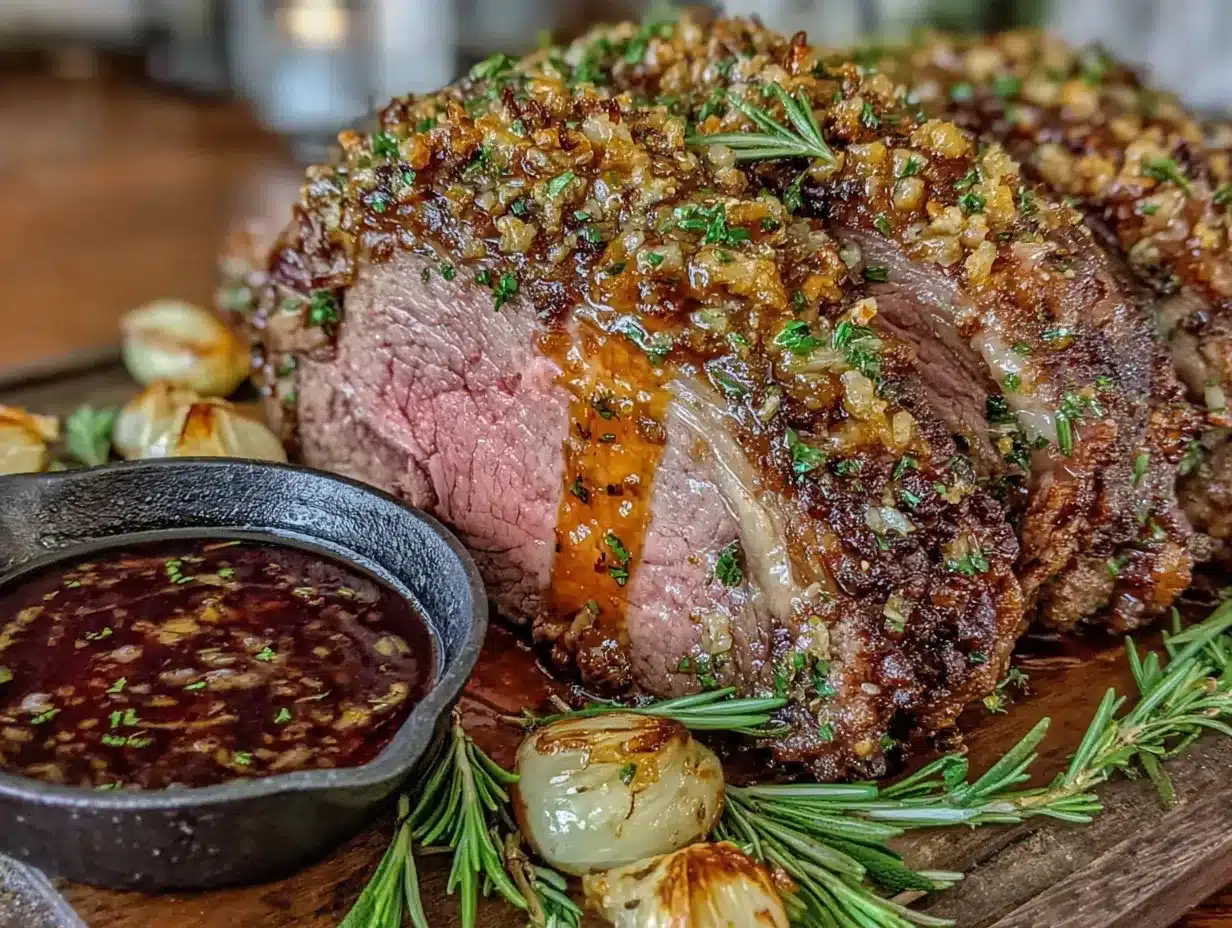
- 2 cups beef broth — Use low-sodium so you can control the salt level. I like Kitchen Basics or homemade if I have it frozen.
- 1 cup dry red wine — Cabernet Sauvignon or Merlot works beautifully. Don’t use cooking wine — it’s loaded with salt and preservatives. Drink the rest while you cook.
- 2 tablespoons unsalted butter — Adds richness and helps thicken the jus slightly. Save the salted butter for your dinner rolls.
- 1 shallot, finely minced — Milder than onion, shallots dissolve into the jus and add sweetness without overpowering the beef flavor.
- 2 sprigs fresh thyme — For simmering in the jus. They’ll get strained out, but they leave their essence behind.
- 1 tablespoon all-purpose flour — Optional, for thickening. I usually skip it for a thinner, more elegant jus, but some people prefer a gravy-like consistency.
Equipment Needed
You don’t need a professional kitchen to pull this off, but having the right tools makes the process smoother. Here’s what you’ll need.
- Large roasting pan with a rack — The rack keeps the roast elevated so heat circulates evenly. No rack? Roll up aluminum foil into coils and place them under the roast.
- Instant-read meat thermometer — This is non-negotiable. Prime rib is too expensive to guess. I use a Thermapen and it’s worth every penny.
- Chef’s knife — A sharp 8-inch knife makes trimming and carving much easier. Dull knives are dangerous — they slip.
- Cutting board — Preferably one with a groove to catch juices. You’ll want those juices for the jus.
- Small saucepan — For making the red wine jus while the roast rests.
- Kitchen twine — Helps the roast hold its shape during cooking. Your butcher might do this for you if you ask.
- Aluminum foil — For tenting the roast while it rests. Don’t skip the rest — it’s when the magic happens.
- Mixing bowl — Small one for combining the herb paste.
Preparation Method
Let’s walk through this step by step. I’ve tested this method five times, and each time I’ve refined it a little more. Follow these steps, and you’ll get perfect results even if it’s your first time making prime rib.
- Prep the roast (24 hours before cooking)
Pat the prime rib dry with paper towels. This step matters more than you think — moisture is the enemy of a good crust. Mix the chopped rosemary, thyme, minced garlic, olive oil, kosher salt, and black pepper in a small bowl until it forms a thick paste. Rub this mixture all over the roast, making sure to coat every surface, including the ends. Don’t forget the fat cap — that’s where the flavor lives. Wrap the roast loosely in plastic wrap and refrigerate for at least 12 hours, up to 24 hours. This overnight rest allows the salt to penetrate the meat while the herbs form that protective crust. - Bring to room temperature (2 hours before cooking)
Remove the roast from the refrigerator and let it sit on the counter for 2 hours. This step is crucial for even cooking. A cold roast straight from the fridge will cook unevenly — the outside will be overdone while the center stays raw. I usually set a timer so I don’t forget. The roast should feel cool but not cold to the touch. - Preheat the oven
Position your oven rack in the lower third of the oven. Preheat to 450°F (232°C). This high initial temperature will sear the herb crust and lock in the juices. Make sure your oven is fully preheated — opening the door too early lets out heat and messes with the timing. - Roast at high heat (15-20 minutes)
Place the roast bone-side down on the rack in your roasting pan. Roast at 450°F for 15-20 minutes. You’re looking for the herb crust to turn deep golden brown and fragrant. Your kitchen will smell incredible at this point — that’s the garlic and rosemary working their magic. - Reduce heat and continue roasting
Without opening the oven door, reduce the temperature to 325°F (163°C). Continue roasting until the internal temperature reaches 120-125°F (49-52°C) for medium-rare. This usually takes about 15-18 minutes per pound, but always trust your thermometer over timing. For a 7-pound roast, expect about 1 hour 45 minutes to 2 hours total cooking time. Start checking the temperature at the 1 hour 30 minute mark. - Rest the roast (20-30 minutes)
Remove the roast from the oven and transfer it to a cutting board. Tent it loosely with aluminum foil — don’t wrap it tight or you’ll steam the crust. Let it rest for 20-30 minutes. The internal temperature will rise another 5-10 degrees during this time (carryover cooking). This rest allows the juices to redistribute throughout the meat. If you cut into it too early, those juices will end up on your cutting board instead of in your mouth. - Make the red wine jus
While the roast rests, pour the pan drippings through a fine-mesh strainer into a measuring cup. Let it sit for a minute, then spoon off the excess fat, leaving the brown bits at the bottom. Place your saucepan over medium heat and add the butter. Once it melts, add the minced shallot and cook for 2 minutes until soft. Pour in the red wine and scrape up any browned bits from the bottom of the pan. Let the wine reduce by half, about 3-4 minutes. Add the beef broth and thyme sprigs. Simmer for 10 minutes until slightly thickened. Season with salt and pepper to taste. If you want a thicker jus, whisk in the flour mixed with a tablespoon of water and simmer for 2 more minutes. - Carve and serve
Remove the kitchen twine. Slice the roast against the grain into ½-inch to ¾-inch thick slices. The bone-in roast will have a natural separation — cut along the bones first to remove them, then slice the meat. Serve immediately with the red wine jus spooned over the top.
Cooking Tips & Techniques
I’ve made every mistake you can imagine with prime rib. Here’s what I learned so you don’t have to repeat my failures.
Don’t skip the salt brine. The overnight rest isn’t just for flavor — it’s for texture. Salt breaks down proteins and helps the meat retain moisture. I once skipped this step because I was short on time, and the roast came out noticeably drier. Never again.
Use a thermometer, not a timer. I can’t stress this enough. Ovens run at different temperatures, roasts vary in shape and size, and your idea of “medium-rare” might be different from mine. An instant-read thermometer removes all the guesswork. Insert it into the thickest part of the meat, avoiding the bone. For medium-rare, pull it at 120-125°F. For medium, pull at 130-135°F.
Let the roast rest properly. I ruined my first prime rib by carving it after only 10 minutes of rest. The juices flooded the cutting board, and the meat was dry and disappointing. Twenty minutes minimum. Thirty is better. Use this time to make your jus and set the table.
Don’t open the oven door constantly. Every time you open the door, the temperature drops significantly. I know it’s tempting to check on that beautiful crust, but resist the urge. Trust your initial timing and only open the door when you’re ready to check the temperature.
Save the bones. After carving, don’t throw away the bones. They make incredible beef stock. I freeze mine and use them for soup or stew later. It’s like getting a bonus recipe from your main dish.
Variations & Adaptations
This recipe is forgiving and adaptable. Here are some ways to make it your own.
Herb variations. Not a fan of rosemary? Swap it for equal amounts of fresh oregano or sage. I tried a sage-thyme combo one Christmas and it was fantastic — more earthy, less piney. You can also add 2 tablespoons of fresh parsley for a brighter flavor profile.
Garlic lovers version. Double the garlic to 12 cloves and roast them slightly before mixing into the herb paste. Roasted garlic adds a sweet, mellow depth that raw garlic doesn’t have. Just mash the roasted cloves into the paste before applying.
Horseradish crust. Mix 3 tablespoons of prepared horseradish into the herb paste for a spicy kick. The horseradish mellows during roasting and leaves behind a gentle heat that pairs beautifully with the beef. My uncle requests this version every year.
Wine-free jus. If you don’t cook with wine, substitute the red wine with an equal amount of beef broth plus 2 tablespoons of balsamic vinegar. The vinegar provides the acidity and depth that wine normally contributes. It’s not exactly the same, but it’s still delicious.
Smoked prime rib. For summer gatherings, try this on a smoker instead of the oven. Set your smoker to 225°F and smoke the roast until it reaches 120°F internally, about 4-5 hours. Finish with a quick sear on a hot grill or in a cast-iron skillet. The herb crust works beautifully with the smoky flavor.
Serving & Storage Suggestions
Prime rib is a showstopper, and how you serve it matters almost as much as how you cook it. Here’s my advice for getting the most out of this dish.
Serving temperature. Serve the roast immediately after carving while it’s still warm. The red wine jus should be hot — reheat it gently if it cooled during the resting period. I like to pour a little jus on each plate and arrange the slices on top.
What to serve alongside. Creamy mashed potatoes are the classic pairing — they soak up the jus perfectly. Roasted asparagus or green beans add color and freshness. Yorkshire puddings are traditional if you want to go full British roast dinner. For something lighter, try a simple arugula salad with lemon vinaigrette to cut through the richness.
Wine pairing. Serve the same wine you used for the jus. A bold Cabernet Sauvignon or a smooth Merlot complements the beef without competing. If you prefer white, a full-bodied Chardonnay works surprisingly well.
Storing leftovers. Store leftover prime rib in an airtight container in the refrigerator for up to 4 days. The jus can be stored separately for up to 5 days. The flavors actually deepen overnight — cold prime rib sandwiches the next day are a legit treat.
Reheating. The key to reheating prime rib without drying it out is low and slow. Place slices in a baking dish with a splash of beef broth, cover with foil, and warm in a 300°F oven for 10-15 minutes. Avoid the microwave — it ruins the texture and makes the meat tough.
Freezing. You can freeze cooked prime rib for up to 3 months. Wrap individual slices tightly in plastic wrap, then foil, and place in a freezer bag. Thaw overnight in the refrigerator before reheating. The texture won’t be quite as perfect as fresh, but it’s still better than most restaurant prime rib.
Nutritional Information & Benefits
Prime rib is a indulgence, no question. But it also has some nutritional benefits worth noting. Here’s what you’re getting in a 6-ounce serving (about two slices) with jus.
| Nutrient | Amount |
|---|---|
| Calories | 480 |
| Protein | 45g |
| Fat | 32g |
| Saturated Fat | 13g |
| Iron | 25% DV |
| Vitamin B12 | 90% DV |
| Zinc | 40% DV |
Beef is one of the best dietary sources of vitamin B12, which supports nerve function and red blood cell formation. The iron in prime rib is heme iron, which your body absorbs more easily than the iron in plant foods. The herb crust adds antioxidants from rosemary and thyme, which have anti-inflammatory properties.
If you’re watching your saturated fat intake, trim the visible fat before eating and skip the butter in the jus. You can also opt for a leaner cut like a ribeye roast instead of prime rib. But honestly — this is a special occasion dish. Enjoy it fully and balance it with lighter meals the rest of the week.
Conclusion
This Classic Herb-Crusted Prime Rib Roast with Red Wine Jus is the kind of recipe that becomes a tradition. It’s the dish your family will request for every holiday, the one your friends will ask you to bring to every gathering. And honestly, it deserves that spot. The herb crust creates a flavor and texture you just can’t get any other way, and the red wine jus ties everything together in one perfect, savory bite.
I love this recipe because it taught me something important — sometimes the extra step, the one that seems fussy or unnecessary, is actually the thing that makes all the difference. The overnight rest, the careful temperature monitoring, the patient resting period — none of it is wasted effort. Every step builds toward that moment when you cut into the roast and see the perfect pink center, when you take that first bite and everything goes quiet.
Try this recipe for your next special occasion. Customize the herbs, play with the wine, make it your own. And when you do, come back and tell me how it went. I’d love to hear about your version, your family’s reaction, your own kitchen victory. Drop a comment below or tag me in your photos. Happy cooking, friends.
Frequently Asked Questions
Can I use dried herbs instead of fresh for the crust?
You can, but fresh herbs really do make a difference here. Dried herbs are more concentrated and can burn during the high-heat sear, giving the crust a bitter taste. If you must use dried, reduce the amount by half and mix them with a little extra olive oil to prevent burning.
How do I know when the prime rib is done without a thermometer?
Honestly, I don’t recommend guessing. Prime rib is too expensive to risk. But if you’re in a pinch, use the touch test — medium-rare feels like the fleshy part of your palm when you touch your thumb to your ring finger. It should have some give but still feel firm. That said, please buy a thermometer. They’re cheap and save so much anxiety.
Can I cook this roast from frozen?
No, please don’t. Cooking a frozen prime rib leads to uneven cooking — the outside will be overdone before the center even starts to thaw. Always thaw your roast in the refrigerator for 24-48 hours before cooking. The overnight herb rest works best with a fully thawed roast anyway.
What if I don’t have a roasting rack?
No problem. Roll up several long pieces of aluminum foil into thick coils and place them in the bottom of your roasting pan. Set the roast on top of the coils. This lifts the meat off the bottom of the pan and allows heat to circulate, just like a rack would. It’s not fancy, but it works perfectly.
How do I prevent the herb crust from burning?
If you notice the crust getting too dark during roasting, tent the roast loosely with foil. This usually happens if your oven runs hot or if the roast is closer to the top heating element. Reduce the oven temperature to 300°F if you see excessive browning. The crust should be deep golden brown, not black.
Pin This Recipe!
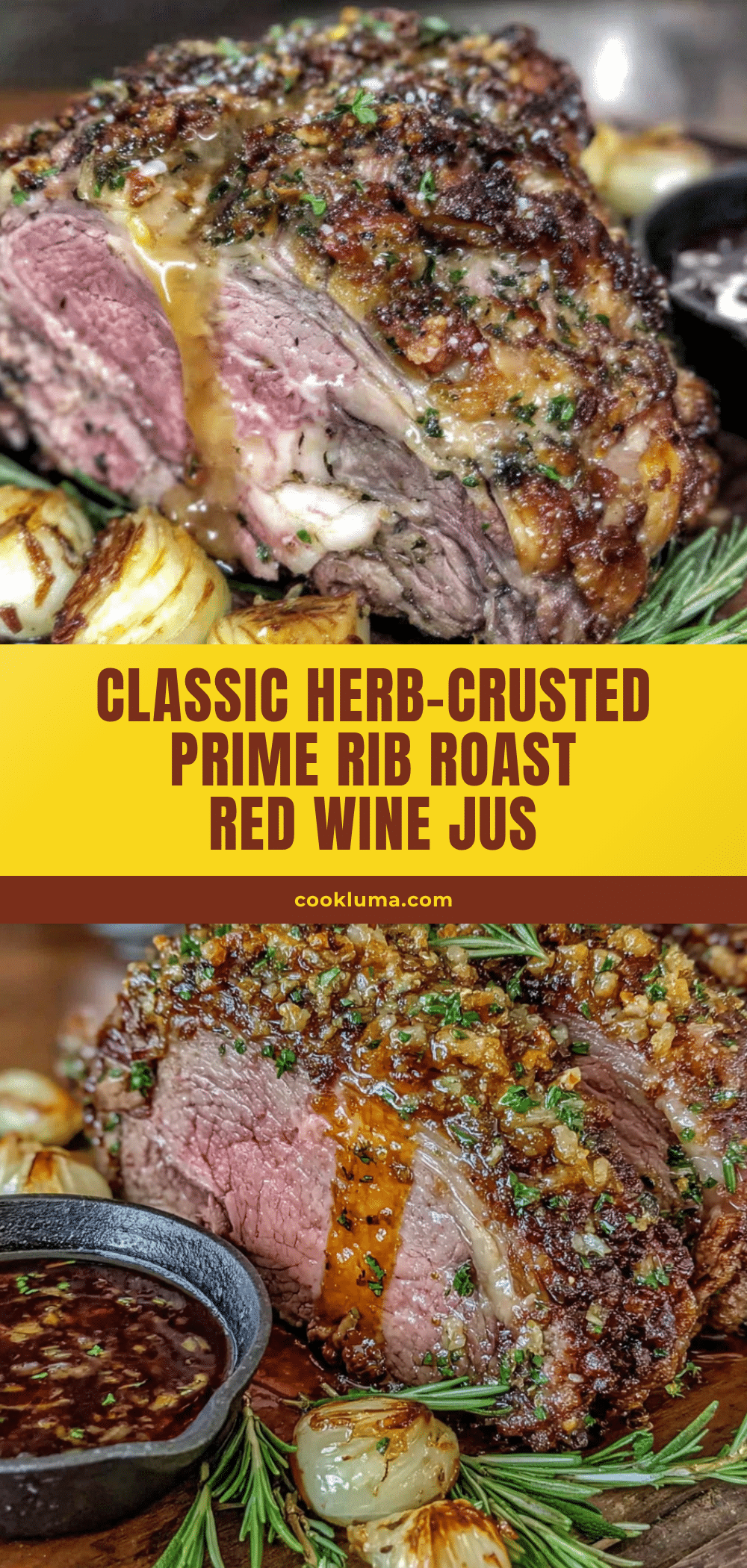
Perfect Herb-Crusted Prime Rib Roast with Red Wine Jus
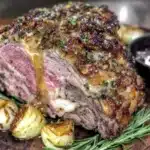
This Classic Herb-Crusted Prime Rib Roast with Red Wine Jus isn’t just a holiday centerpiece — it’s the kind of meal that makes you slow down and actually taste what you’re eating. The rosemary and thyme melt into the fat cap, creating a crispy, aromatic shell that gives way to buttery, pink meat underneath.
- Prep Time: 24 hours (includes overnight marinating)
- Cook Time: 1 hour 45 minutes to 2 hours
- Total Time: 26 hours (includes marinating and resting)
- Yield: 8-10 servings 1x
- Category: Main Course
- Cuisine: American
Ingredients
- 1 bone-in prime rib roast (6–8 pounds)
- ¼ cup fresh rosemary, finely chopped
- ¼ cup fresh thyme leaves
- 6 cloves garlic, minced
- 3 tablespoons olive oil
- 2 tablespoons kosher salt
- 1 tablespoon black pepper, freshly cracked
- 2 cups beef broth, low-sodium
- 1 cup dry red wine (Cabernet Sauvignon or Merlot)
- 2 tablespoons unsalted butter
- 1 shallot, finely minced
- 2 sprigs fresh thyme
- 1 tablespoon all-purpose flour (optional, for thickening)
Instructions
- Prep the roast (24 hours before cooking): Pat the prime rib dry with paper towels. Mix the chopped rosemary, thyme, minced garlic, olive oil, kosher salt, and black pepper in a small bowl until it forms a thick paste. Rub this mixture all over the roast, making sure to coat every surface, including the ends. Wrap the roast loosely in plastic wrap and refrigerate for at least 12 hours, up to 24 hours.
- Bring to room temperature (2 hours before cooking): Remove the roast from the refrigerator and let it sit on the counter for 2 hours. The roast should feel cool but not cold to the touch.
- Preheat the oven: Position your oven rack in the lower third of the oven. Preheat to 450°F (232°C).
- Roast at high heat (15-20 minutes): Place the roast bone-side down on the rack in your roasting pan. Roast at 450°F for 15-20 minutes until the herb crust turns deep golden brown and fragrant.
- Reduce heat and continue roasting: Without opening the oven door, reduce the temperature to 325°F (163°C). Continue roasting until the internal temperature reaches 120-125°F (49-52°C) for medium-rare. This usually takes about 15-18 minutes per pound. For a 7-pound roast, expect about 1 hour 45 minutes to 2 hours total cooking time. Start checking the temperature at the 1 hour 30 minute mark.
- Rest the roast (20-30 minutes): Remove the roast from the oven and transfer it to a cutting board. Tent it loosely with aluminum foil. Let it rest for 20-30 minutes. The internal temperature will rise another 5-10 degrees during this time.
- Make the red wine jus: While the roast rests, pour the pan drippings through a fine-mesh strainer into a measuring cup. Let it sit for a minute, then spoon off the excess fat. Place your saucepan over medium heat and add the butter. Once it melts, add the minced shallot and cook for 2 minutes until soft. Pour in the red wine and scrape up any browned bits from the bottom of the pan. Let the wine reduce by half, about 3-4 minutes. Add the beef broth and thyme sprigs. Simmer for 10 minutes until s…
- Carve and serve: Remove the kitchen twine. Slice the roast against the grain into ½-inch to ¾-inch thick slices. Cut along the bones first to remove them, then slice the meat. Serve immediately with the red wine jus spooned over the top.
Notes
Don’t skip the overnight salt brine — it’s crucial for texture and moisture. Use a thermometer, not a timer, for perfect doneness. Let the roast rest for at least 20 minutes before carving. Save the bones for making beef stock.
Nutrition
- Serving Size: 6 ounces (about 2 sl
- Calories: 480
- Sugar: 1
- Sodium: 800
- Fat: 32
- Saturated Fat: 13
- Carbohydrates: 2
- Protein: 45
Keywords: prime rib, herb crust, red wine jus, roast beef, holiday dinner, Christmas dinner, special occasion, beef roast