Maggie wasn’t trying to impress anyone. I’d stopped by her place to drop off a casserole dish she’d lent me—one of those mundane errands you put off for weeks—and the smell hit me before I even got through the door. Something savory, a little smoky, with this undercurrent of garlic that made my stomach growl right there on her welcome mat. She was in the kitchen with her back to me, humming along to some old rock song on the radio, casually arranging what looked like the most dramatic, gorgeous, slightly terrifying spread of food I’d ever seen on a weekday afternoon.
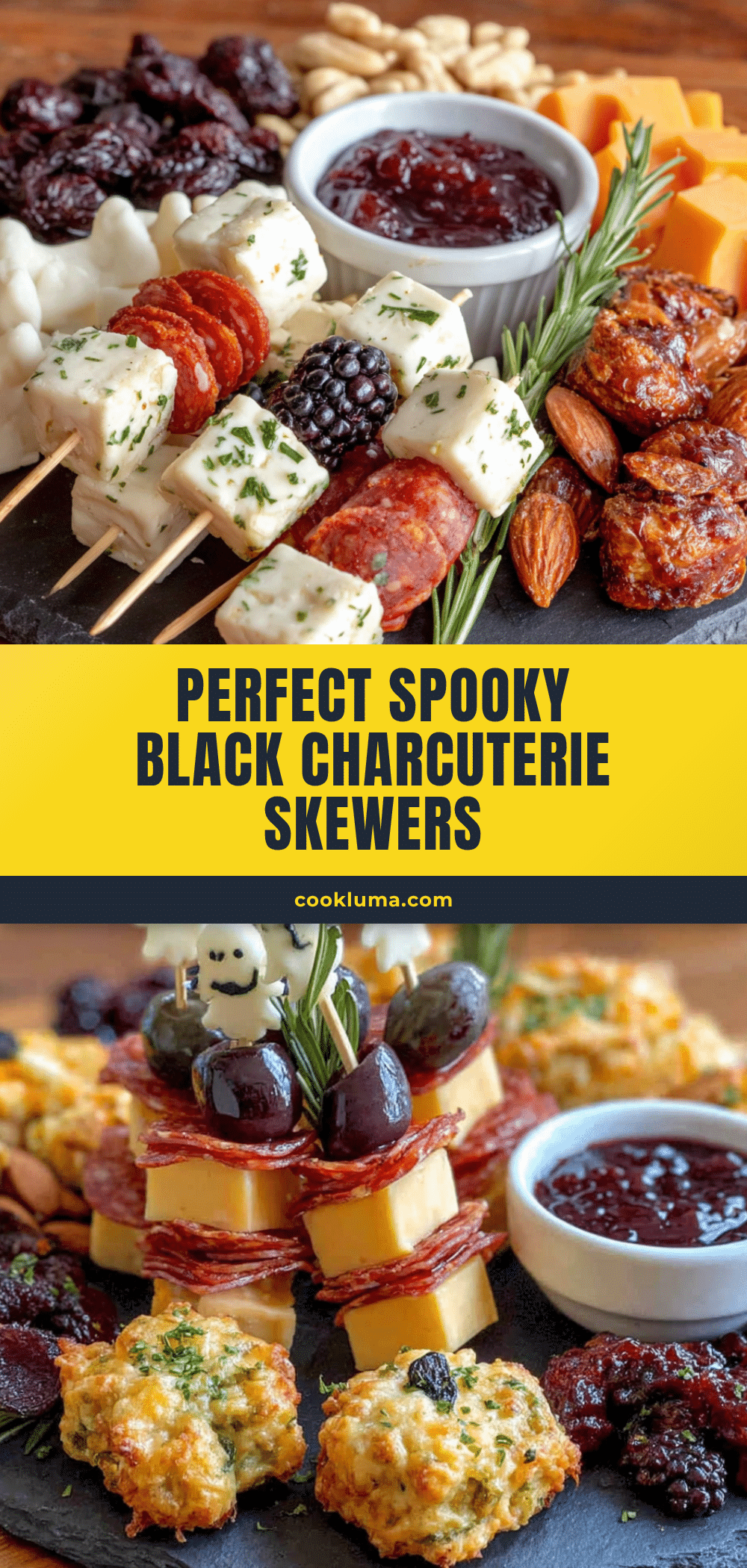
“Oh, that?” she said when I asked, barely glancing up. “Just throwing together some stuff for a Halloween thing later.” She shrugged like it was nothing—like she hadn’t just created a platter that looked like it belonged at a gothic castle feast. The black crackers, the inky dips, the little skewers standing upright like tiny, edible tombstones. I mean, honestly, I almost forgot why I’d come over. I just stood there, taking it all in, while she casually handed me a skewer and said, “Here, try one. Don’t judge the look, it tastes better than it looks.” But it looked incredible.
That’s the thing about recipes you stumble into, isn’t it? You’re not looking for them. They find you. And this one—these perfect spooky black charcuterie board skewers—stayed with me. I kept thinking about how effortless she made it seem, how she didn’t bat an eye at the black food coloring or the way the cheese cubes looked like little charcoal gems. She just assembled it like she’d been doing it her whole life. Maybe you’ve been there, watching someone make something extraordinary look like the most ordinary thing in the world. That’s what this recipe is. It’s the kind of appetizer that makes people stop mid-conversation and say, “Wait, what is THAT?”
Why You’ll Love This Recipe
Let me tell you why these black charcuterie skewers have become my secret weapon for every fall gathering, Halloween party, and spooky-season get-together. I’ve tested this recipe about six times now—tweaking the cheese combinations, figuring out which crackers hold up best, and learning exactly how much black food coloring to use without turning everything into a science experiment gone wrong. Here’s what makes them stand out:
- Insanely Easy to Assemble : We’re talking 15 minutes of active prep time, maybe 20 if you’re being particular about how the cheese cubes look. Perfect for those last-minute party invites or when you realize the potluck is tomorrow and you promised to bring something impressive.
- Simple Ingredients, Maximum Drama : No weird specialty items here. You’re using regular cheese, crackers, meats, and veggies—just with a little black makeover. Your grocery list won’t look any stranger than usual, I promise.
- Perfect for Halloween Hosting : This is the dish that gets photographed. It’s the one people crowd around and ask for the recipe. Whether it’s a costume party, a spooky movie night, or a casual gathering of friends, these skewers set the tone without trying too hard.
- Crowd-Pleasing Flavors : Despite the gothic appearance, the taste is totally approachable. Smoky, salty, creamy, crunchy—all the good stuff people love on a charcuterie board, just with a darker wardrobe.
- Make-Ahead Friendly : You can prep everything the night before and assemble in minutes before guests arrive. Which, let’s face it, is the real magic of hosting without losing your mind.
What makes this recipe different from every other Halloween appetizer out there is the balance between spooky and actually delicious. Some themed recipes lean so hard on the visual gimmick that they forget to taste good. Not these. The black coloring is subtle enough that it doesn’t affect flavor, and the ingredient combinations are genuinely satisfying. It’s the kind of appetizer that makes you close your eyes after the first bite—even if you’re wearing a vampire cape.
What Ingredients You Will Need
This recipe uses simple, wholesome ingredients to deliver bold flavor and dramatic presentation without the fuss. Most of these are pantry staples or easy-to-find items at any grocery store. The magic is in how you prepare them.
For the Skewers Base
- 8 ounces sharp cheddar cheese , cut into ¾-inch cubes (use block cheese, not pre-shredded—it holds up better on skewers and absorbs color more evenly)
- 8 ounces mozzarella cheese , cut into ¾-inch cubes (fresh mozzarella pearls work great too, just pat them dry first)
- 6 ounces salami , sliced into bite-sized pieces (I prefer Genoa salami for its peppery kick)
- 6 ounces pepperoni , sliced into bite-sized pieces (the slight spice cuts through the richness nicely)
- 1 cup black olives , pitted (kalamata or regular black, your call—both work beautifully)
- 1 cup cherry tomatoes (optional, for color contrast—though we’ll be making them black too)
- 1 cup cucumber , cut into thick rounds (adds a fresh crunch that balances the salty meats)
For the Black Coloring
- 1-2 tablespoons activated charcoal powder (food-grade, available at most grocery stores or online—this is what gives everything that deep, spooky black hue)
- 1 tablespoon olive oil (helps the charcoal powder adhere to ingredients evenly)
- 1 teaspoon water (to thin the mixture if needed)
For the Board Accompaniments
- 1 box black crackers (look for squid ink crackers or charcoal crackers—I’ve found them at Trader Joe’s and specialty markets)
- ½ cup black dip (store-bought black bean dip works perfectly, or you can make your own with black beans and spices)
- Fresh herbs for garnish (rosemary sprigs look like little trees and add a nice contrast to the black theme)
- Edible glitter or silver dust (optional, for that extra wow factor—trust me, it photographs beautifully)
Ingredient Selection Tips
I recommend using Tillamook or Cabot for the cheddar—they cube nicely and have that sharp, tangy flavor that stands up to the charcoal without getting lost. For the mozzarella, fresh BelGioioso pearls are my go-to because they’re already portioned and have a soft, creamy texture that contrasts beautifully with the firmer cheddar. If you can’t find black crackers, regular water crackers work fine—just give them a light dusting of charcoal powder before serving.
For substitutions, this recipe is incredibly flexible. Use dairy-free cheese if needed (just note that it might not absorb the black coloring as evenly). Swap the salami for turkey pepperoni or even roasted red peppers for a vegetarian option. The key is keeping the variety of textures—creamy, crunchy, chewy, crisp—so every bite feels different.
Equipment Needed
- Wooden or bamboo skewers (6-inch ones work best—long enough to hold several pieces but short enough to look cute on a board)
- Large serving board or platter (a wooden cutting board or slate board gives that rustic-spooky vibe)
- Small mixing bowl (for the charcoal paste)
- Pastry brush (for applying the black coloring evenly)
- Sharp knife and cutting board (for cubing cheese and slicing vegetables)
- Paper towels (for patting ingredients dry before coloring)
- Small ramekins or bowls (for dips and garnishes)
I’ve made these skewers with everything from fancy cheese knives to a regular old paring knife from my college days, and honestly, the equipment doesn’t matter much. The one thing I’d splurge on is a good pastry brush—the cheap ones shed bristles and you don’t want little black hairs sticking to your cheese cubes. Ask me how I know. Also, if you don’t have wooden skewers, toothpicks work in a pinch—just make the pieces smaller so everything fits.
Preparation Method
- Prep all your ingredients first (10 minutes). Cut the cheddar and mozzarella into ¾-inch cubes. Slice the salami and pepperoni into bite-sized pieces. Cut the cucumber into thick rounds. Pat everything dry with paper towels—this is crucial because wet ingredients won’t hold the charcoal coloring evenly. I learned this the hard way when my first batch looked patchy and gray instead of sleek and black.
- Make the black coloring mixture (2 minutes). In a small bowl, combine 1 tablespoon activated charcoal powder with 1 tablespoon olive oil and 1 teaspoon water. Stir until you get a smooth, inky paste that’s about the consistency of thick paint. Add more water a drop at a time if it’s too thick, or more charcoal if it’s too thin. You want it spreadable but not runny.
- Color the cheese cubes (5 minutes). Using your pastry brush, lightly coat each cheese cube with the charcoal mixture. Don’t drench them—you want a thin, even layer that covers the surface without pooling. Place the colored cubes on a parchment-lined tray to dry slightly. Repeat with the mozzarella, being gentler since it’s softer. I usually do the cheddar first because it’s firmer and easier to handle.
- Color the vegetables (3 minutes). Brush the charcoal mixture onto the cucumber rounds and cherry tomatoes (if using). For the olives, they’re already dark, but a light brush of the mixture gives them that uniform, almost eerie black sheen that looks amazing on the board. Let everything rest for 5 minutes so the color sets.
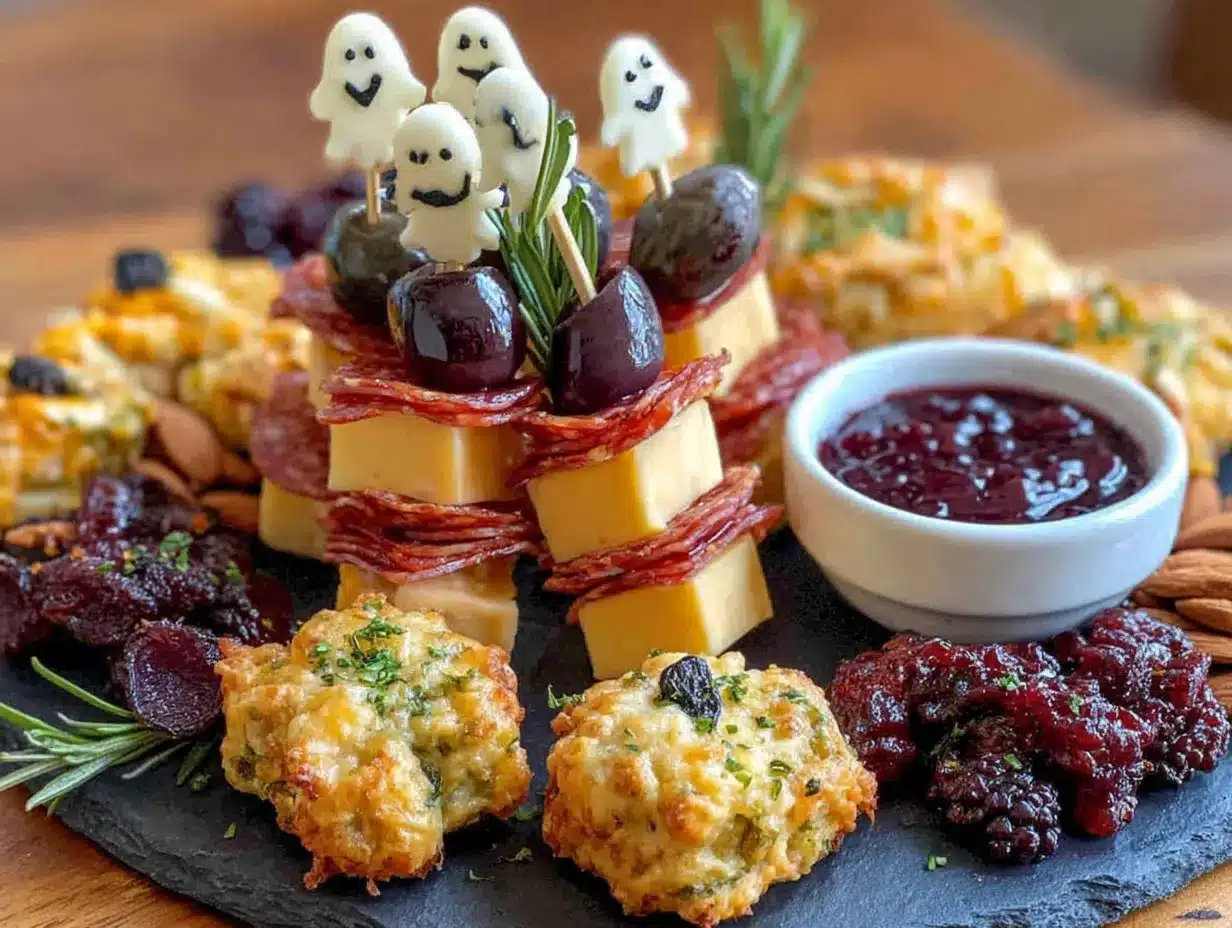
- Assemble the skewers (10 minutes). This is the fun part. Take a wooden skewer and start threading: a cube of black cheddar, a folded slice of salami, a black olive, a cube of black mozzarella, a piece of pepperoni, and a black cucumber round. Repeat this pattern, or mix it up—there’s no wrong way to do it. I like to keep some variety so every skewer feels like a little surprise. Aim for 5-6 pieces per skewer, leaving about an inch at the bottom for handling.
- Arrange the board (5 minutes). Place your black crackers in clusters around the board. Set the ramekins of black dip in strategic spots—maybe one in the center and one off to the side. Arrange the skewers in rows, fanning them out like a deck of cards, or stick them upright into a small pumpkin or hollowed-out bell pepper for that dramatic “graveyard” look. Tuck fresh rosemary sprigs between the skewers for color contrast.
- Final touches (2 minutes). If you’re using edible glitter or silver dust, lightly sprinkle it over the board just before serving. It catches the light and makes everything look magical—like something out of a Halloween fantasy. Add a few extra olives and cheese cubes scattered around for people who want to graze without skewers.
The total active time is about 35 minutes, but you can prep the cheese and vegetables the night before and just assemble before guests arrive. The skewers hold up well for a few hours at room temperature, so you can set them out and let people help themselves.
Cooking Tips & Techniques
Here’s where I share the hard-earned lessons from my many attempts at perfecting these spooky skewers. Because let me tell you, my first batch looked like something that had been through a washing machine with a black sock—patchy, sad, and not at all appetizing.
Don’t overdo the charcoal. A little goes a long way. Too much and your cheese will taste bitter and chalky. The goal is a thin, even coating that looks dramatic but doesn’t overpower the flavor. I use about 1 tablespoon for every 8 ounces of cheese, and I always taste-test one cube before committing to the whole batch.
Pat everything bone-dry. This is non-negotiable. Moisture is the enemy of the charcoal mixture. If your cheese cubes are even slightly damp, the black coating will slide right off and pool at the bottom of your tray. I pat each cube individually with a paper towel before brushing. Yes, it’s tedious. Yes, it’s worth it.
Work in small batches. Don’t try to color all the cheese at once. Do 4-5 cubes at a time, brush them, set them aside, and move on. This keeps the mixture from drying out and gives you more control over the coverage. Plus, if you mess up a few, you haven’t ruined the whole batch.
Let the color set before assembling. Give the colored ingredients at least 5 minutes to dry on a parchment-lined tray. If you try to thread them onto skewers while they’re still wet, the black will smear onto your hands and everything else. I learned this while hosting a party and ended up with black fingerprints all over my white serving board. Not my finest moment.
Balance the flavors. Since everything is black, you’re relying on texture and taste to create variety. Make sure each skewer has a mix of creamy (cheese), chewy (meat), and crunchy (cucumber or crackers) elements. A skewer that’s all cheese gets boring fast, no matter how cool it looks.
Prep ahead strategy. Color the cheese and vegetables the night before and store them in an airtight container in the fridge. Assemble the skewers and board right before guests arrive. This saves you the frantic last-minute rush and lets you actually enjoy your own party. Trust me, your future self will thank you.
Variations & Adaptations
One of the best things about this recipe is how adaptable it is. I’ve made about a dozen variations over the past few months, and each one brings something different to the table.
Vegetarian Version: Skip the salami and pepperoni entirely and double up on the vegetables. Roasted red peppers, artichoke hearts, and grilled zucchini all take the charcoal coloring beautifully. Add some marinated tofu cubes for protein—they absorb the black color even better than cheese does.
Dairy-Free Adaptation: Use vegan cheese blocks (I like Violife or Miyoko’s) and follow the same coloring process. The texture is a bit different, but the visual effect is just as striking. Pair with vegan pepperoni or smoky tempeh strips for that same savory satisfaction.
Spicy Twist: Add a thin slice of jalapeño or serrano pepper to each skewer before threading. The heat cuts through the richness of the cheese and meat, and the green flecks peeking through the black look surprisingly beautiful. I did this for a Halloween party last year and people couldn’t get enough.
Sweet & Savory Combo: Thread a dried fig or date between the cheese and meat. The sweetness is unexpected and delightful against the smoky, salty flavors. Plus, the dark color of dried fruit means you don’t even need to color them—they already fit the spooky theme.
Seafood Option: Smoked salmon or grilled shrimp work wonderfully here. The smoky flavor pairs perfectly with the charcoal, and the texture is a nice change from the cheese-heavy skewers. Just be sure to serve these separately if anyone has shellfish allergies.
I tried a Mediterranean-inspired version last month with feta cheese, kalamata olives, and sun-dried tomatoes (all colored black, of course), and it was a hit. The tangy feta against the salty olives was such a good combination that I’ve added it to my permanent rotation.
Serving & Storage Suggestions
These skewers are best served at room temperature, so take them out of the fridge about 20 minutes before your guests arrive. The cheese softens slightly and the flavors come together beautifully. Arrange them on a dark slate board or black platter for maximum visual impact—the monochrome look is seriously stunning.
For presentation, I like to fan the skewers out in concentric circles, like a sunburst pattern, with the dip bowls in the center. Alternatively, stick them upright into a hollowed-out black bell pepper or a small pumpkin for that “graveyard” effect. Garnish with fresh rosemary sprigs, which look like little evergreen trees against the black backdrop, and scatter a few extra black olives around for good measure.
These skewers pair wonderfully with a bold red wine or a dark beer—something that matches the moody aesthetic. For non-alcoholic options, a sparkling water with blackberries or a dark grape juice fits the theme perfectly. If you’re building a full Halloween spread, serve these alongside a creamy pumpkin soup or a hearty mushroom tart.
Storage: Leftover skewers can be stored in an airtight container in the refrigerator for up to 2 days. The black coloring may dull slightly, but the flavor remains intact. To refresh them, give the cheese cubes a quick brush with a tiny bit of olive oil before serving again.
Reheating: I don’t recommend reheating these—the cheese will melt and the vegetables will get soggy. They’re designed to be served cold or at room temperature. If you want a warm option, consider serving a separate bowl of warm black bean dip alongside the skewers.
One thing I love about this recipe is that the flavors actually improve after a few hours in the fridge. The charcoal has time to meld with the cheese, and the meats absorb some of the smoky notes. So if you’re making these a day ahead, you’re actually doing yourself a favor.
Nutritional Information & Benefits
Per serving (approximately 3 skewers with accompaniments):
- Calories: 280-320
- Protein: 14g
- Fat: 22g
- Carbohydrates: 8g
- Fiber: 2g
- Sugar: 3g
- Sodium: 680mg
These values are estimates and will vary based on the specific cheeses and meats you choose. The charcoal powder itself has no calories and passes through the digestive system without being absorbed—it’s purely for color.
From a health perspective, this recipe offers a good balance of protein and healthy fats from the cheese and meats. The olives provide heart-healthy monounsaturated fats and antioxidants, while the cucumber adds hydration and a dose of vitamin K. If you’re watching your sodium intake, opt for low-sodium cheeses and meats, or increase the vegetable-to-cheese ratio on each skewer.
For those with dietary restrictions, this recipe is naturally gluten-free (just double-check your crackers and dips) and can easily be made dairy-free or vegetarian with the substitutions mentioned earlier. The charcoal used is food-grade activated charcoal, which is generally recognized as safe in small amounts, but it can interfere with medication absorption, so consult your doctor if you have concerns.
Conclusion
These perfect spooky black charcuterie board skewers have become my signature Halloween dish, and I honestly can’t imagine a fall gathering without them. They’re the recipe that makes people stop, stare, and ask, “How did you DO that?” And the best part? You get to shrug and say, “Oh, it’s nothing,” just like Maggie did that day in her kitchen. Because honestly, it really is that simple.
I love how this recipe brings people together—how they crowd around the board, comparing skewers, trying different combinations, and laughing at how ridiculous and wonderful it all looks. It’s Halloween fun at its finest, without the fake spiderwebs and plastic skeletons. Just good food, dressed up in its spookiest black, ready to steal the show.
I’d love to hear how yours turn out! Tag me in your photos, leave a comment below with your favorite variations, or share your own spooky board creations. Did you try the spicy twist? The sweet and savory combo? Did your guests freak out in the best way possible? Drop your stories in the comments—I read every single one and I’m always looking for new ideas to try.
Now go make something spooktacular. Your Halloween spread is about to get a serious upgrade.
Frequently Asked Questions
Can I make these black charcuterie skewers ahead of time?
Absolutely! You can color the cheese and vegetables up to 24 hours in advance and store them in an airtight container in the fridge. Assemble the skewers and arrange the board just before serving for the freshest presentation. The flavors actually meld nicely overnight, so your prep work pays off in taste too.
Does activated charcoal affect the taste of the cheese?
When used sparingly, activated charcoal has virtually no flavor. The key is applying a thin, even layer rather than drenching the ingredients. If you use too much, you might notice a slight earthy or chalky taste, so start with less and build up if needed. I’ve served these to dozens of people and nobody has ever commented on any off-flavors.
Where can I find activated charcoal powder for cooking?
Most grocery stores carry food-grade activated charcoal in the baking aisle or natural foods section. You can also find it at health food stores or online retailers. Just make sure the package specifically says “food-grade” or “for culinary use”—the stuff sold for skincare or gardening isn’t safe to eat.
Can I use black food coloring instead of activated charcoal?
You can, but the results won’t be as dramatic. Liquid black food coloring tends to look more gray than true black, and it can make the cheese taste slightly bitter. Gel-based black food coloring works better, but it still won’t give you that deep, matte, gothic black that charcoal provides. If you’re in a pinch, go with gel—just use it sparingly.
How many skewers does this recipe make?
This recipe yields approximately 20-24 skewers, depending on how many pieces you thread onto each one. That’s enough for a party of 8-10 people as an appetizer, or 12-15 if you’re serving other dishes alongside. Double the recipe easily if you’re hosting a larger crowd—it scales beautifully without extra effort.
Pin This Recipe!
Perfect Black Charcuterie Skewers: Easy Spooky Appetizer
These spooky black charcuterie skewers are an easy, dramatic Halloween appetizer made with cheese, meats, and vegetables coated in activated charcoal for a gothic black hue. Perfect for parties, they’re simple to assemble and packed with crowd-pleasing flavors.
- Prep Time: 15 minutes
- Cook Time: 0 minutes
- Total Time: 35 minutes
- Yield: 20-24 skewers (serves 8-10 as an appetizer) 1x
- Category: Appetizer
- Cuisine: American
Ingredients
- 8 ounces sharp cheddar cheese, cut into ¾-inch cubes
- 8 ounces mozzarella cheese, cut into ¾-inch cubes
- 6 ounces salami, sliced into bite-sized pieces
- 6 ounces pepperoni, sliced into bite-sized pieces
- 1 cup black olives, pitted
- 1 cup cherry tomatoes (optional)
- 1 cup cucumber, cut into thick rounds
- 1–2 tablespoons activated charcoal powder (food-grade)
- 1 tablespoon olive oil
- 1 teaspoon water
- 1 box black crackers (squid ink or charcoal crackers)
- ½ cup black dip (store-bought black bean dip or homemade)
- Fresh herbs for garnish (rosemary sprigs)
- Edible glitter or silver dust (optional)
Instructions
- Prep all your ingredients first (10 minutes). Cut the cheddar and mozzarella into ¾-inch cubes. Slice the salami and pepperoni into bite-sized pieces. Cut the cucumber into thick rounds. Pat everything dry with paper towels.
- Make the black coloring mixture (2 minutes). In a small bowl, combine 1 tablespoon activated charcoal powder with 1 tablespoon olive oil and 1 teaspoon water. Stir until you get a smooth, inky paste that’s about the consistency of thick paint. Add more water a drop at a time if it’s too thick, or more charcoal if it’s too thin.
- Color the cheese cubes (5 minutes). Using your pastry brush, lightly coat each cheese cube with the charcoal mixture. Don’t drench them—you want a thin, even layer that covers the surface without pooling. Place the colored cubes on a parchment-lined tray to dry slightly. Repeat with the mozzarella, being gentler since it’s softer.
- Color the vegetables (3 minutes). Brush the charcoal mixture onto the cucumber rounds and cherry tomatoes (if using). For the olives, they’re already dark, but a light brush of the mixture gives them that uniform, almost eerie black sheen. Let everything rest for 5 minutes so the color sets.
- Assemble the skewers (10 minutes). Take a wooden skewer and start threading: a cube of black cheddar, a folded slice of salami, a black olive, a cube of black mozzarella, a piece of pepperoni, and a black cucumber round. Repeat this pattern, or mix it up. Aim for 5-6 pieces per skewer, leaving about an inch at the bottom for handling.
- Arrange the board (5 minutes). Place your black crackers in clusters around the board. Set the ramekins of black dip in strategic spots. Arrange the skewers in rows, fanning them out like a deck of cards, or stick them upright into a small pumpkin or hollowed-out bell pepper. Tuck fresh rosemary sprigs between the skewers for color contrast.
- Final touches (2 minutes). If you’re using edible glitter or silver dust, lightly sprinkle it over the board just before serving. Add a few extra olives and cheese cubes scattered around for people who want to graze without skewers.
Notes
Pat ingredients bone-dry before coloring to ensure even coverage. Work in small batches when applying charcoal. Let color set for 5 minutes before assembling. Can prep cheese and vegetables up to 24 hours ahead. Serve at room temperature. Leftovers keep in the fridge for up to 2 days.
Nutrition
- Serving Size: 3 skewers with accom
- Calories: 300
- Sugar: 3
- Sodium: 680
- Fat: 22
- Carbohydrates: 8
- Fiber: 2
- Protein: 14
Keywords: Halloween appetizer, spooky charcuterie, black skewers, activated charcoal recipe, party appetizer, easy Halloween food, gothic charcuterie board