Introduction
I was standing in the canned goods aisle of my local grocery store last December when a woman walked past me carrying a single can of cream of coconut. The faint, sweet scent trailed behind her—and suddenly I was nine years old again, wedged between my Tía Carmen’s hip and the kitchen counter in her tiny apartment in the Bronx.
She was laughing at something on the radio, stirring a pot of something that smelled like Christmas in a bottle. I remember the way the evaporated milk cans clinked together when she pulled them from the cabinet. The sound was sharp and metallic, but it meant something good was coming. Honestly, I hadn’t thought about that afternoon in years. But there I stood, clutching my shopping cart, feeling the ache of a memory I could almost touch but not quite hold onto.
Tía Carmen passed when I was sixteen, and I never got her coquito recipe written down. Nobody did. Every family gathering after that, someone would try to recreate it, and every time someone would say, “It’s good, but it’s not Carmen’s.” So I made it my mission to figure it out—through trial, error, and a few phone calls to my mom who vaguely remembered “a pinch of something warm.”
This light & creamy Puerto Rican coquito is the result of about seven test batches, two very patient neighbors who acted as taste testers, and one memorable afternoon where I accidentally used sweetened condensed coconut milk instead of cream of coconut (don’t ask). It’s not exactly Tía Carmen’s—but it’s close enough that the first sip made me close my eyes. And maybe you’ve been there too, chasing a flavor from your past that you can’t quite name but can definitely feel.
Why You’ll Love This Light & Creamy Puerto Rican Coquito
Let me tell you something about traditional coquito recipes—they’re usually heavy. Delicious, absolutely, but heavy. The kind of heavy where you have one glass and suddenly need a nap. This version flips that script completely. I spent months testing ratios to get that rich, velvety texture without the gut-bomb feeling.
Here’s what makes this version stand out:
- Lighter texture, full flavor – I swapped some of the heavy cream for a blend of evaporated milk and a touch of almond milk. You get all the creamy goodness without the weight.
- Simple ingredients – No fancy liqueurs or hard-to-find spices. Everything comes from a regular grocery store. I mean it—I tested this using stuff from my corner bodega.
- Perfect for holiday gatherings – Whether you’re hosting Nochebuena or just want something festive for a cookie swap, this coquito fits right in.
- Crowd-pleaser approved – I brought a batch to my book club and three people asked for the recipe before the discussion even started. It’s that kind of drink.
- Make-ahead friendly – Actually, it gets better after a day or two in the fridge. The flavors meld together like they’re having their own little party.
The secret here is the balance. Traditional coquito can sometimes taste overwhelmingly sweet or boozy. This version lets the coconut and cinnamon shine through without shouting at you. It’s the kind of drink that makes you take a sip, pause, and say “huh—that’s really good” before reaching for another glass.
And honestly? It makes your kitchen smell incredible while you’re making it. That alone is worth the effort.
What Ingredients You Will Need
This recipe uses simple, wholesome ingredients that come together to create something truly special. Most of these are pantry staples or easy to find at any grocery store. I’ve tested variations with different brands, and I’ll share what works best.
- Cream of coconut (15 oz can) – Not to be confused with coconut cream or coconut milk. Cream of coconut is sweetened and thick. I prefer Coco López for the most consistent results, but Goya works fine too.
- Evaporated milk (12 oz can) – This gives the coquito its body without being too heavy. Look for full-fat for best texture.
- Unsweetened almond milk (1 cup) – This is my lighter alternative to heavy cream. You won’t taste the almond, I promise. You can also use oat milk or regular milk if you prefer.
- Sweetened condensed milk (14 oz can) – Adds sweetness and that silky mouthfeel. Go with Nestlé or store brand—both work well.
- White rum (1 to 1½ cups) – I typically use Bacardi or Don Q. The amount is flexible depending on how strong you want it. Start with 1 cup and adjust.
- Cinnamon sticks (2 to 3) – These infuse the coquito with warmth while it sits. Don’t skip them—they’re not just for garnish.
- Vanilla extract (2 teaspoons) – Pure vanilla makes a difference here. Imitation works but the flavor is noticeably less complex.
- Ground cinnamon (1 teaspoon) – For that initial spice hit. I like using Ceylon cinnamon for a milder, sweeter flavor.
- Ground nutmeg (½ teaspoon) – Freshly grated is amazing if you have it, but pre-ground works perfectly fine.
- Ground cloves (¼ teaspoon) – Just a pinch. Cloves are strong, and you want them as a background note, not the main event.
- Salt (a tiny pinch) – This sounds weird, I know. But salt balances sweetness and makes the other flavors pop. Trust me on this one.
Substitution notes: If you want a dairy-free version, use full-fat canned coconut milk instead of evaporated milk, and a dairy-free condensed milk alternative. The texture will be slightly different but still delicious. For a lower-sugar option, look for “lite” cream of coconut and use a sugar-free condensed milk—though I’ll be honest, the texture won’t be quite as luxurious.
Equipment Needed
You don’t need much for this recipe, which is part of why I love it. Here’s what you’ll need:
- Large saucepan or pot – For heating and mixing the ingredients. A 3-quart pot works perfectly.
- Whisk – A good sturdy whisk helps incorporate everything smoothly. I’ve used a fork in a pinch, but don’t recommend it.
- Blender or immersion blender – This is key for getting that silky, uniform texture. A regular blender works great; just let the mixture cool slightly first.
- Glass bottles or jars – For storing the coquito. Swing-top bottles look festive, but mason jars work just as well.
- Measuring cups and spoons – Precision matters with the spices. Eyeballing cloves can lead to disaster.
- Fine-mesh strainer – Optional but helpful if you want to catch any cinnamon stick bits or spice clumps.
I picked up a set of swing-top bottles from a craft store for about $12, and they make the coquito look like something you’d buy at a fancy market. But honestly, I’ve stored this in repurposed pasta sauce jars and it tasted exactly the same.
Preparation Method
- Combine the base ingredients (5 minutes) – In a large saucepan over medium heat, add the cream of coconut, evaporated milk, almond milk, and sweetened condensed milk. Whisk everything together until smooth. Don’t let it boil—just warm it through until it’s steaming slightly. This usually takes about 4 to 5 minutes.
- Add the spices (2 minutes) – Drop in the cinnamon sticks, ground cinnamon, nutmeg, cloves, and that tiny pinch of salt. Whisk again to distribute the spices. The kitchen should start smelling like Christmas at this point. If it doesn’t, your spices might be old—consider getting fresh ones.
- Simmer gently (10 minutes) – Reduce the heat to low and let the mixture simmer for about 10 minutes. Stir occasionally to prevent a skin from forming on top. You’ll notice the color deepening slightly and the aroma getting stronger. This is where the magic happens.
- Cool the mixture (15 to 20 minutes) – Remove the pot from heat and let it cool for about 15 to 20 minutes. Remove the cinnamon sticks with a slotted spoon or tongs. Don’t skip this step—blending hot liquid can be dangerous and messy.
- Blend until smooth (2 minutes) – Carefully pour the warm mixture into a blender. Add the vanilla extract and white rum. Blend on high for about 60 to 90 seconds until the mixture is completely smooth and slightly frothy. If you’re using an immersion blender, you can do this right in the pot.
- Strain (optional, 2 minutes) – If you want an ultra-smooth coquito, pour the blended mixture through a fine-mesh strainer into a large bowl or directly into your storage bottles. This catches any tiny spice particles that didn’t break down completely.
- Chill thoroughly (at least 4 hours, ideally overnight) – Pour the coquito into your bottles or jars and refrigerate. The flavors need time to meld together. I know it’s tempting to taste it right away, but it really does get better after a full day in the fridge.
- Shake before serving – The ingredients can separate slightly as they sit. Give the bottle a good shake before pouring. Serve cold in small glasses—coquito is rich, so a little goes a long way.
Pro tip from my third failed batch: If you notice the coquito looks grainy after chilling, don’t panic. It probably means the mixture wasn’t blended long enough or cooled too quickly. Just pour it back into the blender, add a splash of almond milk, and blend again. Problem solved.
Cooking Tips & Techniques
I’ve made this recipe about fifteen times now, and I’ve learned a few things the hard way. Let me save you some trouble.
Don’t boil the milk mixture. I know it’s tempting to crank up the heat to speed things along, but boiling can cause the dairy to separate or develop a weird texture. Keep it at a gentle simmer—bubbles should barely break the surface.
Toast your spices for deeper flavor. Here’s a trick I picked up from a chef friend: before adding the cinnamon sticks to the pot, toast them in a dry skillet for about 30 seconds per side. It releases the essential oils and makes the cinnamon flavor more pronounced. Same goes for whole cloves if you’re using them.
Room temperature ingredients blend better. If your canned ingredients are cold from the pantry, the mixture takes longer to heat evenly. Let them sit on the counter for about 20 minutes before you start. I learned this after my first batch came out slightly lumpy because the cold condensed milk didn’t incorporate properly.
Taste as you go. Everyone’s palate is different. I like my coquito with a bit more cinnamon, but my neighbor prefers extra rum. After you add the rum but before you chill it, dip a spoon in and taste it. Adjust the spices or sweetness then, not after it’s been sitting in the fridge.
Batch consistency matters. If you’re making a double batch, don’t just double everything and hope for the best. Make two separate batches and combine them. Large quantities are harder to heat evenly, and you might end up with scorched milk at the bottom of the pot. Speaking from experience here.
Variations & Adaptations
One of the best things about this recipe is how flexible it is. Here are some variations I’ve tried and loved:
Vegan coquito: Replace evaporated milk with full-fat canned coconut milk, use oat milk instead of almond milk, and swap sweetened condensed milk with a dairy-free version. The texture is slightly thicker but still delicious. I made this for a friend with dairy allergies and she nearly cried.
Spiced rum version: Swap the white rum for spiced rum like Captain Morgan or Kraken. The extra vanilla and cinnamon notes in the rum complement the existing spices beautifully. Just be aware that spiced rum adds its own sweetness, so you might want to reduce the sugar slightly.
Extra creamy (but still light): Add half a ripe banana to the blender when you blend the mixture. It sounds weird, I know. But the banana adds creaminess without dairy, and the flavor blends in so well you won’t even taste it. My kids actually prefer this version.
Low-sugar option: Use “lite” cream of coconut and a sugar-free sweetened condensed milk. The texture won’t be quite as luxurious, but it’s still very good. I add an extra splash of vanilla to compensate for the reduced sweetness.
Non-alcoholic version: Simply omit the rum and add an extra ½ cup of almond milk or coconut water to maintain the right consistency. It’s still creamy and festive—perfect for kids or designated drivers.
Chocolate coquito: Add ¼ cup of unsweetened cocoa powder to the blender. This turns it into a sort of coconut hot chocolate situation that’s absolutely dangerous. I brought this to a holiday party and it disappeared in twenty minutes.
Serving & Storage Suggestions
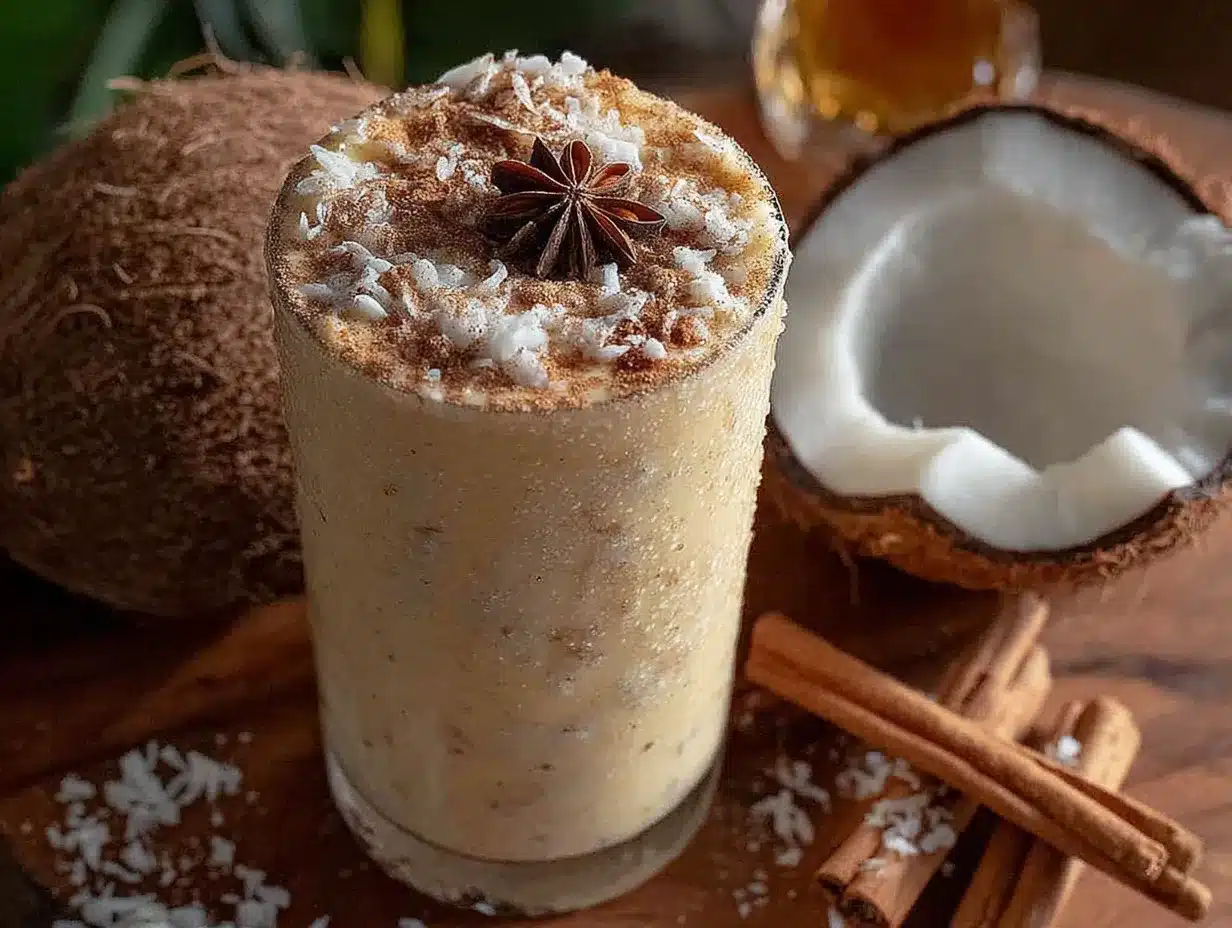
Coquito is traditionally served cold in small glasses—think shot glasses or small juice glasses. The richness means you don’t need a full cup to feel satisfied. I like to serve mine with a cinnamon stick in each glass and a light dusting of ground nutmeg on top.
For a festive touch, rim the glasses with toasted coconut flakes. Just dip the rim in a bit of honey and then into toasted coconut. It looks impressive but takes about thirty seconds.
What to serve with it: Coquito pairs beautifully with biscoff bread pudding for a holiday dessert spread. It’s also wonderful alongside baked pumpkin donuts for a cozy weekend brunch. For a savory contrast, try it with crispy garlic chicken—the sweet creaminess balances the savory garlic perfectly.
Storage: Keep the coquito in sealed glass bottles or jars in the refrigerator. It will stay fresh for up to 2 weeks—though in my house, it never lasts that long. The flavors actually improve after the first 24 hours, so making it a day ahead is ideal.
Can you freeze it? Yes! Pour the coquito into freezer-safe containers, leaving about an inch of headroom for expansion. It will keep for up to 3 months. Thaw in the refrigerator overnight and shake well before serving. The texture might be slightly different after freezing, but it’s still delicious.
Reheating note: Don’t microwave coquito. It can cause the dairy to separate. If you prefer it warm, gently heat it in a saucepan over low heat, stirring constantly. But honestly, it’s best served cold.
Nutritional Information & Benefits
Here’s the thing about coquito—it’s a treat, not a health drink. But this lighter version does have some redeeming qualities compared to traditional recipes.
| Nutrient | Per Serving (4 oz) |
|---|---|
| Calories | 210 |
| Total Fat | 9g |
| Saturated Fat | 6g |
| Carbohydrates | 28g |
| Sugar | 24g |
| Protein | 3g |
| Sodium | 85mg |
Coconut contains medium-chain triglycerides (MCTs), which some studies suggest may support metabolism. The cinnamon in this recipe has anti-inflammatory properties and can help regulate blood sugar. And honestly? The mental health benefits of sipping something that reminds you of family and celebration are real—even if they don’t show up on a nutrition label.
This recipe is gluten-free and can be made dairy-free with the substitutions I mentioned. It does contain tree nuts if you use almond milk, so keep that in mind for allergies. The rum content means this isn’t suitable for children or those avoiding alcohol unless you make the non-alcoholic version.
I’m not here to pretend coquito is a health food. But I do believe that enjoying something special in moderation is part of a balanced life. One small glass after dinner? That’s self-care, not indulgence.
Conclusion
This light & creamy Puerto Rican coquito isn’t just a drink—it’s a connection to family, to memories, to the way Christmas smelled in my Tía Carmen’s kitchen all those years ago. Every time I make it, I think about her laughing at the radio, stirring that pot with a wooden spoon, and telling me to “wait, mija, it’s not ready yet.”
I hope this recipe becomes that for you too. Maybe it reminds you of your own family traditions. Maybe it starts a new one. Maybe you just want something delicious to sip while you wrap presents or watch holiday movies. Whatever your reason, I promise this coquito delivers.
If you try this recipe, I’d love to hear about it. Leave a comment below and tell me how it turned out—did you add extra cinnamon? Use spiced rum? Make it for a party? Share your adaptations and let’s keep the tradition alive. And if you have a family recipe story of your own, I’d love to read that too.
Now go make some coquito. Your holiday season is about to get a whole lot more delicious.
Frequently Asked Questions
Can I make coquito without alcohol?
Absolutely! Simply omit the rum and add an extra ½ cup of almond milk or coconut water to maintain the right consistency. It’s still creamy and delicious—perfect for kids or anyone avoiding alcohol.
How long does homemade coquito last in the fridge?
Stored in a sealed bottle or jar, this coquito stays fresh for up to 2 weeks in the refrigerator. The flavors actually improve after the first 24 hours, so making it ahead is a great idea.
Why did my coquito separate after chilling?
Separation is normal! The ingredients can naturally separate as they sit. Just give the bottle a good shake before serving, and it will come right back together. If it’s grainy, it might need more blending time.
Can I use coconut milk instead of cream of coconut?
You can, but the result will be much less sweet and less creamy. Cream of coconut has added sugar and thickeners that give coquito its signature texture. If you use coconut milk, you’ll need to add extra sweetener and maybe a thickener like cornstarch.
What’s the best rum for coquito?
I recommend a good quality white rum like Bacardi or Don Q. Spiced rum works too but adds extra sweetness and flavor notes. Avoid dark or aged rums as their strong flavor can overpower the coconut and spices.
Pin This Recipe!
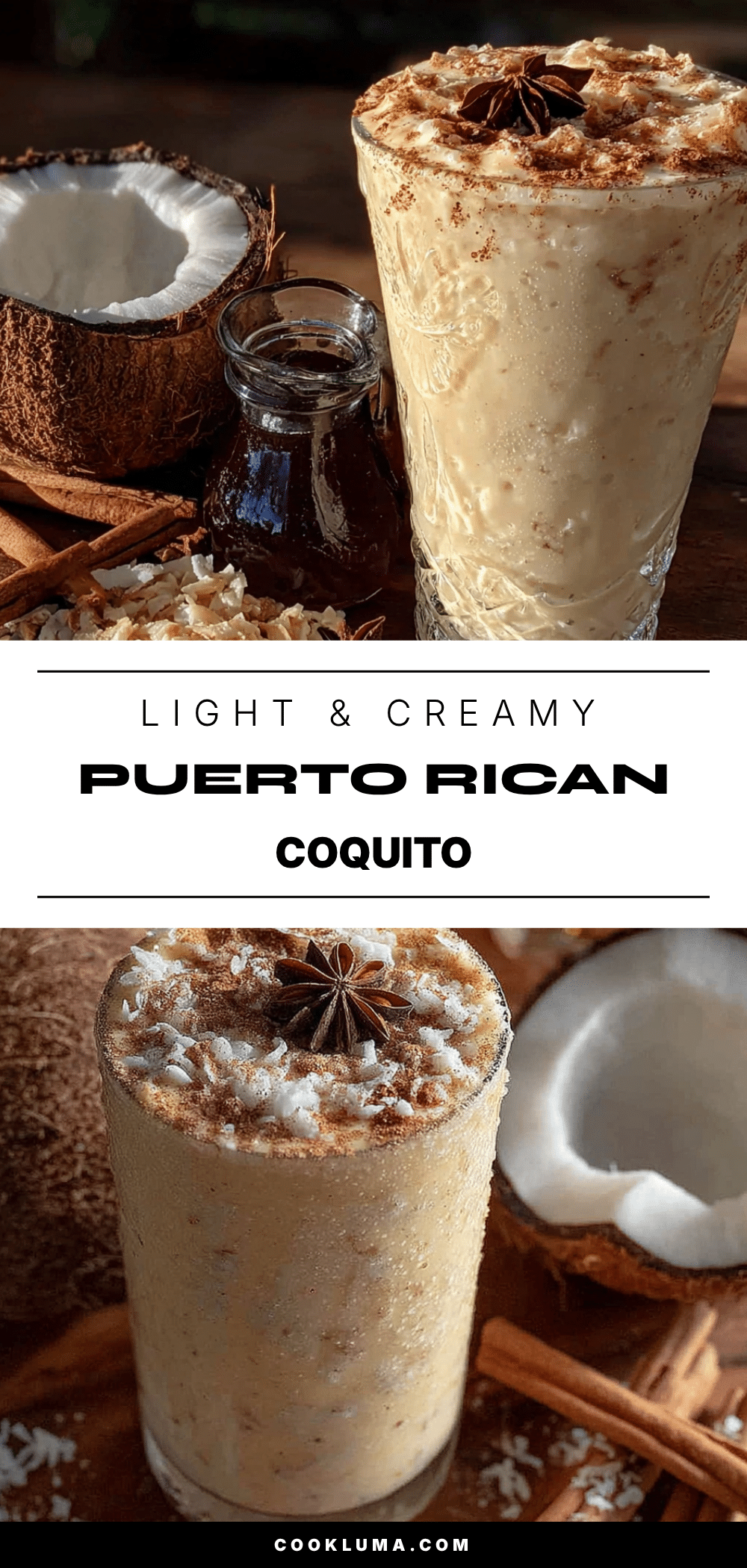
Light & Creamy Puerto Rican Coquito – Best Family Recipe
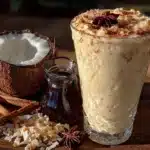
A lighter, creamier version of the classic Puerto Rican coquito, this recipe captures the warm, festive flavors of coconut, cinnamon, and rum without the heavy texture. Perfect for holiday gatherings, it’s a make-ahead crowd-pleaser that tastes even better after a day in the fridge.
- Prep Time: 15 minutes
- Cook Time: 15 minutes
- Total Time: 4 hours 30 minutes (includes chilling)
- Yield: 8 servings (4 oz each) 1x
- Category: Beverage
- Cuisine: Puerto Rican
Ingredients
- 15 oz cream of coconut (e.g., Coco López or Goya)
- 12 oz evaporated milk (full-fat)
- 1 cup unsweetened almond milk
- 14 oz sweetened condensed milk
- 1 to 1½ cups white rum (e.g., Bacardi or Don Q)
- 2 to 3 cinnamon sticks
- 2 teaspoons vanilla extract
- 1 teaspoon ground cinnamon
- ½ teaspoon ground nutmeg
- ¼ teaspoon ground cloves
- A tiny pinch of salt
Instructions
- Combine the base ingredients (5 minutes): In a large saucepan over medium heat, add the cream of coconut, evaporated milk, almond milk, and sweetened condensed milk. Whisk together until smooth. Warm through until steaming, about 4 to 5 minutes. Do not let it boil.
- Add the spices (2 minutes): Drop in the cinnamon sticks, ground cinnamon, nutmeg, cloves, and salt. Whisk to distribute the spices.
- Simmer gently (10 minutes): Reduce heat to low and let the mixture simmer for about 10 minutes, stirring occasionally to prevent a skin from forming.
- Cool the mixture (15 to 20 minutes): Remove from heat and let cool for 15 to 20 minutes. Remove the cinnamon sticks with a slotted spoon or tongs.
- Blend until smooth (2 minutes): Carefully pour the warm mixture into a blender. Add vanilla extract and white rum. Blend on high for 60 to 90 seconds until smooth and slightly frothy.
- Strain (optional, 2 minutes): For ultra-smooth coquito, pour through a fine-mesh strainer into storage bottles.
- Chill thoroughly (at least 4 hours, ideally overnight): Pour into bottles or jars and refrigerate. Flavors meld and improve after 24 hours.
- Shake before serving: Ingredients may separate; shake well. Serve cold in small glasses.
Notes
For best results, let ingredients come to room temperature before starting. Do not boil the milk mixture. If coquito becomes grainy after chilling, blend again with a splash of almond milk. Coquito keeps for up to 2 weeks in the refrigerator and can be frozen for up to 3 months. For a non-alcoholic version, omit rum and add ½ cup almond milk or coconut water.
Nutrition
- Serving Size: 4 oz
- Calories: 210
- Sugar: 24
- Sodium: 85
- Fat: 9
- Saturated Fat: 6
- Carbohydrates: 28
- Protein: 3
Keywords: coquito, Puerto Rican coquito, light coquito, creamy coquito, holiday drink, coconut drink, Christmas drink, rum drink, eggnog alternative