It was 9:47 PM on a rainy Thursday in October, and I was starving for something that tasted like the season but didn’t feel like a punishment. You know that feeling when you want a salad, but you also want it to be cozy? I was standing in front of my fridge, door open, cold air hitting my face, and I had exactly: half a butternut squash I’d roasted three days ago, a sad bunch of kale that was just starting to wilt, and a Granny Smith apple that was maybe a week past its prime. Honestly, I almost ordered pizza.
But something stopped me. Maybe it was the rain on the window, or the fact that I could hear my neighbor’s TV through the wall playing some old black-and-white movie. I grabbed the squash, tore the kale into pieces with my hands (no patience for a knife at that hour), and started tossing things together. I didn’t have any fancy vinaigrette, but I had apple cider vinegar and a jar of Dijon mustard that was probably older than my relationship. And you know what? It worked. I mean, it really worked.
I ate that first bowl standing at the counter, which is how you know something is good. There’s no ceremony when you’re eating alone at 10 PM. You just shovel it in and hope for the best. But this salad—this messy, thrown-together, late-night experiment—made me stop. The sweet squash against the bitter kale, the crunch of apple, the tangy dressing that woke everything up. I made it again the next day, on purpose, with better ingredients and actual measuring spoons. And then I made it for my friend Jenna, who texted me later saying, “I don’t even like salads and I ate the whole thing.”
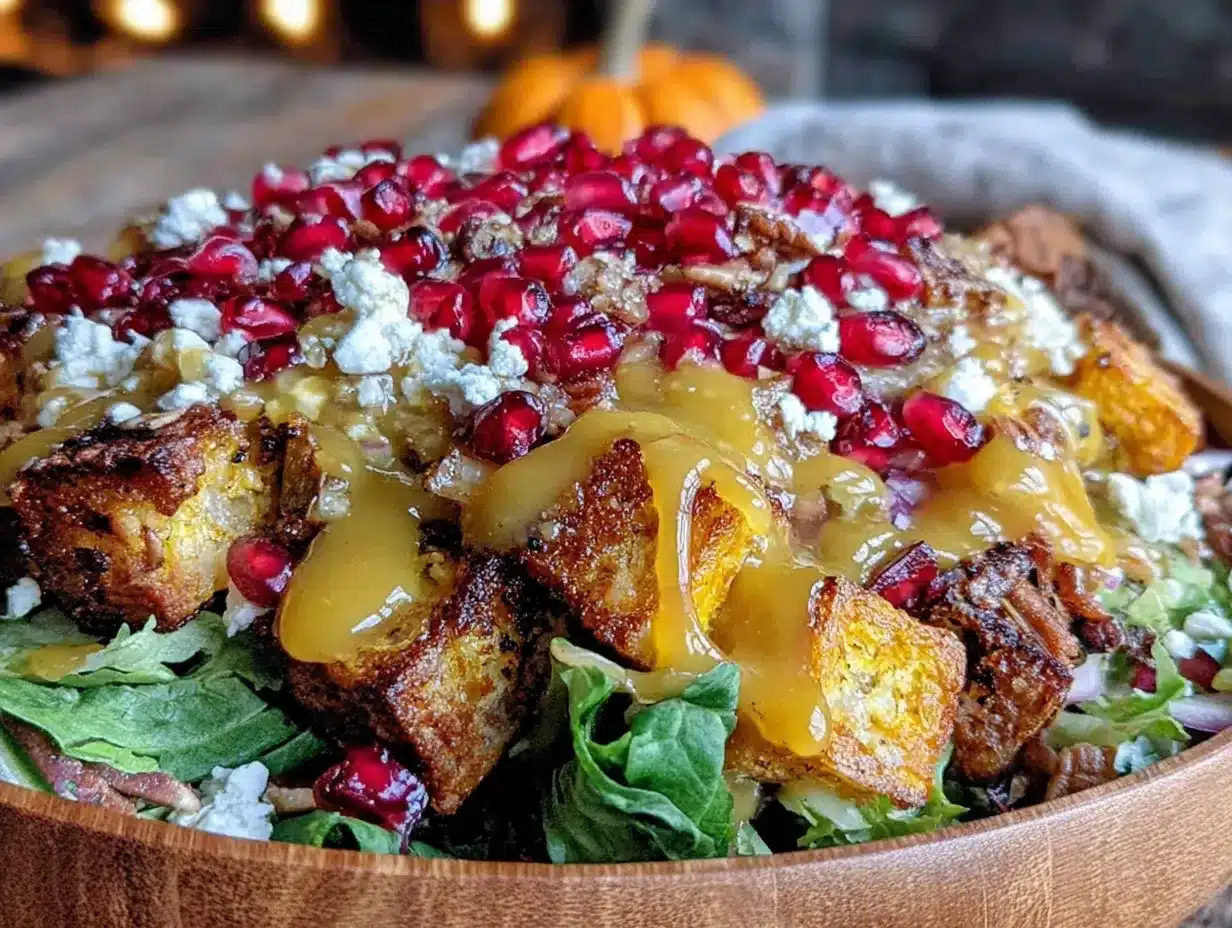
That’s the thing about this Wholesome Fall Harvest Salad with Apple Cider Vinaigrette. It’s not trying to be fancy. It’s just trying to be good. And maybe you’ve been there—wanting something healthy that actually tastes like you put effort into it, without spending two hours in the kitchen. This is that recipe. The one that stays with you, the one you keep making because it just works.
Why You’ll Love This Recipe
Let me be honest with you: I’ve made a lot of salads in my time. Some were good, some were forgettable, and some were the kind you force yourself to eat because you’re “being healthy.” This one isn’t any of those. This Easy Fall Harvest Salad with Apple Cider Vinaigrette is the salad I actually crave. Not because it’s good for me (though it is), but because every single bite is interesting. The textures, the flavors, the way the dressing clings to everything just right.
- Quick & Easy: From start to finish, this comes together in about 20 minutes. Roast the squash ahead of time, and you’re looking at a 10-minute assembly. Perfect for those nights when you want something real but don’t have the energy for a production.
- Simple Ingredients: No trips to specialty stores. You probably have most of this in your kitchen right now. Kale, apple, squash, pecans, cheese. The dressing uses stuff you already have in your pantry.
- Perfect for Fall Gatherings: Thanksgiving, Friendsgiving, Sunday dinner, meal prep for the week. This salad holds up beautifully and actually gets better as it sits. The kale doesn’t get sad and wilted like lettuce would.
- Crowd-Pleaser: I’ve served this to people who “don’t like kale” and watched them go back for seconds. There’s something about the combination that just works. The sweet, the tangy, the crunchy, the creamy.
- Unbelievably Delicious: Here’s the thing—this isn’t a “good for a salad” salad. This is just a good dish, period. The flavors are balanced, the textures are varied, and the dressing ties it all together in a way that feels intentional, not thrown together.
What makes this recipe different from all the other fall salads out there? It’s the technique. Most people dress kale and let it sit for five minutes. I massage the kale with a little olive oil and salt first. It sounds weird, I know, but trust me. It transforms the texture from tough and chewy to tender and silky. It’s a game-changer, and once you try it, you’ll never go back. This isn’t just another version of a fall salad. It’s the best version.
What Ingredients You Will Need
This recipe uses simple, wholesome ingredients that come together to create something truly special. Most of these are fall pantry staples, which means you can probably make this right now without a trip to the store. Here’s what you’ll need and why each one matters.
For the Salad
- Kale, 1 large bunch, stems removed and leaves torn into bite-sized pieces (I prefer lacinato kale, also called dinosaur kale—it’s more tender and has a slightly sweeter flavor than curly kale)
- Butternut squash, 2 cups, peeled and cubed into 1/2-inch pieces (look for squash that feels heavy for its size and has a solid, tan skin without soft spots)
- Granny Smith apple, 1 large, thinly sliced or cut into matchsticks (the tartness balances the sweetness of the squash and dressing)
- Dried cranberries, 1/3 cup (I prefer Craisins or a brand without added sugar if you can find them)
- Pecans, 1/2 cup, roughly chopped and toasted (toasting brings out their natural oils and makes them incredibly crunchy)
- Feta cheese, 1/3 cup, crumbled (or goat cheese if you prefer something creamier and tangier)
- Olive oil, 2 tablespoons, for massaging the kale (use a good quality extra virgin here—it makes a difference)
- Salt and black pepper, to taste
For the Apple Cider Vinaigrette
- Apple cider vinegar, 1/4 cup (this is the star of the dressing—don’t substitute with white vinegar or you’ll lose the fall flavor)
- Dijon mustard, 1 tablespoon (acts as an emulsifier to help the dressing stay together and adds a subtle tang)
- Honey or maple syrup, 1 tablespoon (use maple for a deeper, more autumnal sweetness)
- Shallot, 1 small, finely minced (about 1 tablespoon—this adds a mild onion flavor without being overpowering)
- Olive oil, 1/3 cup, extra virgin
- Salt, 1/4 teaspoon
- Black pepper, 1/8 teaspoon, freshly ground
Substitution Notes
If you’re dairy-free, skip the feta or use a vegan feta alternative. For a nut-free version, swap the pecans for pumpkin seeds or sunflower seeds. You can also use sweet potatoes instead of butternut squash—just adjust the roasting time slightly. And if you don’t have apple cider vinegar, you can use white wine vinegar with a tiny splash of apple juice, but honestly, the apple cider vinegar is worth getting for this one.
Equipment Needed
You don’t need a professional kitchen to make this salad. Here’s what you’ll actually use:
- Baking sheet, 1 large, rimmed (for roasting the squash—I’ve used the same beat-up one for years and it works perfectly)
- Parchment paper or silicone baking mat, for easy cleanup (trust me, roasted squash sticks to everything)
- Chef’s knife and cutting board, for chopping the squash and apple (a sharp knife makes all the difference—I learned this the hard way after nearly losing a finger to a dull blade)
- Large mixing bowl, for massaging the kale and assembling the salad (you need room to get your hands in there)
- Small bowl or jar, for making the vinaigrette (a mason jar works perfectly—just shake it up)
- Whisk or fork, for mixing the dressing if you’re not using a jar
- Measuring cups and spoons, for accuracy (I know, I know, but this dressing is all about balance)
- Vegetable peeler, if you want to peel the squash (I don’t always bother, but it makes for a prettier presentation)
If you don’t have a baking sheet, a cast-iron skillet works great for roasting the squash. And if you don’t have a mason jar, any small container with a tight lid will do for shaking the dressing. I’ve used a cleaned-out jam jar more times than I can count.
Preparation Method
Alright, let’s get into the actual cooking. Or, you know, assembling. This is one of those recipes where the method matters, but it’s not complicated. Follow these steps, and you’ll have a salad that tastes like you spent way more time on it than you actually did.
Step 1: Roast the Butternut Squash
Preheat your oven to 400°F (200°C). Line a baking sheet with parchment paper. Toss the cubed butternut squash with 1 tablespoon of olive oil, a pinch of salt, and a few cracks of black pepper. Spread the squash in a single layer on the baking sheet—don’t overcrowd it, or it will steam instead of roast. Roast for 20-25 minutes, flipping halfway through, until the edges are golden brown and the squash is fork-tender. You want it to have some color, not just be soft. Let it cool completely before adding it to the salad. If you’re in a hurry, you can spread it on a plate and pop it in the fridge for 10 minutes.
Step 2: Toast the Pecans
While the squash is roasting, toast the pecans. You can do this in a dry skillet over medium heat for 3-5 minutes, stirring frequently, until they smell nutty and are slightly darkened. Or you can spread them on a separate baking sheet and toast them in the oven for 5-7 minutes. Watch them carefully—nuts go from toasted to burnt in about 30 seconds. I’ve definitely ruined a batch or two while getting distracted by my phone. Let them cool completely; they’ll get crunchier as they cool.
Step 3: Massage the Kale
This step is non-negotiable. Put your torn kale leaves in a large bowl. Drizzle with 2 tablespoons of olive oil and a pinch of salt. Now get your hands in there and massage the kale for 2-3 minutes. Really work it. You’ll feel the leaves start to soften and darken in color. They’ll shrink down by about half. This breaks down the tough fibers and makes the kale tender and almost silky. It’s weird, I know, but it works. Taste a piece—if it’s still tough, keep going for another minute.
Step 4: Make the Apple Cider Vinaigrette
In a small bowl or mason jar, combine the apple cider vinegar, Dijon mustard, honey (or maple syrup), minced shallot, salt, and pepper. Whisk together, then slowly drizzle in the olive oil while whisking constantly. If you’re using a jar, just put the lid on and shake it like you mean it. Taste and adjust—more vinegar if you like it tangier, more honey if you like it sweeter. The dressing should be well-balanced, not too sharp. Set it aside for a few minutes to let the flavors meld.
Step 5: Assemble the Salad
Add the cooled roasted squash, sliced apple, dried cranberries, toasted pecans, and crumbled feta to the bowl with the massaged kale. Drizzle with about half the vinaigrette and toss gently to combine. You want everything evenly coated, but you don’t want to crush the squash or break up the apple slices. Add more dressing as needed—you might not use all of it. Taste and adjust seasoning with salt and pepper.
Step 6: Let It Rest (Optional but Recommended)
Here’s a tip I learned from experience: let the salad sit for 5-10 minutes before serving. The kale absorbs some of the dressing, the flavors meld together, and everything becomes more cohesive. It’s even better the next day, honestly. Just don’t add the pecans until right before serving if you’re making it ahead, or they’ll get soft.
Cooking Tips & Techniques
I’ve made this salad more times than I can count, and I’ve learned a few things along the way. Some through success, some through spectacular failure. Here’s what I wish someone had told me.
Don’t skip massaging the kale. I know it sounds like a silly extra step, but it’s the difference between a salad that feels like a chore and one that feels like a treat. Massaged kale is tender, almost velvety. Unmassaged kale is like chewing on cardboard. I learned this the hard way when I served a salad at a dinner party and watched people politely struggle through it. Never again.
Cut the squash into uniform pieces. This seems obvious, but I’ve definitely been lazy and ended up with some pieces that were burnt and some that were still raw. Aim for 1/2-inch cubes. They cook evenly and are easy to eat. If your pieces are different sizes, the smaller ones will burn before the larger ones are done.
Toast your nuts. I used to skip this step because I was impatient. Then I did it once and realized what I was missing. Toasting brings out the natural oils and makes the nuts exponentially more flavorful and crunchy. It takes five minutes. Just do it.
Make the dressing ahead of time. The flavors actually get better after sitting for a few hours. I often make the vinaigrette in the morning and let it hang out in the fridge. Just bring it to room temperature and shake it up before using. The shallot mellows out and the flavors meld together beautifully.
Watch your salt. Feta is salty, the dressing has salt, and you salted the kale. It’s easy to overdo it. Taste as you go, and go easy on the salt in the dressing if you’re using a salty cheese. You can always add more, but you can’t take it out.
Don’t overdress the salad. Start with half the dressing and add more as needed. You want everything lightly coated, not swimming. The dressing should enhance the ingredients, not drown them. If you have leftover dressing, it keeps in the fridge for up to a week.
Variations & Adaptations
One of the things I love about this Easy Fall Harvest Salad with Apple Cider Vinaigrette is how flexible it is. Here are some variations I’ve tried and loved.
Make It a Meal
Add some protein to turn this into a main dish salad. Grilled chicken, roasted turkey (perfect for Thanksgiving leftovers), or crispy chickpeas all work beautifully. I’ve also added leftover roasted salmon once, and it was surprisingly good. For a vegetarian option, try adding some cooked quinoa or farro for extra heft.
Seasonal Swaps
This recipe is built for fall, but you can adapt it for other seasons. In winter, swap the apple for a pear and use pomegranate seeds instead of cranberries. In spring, try strawberries and asparagus instead of squash. In summer, peaches and grilled corn are incredible. The vinaigrette works year-round, honestly.
Dietary Adaptations
For a vegan version, skip the feta or use a vegan alternative, and use maple syrup instead of honey in the dressing. For a gluten-free option, this salad is naturally gluten-free—just double-check your dried cranberries and any add-ins. For a lower-carb version, reduce the dried cranberries and add extra pecans or pumpkin seeds.
Change the Cheese
Feta is great, but goat cheese adds a creamier texture and tangier flavor. Blue cheese crumbles are amazing if you’re into that funky, pungent thing. I once used shaved Parmesan, and it was a completely different but equally delicious salad. Experiment and see what you like.
Add Some Grains
Cooked quinoa, farro, or wild rice add texture and turn this into a heartier dish. I love adding about a cup of cooked farro—it adds a chewy texture that plays nicely with the soft squash and crunchy pecans. It’s also a great way to use up leftover grains from earlier in the week.
Serving & Storage Suggestions
This salad is versatile in how you serve it and surprisingly good at hanging around in the fridge. Here’s what I’ve learned about getting the most out of it.
Serving Temperature: I prefer this salad at room temperature, especially if the squash is freshly roasted and still slightly warm. The contrast between the warm squash, cool apple, and room-temperature kale is lovely. But it’s also great cold, straight from the fridge, on a busy weekday when you need lunch in five minutes.
Presentation: If you’re serving this for a gathering, arrange the ingredients on a large platter instead of tossing them all together. Start with a bed of massaged kale, then arrange the squash, apple slices, cranberries, pecans, and feta in rows or sections. Drizzle the dressing over the top just before serving. It looks beautiful and lets people customize their portions.
What to Serve With It: This salad pairs beautifully with roasted chicken, grilled salmon, or a hearty soup like butternut squash or tomato. For a fall-themed dinner, serve it alongside roasted pork tenderloin or a simple pasta dish. It also works as a side for Thanksgiving—it’s a fresh, bright counterpoint to all the heavy, creamy dishes.
Storage: If you’re making this ahead, keep the dressing separate and store the salad undressed. The massaged kale will keep in the fridge for 2-3 days. Store the roasted squash, apple slices, and pecans separately. When you’re ready to eat, toss everything together with the dressing. The salad will keep for about 2 days once dressed, though the apples will start to brown and the pecans will lose their crunch.
Reheating: This is a cold salad, so no reheating needed. But if you’re using leftover roasted squash that’s been in the fridge, you might want to warm it slightly in the microwave or oven before adding it to the salad. Cold squash is fine, but warm squash is better.
Flavor Development: Here’s something interesting—this salad actually gets better after sitting for a few hours. The kale absorbs the dressing and becomes more tender, and the flavors meld together. If you’re serving it at a party, make it an hour ahead and let it sit at room temperature. Just hold back the pecans until right before serving so they stay crunchy.
Nutritional Information & Benefits
I’m not a nutritionist, but I’ve done enough research to know that this salad is packed with good stuff. Here’s a rough breakdown per serving (about 1/4 of the recipe, served as a side).
| Nutrient | Amount Per Serving |
|---|---|
| Calories | 320-350 |
| Total Fat | 22g |
| Saturated Fat | 4g |
| Carbohydrates | 32g |
| Fiber | 6g |
| Sugar | 14g (mostly natural from fruit and honey) |
| Protein | 6g |
| Vitamin A | 180% DV (from the squash and kale) |
| Vitamin C | 60% DV |
| Calcium | 15% DV |
| Iron | 10% DV |
Health Benefits: Kale is a powerhouse of vitamins A, C, and K, plus it’s packed with antioxidants. Butternut squash is rich in beta-carotene (which your body converts to vitamin A) and fiber. Pecans provide healthy fats and magnesium. The apple cider vinegar in the dressing may help with blood sugar regulation. This salad is naturally gluten-free and can easily be made vegan or dairy-free. It’s a great option for anyone looking to eat more vegetables without feeling like they’re missing out on flavor.
Dietary Considerations: This recipe contains dairy (feta) and tree nuts (pecans). For a nut-free version, use pumpkin seeds. For a dairy-free version, skip the feta or use a vegan alternative. The salad is naturally low in added sugar and high in fiber, making it a good choice for blood sugar management.
Conclusion
I’ve made this Wholesome Fall Harvest Salad with Apple Cider Vinaigrette more times than I can count, and it never gets old. It’s the kind of recipe that feels special enough for company but simple enough for a Tuesday night when you just need something real. The combination of textures and flavors—the sweet roasted squash, the tart apple, the tangy dressing, the crunchy pecans, the creamy feta—it all works together in a way that’s honestly kind of magical.
What I love most about this recipe is how forgiving it is. You can swap ingredients, adjust the dressing to your taste, add protein or grains, and it still comes out delicious. It’s a template as much as a recipe, and once you make it a few times, you’ll start to develop your own version. That’s the beauty of cooking, isn’t it? Taking something good and making it yours.
I’d love to hear how this turns out for you. Did you add something unexpected? Did you make a substitution that worked better than the original? Leave a comment below and let me know. And if you share it on social media, tag me—I want to see your beautiful fall salads. Seriously, it makes my day. Now go make some dinner. You deserve something delicious.
Frequently Asked Questions
Can I make this salad ahead of time?
Yes, but with a few caveats. You can roast the squash, toast the pecans, and make the dressing up to 3 days ahead. Store everything separately in the fridge. Massage the kale and slice the apple on the day you’re serving. When you’re ready to eat, toss everything together with the dressing. The salad is best within 2 hours of being dressed.
What can I use instead of kale?
If you’re not a kale fan, you can use mixed greens, baby spinach, or arugula. Keep in mind that these greens are more delicate and won’t hold up as well to dressing or storage. If you’re using spinach or arugula, skip the massaging step and dress the salad right before serving. The salad won’t last as long in the fridge, but it’ll still be delicious.
Can I use a different type of squash?
Absolutely. Acorn squash, delicata squash, or even sweet potatoes work beautifully in this salad. If you’re using delicata, you don’t even need to peel it—the skin is tender and edible. Just slice it into half-moons and roast. Adjust the roasting time based on the squash you choose; different varieties cook at different rates.
How do I keep the apples from browning?
Toss the sliced apples in a little lemon juice or apple cider vinegar before adding them to the salad. This will slow down the oxidation process and keep them looking fresh. Alternatively, slice the apples right before serving and don’t stress too much about it—they’ll still taste great even if they’re a little brown.
Is this salad good for meal prep?
Yes, but with some strategy. Prep all the components separately and store them in individual containers in the fridge. Massage the kale and store it in a container lined with paper towels to absorb excess moisture. Keep the dressing in a small jar. When you’re ready to eat, just toss everything together. The components will last 3-4 days in the fridge. Just don’t add the pecans until you’re ready to eat, or they’ll get soft.
Pin This Recipe!
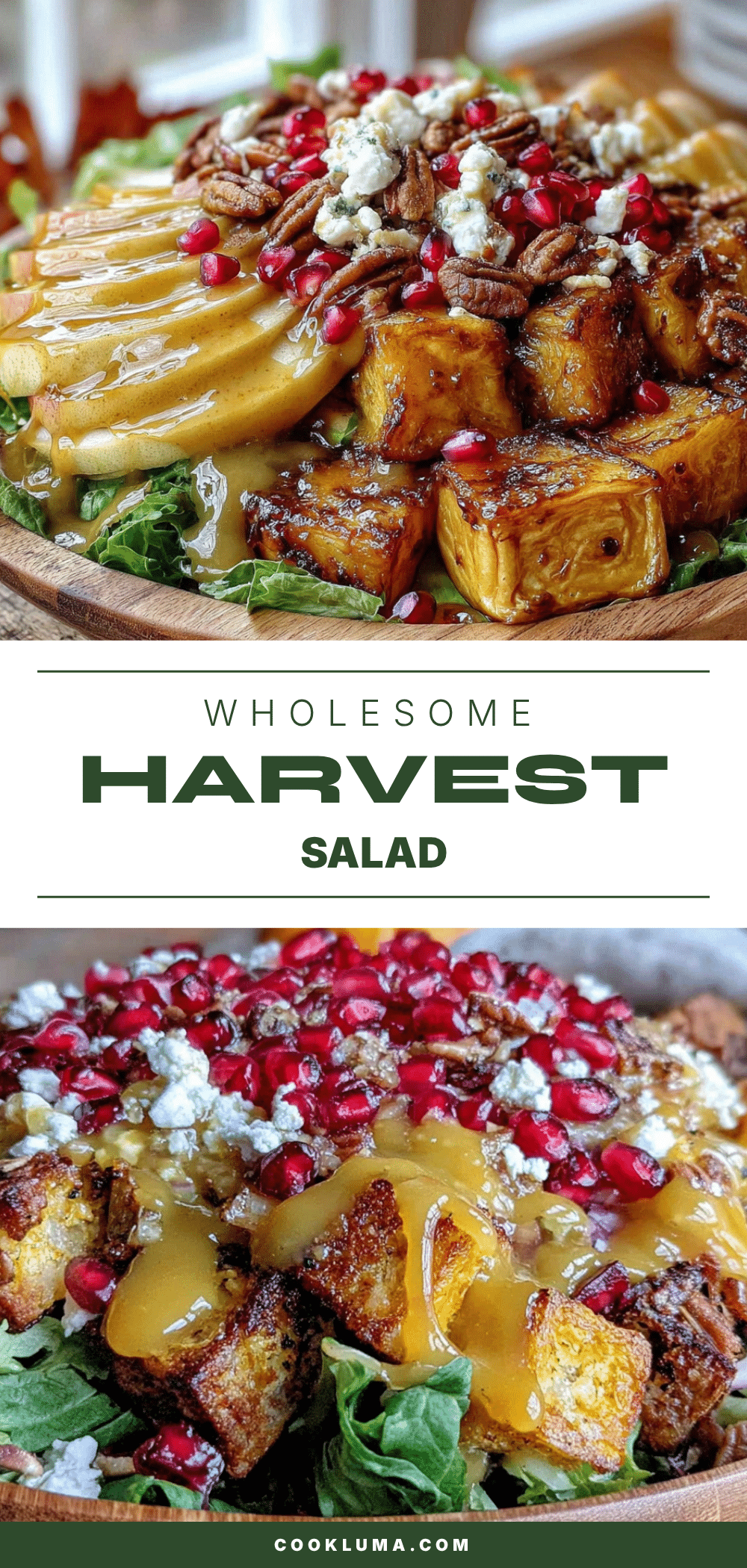
Easy Fall Harvest Salad with Apple Cider Vinaigrette
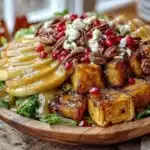
A cozy, quick, and delicious fall salad featuring roasted butternut squash, massaged kale, tart apple, toasted pecans, and a tangy apple cider vinaigrette. Perfect for weeknights or holiday gatherings.
- Prep Time: 15 minutes
- Cook Time: 25 minutes
- Total Time: 40 minutes
- Yield: 4 servings 1x
- Category: Salad
- Cuisine: American
Ingredients
- 1 large bunch kale, stems removed and leaves torn into bite-sized pieces
- 2 cups butternut squash, peeled and cubed into 1/2-inch pieces
- 1 large Granny Smith apple, thinly sliced or cut into matchsticks
- 1/3 cup dried cranberries
- 1/2 cup pecans, roughly chopped and toasted
- 1/3 cup feta cheese, crumbled
- 2 tablespoons olive oil, for massaging the kale
- Salt and black pepper, to taste
- 1/4 cup apple cider vinegar
- 1 tablespoon Dijon mustard
- 1 tablespoon honey or maple syrup
- 1 small shallot, finely minced (about 1 tablespoon)
- 1/3 cup extra virgin olive oil
- 1/4 teaspoon salt
- 1/8 teaspoon freshly ground black pepper
Instructions
- Preheat oven to 400°F (200°C). Line a baking sheet with parchment paper. Toss cubed butternut squash with 1 tablespoon olive oil, a pinch of salt, and black pepper. Spread in a single layer on the baking sheet. Roast for 20-25 minutes, flipping halfway, until golden brown and fork-tender. Let cool completely.
- While squash roasts, toast pecans in a dry skillet over medium heat for 3-5 minutes, stirring frequently, until fragrant and slightly darkened. Let cool.
- Place torn kale in a large bowl. Drizzle with 2 tablespoons olive oil and a pinch of salt. Massage with your hands for 2-3 minutes until leaves soften and darken.
- In a small bowl or mason jar, combine apple cider vinegar, Dijon mustard, honey or maple syrup, minced shallot, 1/4 teaspoon salt, and 1/8 teaspoon pepper. Whisk together, then slowly drizzle in 1/3 cup olive oil while whisking constantly. Alternatively, shake in a jar. Adjust seasoning to taste.
- Add cooled roasted squash, sliced apple, dried cranberries, toasted pecans, and crumbled feta to the bowl with massaged kale. Drizzle with about half the vinaigrette and toss gently. Add more dressing as needed. Season with salt and pepper to taste.
- Let salad rest for 5-10 minutes before serving to allow flavors to meld. If making ahead, add pecans just before serving to maintain crunch.
Notes
Massaging the kale is essential for tenderness. Toast nuts for best flavor. Make dressing ahead for better flavor. Watch salt as feta is salty. Start with half the dressing and add more as needed. Salad keeps for 2 days once dressed, but apples may brown and pecans lose crunch.
Nutrition
- Serving Size: 1/4 of recipe
- Calories: 335
- Sugar: 14
- Sodium: 350
- Fat: 22
- Saturated Fat: 4
- Carbohydrates: 32
- Fiber: 6
- Protein: 6
Keywords: fall harvest salad, apple cider vinaigrette, kale salad, butternut squash salad, easy fall salad, healthy salad, Thanksgiving salad