I was standing in the refrigerated aisle at the grocery store last Tuesday, staring at a pack of bone-in pork chops, when the smell hit me. It wasn’t the pork—it was the lady next to me opening a jug of apple cider, and that sharp, sweet-tart scent cut right through the cold air. And suddenly I was nine years old, standing in my neighbor Mrs. Kowalski’s kitchen, watching her pour a dark, amber liquid into a hot skillet. The sizzle was so loud it made me jump, but she just laughed and said, “That’s the sound of dinner getting good.”
I had totally forgotten about those afternoons. Mrs. K wasn’t a relative or anything—she was just the retired lady next door who let me hang out when my mom ran late. She cooked everything in one pan and never followed a recipe. Her apple cider pork chops were legendary on our block, or at least in my memory. I remember the way the cider would bubble up around the meat, turning into this glossy, savory-sweet sauce that she’d spoon over everything. I tried to recreate it a few times over the years, but it always came out too sweet or too thin.
Honestly, I think I was overthinking it. I kept adding honey and butter and all kinds of stuff, trying to make it “gourmet.” But last week, standing in that aisle, I realized the magic was in the simplicity. So I grabbed the cider, some fresh thyme (Mrs. K used dried, but I’m fancy now, I guess), and a pack of pork chops. I went home, kept it stupid simple, and let me tell you—it worked. This recipe is that memory, finally captured. It’s quick, it’s light, and it tastes like something you’d spend an hour on. Maybe you’ve had that feeling where a dish just clicks into place? This is that dish.
Why You’ll Love This Recipe
Let’s be real—weeknight dinners can feel like a chore. You want something satisfying but not heavy, and you definitely don’t want to spend an hour scrubbing pans. These Quick Apple Cider Pork Chops check every box. They come together in exactly 20 minutes, which means you can walk in the door, get cooking, and still have time to actually sit down and eat.
- Quick & Easy: From fridge to table in under 20 minutes. No marinating, no complicated steps. Just a quick sear and a fast simmer.
- Simple Ingredients: You probably have the pantry stuff already—salt, pepper, garlic, oil. The only special thing is apple cider, which is super easy to find this time of year.
- Perfect for Busy Weeknights: This is the kind of meal you make when you’re tired but still want something that feels like a real dinner, not a sad bowl of cereal.
- Light But Satisfying: No heavy cream or loads of butter here. The sauce is thin and tangy, coating the pork without weighing it down. It’s comfort food that doesn’t leave you feeling sluggish.
- Crowd-Pleaser: I’ve served these to picky eaters and foodie friends alike. Everyone goes back for seconds. The sweet-savory balance is just right.
I’ve tested this recipe at least five times in the last two weeks, trying different cider brands and cooking times. What I landed on is the sweet spot—literally. The key was using a good quality, unsweetened apple cider (not the super sugary stuff) and letting the sauce reduce just enough to get syrupy. This isn’t just another pork chop recipe; it’s the one that makes you close your eyes after the first bite because it tastes like fall in a pan. It’s wholesome, it’s fast, and it’s exactly what a Tuesday night dinner should be.
What Ingredients You Will Need
This recipe relies on a short list of fresh, simple ingredients. Each one plays a specific role in building that savory-sweet balance without any fuss. Most of these are pantry or fridge staples, so you’re probably already halfway there.
- Pork Chops (4 pieces, about 1 inch thick): Go for bone-in if you can—they stay juicier and have more flavor. I usually grab a pack of 4 from the store. Look for chops with a nice pink color and some marbling. If you only have boneless, that works too, just reduce the cooking time by a minute or two per side.
- Apple Cider (1 cup): This is the star. Use unsweetened apple cider, not apple juice. Cider has a deeper, tangier flavor that reduces into a beautiful sauce. I’ve tried a few brands, and Martinelli’s works great, but any local farm brand is even better. Avoid the cloudy, heavily spiced ciders for this—they can be overpowering.
- Chicken Broth (½ cup): Low-sodium is best so you can control the salt. The broth adds savory depth and helps balance the sweetness of the cider. If you’re out of broth, you can use water with a pinch of salt, but the flavor won’t be as rich.
- Garlic (3 cloves, minced): Fresh garlic is non-negotiable here. It adds a punchy, aromatic note that cuts through the sweetness. Don’t use the jarred stuff—it burns too easily and tastes flat.
- Fresh Thyme (4-5 sprigs): Thyme and apple cider are a match made in heaven. The earthy, slightly floral notes of the thyme keep the dish from feeling one-note. If you only have dried, use about 1 teaspoon, but fresh really makes a difference.
- Unsalted Butter (1 tablespoon): Just a little bit at the end to finish the sauce. It adds a silky texture and a hint of richness without making it heavy. You can use ghee or a dairy-free butter alternative if needed.
- Olive Oil (1 tablespoon): For searing the chops. Use a neutral-tasting olive oil or avocado oil. Don’t use extra virgin for high heat—it can burn and turn bitter.
- Salt and Black Pepper (to taste): Simple seasoning lets the other flavors shine. I use kosher salt for better control.
- Dijon Mustard (1 teaspoon, optional): This is my little secret. A tiny bit of Dijon stirred into the sauce adds a subtle tang and emulsifies the butter into the liquid. It’s not enough to taste mustard—it just makes everything more cohesive.
That’s it. Eight ingredients (nine if you count the mustard) and you’re on your way to a dinner that tastes way more complicated than it is. No fancy shopping trips, no obscure spices. Just real food that comes together fast.
Equipment Needed
You don’t need a lot of fancy gear for this one. In fact, you probably have everything already. The most important tool is a good, heavy skillet.
- Large Skillet (12-inch): A cast-iron skillet is ideal because it holds heat evenly and gives you a beautiful sear. But a stainless steel or non-stick pan works fine too. Just make sure it’s big enough to fit all four chops without crowding them. If they overlap, they’ll steam instead of sear.
- Tongs: For flipping the pork chops and handling the thyme sprigs. Metal tongs with silicone tips are my favorite—they grip well and won’t scratch your pan.
- Measuring Cups and Spoons: You’ll need a 1-cup measure for the cider and broth, plus standard measuring spoons for the oil and butter.
- Cutting Board and Knife: For mincing the garlic. A sharp chef’s knife makes this job quick and painless.
- Wooden Spoon or Spatula: For stirring the sauce and scraping up the browned bits from the bottom of the pan. Those bits are pure flavor.
- Small Bowl (optional): If you want to mix the broth and cider before adding them to the pan. I usually just pour them in separately, but a bowl helps if you’re measuring ahead.
I’ve made this recipe in a cheap non-stick pan from the grocery store, and it turned out fine. The sear wasn’t as deep, but the sauce still came together. If you’re looking to invest in one piece of equipment, get a good cast-iron skillet. It’ll last forever and makes everything taste better.
Preparation Method
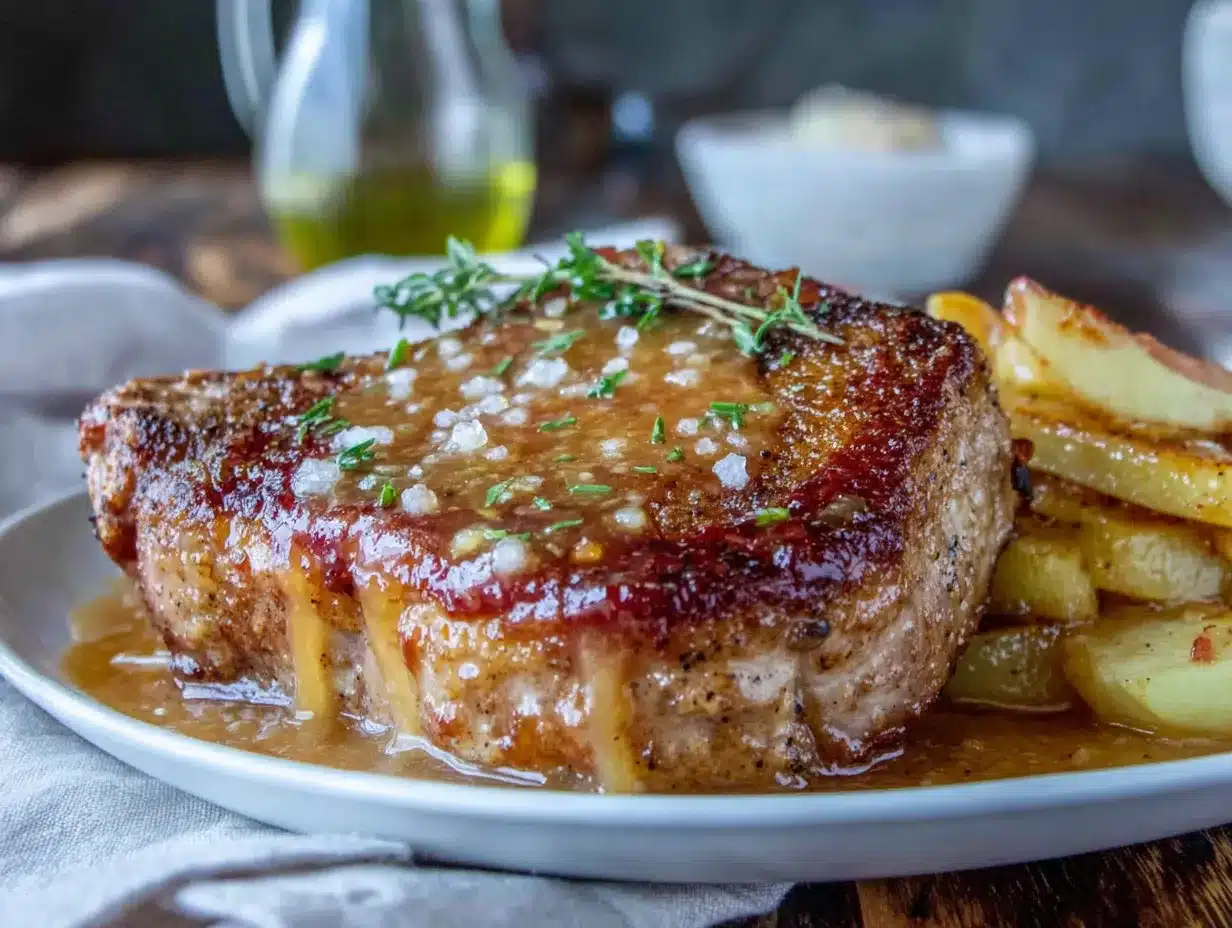
Alright, let’s get cooking. This whole process takes about 20 minutes from start to finish, so read through the steps once before you start. Have everything prepped and measured—this is one of those recipes where things move fast once the heat is on.
- Pat the pork chops dry (2 minutes): Take the pork chops out of the fridge and pat them completely dry with paper towels. This is the most important step for a good sear. Wet meat won’t brown—it’ll just steam. Season both sides generously with salt and pepper. Don’t be shy; pork chops can handle a good amount of seasoning.
- Heat the oil (1 minute): Place your skillet over medium-high heat and add the olive oil. Swirl the pan to coat the bottom. Wait until the oil is shimmering and almost smoking—you want it hot. A drop of water should sizzle and evaporate instantly when it hits the pan.
- Sear the pork chops (4-5 minutes): Carefully lay the pork chops in the hot skillet. You should hear a loud sizzle—that’s the sound of a good sear. Let them cook undisturbed for 2-3 minutes. Don’t move them around. When they’re ready to flip, they’ll release easily from the pan. If they stick, give them another 30 seconds. Flip and cook for another 2 minutes on the second side. The chops should be deeply golden brown. Transfer them to a plate and set aside. They won’t be fully cooked yet—that’s fine.
- Sauté the garlic (30 seconds): Reduce the heat to medium. Add the minced garlic to the pan (there should still be some oil and fat in there). Stir constantly for about 20-30 seconds until fragrant. Be careful—garlic burns fast. If it turns brown in seconds, your pan is too hot. Pull it off the heat for a moment.
- Deglaze the pan (1 minute): Pour in the apple cider and chicken broth. Use your wooden spoon or spatula to scrape up all the browned bits from the bottom of the pan. That’s where the flavor lives. The liquid will start bubbling immediately. Let it come to a boil.
- Simmer the sauce (5-6 minutes): Add the fresh thyme sprigs to the liquid. Nestle the pork chops back into the pan, along with any juices that collected on the plate. Reduce the heat to medium-low so the sauce is at a gentle simmer (not a rolling boil). Cook for 5-6 minutes, flipping the chops halfway through. The sauce should reduce by about half and thicken slightly. It won’t be super thick—more like a thin glaze.
- Finish with butter (1 minute): Remove the thyme sprigs (they’ve given their all). Stir in the butter and the Dijon mustard (if using) until the butter melts and the sauce looks glossy. Taste the sauce and adjust seasoning with a little more salt or pepper if needed.
- Rest and serve (2 minutes): Remove the pan from the heat. Let the pork chops rest in the sauce for 2-3 minutes. This lets the juices redistribute so they stay tender. Serve the chops with the sauce spooned over the top.
That’s it. Eight steps, one pan, and you’ve got a dinner that looks and tastes like you fussed. The whole thing takes about 18-20 minutes, depending on how fast you move. The pork will be juicy, the sauce will be tangy-sweet, and you’ll have exactly one pan to wash.
Cooking Tips & Techniques
I’ve messed up this recipe more times than I’d like to admit. Here are the lessons I learned the hard way, so you don’t have to.
Don’t skip drying the pork chops. I know it seems like a small step, but moisture is the enemy of a good sear. If you want that deep, golden-brown crust, the surface needs to be bone-dry. I once forgot to pat them dry, and they turned gray and steamed. It was sad.
Watch your heat levels. Pork chops are lean, so they dry out fast if you overcook them. Use a meat thermometer if you have one—pull them at 140°F (60°C) and let them rest. They’ll carry over to 145°F (63°C) while resting. If you don’t have a thermometer, cut into the thickest part of one. The center should be just slightly pink with clear juices.
Don’t crowd the pan. If your skillet is too small, cook the chops in two batches. When meat is crowded, it releases steam instead of browning. I made this mistake with a 10-inch pan and ended up with pale, sad pork. Not great.
Let the sauce reduce properly. The sauce is supposed to be thin, but it should coat the back of a spoon. If it’s watery, let it simmer for another minute or two without the chops. If it’s too thick (which rarely happens), add a splash of broth or water.
Taste as you go. Ciders vary in sweetness. Some are super tart, others are candy-sweet. Taste the sauce before you add the butter and adjust the balance. If it’s too sweet, add a tiny splash of vinegar or lemon juice. If it’s too tart, a pinch of brown sugar can help.
Variations & Adaptations
This recipe is a great base, and it’s easy to tweak based on what you have or what you’re craving. Here are a few ways I’ve played around with it.
- Make it dairy-free: Skip the butter at the end or use a dairy-free alternative like Miyoko’s. The sauce will still be good, just a little less glossy. You can also use coconut oil instead of butter, but it will add a slight coconut flavor.
- Add some heat: A pinch of red pepper flakes or a thinly sliced jalapeño added with the garlic gives the sauce a nice kick. The heat plays really well with the sweet cider.
- Go low-carb: This recipe is naturally pretty low in carbs (about 10g per serving from the cider). Serve it with roasted vegetables or cauliflower mash instead of potatoes or rice.
- Swap the protein: This sauce works beautifully with chicken thighs or even a firm white fish like cod. For chicken, cook until 165°F (74°C) internal temp. For fish, reduce the simmering time to 3-4 minutes.
- Add some fruit: Toss in a diced apple (Honeycrisp or Granny Smith) when you add the cider. It softens in the sauce and adds little pockets of sweet-tart flavor. I did this once by accident when I had an apple that was about to go bad, and it was a happy accident.
- Herb swap: If you don’t have thyme, rosemary works too. Use one small sprig and remove it before serving. Sage is also lovely, but use it sparingly—it can be overpowering.
Serving & Storage Suggestions
These pork chops are versatile enough for a casual weeknight or a slightly fancier dinner. Here’s how I like to serve them.
Serving temperature: Serve the pork chops hot, straight from the pan, with the sauce spooned over the top. Let them rest for a couple of minutes after cooking so the juices settle.
What to serve with them: The sauce is begging for something to soak it up. Mashed potatoes are a classic choice—the creamy texture balances the tangy sauce. Roasted Brussels sprouts or green beans add a nice crunch and color. For a lighter option, serve over a bed of arugula or sautéed spinach. The sauce works as a dressing too.
Storage: Leftover pork chops keep well in an airtight container in the fridge for up to 3 days. The flavors actually meld together overnight, making them even better the next day. The sauce might thicken up a bit—just add a splash of broth or water when reheating.
Reheating: The best way to reheat is gently on the stovetop. Place the chops and sauce in a skillet over low heat, cover, and warm for 4-5 minutes, flipping once. Avoid the microwave—it tends to toughen the pork. If you’re in a hurry, microwave on 50% power in 30-second bursts, but watch it closely.
Freezing: You can freeze the cooked pork chops and sauce together in a freezer-safe container for up to 2 months. Thaw overnight in the fridge before reheating. The texture won’t be quite as perfect as fresh, but it’s still a solid meal for a busy night.
Nutritional Information & Benefits
This recipe is a great option if you’re looking for a balanced, satisfying meal that doesn’t weigh you down. Here’s the rough breakdown per serving (one pork chop with sauce):
- Calories: ~320
- Protein: 30g
- Fat: 18g
- Carbohydrates: 10g
- Fiber: 0g
- Sugar: 8g (naturally occurring from the cider)
- Sodium: 450mg (varies based on broth and seasoning)
Pork chops are a great source of lean protein, which helps keep you full and supports muscle health. Apple cider contains antioxidants and a small amount of vitamin C, though most of the nutrients are concentrated in the flavor. The fresh thyme adds a touch of vitamin K and has anti-inflammatory properties. It’s not a health food by any stretch, but it’s a wholesome, balanced meal that fits into a healthy lifestyle without feeling restrictive.
If you’re watching your sodium, use low-sodium broth and go light on the added salt. The mustard and thyme add plenty of flavor without extra salt.
Conclusion
These Quick Apple Cider Pork Chops have become my go-to when I want something that feels special but takes almost no effort. They’re the kind of recipe that makes you look like a hero on a Tuesday night—golden, juicy pork in a tangy-sweet sauce that comes together in one pan. No fuss, no stress, just good food.
I love that this recipe is flexible. You can dress it up with a side of roasted veggies for a dinner party or keep it simple with some crusty bread for a quiet night in. It’s forgiving, it’s fast, and it tastes like fall in the best way.
If you try this recipe, I’d love to hear how it goes. Did you add your own twist? Serve it with something unexpected? Drop a comment below and let me know—I read every single one. And if you loved it, share it with a friend who needs a quick dinner win. Happy cooking!
Frequently Asked Questions
Can I use apple juice instead of apple cider?
You can, but the flavor will be different. Apple juice is thinner and sweeter, with less tang. The sauce won’t reduce as nicely and might taste one-dimensional. If you’re in a pinch, use apple juice and add a teaspoon of apple cider vinegar to balance the sweetness.
How do I know when the pork chops are done without a thermometer?
Cut into the thickest part of one chop. The center should be just slightly pink with clear juices. If the juices run clear and the meat is white all the way through, it’s done. Overcooked pork is dry and tough, so err on the side of slightly pink.
Can I make this recipe with boneless pork chops?
Yes, absolutely. Boneless chops cook faster, so reduce the searing time to 2 minutes per side and the simmering time to 3-4 minutes. Keep an eye on them so they don’t dry out.
What if I don’t have fresh thyme?
Dried thyme works in a pinch. Use about 1 teaspoon and add it with the garlic. Fresh herbs are always better for this recipe, but dried will still give you a nice earthy flavor.
Can I double this recipe for a crowd?
Yes, but use a larger skillet or cook the chops in batches. If you crowd the pan, they won’t sear properly. You can also double the sauce ingredients easily. Just make sure your pan is big enough to hold everything.
Pin This Recipe!

Easy 20-Minute Apple Cider Pork Chops for a Quick Dinner

Quick, one-pan apple cider pork chops with a tangy-sweet sauce that comes together in just 20 minutes. Perfect for busy weeknights, this simple recipe delivers juicy, golden pork with a glossy, savory-sweet glaze.
- Prep Time: 5 minutes
- Cook Time: 15 minutes
- Total Time: 20 minutes
- Yield: 4 servings 1x
- Category: Main Course
- Cuisine: American
Ingredients
- 4 bone-in pork chops, about 1 inch thick
- 1 cup unsweetened apple cider
- ½ cup low-sodium chicken broth
- 3 cloves garlic, minced
- 4–5 sprigs fresh thyme
- 1 tablespoon unsalted butter
- 1 tablespoon olive oil
- Salt and black pepper to taste
- 1 teaspoon Dijon mustard (optional)
Instructions
- Pat the pork chops dry with paper towels and season both sides generously with salt and pepper.
- Heat olive oil in a large skillet over medium-high heat until shimmering.
- Sear the pork chops for 2-3 minutes per side until deeply golden brown. Transfer to a plate.
- Reduce heat to medium, add minced garlic, and sauté for 20-30 seconds until fragrant.
- Pour in apple cider and chicken broth, scraping up browned bits from the pan.
- Add fresh thyme sprigs and return pork chops to the pan. Simmer on medium-low for 5-6 minutes, flipping halfway.
- Remove thyme sprigs. Stir in butter and Dijon mustard (if using) until melted and glossy.
- Let pork chops rest in the sauce for 2-3 minutes before serving. Spoon sauce over the top.
Notes
Pat pork chops completely dry for a good sear. Use a meat thermometer to avoid overcooking; pull at 140°F (60°C) and rest to 145°F (63°C). If sauce is too sweet, add a splash of vinegar or lemon juice. For a dairy-free version, skip the butter or use a dairy-free alternative.
Nutrition
- Serving Size: 1 pork chop with sau
- Calories: 320
- Sugar: 8
- Sodium: 450
- Fat: 18
- Saturated Fat: 6
- Carbohydrates: 10
- Protein: 30
Keywords: apple cider pork chops, quick dinner, one-pan meal, weeknight dinner, pork chop recipe, fall recipe, easy dinner