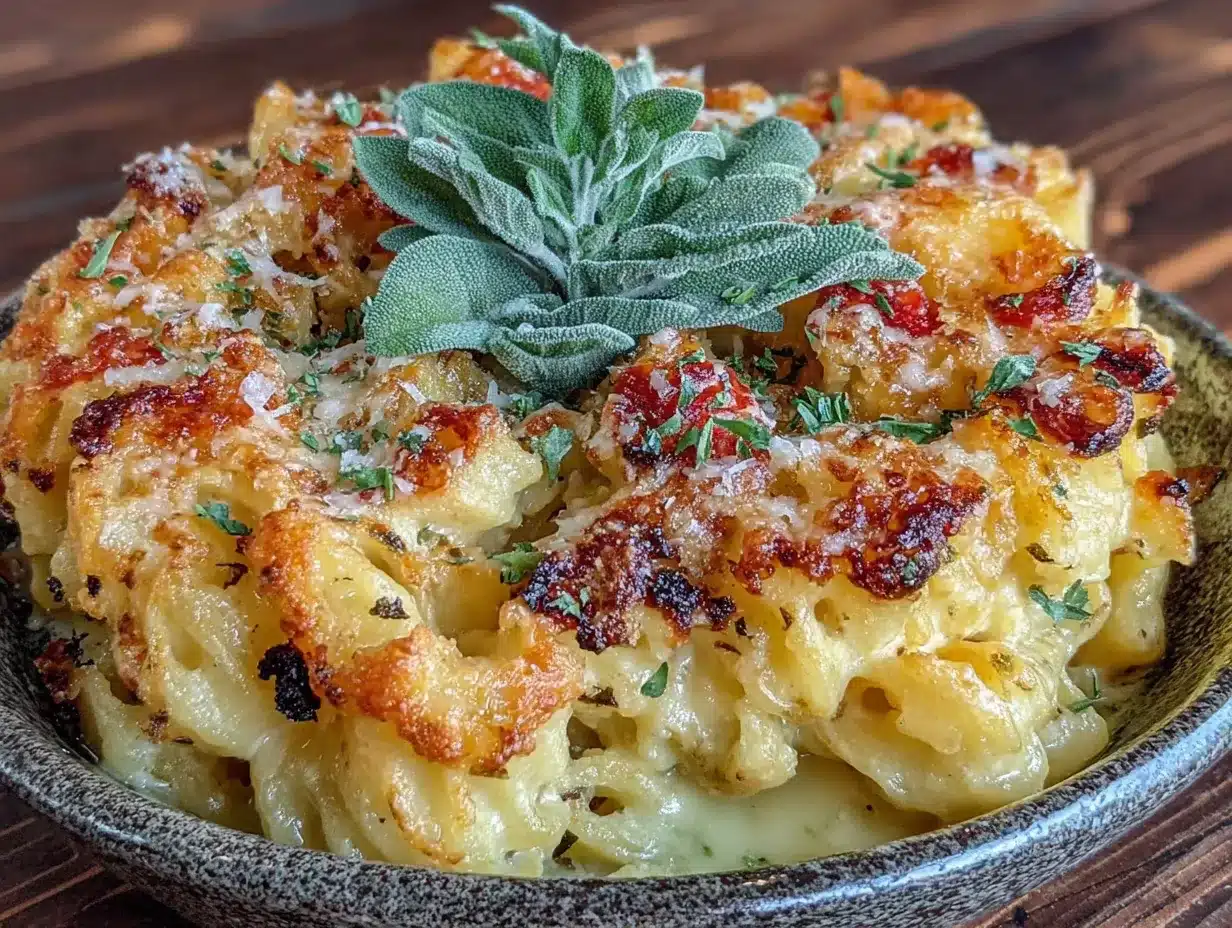
It was 11:47 PM on a random Thursday, and I had the weirdest craving for mac and cheese—but not just any mac and cheese. I wanted something that felt like fall in a bowl, something that would make people at a dinner party stop mid-conversation and ask, “Wait, what’s in this?” The problem? I didn’t have a block of cheddar big enough to feed a crowd, but I had a butternut squash sitting on my counter that I’d bought on a whim three days earlier. And that’s when the idea hit me—what if I blended the squash into the cheese sauce? I mean, it sounded a little unhinged at first. But something about the late hour loosened my usual rules. I started chopping the squash while my cat watched from the counter, judging me silently. The kitchen got messy. I forgot to set a timer for the pasta. Honestly, it was a small disaster in the making. But then I tasted the sauce, and let me tell you—I nearly cried. That first bite had this unexpected sweetness from the squash, balanced by sharp cheddar and a hint of nutmeg. And when I fried up some sage leaves in butter and scattered them on top? Pure magic. I stayed up until 1 AM eating it straight from the pot, standing in my pajamas. Maybe you’ve been there—that moment when a late-night experiment turns into something you know you’ll be making for years. This is that recipe. And now I’m sharing it with you, because honestly, your next dinner party deserves a dish that steals the show without stealing your sanity.
Why You’ll Love This Recipe
Let me tell you why this butternut squash mac and cheese is the dish you’ll want to make for every gathering. I’ve tested this recipe at least eight times—yes, eight—tweaking the cheese ratio, adjusting the squash blend, and even burning a batch of sage before I got it right. So trust me when I say this version is the one.
- Quick & Easy: Comes together in about 45 minutes, perfect for those nights when you need something impressive but don’t have hours to spend in the kitchen.
- Simple Ingredients: No fancy grocery trips needed. You likely already have most of these pantry staples—pasta, butter, flour, milk—plus a butternut squash that’s easy to find at any grocery store.
- Perfect for Dinner Parties: This dish is made for hosting. It scales beautifully for a crowd, looks gorgeous on a buffet table, and can be prepped ahead so you’re not stuck in the kitchen when your guests arrive.
- Crowd-Pleaser: I’ve served this at potlucks, holiday dinners, and casual get-togethers. Kids devour it. Adults ask for seconds. Even my friend who “doesn’t like squash” went back for thirds.
- Unbelievably Delicious: The texture is ultra-creamy thanks to the blended squash, and the crispy sage on top adds this nutty, aromatic crunch that takes it over the top.
What makes this recipe different from all the other butternut squash mac and cheese recipes out there? It’s the technique. Instead of just mashing the squash into the sauce, I roast it first to concentrate the sweetness, then blend it with the cheese sauce until silky smooth. The result is a sauce that’s velvety, rich, and surprisingly light—not heavy like some stovetop mac and cheeses can be. And that crispy sage? It’s not just a garnish. It’s the secret weapon that makes this dish unforgettable.
This recipe isn’t just good—it’s the kind that makes you close your eyes after the first bite. It’s comfort food reimagined: healthier (hello, hidden veggies!), faster, but with the same soul-soothing satisfaction. Perfect for impressing guests without stress, or turning a simple weeknight dinner into something memorable.
What Ingredients You Will Need
This recipe uses simple, wholesome ingredients to deliver bold flavor and satisfying texture without the fuss. Most of these are pantry staples or easy to find at your local grocery store. Here’s what you’ll need:
For the Roasted Butternut Squash
- 1 medium butternut squash (about 2-3 pounds), peeled, seeded, and cubed into 1-inch pieces
- 2 tablespoons olive oil (I prefer extra virgin for roasting)
- 1/2 teaspoon salt
- 1/4 teaspoon black pepper
For the Cheese Sauce
- 4 tablespoons unsalted butter
- 1/4 cup all-purpose flour (use gluten-free flour blend if needed)
- 3 cups whole milk (warm, for smoother blending)
- 2 cups shredded sharp cheddar cheese (I recommend Cabot or Tillamook for best melting)
- 1 cup shredded Gruyère cheese (adds nutty richness—trust me on this one)
- 1/2 cup grated Parmesan cheese
- 1/2 teaspoon ground nutmeg (freshly grated is ideal)
- 1 teaspoon Dijon mustard (enhances the cheese flavor without tasting like mustard)
- Salt and pepper to taste
For the Pasta
- 1 pound elbow macaroni (or any short pasta like cavatappi, shells, or fusilli)
- Salt for the pasta water (it should taste like the sea)
For the Crispy Sage Topping
- 2 tablespoons unsalted butter
- 12-15 fresh sage leaves
- 1/4 cup panko breadcrumbs (optional, for extra crunch)
- Flaky sea salt for finishing
Ingredient Tips & Substitutions: If you can’t find Gruyère, substitute with extra sharp cheddar or Gouda. For a dairy-free version, use plant-based butter, unsweetened oat milk, and your favorite dairy-free cheese shreds (though the texture will be slightly different). Look for a butternut squash that feels heavy for its size and has firm, unblemished skin. In fall, local farmers’ markets often have the best squash. You can also use pre-cut squash from the grocery store to save time—just make sure the pieces are uniform in size for even roasting.
Equipment Needed
You don’t need a professional kitchen to make this dish, but a few key tools will make the process smoother. Here’s what I recommend:
- Large pot (at least 5-quart) for boiling pasta
- Baking sheet for roasting the squash
- Blender or food processor (a high-speed blender like a Vitamix works best, but a standard blender or immersion blender will do the job)
- Large saucepan for making the cheese sauce
- Wooden spoon or silicone spatula for stirring
- Small skillet for frying the sage leaves
- 9×13-inch baking dish if you’re baking the mac and cheese (optional, but recommended for a crowd)
- Cheese grater (please grate your own cheese—pre-shredded has anti-caking agents that affect melting)
- Measuring cups and spoons
If you don’t have a blender, you can mash the roasted squash with a potato masher until smooth, though the sauce won’t be as silky. I’ve done it that way in a pinch, and it still tastes amazing. For the baking dish, a 9×13 works perfectly for feeding 8-10 people. If you’re making a smaller batch, an 8×8 dish will do.
Preparation Method
Let’s get cooking! This recipe comes together in about 45 minutes, and I’ll walk you through every step. Set a timer for the squash, and don’t forget to taste as you go—that’s the secret to great cooking.
- Preheat your oven to 400°F (200°C). While it’s heating, peel your butternut squash using a sharp vegetable peeler. Cut it in half lengthwise, scoop out the seeds, and cube it into 1-inch pieces. Toss the cubes with olive oil, salt, and pepper on a baking sheet. Spread them in a single layer—crowding leads to steaming instead of roasting. Roast for 25-30 minutes, flipping halfway, until the squash is tender and lightly caramelized at the edges. You’ll know it’s done when a fork slides in easily.
- While the squash roasts, start your pasta water. Fill your large pot with water, add a generous tablespoon of salt (the water should taste salty like the ocean), and bring it to a boil. Cook your pasta according to package directions until al dente—usually 7-9 minutes. Drain the pasta, but reserve about 1 cup of the starchy pasta water before draining. This liquid gold helps thin the sauce later if needed.
- Make the cheese sauce base. In your large saucepan, melt the butter over medium heat. Once it’s bubbling, whisk in the flour and cook for 1-2 minutes, stirring constantly. This cooks out the raw flour taste. Slowly pour in the warm milk, whisking continuously to prevent lumps. Keep whisking until the mixture thickens, about 3-4 minutes. It should coat the back of a spoon.
- Blend the squash into the sauce. Transfer the roasted squash to your blender. Pour in the milk mixture (carefully—it’s hot!). Add the nutmeg, Dijon mustard, and a pinch of salt. Blend until completely smooth, about 30-60 seconds. The color should be a beautiful golden orange. Taste it here—you should taste the sweetness of the squash and warmth of the nutmeg. Adjust salt if needed.
- Melt in the cheese. Return the blended sauce to the saucepan over low heat. Gradually add the shredded cheddar, Gruyère, and Parmesan, stirring constantly until each addition melts before adding the next. The sauce will be thick and velvety. If it seems too thick, stir in a splash of the reserved pasta water.
- Combine pasta and sauce. Pour the drained pasta into the pot with the cheese sauce. Stir gently until every piece of pasta is coated. The sauce should cling to the noodles. If you’re serving immediately, you can stop here. If you’re baking it, transfer everything to your greased 9×13 baking dish.
- Make the crispy sage topping. In a small skillet, melt 2 tablespoons of butter over medium heat. Add the sage leaves in a single layer. Fry for 30-60 seconds per side, until they turn dark green and crispy. Watch carefully—they can burn quickly! Remove them to a paper towel. If using panko, toast the breadcrumbs in the remaining butter for 1-2 minutes until golden.
- Finish and serve. If baking, sprinkle the panko over the mac and cheese and bake at 375°F (190°C) for 15-20 minutes until bubbly. Top with the crispy sage leaves and a sprinkle of flaky sea salt just before serving. The contrast of creamy pasta, crunchy topping, and aromatic sage is everything.
Cooking Tips & Techniques
After making this recipe more times than I can count, I’ve learned a few tricks that make a real difference. Let me share them with you so you can skip the mistakes I made.
Don’t skip roasting the squash. I tried boiling it once to save time, and the sauce came out watery and bland. Roasting concentrates the natural sugars and gives the sauce depth. Trust the process—it’s worth the extra 10 minutes.
Grate your own cheese. I know, I know, the pre-shredded bags are convenient. But they’re coated with cellulose and starch that prevent smooth melting. Freshly grated cheese melts like a dream and gives you that silky, stretchy sauce. Do yourself this favor.
Taste as you go. This is the most important tip I can give you. The amount of salt you need depends on your cheese, your squash, and your personal preference. I’ve had batches where I needed an extra pinch of salt and others where the cheese was salty enough on its own. Trust your taste buds.
Watch the sage like a hawk. I burned my first batch of sage leaves while I was texting my sister. They went from perfect to black in about 15 seconds. Keep your eyes on the pan, and pull them out the moment they turn dark green. They’ll crisp up more as they cool.
Make it ahead for parties. You can assemble the entire dish (without the sage topping) up to 24 hours in advance. Cover it and refrigerate. When your guests arrive, just add the sage and panko, and bake. This is a lifesaver for dinner parties—you get to enjoy your own party instead of being stuck in the kitchen.
Variations & Adaptations
One of the best things about this recipe is how flexible it is. Here are some ways to make it your own:
Gluten-Free Version: Use gluten-free pasta (I like Banza chickpea pasta or Jovial brown rice pasta) and swap the all-purpose flour with a 1:1 gluten-free flour blend. The sauce will still be thick and creamy.
Add Protein: Crispy bacon bits, shredded rotisserie chicken, or crumbled Italian sausage turn this into a full meal. I’ve added leftover pulled pork before, and it was incredible. Just fold it in right before baking.
Spice It Up: Add 1/4 teaspoon of cayenne pepper or smoked paprika to the cheese sauce for a subtle kick. My friend Sarah likes to add a chopped jalapeño to the sage butter—it gives the topping a little heat that cuts through the richness.
Vegan Adaptation: Use plant-based butter, unsweetened oat milk, and your favorite vegan cheese shreds. I’ve tried this with Violife cheddar shreds, and while the texture is slightly different, the flavor is surprisingly close. Add a tablespoon of nutritional yeast for extra cheesy flavor.
Swap the Squash: No butternut squash? Use roasted sweet potato, pumpkin, or even carrot puree. Each gives a slightly different sweetness and color, but they all work beautifully. I made a version with roasted delicata squash last fall, and it was just as good.
Serving & Storage Suggestions
This mac and cheese is best served hot, straight from the oven or stovetop. The contrast between the creamy pasta and the crispy sage topping is at its peak within the first 15 minutes. If you’re hosting a dinner party, I recommend baking it right before your guests arrive and letting it rest for 5 minutes before serving.
What to serve alongside: A simple green salad with a lemon vinaigrette cuts through the richness beautifully. Roasted broccoli or green beans are also great choices. For a heartier meal, serve it alongside roasted chicken or a simple pork chop. And don’t forget a glass of crisp white wine—Sauvignon Blanc or Chardonnay pairs wonderfully.
Storage: Leftovers keep in an airtight container in the refrigerator for up to 4 days. The pasta will absorb some of the sauce overnight, so don’t be alarmed if it seems drier the next day. To reheat, add a splash of milk or cream and warm it gently on the stovetop or in the microwave. You can also reheat it in the oven at 350°F for 10-15 minutes.
Freezing: This mac and cheese freezes well for up to 3 months. Assemble the dish (without the sage topping), let it cool completely, then wrap it tightly in plastic wrap and foil. To serve, thaw overnight in the refrigerator, add the sage and panko, and bake as directed. The flavor actually deepens after freezing—the squash and cheese have time to meld together.
Flavor development: Honestly, I think this dish tastes even better the next day. The flavors meld together overnight, and the squash sweetness becomes more pronounced. If you’re meal prepping for a party, making it a day ahead is actually my preferred method.
Nutritional Information & Benefits
Here’s the estimated nutritional breakdown per serving (based on 8 servings):
| Nutrient | Amount |
|---|---|
| Calories | 485 |
| Total Fat | 24g |
| Saturated Fat | 14g |
| Cholesterol | 65mg |
| Sodium | 620mg |
| Total Carbohydrates | 48g |
| Dietary Fiber | 4g |
| Sugars | 8g |
| Protein | 20g |
| Vitamin A | 180% DV |
| Vitamin C | 25% DV |
| Calcium | 35% DV |
| Iron | 10% DV |
The butternut squash is the star here nutritionally—it’s packed with vitamin A (great for eye health), vitamin C, and fiber. The cheese provides calcium and protein, while the sage adds antioxidants. This isn’t health food, but it’s certainly a more nutritious take on classic mac and cheese. The squash replaces some of the heavy cream you’d normally use, cutting down on saturated fat without sacrificing creaminess.
Dietary considerations: This recipe contains dairy and gluten. For a gluten-free version, see the variations section above. For a lower-fat option, use reduced-fat cheese and substitute half the butter with olive oil. The flavor will be slightly different, but still delicious.
Conclusion
This butternut squash mac and cheese with crispy sage has become my go-to dish for every gathering, from casual potlucks to holiday dinners. It’s the recipe that makes people lean in and ask, “Wait, what did you put in this?” It’s the dish that gets scraped clean before any other side on the table. And it’s the meal that reminds me why I love cooking—because food has this incredible power to bring people together.
I hope you make this for your next dinner party, your next family dinner, or just because it’s a Tuesday and you deserve something special. Don’t be afraid to make it your own—swap the cheese, add some bacon, or go heavy on the sage. The best recipes are the ones that evolve with the cook.
When you make it, I’d love to hear how it turned out. Leave a comment below, tag me in your photos, or share your own twist on this recipe. Did you add something unexpected? Did your guests go back for thirds? Tell me all about it—I read every single comment, and honestly, it makes my day.
Now go forth and make some magic in your kitchen. Your dinner guests are about to be very, very happy.
Frequently Asked Questions
Can I make this butternut squash mac and cheese ahead of time?
Absolutely! You can assemble the entire dish (without the sage topping) up to 24 hours in advance. Cover it and refrigerate, then add the sage and panko right before baking. This is perfect for dinner parties when you want to spend time with your guests instead of being stuck in the kitchen.
Can I use pre-cut butternut squash from the store?
Yes, pre-cut squash works great and saves time. Just make sure the pieces are uniform in size (about 1-inch cubes) so they roast evenly. You’ll find pre-cut squash in the produce section of most grocery stores.
My cheese sauce turned out grainy. What went wrong?
Grainy sauce usually happens when the heat is too high or when you add the cheese too quickly. Always melt cheese over low heat, and add it gradually, stirring constantly. Also, make sure you’re using freshly grated cheese—pre-shredded cheese has anti-caking agents that can cause graininess.
Can I freeze this butternut squash mac and cheese?
Yes! Freeze it for up to 3 months. Assemble the dish without the sage topping, let it cool completely, then wrap tightly in plastic wrap and foil. Thaw overnight in the refrigerator before baking. The flavor actually deepens after freezing.
What can I substitute for Gruyère cheese?
If you can’t find Gruyère, substitute with extra sharp cheddar, Gouda, or even Monterey Jack. Each will give a slightly different flavor, but all will work beautifully. The Gruyère adds a nutty richness, but the dish is still delicious without it.
Pin This Recipe!
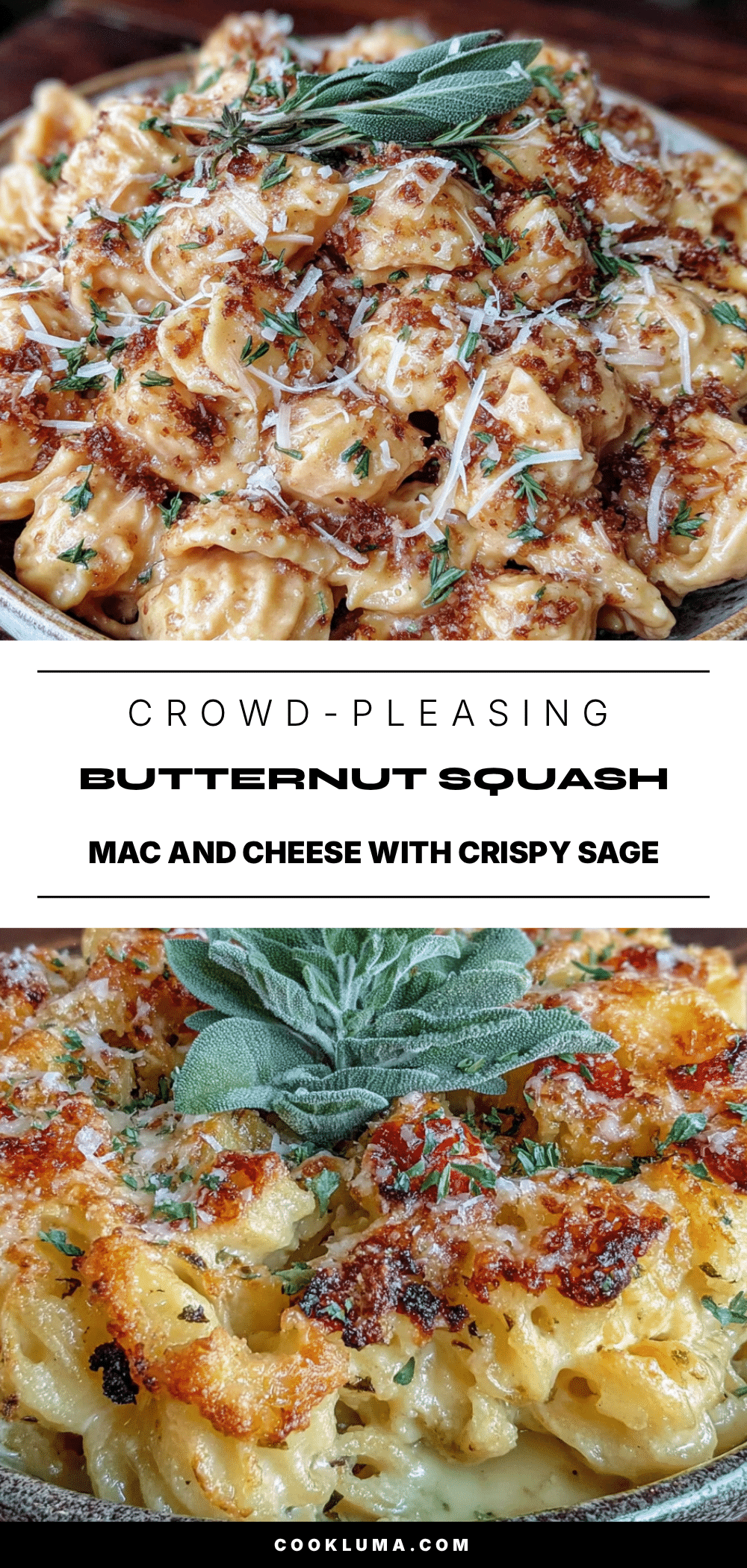
Crowd-Pleasing Butternut Squash Mac and Cheese with Crispy Sage
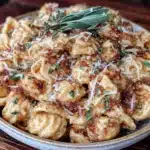
This butternut squash mac and cheese is ultra-creamy, thanks to roasted squash blended into the cheese sauce, and topped with crispy sage for a nutty, aromatic crunch. It’s a crowd-pleasing dish perfect for dinner parties, holidays, or a cozy weeknight meal.
- Prep Time: 15 minutes
- Cook Time: 30 minutes
- Total Time: 45 minutes
- Yield: 8 servings 1x
- Category: Main Course
- Cuisine: American
Ingredients
- 1 medium butternut squash (about 2–3 pounds), peeled, seeded, and cubed into 1-inch pieces
- 2 tablespoons olive oil
- 1/2 teaspoon salt
- 1/4 teaspoon black pepper
- 4 tablespoons unsalted butter
- 1/4 cup all-purpose flour
- 3 cups whole milk, warm
- 2 cups shredded sharp cheddar cheese
- 1 cup shredded Gruyère cheese
- 1/2 cup grated Parmesan cheese
- 1/2 teaspoon ground nutmeg
- 1 teaspoon Dijon mustard
- Salt and pepper to taste
- 1 pound elbow macaroni (or short pasta like cavatappi, shells, or fusilli)
- Salt for pasta water
- 2 tablespoons unsalted butter (for sage topping)
- 12–15 fresh sage leaves
- 1/4 cup panko breadcrumbs (optional)
- Flaky sea salt for finishing
Instructions
- Preheat oven to 400°F (200°C). Peel butternut squash, cut in half lengthwise, scoop out seeds, and cube into 1-inch pieces. Toss with olive oil, salt, and pepper on a baking sheet. Spread in a single layer and roast for 25-30 minutes, flipping halfway, until tender and lightly caramelized.
- While squash roasts, bring a large pot of salted water to a boil. Cook pasta according to package directions until al dente. Drain, reserving 1 cup of pasta water.
- In a large saucepan, melt butter over medium heat. Whisk in flour and cook for 1-2 minutes, stirring constantly. Slowly pour in warm milk, whisking continuously, and cook until thickened, about 3-4 minutes.
- Transfer roasted squash to a blender. Add the milk mixture, nutmeg, Dijon mustard, and a pinch of salt. Blend until smooth, about 30-60 seconds.
- Return blended sauce to the saucepan over low heat. Gradually add cheddar, Gruyère, and Parmesan, stirring until each addition melts. If too thick, stir in reserved pasta water.
- Combine drained pasta with cheese sauce, stirring until coated. If baking, transfer to a greased 9×13-inch baking dish.
- In a small skillet, melt 2 tablespoons butter over medium heat. Add sage leaves in a single layer and fry for 30-60 seconds per side until crispy. Remove to paper towel. If using panko, toast in remaining butter for 1-2 minutes until golden.
- If baking, sprinkle panko over mac and cheese and bake at 375°F (190°C) for 15-20 minutes until bubbly. Top with crispy sage leaves and flaky sea salt before serving.
Notes
Don’t skip roasting the squash—it concentrates sweetness. Grate your own cheese for smooth melting. Watch sage carefully as it burns quickly. Can be assembled up to 24 hours ahead (without sage topping) and refrigerated. Leftovers keep for up to 4 days in the refrigerator; reheat with a splash of milk. Freezes well for up to 3 months.
Nutrition
- Serving Size: 1 serving (about 1/8
- Calories: 485
- Sugar: 8
- Sodium: 620
- Fat: 24
- Saturated Fat: 14
- Carbohydrates: 48
- Fiber: 4
- Protein: 20
Keywords: butternut squash mac and cheese, crispy sage, fall comfort food, dinner party, vegetarian, easy mac and cheese