I was folding laundry last October—a truly mindless Tuesday—when the smell of a neighbor’s woodsmoke drifted through my cracked window. It hit me with a force that stopped me mid-fold: I was seven years old, standing in Mrs. Gable’s kitchen two doors down. She wasn’t my grandmother, just the elderly lady who let me help her bake after school when my mom worked late. Her kitchen always smelled like yeast and cinnamon and something faintly earthy—pumpkin, I realize now. She’d let me punch down the dough, which I took way too seriously, and she never once told me I was doing it wrong. That woman could make a bag of flour feel like a secret. I haven’t thought about her in years, but that whiff of smoke brought her back so clearly I could almost feel the flour on my hands.
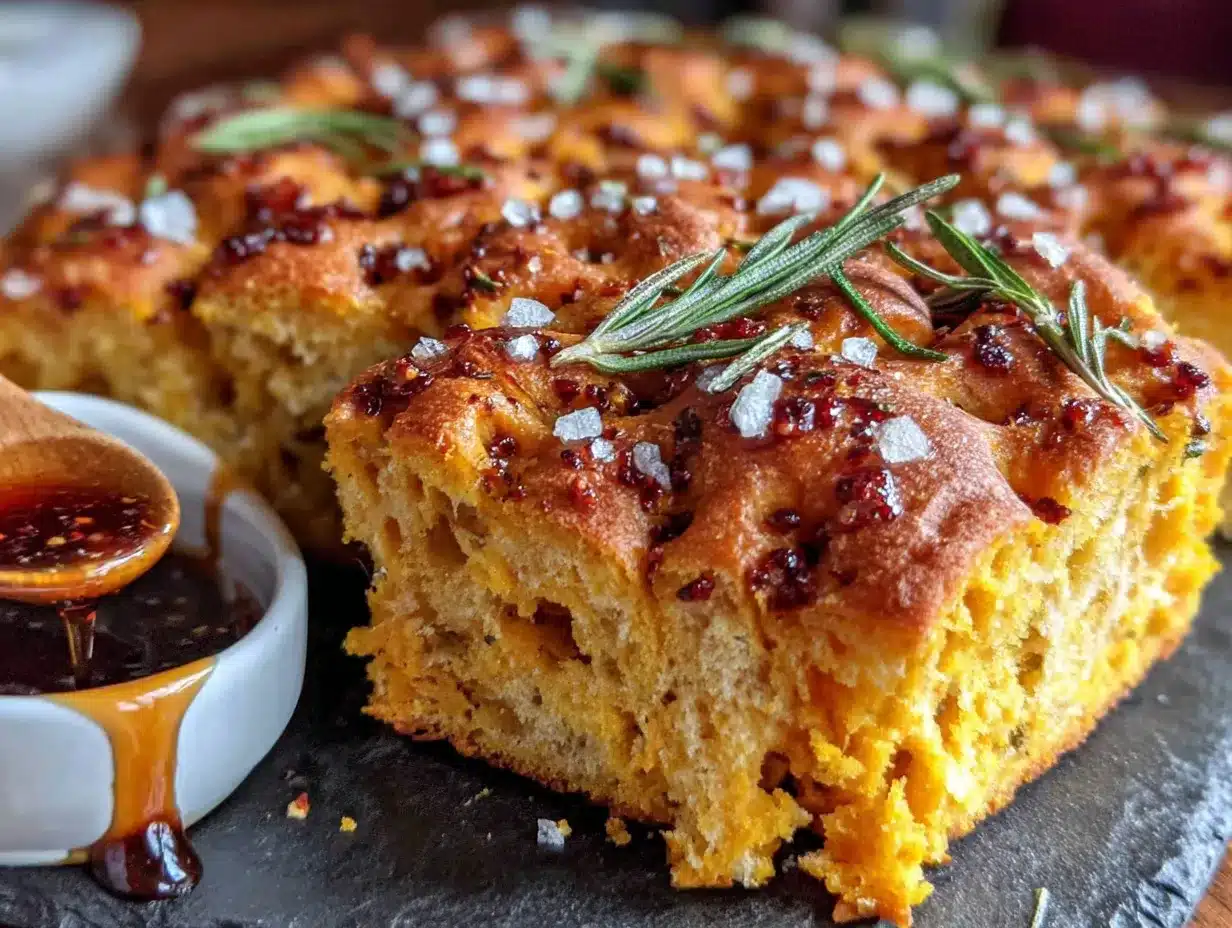
So, naturally, I had to make bread. Not just any bread, but something that captured that exact feeling—warm, slightly sweet, and a little bit messy. That’s how this Cozy Sourdough Discard Pumpkin Focaccia was born. It’s the recipe I wish I could have made with Mrs. Gable, if she’d had sourdough starter lying around (which she probably did, honestly—she seemed to have everything). This focaccia is soft and pillowy, with a gorgeous orange hue from the pumpkin puree and a crispy, golden crust that shatters when you bite into it. The sourdough discard adds a subtle tang that plays perfectly with the earthy sweetness of the pumpkin, and the whole thing is topped with flaky salt and fresh rosemary. It’s the kind of bread that makes your kitchen smell like a hug, and I mean that literally. Maybe you’ve had a moment like that—a random scent that yanks you right back to a person or a place you’d almost forgotten. This is my attempt to bottle that feeling.
It’s not perfect, and that’s the point. The first time I made it, I forgot the salt (rookie move), and the dough was so sticky I almost cried. But I kept at it, because some recipes just demand persistence. This one stayed with me because it’s forgiving—it doesn’t care if your folds are messy or if you use a slightly different flour. It just wants to be made. And every time I bake it, I feel like I’m back in that warm kitchen, seven years old, covered in flour, and perfectly content.
Why You’ll Love This Recipe
This isn’t just another bread recipe. It’s the one you’ll turn to when you need a little comfort, a little creativity, and a lot of flavor without a ton of fuss. I’ve tested this focaccia at least a dozen times, tweaking the hydration, the fermentation time, and the amount of pumpkin until it felt just right. It’s family-approved (my picky nephew ate three pieces) and nutritionist-friendly (hello, vitamin A from the pumpkin!). Here’s why it stands out:
- Quick & Easy: Comes together in under 2 hours from start to finish, including rise time. Perfect for a lazy Sunday or a weeknight baking project.
- Simple Ingredients: No fancy grocery trips. You likely have flour, olive oil, and salt in your pantry. The sourdough discard and pumpkin puree are the stars, and both are easy to keep on hand.
- Perfect for Fall: Great for Thanksgiving appetizers, cozy dinners, or just because it’s October and you want your house to smell amazing.
- Crowd-Pleaser: Always gets rave reviews, even from people who “don’t like sourdough” or “aren’t sure about pumpkin bread.”
- Unbelievably Delicious: The texture is next-level—crispy on the bottom, soft and airy inside, with a slight tang from the discard and a sweet, earthy note from the pumpkin.
What makes this recipe different? It’s the balance. Most pumpkin breads are sweet, and most focaccias are savory. This one sits right in the middle, like a cozy sweater you never want to take off. Plus, using sourdough discard means you’re not wasting anything—you’re turning your starter’s “leftovers” into something gorgeous. It’s comfort food reimagined: faster, smarter, and with the same soul-soothing satisfaction.
Ingredients You Will Need
This recipe uses simple, wholesome ingredients to deliver bold flavor and satisfying texture without the fuss. Most of these are pantry staples, especially if you keep a sourdough starter. Here’s what you’ll need:
For the Focaccia Dough
- 1 cup (240g) sourdough discard (unfed, straight from the fridge—no need to feed it first)
- 1/2 cup (120g) pumpkin puree (not pumpkin pie filling—look for 100% pure pumpkin, like Libby’s or store brand)
- 2 1/2 cups (315g) all-purpose flour (bread flour also works for a chewier texture)
- 1 cup (240ml) warm water (about 100°F—think warm bathwater, not hot)
- 2 tablespoons (30ml) olive oil (plus extra for drizzling—use a good quality one for flavor)
- 1 1/2 teaspoons (9g) salt (fine sea salt or table salt)
- 1 teaspoon (4g) active dry yeast (optional, but helps with a more reliable rise if your discard is sluggish)
For the Topping
- 2 tablespoons (30ml) olive oil (for the pan and drizzling on top)
- 1 tablespoon (2g) fresh rosemary, chopped (or 1 teaspoon dried)
- 1 teaspoon (3g) flaky sea salt (like Maldon—trust me, it makes a difference)
- Optional: 1/4 cup (30g) pumpkin seeds (pepitas) for crunch
Ingredient Tips: I recommend King Arthur Flour for consistent results, but any all-purpose flour works. For the pumpkin puree, make sure it’s not seasoned—you want just pumpkin. If your discard is very liquidy, reduce the water slightly (start with 3/4 cup and add more if needed). The dough should be sticky but not soupy. You can also swap the all-purpose flour with a gluten-free 1:1 blend, but the texture will be denser.
Equipment Needed
You don’t need a fancy bakery setup for this. Here’s what I use:
- Large mixing bowl (glass or stainless steel—something big enough for the dough to double)
- 9×13-inch baking pan (or a 10-inch cast-iron skillet for a round focaccia)
- Wooden spoon or dough whisk (a sturdy spoon works fine)
- Plastic wrap or a damp kitchen towel (for covering the dough)
- Measuring cups and spoons (digital scale recommended for accuracy, but cups work)
- Bench scraper or spatula (for folding the dough)
- Oven (preheated to 425°F)
Budget-Friendly Tip: Don’t have a 9×13 pan? Use a rimmed baking sheet—the focaccia will be thinner but just as delicious. No dough whisk? A fork works for mixing. I’ve made this in a cast-iron skillet before, and the crispy edges are even better. Just make sure your pan is well-oiled.
Preparation Method
Let’s get baking. This method is straightforward, but I’ll walk you through every step so you feel confident.
- Mix the dough: In a large bowl, combine the sourdough discard, pumpkin puree, warm water, and olive oil. Stir until smooth—it’ll look a bit like a thick orange soup. Add the flour, salt, and yeast (if using). Mix with a wooden spoon until a shaggy dough forms. It will be very sticky—that’s normal! Don’t be tempted to add more flour yet.
- First rest (20 minutes): Cover the bowl with plastic wrap or a damp towel. Let it rest for 20 minutes. This is called autolyse, and it helps the flour absorb the liquid and develop gluten. You’ll notice the dough feels smoother after this rest.
- Stretch and fold (3 times, 20 minutes apart): After the rest, wet your hands (this prevents sticking). Grab one side of the dough, stretch it up, and fold it over itself. Rotate the bowl and repeat 4 times total. Cover and rest 20 minutes. Do this two more times. After the third fold, the dough should feel bouncy and hold its shape a bit. If it’s still very sticky, don’t worry—it’s okay.
- Bulk fermentation (1-2 hours): Cover the bowl and let the dough rise at room temperature until it’s doubled in size. This takes about 1 hour if you used yeast, or 2 hours if you relied solely on the discard. The dough should look puffy and have bubbles on the surface. If your kitchen is cold, it might take longer—be patient!
- Prepare the pan: While the dough rises, drizzle 2 tablespoons of olive oil into your 9×13 pan. Use your fingers to spread it all over the bottom and sides. This is crucial for that crispy, golden crust.
- Transfer and stretch: Gently scrape the dough into the oiled pan. Don’t punch it down—you want to keep those air bubbles. Using oiled fingers, gently stretch the dough to fit the pan. It might resist; that’s okay. Let it rest for 10 minutes, then stretch again. Repeat until it fills the pan.
- Second rise (30-45 minutes): Cover the pan with plastic wrap or a towel. Let it rise until the dough is puffy and reaches the edges of the pan. This is the final rise—don’t skip it!
- Preheat and dimple: Preheat your oven to 425°F (220°C). When the dough is ready, drizzle 1 tablespoon of olive oil on top. Using your fingertips, press deep dimples all over the dough—go all the way to the bottom of the pan. This is what gives focaccia its signature look. Sprinkle with fresh rosemary and flaky salt. Add pumpkin seeds if using.
- Bake: Bake for 20-25 minutes, until the top is deep golden brown and the bottom sounds hollow when tapped. If the top is browning too fast, tent with foil at the 15-minute mark.
- Cool and serve: Let the focaccia cool in the pan for 5 minutes, then transfer to a wire rack. Drizzle with a little more olive oil if you’re feeling fancy. Serve warm or at room temperature.
Troubleshooting: If your dough is too sticky to handle, wet your hands more—don’t add flour. If it’s not rising, check your discard: it should be active and bubbly (even if unfed). If you’re short on time, you can skip the stretch and folds, but the texture won’t be as airy.
Cooking Tips & Techniques
I’ve made this focaccia at least 10 times, and I’ve learned a few things the hard way. Here’s what I wish I’d known from the start:
- Don’t skip the oil. The olive oil isn’t just for flavor—it creates that crispy, almost fried bottom crust. Be generous with it in the pan.
- Wet hands are your best friend. When handling sticky dough, keep a small bowl of water nearby. Dip your fingers before every stretch or fold. It’s a game-changer.
- Dimple with purpose. Those dimples aren’t just decorative. They create little pools of oil that crisp up beautifully. Press all the way to the bottom of the pan.
- Watch the oven. Every oven runs differently. Check your focaccia at 20 minutes—if it’s golden and smells heavenly, it’s done. Overbaking dries it out.
- Let it cool (a little). I know it’s tempting to tear into it immediately, but letting it rest for 5 minutes helps the structure set. You’ll get cleaner slices.
My biggest failure: The first time I made this, I used cold water and the yeast didn’t activate. The dough barely rose, and I ended up with a dense, flat brick. Lesson learned: always use warm water (around 100°F). Too hot kills the yeast, too cold and it sleeps.
Variations & Adaptations
This recipe is incredibly flexible. Here are some ways to make it your own:
- Sweet Version: Swap the rosemary for cinnamon and sugar (2 tablespoons brown sugar + 1 teaspoon cinnamon). Top with a drizzle of honey after baking. It’s like pumpkin cinnamon rolls in bread form.
- Savory Herb Blend: Add 1 teaspoon of dried thyme and 1/2 teaspoon of garlic powder to the dough. Top with fresh sage and black pepper. Perfect with soups or stews.
- Gluten-Free Option: Use a 1:1 gluten-free flour blend (like Bob’s Red Mill). The dough will be stickier and denser, but still delicious. Add an extra tablespoon of olive oil for moisture.
- Cheese Lover’s Version: Sprinkle 1/2 cup of shredded Parmesan or crumbled feta on top before baking. It gets crispy and salty—absolutely addictive.
- Spiced Pumpkin: Add 1 teaspoon pumpkin pie spice to the dough for a more autumnal flavor. Top with pecans instead of pumpkin seeds.
I’ve tried the sweet version with a friend’s kids, and they devoured it. The savory herb blend is my personal favorite for Thanksgiving—it pairs beautifully with turkey and gravy.
Serving & Storage Suggestions
This focaccia is best served warm, straight from the oven, with a pat of butter melting into the dimples. But it’s also amazing at room temperature—perfect for picnics or lunchboxes. Here’s how to serve and store it:
- Serving Temperature: Warm or room temperature. If you reheat it, pop it in a 300°F oven for 5 minutes (not the microwave—it gets soggy).
- Pairings: Serve alongside a bowl of creamy tomato soup, a hearty salad, or as a side to roasted chicken. It’s also fantastic with a drizzle of balsamic glaze for dipping.
- Storage: Store in an airtight container at room temperature for up to 2 days. After that, it’s best to freeze it. The texture softens slightly, but it’s still delicious.
- Freezing: Wrap tightly in plastic wrap, then foil. Freeze for up to 3 months. Thaw at room temperature and reheat in the oven.
- Flavor Development: Honestly, this focaccia tastes even better the next day. The flavors meld together, and the tang from the sourdough becomes more pronounced. If you can resist eating it all, save some for tomorrow.
Nutritional Information & Benefits
This recipe makes 12 servings. Per serving (1 piece):
- Calories: 180
- Fat: 7g
- Carbohydrates: 26g
- Fiber: 2g
- Protein: 4g
- Sugar: 2g
Health Benefits: Pumpkin is packed with vitamin A (great for eye health and immunity) and fiber. Sourdough fermentation breaks down some of the gluten and phytic acid, making nutrients more bioavailable. Plus, using discard means you’re reducing food waste—a win for your wallet and the planet. This recipe is vegetarian and can be made vegan by using a plant-based oil (olive oil is already vegan). It’s not gluten-free in its standard form, but the gluten-free variation works well.
Conclusion
This Cozy Sourdough Discard Pumpkin Focaccia is more than a recipe—it’s a way to turn a simple Tuesday into something special. It’s forgiving, flexible, and packed with flavor. Whether you’re chasing a childhood memory or just need a warm, comforting bread to share with loved ones, this one delivers. I love it because it feels like a little bit of magic: a few humble ingredients, some patience, and suddenly your kitchen smells like autumn.
Now it’s your turn. I’d love to hear how it turns out! Did you try a variation? Did your kids help with the dimpling? Drop a comment below—I read every single one. And if you share it on social media, tag me so I can see your beautiful creation. Happy baking, friends!
Frequently Asked Questions
Can I use active sourdough starter instead of discard?
Yes, you can! If you use active starter, reduce the water slightly (start with 3/4 cup) and expect a faster rise. The flavor will be milder, but still delicious.
My dough is very sticky—is that normal?
Absolutely. Focaccia dough is supposed to be sticky—it’s what creates that airy, open crumb. Resist the urge to add more flour. Use wet hands to handle it, and trust the process.
Can I make this without yeast?
Yes! The sourdough discard provides natural leavening. The rise will take longer (2-3 hours), and the texture will be slightly denser, but it works beautifully. Just make sure your discard is active and bubbly.
How do I get a crispy bottom crust?
The secret is generous olive oil in the pan. Use at least 2 tablespoons, and make sure it coats the entire bottom. Baking on a lower oven rack also helps the bottom crisp up.
Can I add other toppings?
Of course! Try caramelized onions, roasted garlic, sun-dried tomatoes, or even thinly sliced apples for a sweet-savory twist. Just don’t overload it—less is more with focaccia.
Pin This Recipe!
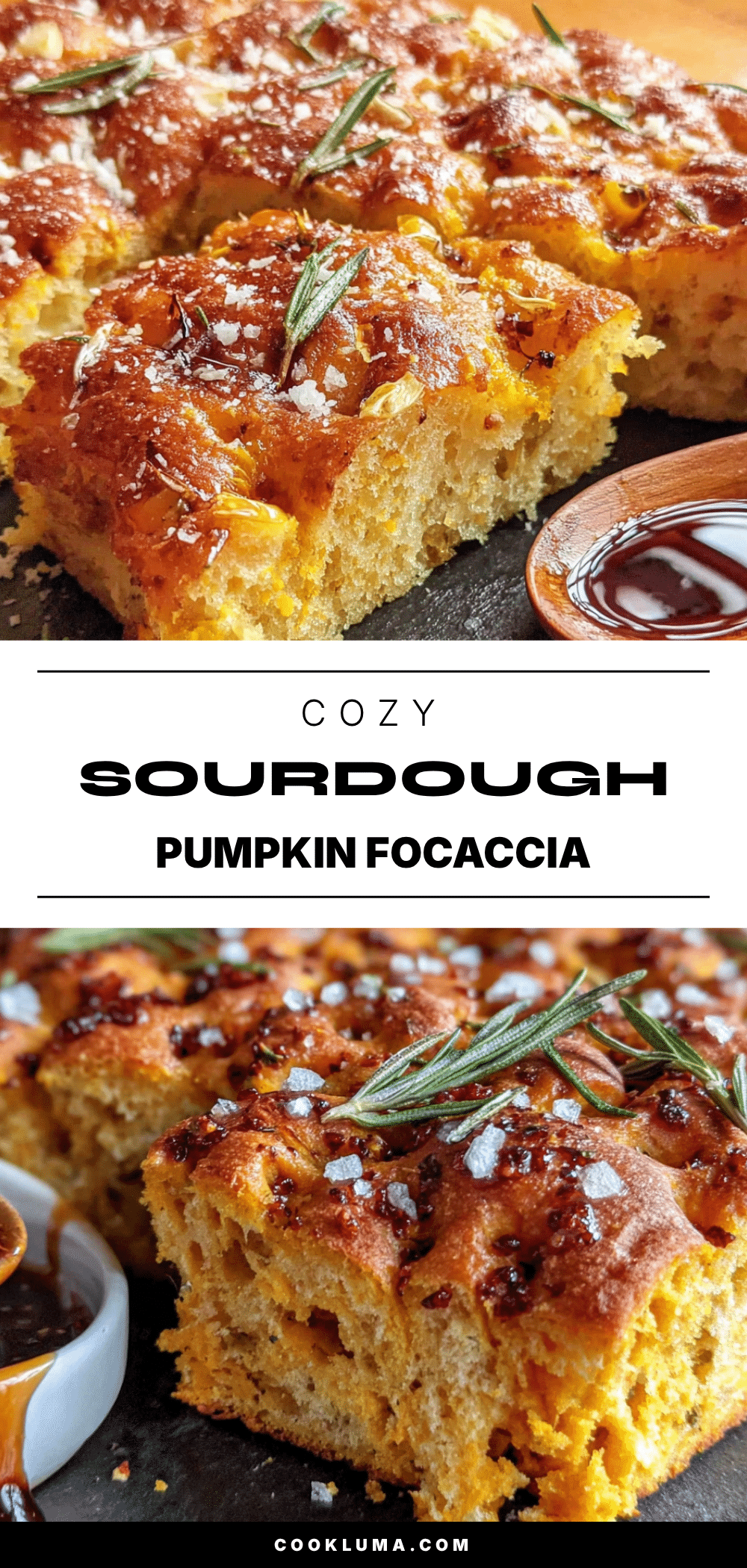
Cozy Sourdough Discard Pumpkin Focaccia – Easy Fall Recipe

This soft and pillowy focaccia features a gorgeous orange hue from pumpkin puree and a crispy, golden crust. The sourdough discard adds a subtle tang that pairs perfectly with the earthy sweetness of pumpkin, topped with flaky salt and fresh rosemary.
- Prep Time: 20 minutes
- Cook Time: 25 minutes
- Total Time: 2 hours 10 minutes
- Yield: 12 servings 1x
- Category: Bread
- Cuisine: American
Ingredients
- 1 cup (240g) sourdough discard (unfed, straight from the fridge)
- 1/2 cup (120g) pumpkin puree (100% pure, not pumpkin pie filling)
- 2 1/2 cups (315g) all-purpose flour (or bread flour for chewier texture)
- 1 cup (240ml) warm water (about 100°F)
- 2 tablespoons (30ml) olive oil (plus extra for drizzling)
- 1 1/2 teaspoons (9g) salt (fine sea salt or table salt)
- 1 teaspoon (4g) active dry yeast (optional, for more reliable rise)
- 2 tablespoons (30ml) olive oil (for the pan and topping)
- 1 tablespoon (2g) fresh rosemary, chopped (or 1 teaspoon dried)
- 1 teaspoon (3g) flaky sea salt (like Maldon)
- 1/4 cup (30g) pumpkin seeds (pepitas, optional for crunch)
Instructions
- Mix the dough: In a large bowl, combine sourdough discard, pumpkin puree, warm water, and olive oil. Stir until smooth. Add flour, salt, and yeast (if using). Mix with a wooden spoon until a shaggy, sticky dough forms.
- First rest (20 minutes): Cover the bowl with plastic wrap or a damp towel. Let rest for 20 minutes (autolyse).
- Stretch and fold (3 times, 20 minutes apart): Wet your hands. Grab one side of the dough, stretch it up, and fold it over itself. Rotate the bowl and repeat 4 times. Cover and rest 20 minutes. Repeat two more times.
- Bulk fermentation (1-2 hours): Cover the bowl and let the dough rise at room temperature until doubled in size (1 hour with yeast, 2 hours without).
- Prepare the pan: Drizzle 2 tablespoons of olive oil into a 9×13-inch baking pan. Spread to coat bottom and sides.
- Transfer and stretch: Gently scrape dough into the oiled pan. Using oiled fingers, gently stretch dough to fit the pan. Let rest 10 minutes, then stretch again until it fills the pan.
- Second rise (30-45 minutes): Cover the pan with plastic wrap or a towel. Let rise until puffy and reaches the edges.
- Preheat and dimple: Preheat oven to 425°F (220°C). Drizzle 1 tablespoon olive oil on top. Use fingertips to press deep dimples all over the dough. Sprinkle with rosemary, flaky salt, and pumpkin seeds (if using).
- Bake: Bake for 20-25 minutes until deep golden brown and bottom sounds hollow when tapped. Tent with foil at 15 minutes if browning too fast.
- Cool and serve: Let cool in pan for 5 minutes, then transfer to a wire rack. Drizzle with more olive oil if desired. Serve warm or at room temperature.
Notes
Use warm water (around 100°F) to activate yeast. Wet hands when handling sticky dough. Dimple all the way to the bottom of the pan for crispy oil pools. Let cool 5 minutes before slicing. Tastes even better the next day.
Nutrition
- Serving Size: 1 piece
- Calories: 180
- Sugar: 2
- Sodium: 300
- Fat: 7
- Saturated Fat: 1
- Carbohydrates: 26
- Fiber: 2
- Protein: 4
Keywords: sourdough discard, pumpkin focaccia, fall recipe, easy bread, sourdough, pumpkin, focaccia, autumn