The neighborhood potluck was in three hours and I’d completely forgotten. I’d volunteered to bring a side dish weeks ago, and now I was staring into my fridge like it held the answers to the universe. Everyone else would be bringing elaborate casseroles, homemade breads, maybe even that famous seven-layer dip that takes two days to assemble. I had a single butternut squash, a pomegranate I’d bought on a whim, and a block of feta that was staring at me with quiet judgment. Honestly, my kitchen looked like a sad still life of forgotten grocery items.
I mean, I could have just stopped at the store on the way. But that felt like admitting defeat. So I did what any slightly panicked person does—I started chopping. The squash was stubborn, let me tell you. It took some serious elbow grease and a near-miss with my thumb to get it into cubes. I tossed it with olive oil, salt, and a little cinnamon because, why not? It smelled cozy, at least. The pomegranate seeds were a last-minute addition—I just started pulling them out while the squash roasted, and somehow, they ended up scattered all over the pan.
I walked into that potluck with a baking dish that looked more like a happy accident than a planned dish. And you know what happened? People went crazy for it. Not because it was fancy, but because it was honest. It was warm, it was sweet, it had those little bursts of tartness from the pomegranate seeds that made everyone pause and say, “Wait, what is that?” It won the unofficial best side dish of the night, and I didn’t even have a recipe written down. That was three years ago, and I’ve been making this cozy roasted butternut squash with pomegranate seeds ever since. It’s the dish I bring when I have nothing to prove and everything to share.
Why You’ll Love This Recipe
This isn’t just another roasted vegetable recipe. This is the kind of dish that makes you close your eyes after the first bite. It’s comfort food reimagined—healthier, faster, but with the same soul-soothing satisfaction. Let me tell you why this one’s a keeper.
- Quick & Easy: Comes together in about 40 minutes, most of which is hands-off oven time. Perfect for busy weeknights or last-minute dinner party invitations.
- Simple Ingredients: No fancy grocery trips needed. You probably have the olive oil, salt, and cinnamon in your pantry right now.
- Perfect for Any Occasion: It works for Thanksgiving, a cozy Sunday dinner, or even a fancy brunch. It’s versatile like that.
- Crowd-Pleaser: I’ve served this to kids who “don’t like squash” and adults who asked for the recipe. It’s got that magic touch.
- Unbelievably Delicious: The combination of caramelized roasted butternut squash, tart pomegranate seeds, and salty feta is next-level comfort food.
What makes this recipe different from the rest? It’s the balance. The squash gets perfectly caramelized in the oven, bringing out its natural sweetness. The pomegranate seeds add a pop of acidity that cuts through the richness. And the feta? It adds a salty, creamy finish that ties everything together. I’ve tested this with different squashes, different cheeses, and different spice blends. This version is the one that works every single time. It’s not just another recipe—it’s my best version.
Ingredients You Will Need
This recipe uses simple, wholesome ingredients to deliver bold flavor and satisfying texture without the fuss. Most of these are pantry staples or easy to find at any grocery store.
For the Roasted Butternut Squash
- 1 medium butternut squash (about 2-2.5 lbs / 900g-1.1 kg), peeled, seeded, and cut into 1-inch cubes (look for one that feels heavy for its size—it’s fresher)
- 3 tablespoons olive oil (extra virgin gives the best flavor, but regular works fine too)
- 1 teaspoon ground cinnamon (I prefer Simply Organic for its warm, fragrant profile)
- ½ teaspoon salt (use flaky sea salt if you have it—it makes a difference)
- ¼ teaspoon black pepper (freshly ground is always better)
- Pinch of cayenne pepper (optional, but it adds a subtle warmth that doesn’t make it spicy)
For the Topping
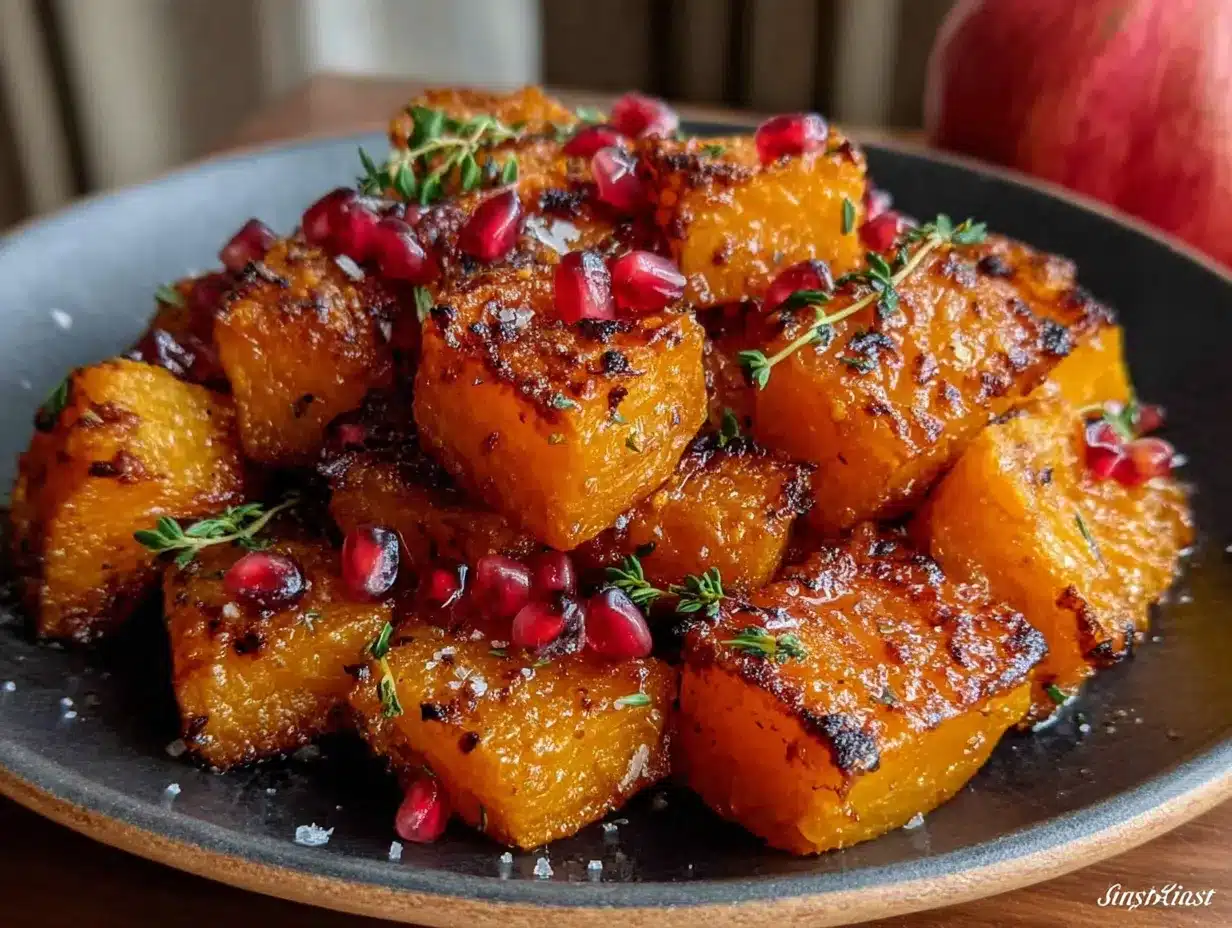
- ½ cup pomegranate seeds (about 1 small pomegranate; you can also buy pre-seeded containers to save time)
- ⅓ cup crumbled feta cheese (use a good quality block and crumble it yourself—it’s creamier)
- 2 tablespoons fresh parsley, chopped (flat-leaf parsley has a cleaner taste, but curly works too)
- 1 tablespoon toasted pumpkin seeds (optional, but adds a lovely crunch)
For the Drizzle (Optional but Recommended)
- 1 tablespoon balsamic glaze (store-bought is fine, or you can reduce balsamic vinegar on the stove)
- 1 tablespoon honey or maple syrup (use maple syrup for a vegan option)
Substitution Tips: If you can’t find butternut squash, use acorn squash or sweet potatoes instead. For a dairy-free version, skip the feta or use a plant-based feta alternative. No pomegranate? Dried cranberries work in a pinch, though the texture will be different. And if you’re not a fan of cinnamon, try smoked paprika or cumin for a savory twist.
Equipment Needed
You don’t need a fancy kitchen to make this dish. Here’s what you’ll need:
- Large baking sheet (rimmed is best to catch any juices; I use a half-sheet pan for even roasting)
- Chef’s knife (a sharp one makes cutting squash much easier—trust me on this)
- Vegetable peeler (a Y-shaped peeler works wonders on butternut squash skin)
- Cutting board (get a sturdy one—squash is tough)
- Large mixing bowl (for tossing the squash with oil and spices)
- Serving platter or bowl (something wide to show off the colors)
Budget-Friendly Tip: If you don’t have a good chef’s knife, a sharp serrated knife can work for cutting squash. And if you’re really in a pinch, most grocery stores sell pre-cut butternut squash cubes. It’s a little more expensive, but it saves time and effort.
Preparation Method
Let’s get cooking. This recipe is straightforward, but I’ll walk you through every step so you get the best results.
- Preheat your oven to 400°F (200°C). Line your baking sheet with parchment paper for easy cleanup. Trust me, you’ll thank yourself later.
- Prepare the butternut squash. Using your vegetable peeler, remove the skin completely. Cut off the stem end and the bottom. Slice the squash in half lengthwise and scoop out the seeds with a spoon. Cut the flesh into 1-inch cubes. Try to make them uniform in size so they cook evenly. This takes about 10 minutes, but you’ll get faster with practice.
- Season the squash. In your large mixing bowl, combine the cubed squash with olive oil, cinnamon, salt, black pepper, and a pinch of cayenne if using. Toss everything together with your hands or a spatula until every piece is coated. The smell at this point is already amazing—warm and slightly sweet.
- Spread on the baking sheet. Arrange the squash in a single layer on your prepared baking sheet. Don’t overcrowd—if the pieces are touching too much, they’ll steam instead of roast. If you need to, use two baking sheets. Give them a little space to breathe.
- Roast for 25-30 minutes. Halfway through, flip the pieces with a spatula so they brown evenly. You’re looking for deep golden edges and a fork-tender center. The squash should be caramelized on the outside but soft and creamy on the inside. If you want extra caramelization, broil for the last 2 minutes—but watch closely so they don’t burn.
- Prepare the toppings while the squash roasts. Deseed your pomegranate if you’re using a whole one. Here’s my trick: cut it in half, hold it cut-side down over a bowl, and whack the back with a wooden spoon. The seeds fall right out. Crumble your feta and chop your parsley. Toast the pumpkin seeds in a dry skillet over medium heat for 2-3 minutes until they start to pop.
- Assemble the dish. Transfer the roasted squash to your serving platter. Sprinkle the pomegranate seeds, crumbled feta, and chopped parsley over the top. Add the toasted pumpkin seeds if using. Drizzle with balsamic glaze and a little honey or maple syrup right before serving.
- Serve warm or at room temperature. This dish is delicious both ways. If you’re serving it later, just let it come to room temperature before adding the toppings so the feta doesn’t get too soft.
Cooking Tips & Techniques
I’ve made this recipe more times than I can count, and I’ve learned a few things along the way. Here are my best tips for getting it right every time.
Don’t skip the cinnamon. I know it sounds weird with squash, but it brings out the natural sweetness in a way that salt alone can’t. It’s not overpowering—it’s just enough to make you wonder what that warm flavor is.
Cut the squash evenly. This is the biggest mistake people make. If your cubes are different sizes, some will burn while others stay raw. Take the extra two minutes to make them uniform. Your future self will thank you.
Use a hot oven. 400°F is the sweet spot. Too low and the squash will get mushy before it caramelizes. Too high and the outside burns before the inside is done. I learned this the hard way after serving charcoal-flavored squash to my book club. Not my finest moment.
Add the toppings at the last minute. Pomegranate seeds get soggy if they sit on hot squash for too long. Feta melts into a puddle if it’s too warm. Wait until you’re ready to serve, then sprinkle everything on. It keeps the textures distinct and beautiful.
Multitask like a pro. While the squash roasts, prep your toppings and clean up your workspace. This dish comes together so quickly that you’ll have time to set the table and pour yourself a glass of wine before it’s done.
Variations & Adaptations
One of the best things about this recipe is how easy it is to adapt. Here are a few ways I’ve changed it up over the years.
Vegan Version: Skip the feta and use a vegan feta alternative or toasted pine nuts for creaminess. Use maple syrup instead of honey for the drizzle. It’s just as satisfying, I promise.
Spicy Twist: Add ½ teaspoon of smoked paprika and ¼ teaspoon of chipotle powder to the seasoning mix. The smoky heat pairs beautifully with the sweet squash and tart pomegranate. I made this version for a Super Bowl party and it disappeared in minutes.
Herb Lover’s Variation: Swap the parsley for fresh mint or cilantro. Mint especially works wonders with the pomegranate seeds—it’s a classic Middle Eastern flavor combination. Add a sprinkle of sumac for extra tang.
Grain Bowl Style: Serve the roasted squash over a bed of cooked quinoa or farro. Add some arugula, the pomegranate seeds, feta, and a lemon-tahini dressing. It turns into a hearty main dish salad that’s perfect for lunch.
Maple-Balsamic Version: Instead of the cinnamon, toss the squash with 2 tablespoons of balsamic vinegar and 1 tablespoon of maple syrup before roasting. The vinegar caramelizes and creates a tangy-sweet glaze that’s absolutely addictive.
Serving & Storage Suggestions
This dish is incredibly versatile when it comes to serving. Here’s how to make the most of it.
Serving Temperature: Serve it warm straight from the oven, or let it cool to room temperature for a more relaxed presentation. I actually prefer it at room temperature—the flavors seem to meld together better.
Presentation Tip: Use a wide, shallow white platter to show off the vibrant colors. The orange squash, red pomegranate seeds, white feta, and green parsley make for a stunning visual. It’s almost too pretty to eat. Almost.
What to Serve With It: This pairs beautifully with roasted chicken, grilled salmon, or a simple lentil soup. For a holiday meal, it’s perfect alongside a classic roast turkey or honey-glazed ham. I also love it with a crusty baguette and a green salad for a light dinner.
Storage: Store leftovers in an airtight container in the refrigerator for up to 4 days. Keep the toppings separate if you can—the pomegranate seeds and feta will last longer that way.
Reheating: Reheat the squash in a 350°F oven for 5-7 minutes, or in a skillet over medium heat. The microwave works in a pinch, but the squash will be softer. Add fresh toppings after reheating for the best texture.
Flavor Development: Here’s a little secret—this dish actually tastes better the next day. The flavors have time to meld together, and the squash gets even sweeter. I sometimes make it a day ahead on purpose.
Nutritional Information & Benefits
This dish is as good for you as it is delicious. Here’s a rough breakdown per serving (based on 6 servings).
| Nutrient | Amount Per Serving |
|---|---|
| Calories | 185 |
| Total Fat | 10g |
| Saturated Fat | 3g |
| Carbohydrates | 22g |
| Fiber | 5g |
| Sugar | 9g |
| Protein | 5g |
| Vitamin A | 200% DV |
| Vitamin C | 35% DV |
| Calcium | 10% DV |
Health Benefits: Butternut squash is packed with vitamin A, which is great for your eyes and immune system. Pomegranate seeds are loaded with antioxidants that fight inflammation. Feta provides calcium and protein without being too heavy. This is comfort food that actually nourishes you.
Dietary Considerations: This recipe is naturally gluten-free and vegetarian. With the substitutions mentioned above, it can easily be made vegan and dairy-free. It’s also relatively low in calories for such a satisfying dish.
Conclusion
This cozy roasted butternut squash with pomegranate seeds has become my go-to dish for almost every occasion. It started as a panic-induced experiment and turned into a recipe that I genuinely look forward to making. There’s something about the way the squash caramelizes in the oven, the way the pomegranate seeds pop in your mouth, the way the feta melts into little salty pockets—it just works.
I love this recipe because it’s forgiving. You can adjust the spices, swap the cheese, or change up the toppings, and it still turns out beautiful. It’s the kind of dish that makes you look like you spent hours in the kitchen when really, you just let the oven do the work. And honestly, isn’t that the best kind of cooking?
I’d love to hear how this turns out for you. Did you try a different variation? Did your family love it as much as mine does? Drop a comment below and share your experience. And if you’re looking for more cozy, comforting recipes, check out my cozy butternut squash soup or my pomegranate arugula salad. Happy cooking, friends!
Frequently Asked Questions
Can I use pre-cut butternut squash?
Absolutely. It saves time and effort. Just make sure the pieces are roughly the same size so they cook evenly. If they’re smaller than 1-inch cubes, reduce the roasting time by 5 minutes.
How do I deseed a pomegranate without making a mess?
Cut the pomegranate in half horizontally. Hold it cut-side down over a bowl of water. Whack the back with a wooden spoon—the seeds sink to the bottom and the membrane floats. Strain and pat dry. No stains, no mess.
Can I make this dish ahead of time?
Yes! Roast the squash up to 2 days ahead and store it in the fridge. When you’re ready to serve, reheat it in the oven and add the toppings fresh. The pomegranate seeds and feta should always be added at the last minute.
What can I use instead of feta cheese?
Goat cheese is a great substitute—it’s creamier and tangy. For a dairy-free option, try crumbled tofu that’s been marinated in lemon juice and salt. Or just leave the cheese out entirely; the dish is still delicious without it.
Can I freeze roasted butternut squash?
You can freeze the roasted squash on its own for up to 3 months. Let it cool completely, then transfer to a freezer-safe bag. Thaw in the fridge overnight and reheat in the oven. Don’t freeze it with the toppings—they won’t thaw well.
Pin This Recipe!
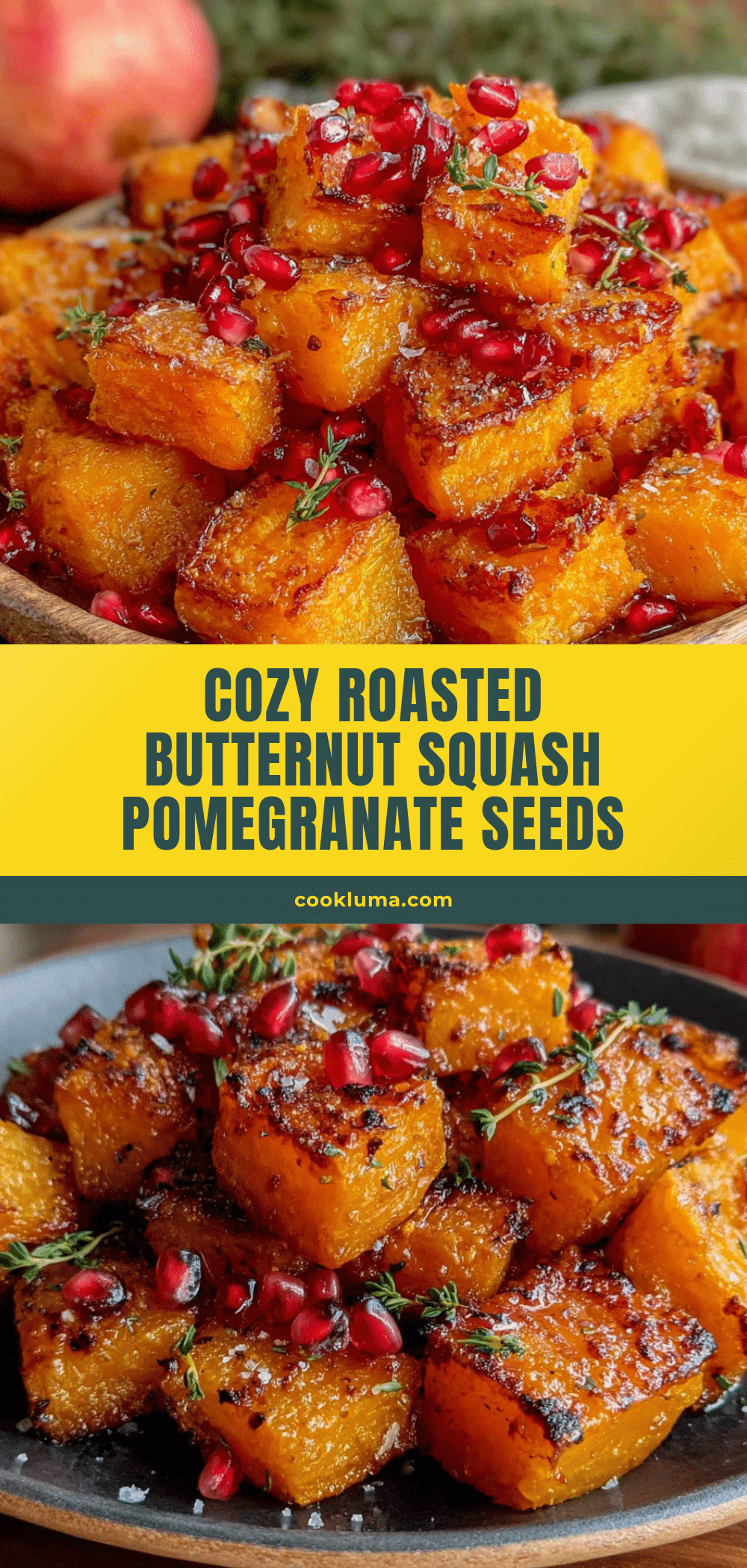
Cozy Roasted Butternut Squash with Pomegranate Seeds
This cozy roasted butternut squash with pomegranate seeds is a quick and easy side dish that’s perfect for any occasion. The caramelized squash, tart pomegranate seeds, and salty feta create a beautiful balance of flavors.
- Prep Time: 15 minutes
- Cook Time: 30 minutes
- Total Time: 45 minutes
- Yield: 6 servings 1x
- Category: Side Dish
- Cuisine: American
Ingredients
- 1 medium butternut squash (about 2–2.5 lbs / 900g-1.1 kg), peeled, seeded, and cut into 1-inch cubes
- 3 tablespoons olive oil
- 1 teaspoon ground cinnamon
- ½ teaspoon salt (preferably flaky sea salt)
- ¼ teaspoon black pepper (freshly ground)
- Pinch of cayenne pepper (optional)
- ½ cup pomegranate seeds (about 1 small pomegranate)
- ⅓ cup crumbled feta cheese
- 2 tablespoons fresh parsley, chopped
- 1 tablespoon toasted pumpkin seeds (optional)
- 1 tablespoon balsamic glaze (optional)
- 1 tablespoon honey or maple syrup (optional)
Instructions
- Preheat your oven to 400°F (200°C). Line your baking sheet with parchment paper for easy cleanup.
- Prepare the butternut squash: Using a vegetable peeler, remove the skin completely. Cut off the stem end and the bottom. Slice the squash in half lengthwise and scoop out the seeds with a spoon. Cut the flesh into 1-inch cubes, making them uniform in size.
- Season the squash: In a large mixing bowl, combine the cubed squash with olive oil, cinnamon, salt, black pepper, and a pinch of cayenne if using. Toss everything together until every piece is coated.
- Spread the squash in a single layer on the prepared baking sheet. Do not overcrowd; use two baking sheets if needed.
- Roast for 25-30 minutes, flipping halfway through, until the squash is deep golden on the edges and fork-tender. For extra caramelization, broil for the last 2 minutes, watching closely.
- While the squash roasts, prepare the toppings: Deseed the pomegranate (cut in half, hold cut-side down over a bowl, and whack the back with a wooden spoon). Crumble the feta, chop the parsley, and toast the pumpkin seeds in a dry skillet over medium heat for 2-3 minutes until they start to pop.
- Assemble the dish: Transfer the roasted squash to a serving platter. Sprinkle pomegranate seeds, crumbled feta, chopped parsley, and toasted pumpkin seeds (if using) over the top. Drizzle with balsamic glaze and honey or maple syrup right before serving.
- Serve warm or at room temperature. If serving later, let it come to room temperature before adding the toppings.
Notes
Don’t skip the cinnamon—it brings out the natural sweetness of the squash. Cut the squash evenly to ensure even cooking. Add toppings at the last minute to keep textures distinct. This dish tastes even better the next day as flavors meld. For a vegan version, skip the feta or use a plant-based alternative and use maple syrup instead of honey.
Nutrition
- Serving Size: 1 serving (about 1 c
- Calories: 185
- Sugar: 9
- Sodium: 350
- Fat: 10
- Saturated Fat: 3
- Carbohydrates: 22
- Fiber: 5
- Protein: 5
Keywords: roasted butternut squash, pomegranate seeds, feta, fall side dish, holiday side dish, easy roasted vegetables