The woman at the farmers market stall watched me circle back three times before she finally spoke. I was holding a butternut squash already, but those acorn squash kept catching my eye—dark green with that orange blush, like they were trying to look like little sunsets. She didn’t try to sell me anything. She just said, “You’re overthinking it. Grab one and I’ll tell you what to do with it.” So I did. And she did. She told me about her mother-in-law who used to stuff them with whatever was left in the pantry, and how that became the most requested dish at every family gathering. No written recipe, no measurements—just a philosophy of making something humble feel special.
I went home with three acorn squash and a vague idea, and honestly, my first attempt was a disaster. Too watery. Bland. The quinoa was somehow both crunchy and mushy. But I kept at it, tweaking and testing, and somewhere around attempt number four, it clicked. This cozy quinoa stuffed acorn squash became the dish I bring to Friendsgiving, the one that gets the “wait, you made this?” reaction, and the one that finally convinced me that Thanksgiving sides can steal the whole show.
Maybe you’ve been there—staring down a holiday menu, wondering if you can bring something that doesn’t feel like an afterthought. Something that looks impressive but doesn’t require you to hover over a stove for hours. This recipe is that dish. It’s vegetarian-friendly, packed with fall flavors, and honestly? It might just become the thing your family asks for every year. I know it did for mine.
Why You’ll Love This Recipe
This isn’t your average stuffed squash situation. I’ve made enough versions to know what works and what doesn’t, and this one hits every mark. Here’s why it deserves a spot on your Thanksgiving table:
- Looks Fancy, Zero Stress : These stuffed squash halves look like you spent all day in the kitchen. But honestly? The oven does most of the work. You’re basically roasting and stuffing at the same time.
- Make-Ahead Friendly : You can prep the filling a day ahead, stuff the squash in the morning, and pop them in the oven when guests arrive. No last-minute panic.
- Naturally Vegetarian : Finally, a hearty side that your vegetarian friends can actually eat without picking around things. It’s filling enough to be a main dish too.
- Packed with Fall Flavors : We’re talking roasted squash, nutty quinoa, tart cranberries, toasted pecans, and warm spices. It tastes like autumn in a bowl.
- Crowd-Pleaser : I’ve watched confirmed meat-eaters go back for seconds of this. The texture combo—creamy squash, fluffy quinoa, crunchy nuts—is seriously addictive.
What makes this recipe different from the dozens of stuffed squash recipes out there? Two things. First, I roast the squash cut-side down first, which gives you perfectly tender edges without that soggy bottom problem. Second, I toast the quinoa before cooking it—a trick that adds a nutty depth you won’t get from just boiling it. It’s a small step that makes a big difference, and once you try it, you won’t go back.
This is comfort food that feels good to eat. It’s the kind of dish that makes you close your eyes after the first bite, and honestly? That’s exactly what Thanksgiving should be about.
What Ingredients You Will Need
This recipe uses simple, wholesome ingredients that come together to create something truly special. Most of these are pantry staples or easy to find at any grocery store during fall.
For the Squash
- 3 medium acorn squash (about 1.5 pounds each; look for ones that feel heavy for their size and have mostly green skin with some orange patches)
- 2 tablespoons olive oil (for brushing the squash; avocado oil works too)
- ½ teaspoon salt (I use fine sea salt for even seasoning)
- ¼ teaspoon black pepper (freshly ground, always)
For the Quinoa Filling
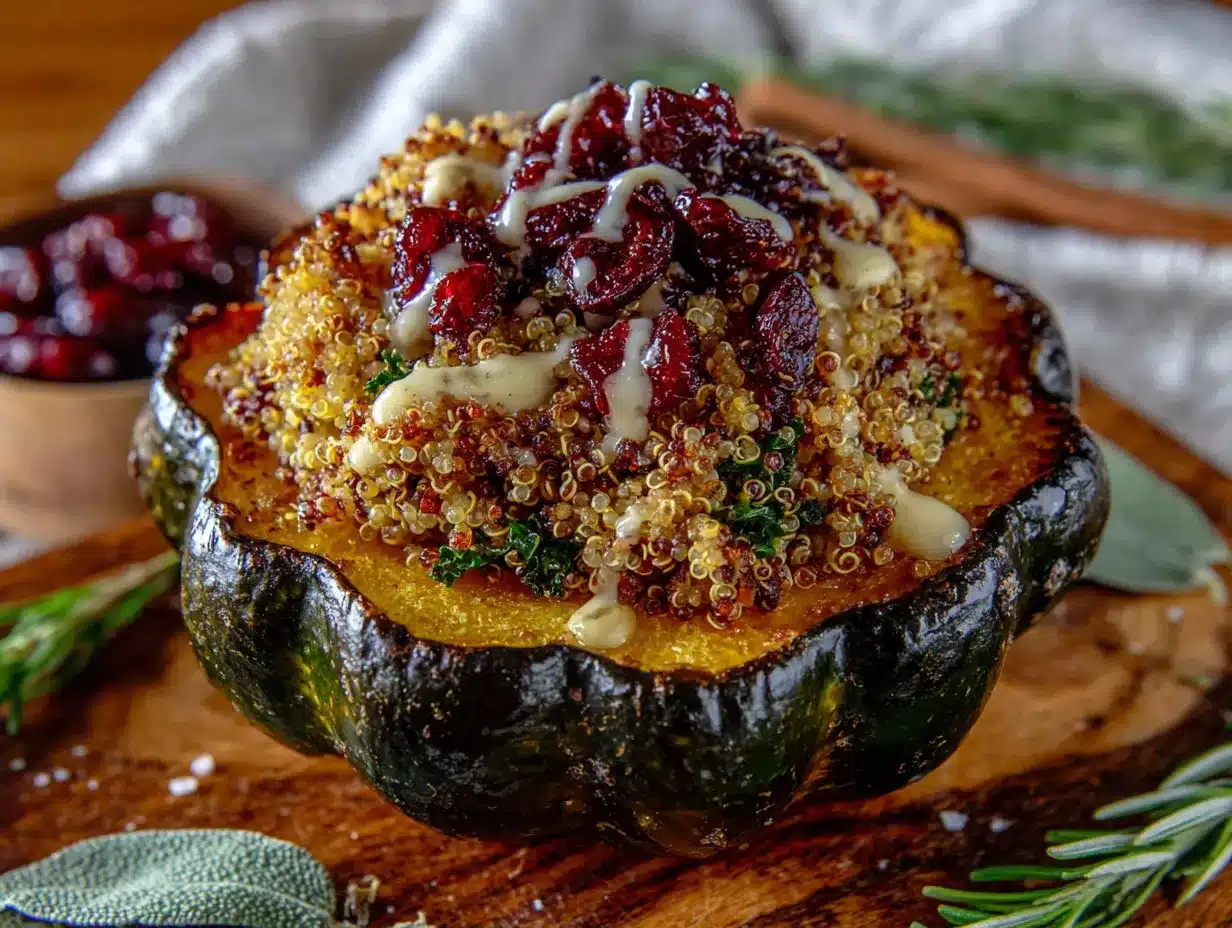
- 1 cup quinoa (any color works; I prefer tri-color for the texture and visual appeal)
- 1 ½ cups vegetable broth (low-sodium; chicken broth works if you’re not keeping it vegetarian)
- 1 tablespoon olive oil (for sautéing)
- 1 medium yellow onion, diced (about 1 cup)
- 3 cloves garlic, minced (fresh, not jarred—trust me on this)
- 1 medium apple, diced (Honeycrisp or Fuji; you want something that holds its shape when cooked)
- ½ cup dried cranberries (unsweetened if you can find them; regular is fine too)
- ½ cup pecans, chopped (toast them first for maximum flavor)
- 1 teaspoon dried sage (rubbed sage is best; it distributes more evenly than ground)
- ½ teaspoon dried thyme
- ½ teaspoon cinnamon (trust the cinnamon—it ties everything together)
- ¼ teaspoon nutmeg (freshly grated if you have it; pre-ground is fine)
- Salt and pepper to taste
- ¼ cup fresh parsley, chopped (for brightness and color; optional but recommended)
For the Garnish (Optional but Pretty)
- Extra toasted pecans
- Fresh sage leaves
- Drizzle of maple syrup or balsamic glaze
- Crumbled feta or goat cheese (if you’re not keeping it vegan)
A few ingredient notes that I’ve learned the hard way: Don’t skip toasting the quinoa. I know it sounds like an extra step, but it takes three minutes and adds a nutty flavor that makes the whole dish better. For the squash, pick ones that are similar in size so they cook evenly. And if you can’t find dried cranberries, dried cherries or chopped dried apricots work beautifully too—just adjust the sweetness level to your taste.
Equipment Needed
You don’t need a fancy kitchen to pull this off. Here’s what you’ll actually use:
- Sharp chef’s knife : Acorn squash are tough. A dull knife is a recipe for frustration (and possibly a trip to urgent care).
- Cutting board : Preferably one with a groove to catch juices.
- Large baking sheet : Rimmed, so nothing slides off. I use a half-sheet pan.
- Parchment paper or silicone baking mat : Makes cleanup infinitely easier.
- Medium saucepan : For cooking the quinoa.
- Large skillet : For sautéing the filling ingredients.
- Mixing bowl : For combining the stuffing mixture.
- Measuring cups and spoons : Standard set.
- Kitchen spoon or spatula : For stuffing the squash.
- Pastry brush (optional) : For brushing oil on the squash. A paper towel works too.
If you don’t have a pastry brush, just drizzle the oil over the cut sides of the squash and rub it in with your fingers. And if you’re using a smaller baking sheet, you might need to roast the squash in batches. That’s totally fine—just keep the first batch warm while the second one finishes.
Preparation Method
Let’s walk through this step by step. I’ve included all the little details that make the difference between good squash and “can I have the recipe?” squash.
Step 1: Prep the Squash
Preheat your oven to 400°F (200°C). Line a large baking sheet with parchment paper. Carefully cut each acorn squash in half from stem to tip. Scoop out the seeds and stringy bits with a spoon—a grapefruit spoon works great for this if you have one. Brush the cut sides and the cavities with olive oil, then season with salt and pepper. Place the squash halves cut-side down on the prepared baking sheet. Roast for 25 minutes. This initial cut-side-down roasting is the secret to tender, caramelized edges without any sogginess.
Step 2: Toast the Quinoa
While the squash roasts, place a medium saucepan over medium heat. Add the quinoa and toast it, stirring frequently, for about 3-4 minutes. You’ll know it’s ready when it smells nutty and starts to pop slightly. Be careful not to burn it—it happens fast. Once toasted, carefully add the vegetable broth (it will sizzle). Bring to a boil, then reduce heat to low, cover, and simmer for 15 minutes. Remove from heat and let it sit, covered, for 5 minutes. Fluff with a fork.
Step 3: Make the Filling
While the quinoa cooks, heat 1 tablespoon of olive oil in a large skillet over medium heat. Add the diced onion and cook until translucent, about 5-6 minutes. Add the minced garlic and cook for another 30 seconds until fragrant. Add the diced apple and cook for 2-3 minutes—you want it to soften slightly but still hold its shape. Stir in the dried cranberries, toasted pecans, sage, thyme, cinnamon, nutmeg, and a pinch of salt and pepper. Cook for 1 minute to bloom the spices. Remove from heat.
Step 4: Combine Everything
In a large mixing bowl, combine the cooked quinoa with the apple-cranberry mixture. Add the fresh parsley if using, and stir gently to combine. Taste and adjust seasoning—this is where you add more salt, pepper, or even a tiny pinch of cinnamon if it needs it. The filling should be savory with hints of sweetness from the apple and cranberries.
Step 5: Stuff the Squash
Remove the squash from the oven and carefully flip them over using tongs. The squash will be tender but should hold their shape. Spoon the quinoa filling into each cavity, mounding it slightly. Don’t pack it too tightly—you want some texture, not a dense brick. Return the stuffed squash to the oven and roast for another 15-20 minutes, until the filling is heated through and the squash is fork-tender.
Step 6: Rest and Serve
Let the stuffed squash rest for 5 minutes before serving. This allows the flavors to settle and makes them easier to handle. Garnish with extra toasted pecans, fresh sage leaves, a drizzle of maple syrup, or crumbled cheese if you like. Serve warm.
Cooking Tips & Techniques
After making this recipe more times than I care to count, here are the things I wish someone had told me:
Don’t overcook the squash. Acorn squash can go from perfectly tender to mushy surprisingly fast. Start checking at the 35-minute mark. You want it tender enough that a fork slides in easily, but not so soft that it collapses when you pick it up.
Toast your nuts and quinoa separately. I learned this the hard way—if you try to toast them together, the quinoa burns before the nuts are done. Toast the quinoa in the saucepan before adding liquid, and toast the pecans in a dry skillet over medium heat for 3-4 minutes until fragrant.
Season in layers. Don’t just dump all the salt in at the end. Season the squash before roasting, season the quinoa water, and season the filling. Each layer builds flavor, and you’ll end up with a dish that tastes balanced rather than flat.
Watch your liquid ratio. If you’re using a different type of quinoa (white, red, black), check the package instructions. Some need slightly more or less liquid. I’ve had a few batches turn out mushy because I didn’t adjust.
Make extra filling. I always make a little more quinoa mixture than I think I’ll need. You can serve any extra on the side, or use it as a stuffing for bell peppers or mushrooms later in the week.
Variations & Adaptations
This recipe is endlessly adaptable. Here are some of my favorite twists:
Vegan Version : The recipe is already vegan as written if you skip the cheese garnish. Use maple syrup instead of honey if you’re adding a sweet drizzle.
Gluten-Free : This recipe is naturally gluten-free. Just double-check your vegetable broth label to be sure.
Add Protein : Stir in 1 cup of cooked chickpeas, crumbled sausage (cook it first), or shredded rotisserie chicken to make it more substantial. I’ve done all three, and the chickpea version is my personal favorite.
Switch the Grains : Don’t have quinoa? Use farro, wild rice, or brown rice instead. Just adjust the cooking time and liquid ratio accordingly. Farro takes about 30 minutes, wild rice about 45.
Seasonal Swaps : In the summer, try this with zucchini boats instead of acorn squash. In winter, swap the dried cranberries for dried figs or dates. The apple can be replaced with pear or even finely chopped celery for a savory twist.
Spice It Up : Add a pinch of cayenne pepper or red pepper flakes to the filling if you want a little heat. It plays surprisingly well with the sweetness of the squash.
Serving & Storage Suggestions
These stuffed squash halves are stunning on a platter. Serve them warm, garnished with a sprinkle of fresh herbs and maybe a drizzle of balsamic glaze if you’re feeling fancy. They pair beautifully with roasted turkey, mashed potatoes, or a simple green salad.
For Thanksgiving, I like to serve these alongside a roasted brussels sprouts with balsamic glaze and some creamy garlic mashed potatoes. The combination of textures and flavors is pure comfort.
Storage : Leftover stuffed squash keeps well in the refrigerator for up to 4 days. Store them in an airtight container. The flavors actually deepen overnight, so leftovers might be even better.
Reheating : The best way to reheat is in the oven at 350°F (175°C) for about 10-15 minutes. The microwave works in a pinch, but the squash will be softer. If the filling seems dry, add a tiny splash of broth or water before reheating.
Freezing : You can freeze the stuffed squash for up to 3 months. Assemble them completely, then freeze on a baking sheet until solid. Transfer to a freezer-safe bag or container. To reheat, thaw overnight in the refrigerator and bake at 350°F until heated through, about 20-25 minutes.
Nutritional Information & Benefits
This dish is as nutritious as it is delicious. Here’s a rough estimate per serving (one stuffed squash half):
- Calories : 320
- Protein : 8g
- Carbohydrates : 52g
- Fiber : 9g
- Sugar : 14g (mostly natural from the squash and cranberries)
- Fat : 12g
- Sodium : 380mg
Acorn squash is packed with vitamin A, vitamin C, and potassium. Quinoa provides complete protein and all nine essential amino acids, plus plenty of fiber. The pecans add healthy fats and magnesium, while the apple and cranberries contribute antioxidants. It’s a well-rounded dish that leaves you feeling satisfied without that heavy Thanksgiving food coma.
Frequently Asked Questions
Can I make this recipe ahead of time?
Absolutely. You can prep the filling up to two days in advance and store it in the refrigerator. You can also roast the squash halves a day ahead, stuff them, and keep them covered in the fridge. When you’re ready to serve, just pop them in the oven at 375°F for about 20 minutes until heated through.
Do I have to peel the acorn squash?
Nope. The skin of acorn squash is edible and becomes tender when roasted. It’s actually where a lot of the fiber is. Plus, leaving the skin on helps the squash hold its shape when stuffed. Just make sure to wash the squash well before cutting.
Can I use a different type of squash?
Yes! Butternut squash works well—just cut it in half lengthwise and scoop out the seeds. Delicata squash is also great and has edible skin too. For smaller squash like carnival or sweet dumpling, you might need to adjust the roasting time. Stay away from spaghetti squash for this one; the texture is too different.
How do I keep the squash from getting soggy?
The cut-side-down roasting trick is your best friend here. It allows steam to escape and caramelizes the cut surface. Also, make sure your filling isn’t too wet—drain any excess liquid from the cooked quinoa and don’t overcook the apple. If your filling seems loose, add a handful of breadcrumbs or extra nuts to absorb moisture.
Can I freeze the stuffed squash?
Yes, but with a caveat. The texture of the squash will be softer after freezing and thawing. If you’re okay with that, go ahead and freeze them. I recommend freezing them before the final bake, then baking straight from frozen (add about 10 minutes to the cooking time). They’re still delicious, just not quite as firm as fresh.
Conclusion
This cozy quinoa stuffed acorn squash has become my go-to dish for fall gatherings, and I think it deserves a spot on your table too. It’s the kind of recipe that looks like you fussed but actually comes together with minimal stress—which, let’s be honest, is exactly what we need during the holiday season.
What I love most about this dish is how it brings people together. It’s hearty enough for vegetarians, impressive enough for the turkey lovers, and seasonal enough to feel special. Every time I make it, I think about that woman at the farmers market who shared her mother-in-law’s philosophy with me. She was right. Sometimes the best dishes come from making something humble feel extraordinary.
I’d love to hear how yours turns out. Did you try a variation? Add your own twist? Drop a comment below and let me know—I read every single one. And if you’re looking for more Thanksgiving inspiration, don’t miss our best Thanksgiving side dishes roundup. Happy cooking, friends!
Pin This Recipe!
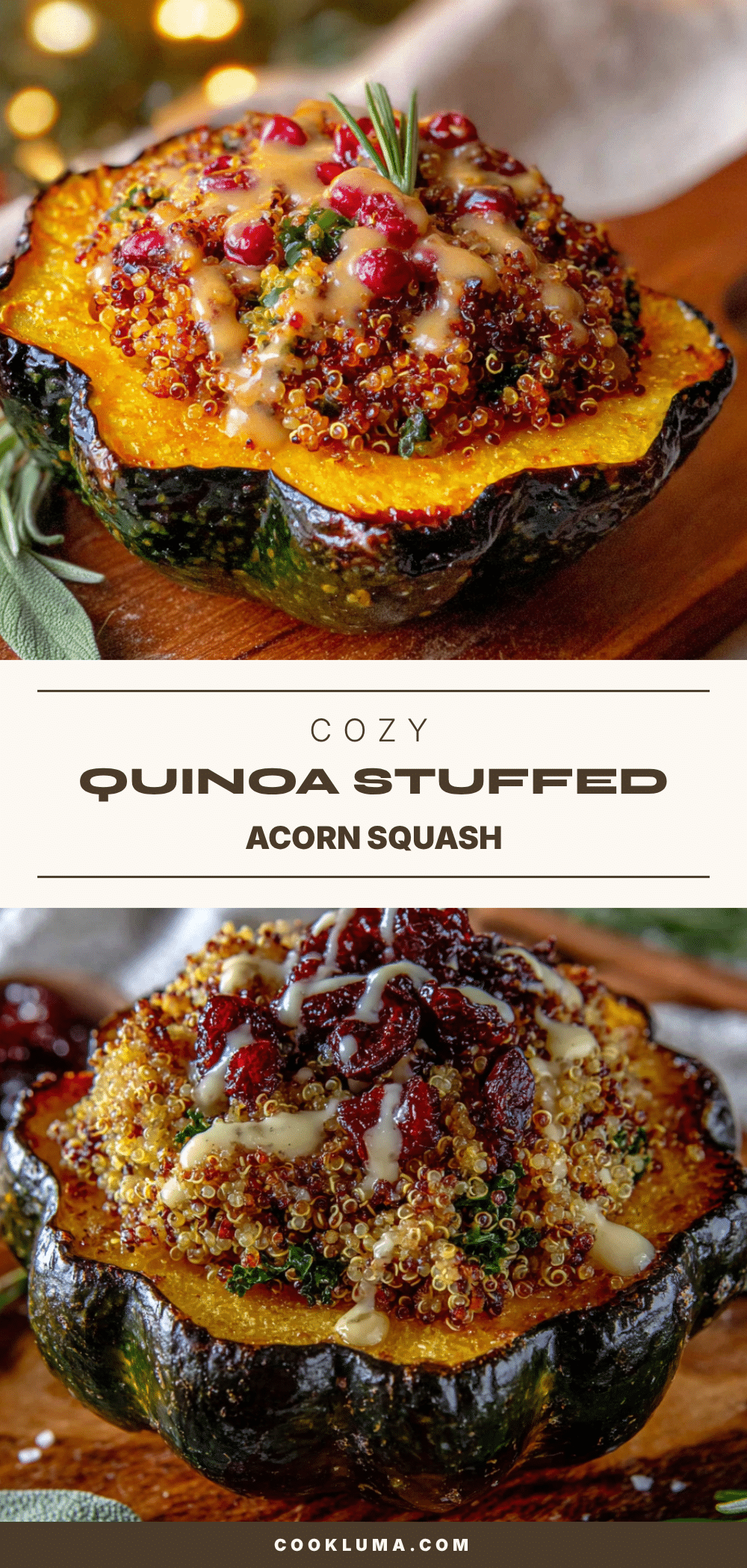
Cozy Quinoa Stuffed Acorn Squash: Best Thanksgiving Side
This vegetarian-friendly stuffed acorn squash features roasted squash halves filled with nutty quinoa, tart cranberries, toasted pecans, and warm fall spices. It’s a stunning, make-ahead side dish that’s perfect for Thanksgiving or any autumn gathering.
- Prep Time: 20 minutes
- Cook Time: 45 minutes
- Total Time: 1 hour 5 minutes
- Yield: 6 servings 1x
- Category: Side Dish
- Cuisine: American
Ingredients
- 3 medium acorn squash (about 1.5 pounds each)
- 2 tablespoons olive oil (for brushing the squash)
- ½ teaspoon fine sea salt
- ¼ teaspoon freshly ground black pepper
- 1 cup quinoa (any color; tri-color preferred)
- 1 ½ cups low-sodium vegetable broth
- 1 tablespoon olive oil (for sautéing)
- 1 medium yellow onion, diced (about 1 cup)
- 3 cloves garlic, minced
- 1 medium apple (Honeycrisp or Fuji), diced
- ½ cup dried cranberries (unsweetened if available)
- ½ cup pecans, chopped and toasted
- 1 teaspoon dried rubbed sage
- ½ teaspoon dried thyme
- ½ teaspoon cinnamon
- ¼ teaspoon nutmeg (freshly grated or ground)
- Salt and pepper to taste
- ¼ cup fresh parsley, chopped (optional)
- For garnish (optional): extra toasted pecans, fresh sage leaves, drizzle of maple syrup or balsamic glaze, crumbled feta or goat cheese
Instructions
- Preheat oven to 400°F (200°C). Line a large baking sheet with parchment paper.
- Cut each acorn squash in half from stem to tip. Scoop out seeds and stringy bits. Brush cut sides and cavities with olive oil; season with salt and pepper. Place cut-side down on prepared baking sheet. Roast for 25 minutes.
- While squash roasts, place a medium saucepan over medium heat. Add quinoa and toast, stirring frequently, for 3-4 minutes until nutty and slightly popping. Carefully add vegetable broth (it will sizzle). Bring to a boil, reduce heat to low, cover, and simmer for 15 minutes. Remove from heat, let sit covered for 5 minutes, then fluff with a fork.
- Heat 1 tablespoon olive oil in a large skillet over medium heat. Add diced onion and cook until translucent, about 5-6 minutes. Add minced garlic and cook for 30 seconds until fragrant. Add diced apple and cook for 2-3 minutes until slightly softened. Stir in dried cranberries, toasted pecans, sage, thyme, cinnamon, nutmeg, and a pinch of salt and pepper. Cook for 1 minute to bloom spices. Remove from heat.
- In a large mixing bowl, combine cooked quinoa with the apple-cranberry mixture. Add fresh parsley if using. Stir gently to combine. Taste and adjust seasoning as needed.
- Remove squash from oven and carefully flip them over using tongs. Spoon quinoa filling into each cavity, mounding slightly. Do not pack too tightly.
- Return stuffed squash to oven and roast for another 15-20 minutes until filling is heated through and squash is fork-tender.
- Let rest for 5 minutes before serving. Garnish as desired with extra toasted pecans, fresh sage leaves, a drizzle of maple syrup or balsamic glaze, or crumbled cheese. Serve warm.
Notes
For best results, toast quinoa before cooking to enhance nutty flavor. Roast squash cut-side down first to prevent sogginess. Make filling up to 2 days ahead; stuff squash in the morning and bake when ready. Leftovers keep in the refrigerator for up to 4 days. To freeze, assemble completely, freeze on a baking sheet, then transfer to a freezer-safe bag for up to 3 months. Reheat at 350°F (175°C) for 10-15 minutes.
Nutrition
- Serving Size: 1 stuffed squash hal
- Calories: 320
- Sugar: 14
- Sodium: 380
- Fat: 12
- Saturated Fat: 1.5
- Carbohydrates: 52
- Fiber: 9
- Protein: 8
Keywords: stuffed acorn squash, quinoa stuffed squash, Thanksgiving side, vegetarian side dish, fall recipe, acorn squash recipe, holiday side dish