Carol wasn’t trying to impress anyone. I’d stopped by her place on a drizzly Tuesday afternoon to pick up a book I’d lent her, and the smell hit me before I even got through the front door. It wasn’t just any cooking smell—it was the deep, almost woodsy scent of simmering beer and browned meat, the kind of aroma that makes you forget why you came in the first place. She was stirring this big, beat-up Dutch oven on the stove, wearing an old sweater with a hole in the elbow, and she just shrugged when I asked what was for dinner. “Oh, it’s just a stew,” she said, like she hadn’t just created a tiny miracle in her kitchen. I stood there, dripping rainwater on her floor, completely mesmerized by the way the steam curled up from that pot. It smelled like a pub in the best possible way—malty, rich, and somehow both rustic and elegant all at once. She let me taste a spoonful, and honestly, I think I made a sound that was slightly embarrassing. The beef was so tender it practically melted, and the broth had this velvety, almost sweet depth that I couldn’t quite figure out. When I asked her what the secret was, she just pointed to a half-empty bottle of Guinness on the counter and said, “That, and not rushing it.” I left with my book, but my mind was still back in her kitchen, trying to decode that perfect balance of flavors. It took me three tries to get my version even close to hers, but now, this Cozy Guinness Beef Stew with Root Veggies is my go-to for those days when the world feels a little too loud and you just need something warm and steady to hold onto. Maybe you’ve been there—standing in your kitchen on a cold evening, craving something that feels like a hug in a bowl. This is that recipe.
Why You’ll Love This Recipe
I’ve tested this stew more times than I can count, tweaking the amount of stout and the size of the vegetable chunks until everything clicked. It’s one of those recipes that feels special but isn’t fussy, and I think that’s why it works so well for real life. Let me break down exactly what makes this one a keeper.
- Quick & Easy: Don’t let the rich flavor fool you—this comes together in about 45 minutes of active time. The oven does the heavy lifting while you relax.
- Simple Ingredients: No trips to a specialty store. You probably have most of this in your pantry right now, minus the beef and the beer.
- Perfect for Cold Weather: This is the ultimate comfort food for a snowy evening, a rainy Sunday, or any day that calls for extra coziness.
- Crowd-Pleaser: I’ve served this at casual get-togethers and fancy dinner parties, and it disappears every single time. Even people who say they don’t like beer love this.
- Unbelievably Delicious: The Guinness adds a roasty, slightly bitter note that balances the sweetness of the carrots and parsnips. It’s next-level comfort food, I swear.
What sets this apart from other beef stew recipes is the way the stout interacts with the root vegetables. Most recipes just dump everything in a pot and hope for the best, but I’ve learned that letting the beer reduce slightly before adding the broth creates a deeper, more complex flavor. It’s not just another stew—it’s your new favorite cold-weather ritual. The kind that makes you close your eyes after the first bite and forget about whatever was stressing you out.
What Ingredients You Will Need
This recipe uses simple, hearty ingredients that work together to create something truly special. The beauty of this stew is that it relies on pantry staples and a few fresh veggies, so you don’t need to hunt down anything obscure. Here’s what you’ll need to gather.
- Beef chuck, 2 lbs (900g), cut into 1.5-inch cubes: This cut has enough marbling to stay tender during the long simmer. I recommend buying a whole piece and cubing it yourself for the best texture.
- Guinness Draught, 1 can (14.9 oz / 440ml): The star of the show. The roasty flavor is irreplaceable, but any dry stout will work in a pinch.
- Carrots, 3 large (about 300g), peeled and cut into 1-inch chunks: They add sweetness that balances the beer’s bitterness. Go for organic if you can—they’re noticeably sweeter.
- Parsnips, 2 large (about 200g), peeled and cut into 1-inch chunks: These bring a subtle, almost nutty flavor that you don’t get from carrots alone. Don’t skip them!
- Yellow onion, 1 large (about 200g), diced: The aromatic base. Yellow onions have the right balance of sweetness and bite for this dish.
- Celery, 2 stalks (about 80g), diced: Adds a savory depth that rounds out the flavor.
- Garlic, 4 cloves, minced: Because every good stew needs garlic. Fresh is non-negotiable here.
- Tomato paste, 2 tablespoons (30g): This adds umami and helps thicken the broth. I prefer the tube kind for easy squeezing.
- Beef broth, 3 cups (710ml): Use a good quality broth—it makes a difference. I like Better Than Bouillon for the richest flavor.
- All-purpose flour, 3 tablespoons (24g): For dredging the beef and thickening the stew. Use gluten-free flour if needed.
- Olive oil, 2 tablespoons (30ml): For browning the meat. Avocado oil works too if you prefer a higher smoke point.
- Fresh thyme, 4 sprigs: The earthy notes complement the stout beautifully. Dried thyme works in a pinch (1 teaspoon).
- Bay leaves, 2: They add a subtle floral note that deepens as the stew simmers. Remove before serving.
- Salt and black pepper, to taste: I use kosher salt for its clean flavor and coarse grind.
- Potatoes, 2 medium (about 400g), peeled and cut into 1.5-inch chunks: Yukon Golds are my go-to—they hold their shape and get creamy without falling apart.
Substitution Guidance: If you’re avoiding gluten, swap the all-purpose flour for a 1-to-1 gluten-free blend or use cornstarch (mix 2 tablespoons with 2 tablespoons cold water and stir in at the end). For a lower-carb version, replace the potatoes with additional parsnips or turnips. And if you don’t have Guinness, any dry stout or even a dark beer like a porter will work—just avoid anything too hoppy, as it can turn bitter during cooking.
Equipment Needed
You don’t need a fancy kitchen to make this stew, but a few key tools will make your life a lot easier. Here’s what I use every time.
- Dutch oven or heavy-bottomed pot (5-6 quarts): This is the workhorse of the recipe. A Le Creuset is lovely, but any enameled cast iron or heavy stainless steel pot will do. The key is even heat distribution.
- Sharp chef’s knife: A good knife makes cutting beef and veggies a breeze. I use a 8-inch Wüsthof, but any sharp blade works.
- Cutting board: Go for a large wooden or plastic board. You’ll be doing a lot of chopping.
- Wooden spoon or spatula: For stirring and scraping up the browned bits from the bottom of the pot.
- Measuring cups and spoons: Accuracy matters, especially with the flour and tomato paste.
- Small bowl: For dredging the beef in flour. A shallow dish works best.
- Tongs: For flipping the beef cubes without burning your fingers.
Budget-friendly alternatives: No Dutch oven? No problem. A large stainless steel stockpot or even a slow cooker will work. If using a slow cooker, brown the beef and sauté the vegetables on the stovetop first, then transfer everything to the slow cooker and cook on low for 6-8 hours. I’ve done it both ways, and honestly, the slow cooker version is almost as good—it just lacks that slight caramelization you get from the oven.
Preparation Method
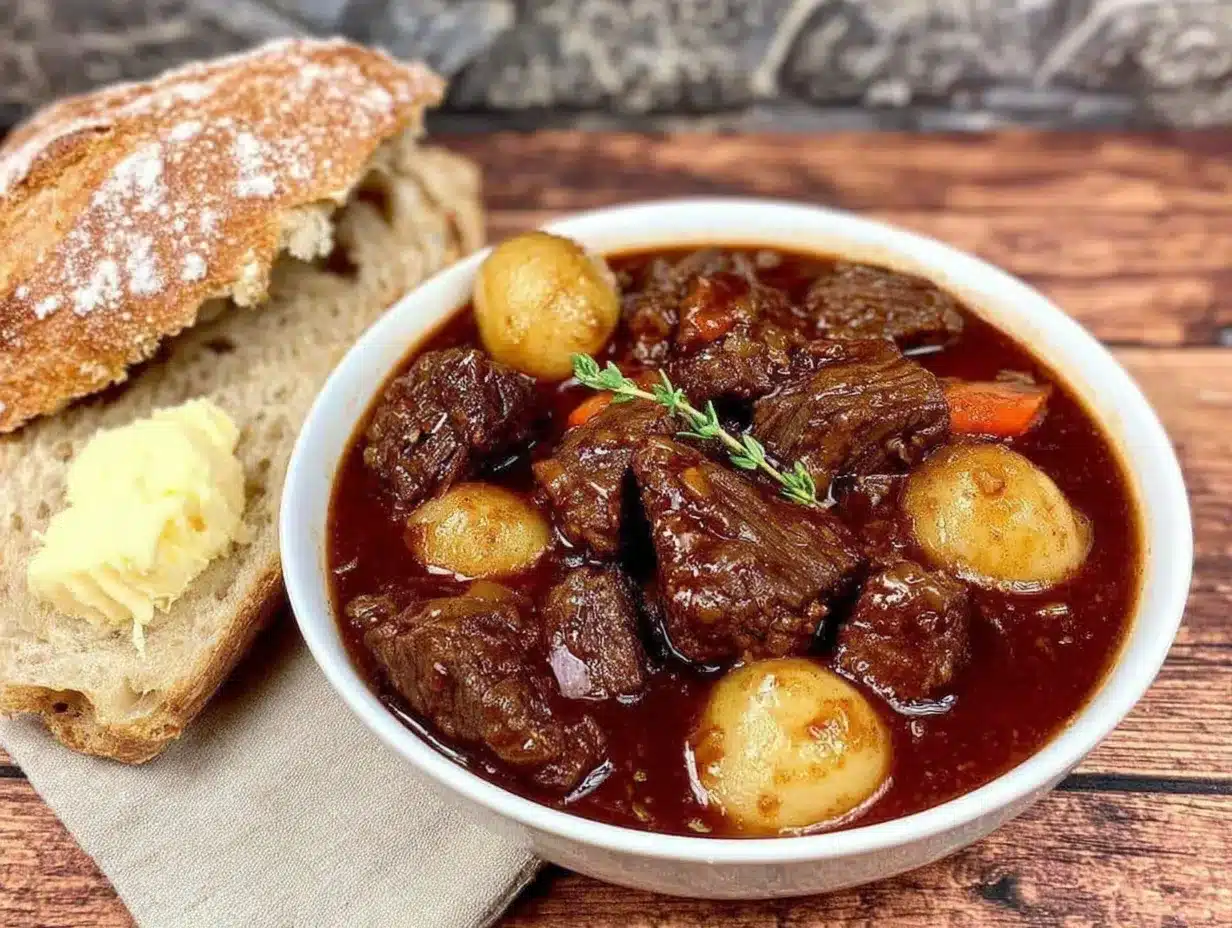
This recipe takes about 2.5 to 3 hours from start to finish, but most of that is hands-off simmering time. The active prep is only about 45 minutes, so don’t let the long cook time scare you. Let’s walk through it step by step.
- Preheat your oven to 325°F (160°C). This gentle heat will slowly break down the beef’s connective tissue, giving you that melt-in-your-mouth texture. Position the rack in the lower third of the oven.
- Pat the beef cubes dry with paper towels. This is crucial—wet meat won’t brown properly. Season generously with salt and pepper on all sides. Don’t be shy with the seasoning here; it’s your only chance to season the meat directly.
- Place the flour in a shallow bowl or dish. Dredge the beef cubes in the flour, shaking off any excess. Work in batches to avoid clumping. Set the floured beef aside on a plate.
- Heat 1 tablespoon of olive oil in your Dutch oven over medium-high heat. Wait until the oil is shimmering but not smoking. Add half the beef cubes in a single layer—don’t overcrowd the pot. Sear for 3-4 minutes per side, until deeply browned. Transfer to a plate. Repeat with the remaining oil and beef. Pro tip: Those browned bits stuck to the bottom are pure flavor. Don’t clean the pot between batches.
- Reduce the heat to medium. Add the diced onion, celery, and a pinch of salt. Cook for 5-6 minutes, stirring occasionally, until the onions are translucent and starting to soften. Scrape up any remaining browned bits as you stir.
- Add the minced garlic and tomato paste. Cook for 1 minute, stirring constantly, until the paste darkens slightly and becomes fragrant. This step deepens the tomato flavor and removes any raw taste.
- Pour in the Guinness. Use your wooden spoon to scrape the bottom of the pot thoroughly—that’s where all the flavor is hiding. Let the beer come to a boil, then reduce the heat to a simmer. Cook for 5 minutes, allowing the alcohol to cook off and the liquid to reduce slightly. The kitchen will smell incredible at this point.
- Return the browned beef to the pot, along with any accumulated juices. Add the beef broth, thyme sprigs, and bay leaves. Stir everything together gently. The liquid should just barely cover the beef. If it doesn’t, add a splash more broth or water.
- Bring the stew to a gentle simmer on the stovetop. Once you see small bubbles breaking the surface, cover the pot with the lid and transfer it to the preheated oven. Set a timer for 1 hour and 30 minutes.
- After 1 hour and 30 minutes, carefully remove the pot from the oven. Add the carrots, parsnips, and potatoes to the stew. Stir gently to submerge the vegetables in the liquid. Return the covered pot to the oven for another 45 minutes to 1 hour.
- Test for doneness. The beef should be fork-tender, meaning you can easily shred it with a fork. The vegetables should be soft but not mushy. If the beef isn’t quite there yet, return the pot to the oven for another 15-20 minutes.
- Remove the bay leaves and thyme sprigs. Taste the stew and adjust the seasoning with salt and pepper. Sometimes it needs a little more pepper to balance the richness of the stout.
- Let the stew rest for 10-15 minutes before serving. This allows the flavors to meld and the broth to thicken slightly. It will be piping hot, so be careful when ladling.
Sensory cues: When the stew is done, the broth should be thick enough to coat the back of a spoon. The carrots should offer slight resistance when pierced with a fork but not be crunchy. The beef should pull apart with minimal effort. If the broth seems too thin, you can simmer it uncovered on the stovetop for 5-10 minutes to reduce it further.
Cooking Tips & Techniques
After making this stew at least a dozen times, I’ve collected a few hard-won lessons that will save you from my early mistakes. Trust me on these.
- Don’t skip the browning step. I know it’s tempting to just dump everything in the pot and let it cook, but that deep brown crust on the beef is where most of the flavor comes from. It’s called the Maillard reaction, and it’s non-negotiable for a rich stew. If you’re short on time, at least brown the beef in two batches—crowding the pan will steam the meat instead of searing it.
- Use room-temperature beef. Cold beef straight from the fridge will cool down your pan and prevent proper browning. Let the cubed beef sit on the counter for 15-20 minutes before searing. Just don’t leave it out longer than that for food safety reasons.
- Patience with the beer. Let the Guinness simmer for a full 5 minutes before adding the broth. This step cooks off the harsh alcohol and concentrates the malty flavor. I once rushed this step and ended up with a stew that tasted a little too “beery” in a not-good way.
- Cut vegetables uniformly. I know it feels fussy, but cutting your carrots, parsnips, and potatoes into roughly the same size ensures they cook evenly. Nothing worse than a mushy carrot next to a crunchy potato.
- Don’t peek too often. Every time you lift the lid, you let out heat and moisture. Trust the oven and only check on the stew when it’s time to add the vegetables. I’m guilty of this one—I used to open the oven every 20 minutes “just to check,” and my stew always took longer to cook.
- Make it ahead. This stew is actually better the next day. The flavors continue to meld in the fridge, and the texture improves. I often make it a day ahead and reheat it gently on the stovetop. Just add a splash of broth if it’s too thick.
Variations & Adaptations
One of the best things about this stew is how flexible it is. I’ve played around with different ingredients and methods, and here are some variations that have worked beautifully.
- Vegetarian Version: Swap the beef for 2 cans of drained chickpeas and use vegetable broth instead of beef broth. Add the chickpeas with the vegetables so they don’t get too mushy. The Guinness still provides that deep, savory flavor, and the chickpeas hold up surprisingly well.
- Slow Cooker Adaptation: Brown the beef and sauté the vegetables on the stovetop as directed. Transfer everything to a slow cooker, add the broth and beer, and cook on low for 6-8 hours or high for 3-4 hours. Add the vegetables in the last 2 hours of cooking so they don’t turn to mush.
- Herb Swap: If you don’t have fresh thyme, try rosemary or a combination of rosemary and sage. I once used a sprig of fresh rosemary from my neighbor’s garden, and it added a lovely piney note that worked surprisingly well with the stout.
- Root Veggie Mix-Up: Not a fan of parsnips? Swap them for celery root or turnips. Sweet potatoes also work, but they’ll make the stew slightly sweeter. I’ve also added a diced rutabaga for extra earthiness—highly recommend.
- Spicy Kick: Add a pinch of red pepper flakes along with the garlic for a subtle heat that cuts through the richness. It’s not traditional, but it’s delicious on a cold night.
Serving & Storage Suggestions
This stew is a meal in itself, but the right accompaniments can take it from great to unforgettable. Here’s how I like to serve and store it.
Serving: Ladle the stew into deep bowls and top with a sprinkle of fresh parsley or chives for a pop of color. I love serving it with a thick slice of crusty sourdough bread for dipping—the kind with a chewy crust that soaks up every last drop of broth. For a more substantial meal, serve it over creamy mashed potatoes or egg noodles. A simple side salad with a tangy vinaigrette cuts through the richness beautifully.
Storage: Let the stew cool completely before transferring it to an airtight container. It will keep in the refrigerator for up to 4 days. The flavors actually deepen over time, so don’t be surprised if it tastes even better on day two. For longer storage, freeze the stew in portion-sized containers for up to 3 months. I like to freeze it in zip-top bags laid flat—they stack easily and thaw quickly.
Reheating: The best way to reheat this stew is on the stovetop over medium-low heat, stirring occasionally. Add a splash of beef broth or water if it’s too thick. You can also microwave individual portions in 1-minute intervals, stirring in between. Avoid boiling the stew when reheating, as it can make the beef tough.
Nutritional Information & Benefits
This stew is comfort food that also happens to be packed with nutrients. Here’s a rough breakdown per serving (based on 6 servings).
| Nutrient | Amount per Serving |
|---|---|
| Calories | ~420 |
| Protein | 35g |
| Fat | 18g |
| Carbohydrates | 32g |
| Fiber | 6g |
| Iron | 25% DV |
| Vitamin A | 60% DV |
Health Benefits: The beef provides high-quality protein and iron, which supports energy levels and healthy blood. Carrots are loaded with beta-carotene for eye health, and parsnips offer a good dose of fiber and vitamin C. The Guinness, believe it or not, contains antioxidants and B vitamins (in moderation, of course). This is a balanced meal that satisfies both your taste buds and your body’s needs.
Dietary Considerations: This recipe can be made gluten-free by using a gluten-free flour blend or cornstarch for thickening. It’s naturally dairy-free and nut-free. For a lower-carb version, replace the potatoes with additional parsnips or cauliflower florets.
Conclusion
This Cozy Guinness Beef Stew with Root Veggies is more than just a recipe—it’s a little ritual for the soul. It’s the kind of meal that turns a quiet evening into something memorable, that fills your home with warmth and your belly with comfort. I’ve made it for sick friends, for holiday gatherings, and for myself on nights when I needed a reminder that simple things can be extraordinary. The way the stout deepens the broth, the way the carrots get all soft and sweet, the way the beef falls apart at the touch of a fork—it’s pure magic, and it starts with just a few humble ingredients.
I’d love for you to try it and make it your own. Maybe you’ll add extra garlic like my friend Carol does, or throw in a parsnip from your farmer’s market haul. Whatever you do, don’t rush it. Let the stew do its thing, and I promise it’ll reward you. Drop a comment below and let me know how it turned out—did you stick with the classic version, or did you put your own spin on it? I read every single comment, and nothing makes me happier than hearing about your kitchen adventures. Happy cooking, friends.
Frequently Asked Questions
Can I use a different type of beer instead of Guinness?
Absolutely. Any dry stout or porter will work beautifully. Avoid IPAs or highly hopped beers, as they can turn bitter during the long simmer. A milk stout adds a touch of sweetness if you prefer a milder flavor.
Can I make this stew in a slow cooker?
Yes! Brown the beef and sauté the vegetables on the stovetop first, then transfer everything to a slow cooker. Cook on low for 6-8 hours or high for 3-4 hours. Add the root vegetables in the last 2 hours to prevent them from turning mushy.
How can I thicken the stew if it’s too thin?
If the broth is too thin after cooking, whisk 2 tablespoons of cornstarch with 2 tablespoons of cold water until smooth. Stir the slurry into the simmering stew and cook for 2-3 minutes until thickened. You can also mash a few of the potatoes against the side of the pot to naturally thicken the broth.
Can I freeze this stew?
Yes, this stew freezes beautifully. Let it cool completely, then transfer it to airtight containers or zip-top bags. It will keep in the freezer for up to 3 months. Thaw overnight in the refrigerator and reheat gently on the stovetop.
What can I serve with this stew?
Crusty sourdough bread is my top pick for soaking up the broth. Mashed potatoes, egg noodles, or a simple green salad with a tangy vinaigrette also pair wonderfully. For a truly cozy meal, serve it with a glass of the same Guinness you used in the stew.
Pin This Recipe!
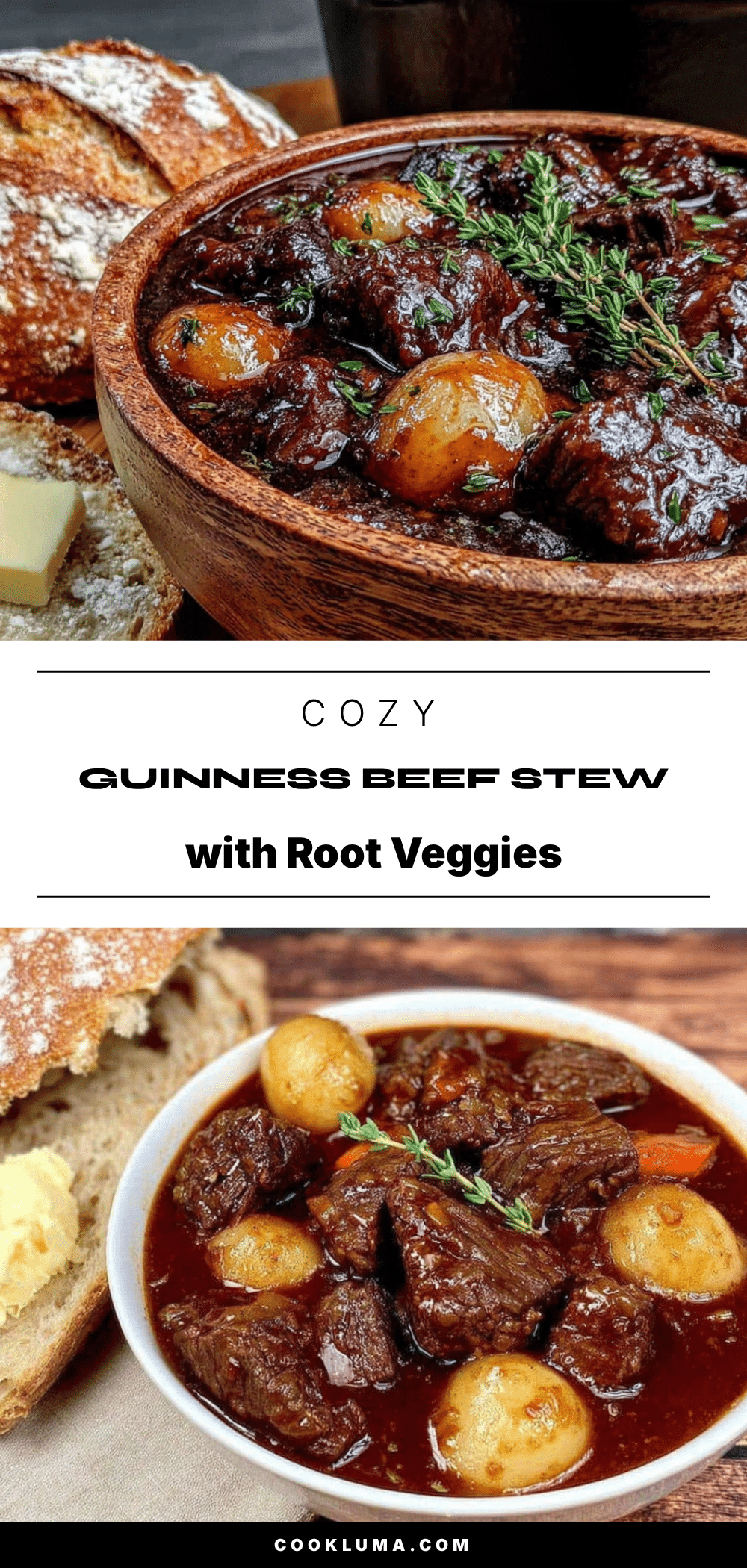
Cozy Guinness Beef Stew with Root Veggies

A rich and hearty beef stew made with Guinness stout and root vegetables, perfect for cold weather comfort. The beef is melt-in-your-mouth tender, and the broth is velvety and deeply flavorful.
- Prep Time: 45 minutes
- Cook Time: 2 hours 15 minutes
- Total Time: 3 hours
- Yield: 6 servings
- Category: Main Course
- Cuisine: Irish
Ingredients
- Beef chuck, 2 lbs (900g), cut into 1.5-inch cubes
- Guinness Draught, 1 can (14.9 oz / 440ml)
- Carrots, 3 large (about 300g), peeled and cut into 1-inch chunks
- Parsnips, 2 large (about 200g), peeled and cut into 1-inch chunks
- Yellow onion, 1 large (about 200g), diced
- Celery, 2 stalks (about 80g), diced
- Garlic, 4 cloves, minced
- Tomato paste, 2 tablespoons (30g)
- Beef broth, 3 cups (710ml)
- All-purpose flour, 3 tablespoons (24g)
- Olive oil, 2 tablespoons (30ml)
- Fresh thyme, 4 sprigs
- Bay leaves, 2
- Salt and black pepper, to taste
- Potatoes, 2 medium (about 400g), peeled and cut into 1.5-inch chunks
Instructions
- Preheat your oven to 325°F (160°C). Position the rack in the lower third of the oven.
- Pat the beef cubes dry with paper towels. Season generously with salt and pepper on all sides.
- Place the flour in a shallow bowl or dish. Dredge the beef cubes in the flour, shaking off any excess. Set aside on a plate.
- Heat 1 tablespoon of olive oil in your Dutch oven over medium-high heat. Add half the beef cubes in a single layer and sear for 3-4 minutes per side until deeply browned. Transfer to a plate. Repeat with the remaining oil and beef.
- Reduce the heat to medium. Add the diced onion, celery, and a pinch of salt. Cook for 5-6 minutes, stirring occasionally, until the onions are translucent and starting to soften.
- Add the minced garlic and tomato paste. Cook for 1 minute, stirring constantly, until the paste darkens slightly and becomes fragrant.
- Pour in the Guinness. Use your wooden spoon to scrape the bottom of the pot thoroughly. Let the beer come to a boil, then reduce the heat to a simmer. Cook for 5 minutes.
- Return the browned beef to the pot, along with any accumulated juices. Add the beef broth, thyme sprigs, and bay leaves. Stir gently. The liquid should just barely cover the beef.
- Bring the stew to a gentle simmer on the stovetop. Cover the pot with the lid and transfer it to the preheated oven. Cook for 1 hour and 30 minutes.
- After 1 hour and 30 minutes, carefully remove the pot from the oven. Add the carrots, parsnips, and potatoes. Stir gently to submerge the vegetables. Return the covered pot to the oven for another 45 minutes to 1 hour.
- Test for doneness: the beef should be fork-tender and the vegetables soft but not mushy. If needed, return to the oven for another 15-20 minutes.
- Remove the bay leaves and thyme sprigs. Taste and adjust seasoning with salt and pepper.
- Let the stew rest for 10-15 minutes before serving.
Notes
For a gluten-free version, use a 1-to-1 gluten-free flour blend or cornstarch (mix 2 tablespoons with 2 tablespoons cold water and stir in at the end). For a lower-carb version, replace potatoes with additional parsnips or turnips. The stew is even better the next day; make it ahead and reheat gently.
Nutrition
- Serving Size: 1 serving (about 1.5
- Calories: 420
- Sugar: 8
- Sodium: 800
- Fat: 18
- Saturated Fat: 6
- Carbohydrates: 32
- Fiber: 6
- Protein: 35
Keywords: Guinness beef stew, Irish stew, beef stew with stout, root vegetable stew, comfort food, winter stew