I was standing in the frozen foods aisle of a grocery store last November when the smell of someone’s roasted turkey dinner—wafting from the deli, maybe, or just a ghost in the air-conditioning—hit me, and suddenly I was seven years old in my aunt Lena’s tiny kitchen in Pittsburgh. She wasn’t my real aunt, just a family friend who lived three doors down and let me sit on her counter while she cooked. I remember the way she’d brown butter in a dented old skillet, the smell so nutty and rich it made my stomach ache. She passed away a few years ago, and I never got her cornbread dressing recipe. Honestly, I didn’t even know she had one until my mom mentioned it at her funeral. So for the last two Thanksgivings, I’ve been trying to recreate that feeling—that warm, buttery, sage-scented hug of a dish. This brown butter sage cornbread dressing is the closest I’ve come.
Maybe you’ve been there, too—chasing a taste you can’t quite name, trying to bring back a moment that feels just out of reach. This recipe isn’t just about the ingredients. It’s about the ritual: crumbling cornbread by hand, watching butter turn golden in the pan, and letting the smell of sage fill your kitchen. It’s the kind of dish that makes you slow down, even when you’re rushing. And honestly, it’s forgiving. I’ve made it with stale cornbread, fresh cornbread, even a box mix in a pinch (don’t tell anyone). It always works because the real magic is in that browned butter and those herbs. By the time you pull it out of the oven, golden and crisp on top, you’ll understand why I keep making it—and why I’ll never buy boxed stuffing again.
Why You’ll Love This Recipe
I’ve tested this brown butter sage cornbread dressing at least seven times—once when I accidentally used salted butter for the browning (it was fine, actually), and once when I forgot the eggs entirely (that was a crumbly mess). So trust me when I say this version is the one. It’s been taste-tested by my picky neighbor, my cousin who “doesn’t do Thanksgiving food,” and a room full of friends who went back for thirds. Here’s why it stands out:
- Simple Ingredients, Big Flavor: You don’t need a specialty grocery store. Cornmeal, butter, sage, onion, celery—these are pantry staples that turn into something extraordinary.
- Perfect for Thanksgiving (or Any Cozy Night): This dressing is the star of the holiday table, but honestly, I’ve made it on a rainy Tuesday in February just because.
- Crowd-Pleaser Approved: Even folks who swear they don’t like stuffing will go back for seconds. The nutty brown butter and fresh sage are that good.
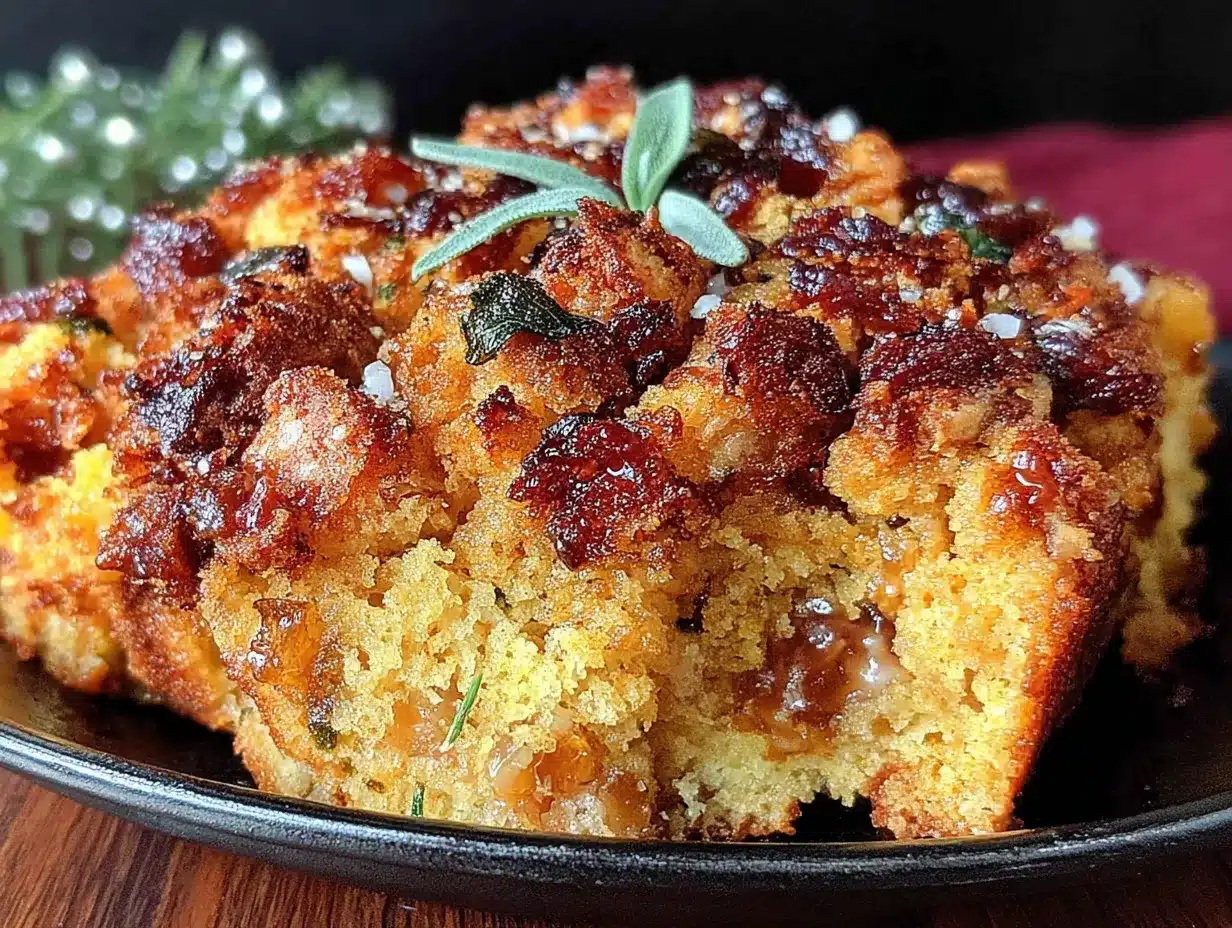
- Unbelievably Comforting: The texture is everything—crispy edges, soft center, with little pockets of caramelized onion and celery. It’s the kind of side dish that makes you close your eyes after the first bite.
- Easy to Make Ahead: You can prep the cornbread a day or two ahead, and the whole dish can be assembled the night before. That’s a lifesaver when you’re juggling a turkey and three pies.
What makes this dressing different from the rest? It’s the brown butter, plain and simple. That toasty, nutty flavor adds a depth you just don’t get from plain melted butter. Plus, I use a mix of fresh and dried sage—the fresh for bright, herbal notes and the dried for that earthy, savory backbone. It’s not just another version of cornbread dressing. It’s the one you’ll come back to year after year.
What Ingredients You Will Need
This recipe uses simple, wholesome ingredients to deliver bold flavor and satisfying texture without the fuss. Most of these are probably in your kitchen right now—or at least in your neighbor’s. Here’s what you’ll need:
For the Cornbread
- 1 cup yellow cornmeal (I prefer Bob’s Red Mill for consistent texture)
- 1 cup all-purpose flour (or gluten-free 1:1 blend, like King Arthur’s)
- 1 tablespoon baking powder
- 1 teaspoon salt
- 1/4 cup granulated sugar (just a touch of sweetness)
- 1 cup buttermilk (adds tenderness; use whole milk + 1 tsp lemon juice if needed)
- 2 large eggs, room temperature
- 1/4 cup unsalted butter, melted (or vegetable oil for a dairy-free option)
For the Brown Butter Sage Dressing
- 1/2 cup unsalted butter (for browning—this is the star)
- 1 large yellow onion, diced (about 1 1/2 cups)
- 3 celery stalks, diced (about 1 cup)
- 4 cloves garlic, minced
- 2 tablespoons fresh sage, finely chopped (about 8-10 leaves)
- 1 teaspoon dried sage (or 1/2 teaspoon rubbed sage)
- 1 teaspoon dried thyme
- 1/2 teaspoon dried rosemary (crushed between your fingers)
- 1/2 teaspoon black pepper
- 1 teaspoon salt (plus more to taste)
- 2 cups low-sodium chicken or vegetable broth (adjust for desired moisture)
- 2 large eggs, lightly beaten
- Optional: 1/4 cup chopped fresh parsley (for garnish and a pop of color)
Ingredient Tips
Look for firm, fresh sage leaves—they should smell earthy and slightly peppery. If you can only find dried sage, use 1 1/2 teaspoons total and skip the fresh. For the broth, I like Swanson’s low-sodium chicken broth because it lets me control the salt. If you’re vegetarian, a good veggie broth works just fine—just avoid the super salty ones. And if you’re out of buttermilk, no worries: just add 1 tablespoon of lemon juice or white vinegar to a cup of regular milk and let it sit for 5 minutes. It works like a charm.
Equipment Needed
You don’t need fancy gadgets for this recipe, but a few key tools make the process smoother. Here’s what I use:
- 9×13-inch baking dish (or a 10-inch cast-iron skillet if you want extra-crispy edges)
- Large skillet (for browning butter and sautéing veggies—go for stainless steel so you can see the color change)
- Mixing bowls (one large, one medium)
- Whisk (for the cornbread batter)
- Wooden spoon or spatula (for stirring the dressing)
- Sharp knife and cutting board
- Measuring cups and spoons
- Cooling rack (if you’re making cornbread ahead of time)
If you don’t have a 9×13 dish, a 10-inch round baking dish or even a 12-inch oven-safe skillet works. I’ve also used a disposable aluminum pan for potlucks—just keep an eye on the bake time, as it might cook faster. And if you don’t have a whisk, a fork works in a pinch for the cornbread batter. Trust me, I’ve been there.
Preparation Method
Step 1: Make the Cornbread (Day Before or a Few Hours Ahead)
Preheat your oven to 400°F (200°C). Grease an 8×8-inch baking pan or a 10-inch cast-iron skillet. In a large bowl, whisk together the cornmeal, flour, baking powder, salt, and sugar. In a separate bowl, whisk the buttermilk, eggs, and melted butter until smooth. Pour the wet ingredients into the dry and stir until just combined—don’t overmix, or the cornbread will be tough. Pour the batter into the prepared pan and bake for 20-25 minutes, until golden and a toothpick inserted in the center comes out clean. Let it cool completely on a wire rack. Once cool, crumble it into a large bowl and let it sit out, uncovered, overnight to dry out slightly. (If you’re short on time, spread the crumbled cornbread on a baking sheet and bake at 300°F for 10 minutes.)
Step 2: Brown the Butter
In a large skillet, melt the 1/2 cup butter over medium heat. Stir constantly with a wooden spoon. You’ll see it foam, then the foam will subside, and little brown specks will appear at the bottom of the pan. This takes about 5-7 minutes. The moment it smells nutty and turns a deep amber, remove it from the heat and pour it into a heatproof bowl—don’t leave it in the hot pan or it’ll burn. Set aside. (Pro tip: I’ve burned butter more times than I’d like to admit. If you see black specks, start over. Burnt butter tastes bitter, not nutty.)
Step 3: Sauté the Aromatics
In the same skillet (no need to wash it), add a tablespoon of olive oil or a pat of fresh butter. Add the diced onion and celery and cook over medium heat for 8-10 minutes, until soft and translucent. Add the minced garlic and cook for 1 more minute, until fragrant. Stir in the fresh sage, dried sage, thyme, rosemary, salt, and pepper. Cook for 30 seconds until the herbs are fragrant. Remove from heat.
Step 4: Assemble and Bake
Preheat your oven to 375°F (190°C). Grease your 9×13-inch baking dish. In a very large bowl, combine the crumbled cornbread and the sautéed vegetable-herb mixture. Pour in the browned butter and toss gently with your hands or a spatula until evenly distributed. In a separate bowl, whisk together the broth and beaten eggs. Pour this over the cornbread mixture and stir gently until everything is moistened but not soggy. You want it to hold together when pressed, but still have some texture. Transfer to the prepared baking dish and spread evenly. Bake for 30-35 minutes, until the top is golden brown and crispy around the edges. Let it rest for 10 minutes before serving. The smell alone will make your mouth water.
Cooking Tips & Techniques
I’ve made every mistake in the book with this recipe, so let me save you some trouble. First, don’t skip drying out the cornbread. If it’s too fresh and moist, your dressing will turn into a dense, gummy brick. I learned this the hard way one year when I was in a rush and used warm cornbread straight from the oven. It was a sad, mushy mess. Let it sit out overnight, or use the oven trick if you’re short on time.
Second, when browning butter, keep your eyes on it. It goes from perfect to burnt in seconds. I like to swirl the pan constantly and listen for the sizzle to change—it goes from loud and bubbly to a quieter, more gentle sound. That’s when you know it’s ready. And don’t be afraid to use a light-colored pan so you can actually see the color change.
Third, taste your broth before adding it. Some store-bought broths are super salty, and you don’t want to oversalt the dressing. I always use low-sodium and adjust later. Also, if you like a moister dressing, add an extra 1/4 cup of broth. If you prefer it drier, cut back by 1/4 cup. It’s all about personal preference. And finally, let the dressing rest after baking. This allows the liquid to absorb fully and the flavors to meld. I know it’s hard to wait, but trust me—it’s worth it.
Variations & Adaptations
One of the best things about this brown butter sage cornbread dressing is how easily it adapts. Here are a few ways to make it your own:
- Gluten-Free Version: Use a gluten-free 1:1 flour blend in the cornbread, and make sure your broth is certified gluten-free. I’ve tested this with King Arthur’s blend and it works beautifully—just don’t overmix the batter.
- Add Sausage or Bacon: Cook 1/2 pound of bulk breakfast sausage or chopped bacon in the skillet before sautéing the veggies. Drain off most of the fat (leave about 1 tablespoon for flavor), then proceed. It adds a smoky, savory punch that’s perfect for a heartier dish.
- Vegan Option: Swap the butter for vegan butter (I like Miyoko’s) and use flax eggs (2 tablespoons ground flax + 6 tablespoons water) instead of regular eggs. Use vegetable broth. The texture will be slightly less rich, but still delicious.
- Add Dried Fruit or Nuts: Stir in 1/2 cup dried cranberries or chopped toasted pecans along with the sautéed veggies. The sweetness and crunch are a lovely contrast to the savory herbs.
- Make It Spicy: Add a pinch of red pepper flakes or a diced jalapeño (seeds removed) when sautéing the onion and celery. It gives the dressing a subtle warmth without overwhelming the sage.
I once tried a version with roasted butternut squash cubes folded in—it was fantastic. The sweetness of the squash played nicely with the nutty brown butter. Don’t be afraid to experiment; that’s half the fun.
Serving & Storage Suggestions
Serve this dressing warm, straight from the oven. I like to let it rest for 10 minutes, then scoop it onto plates with a big spoon. It’s perfect alongside roasted turkey, but honestly, it’s also amazing with a simple roast chicken or even a pork chop. For a vegetarian meal, pair it with a hearty mushroom gravy and some roasted Brussels sprouts. And if you’re feeling fancy, drizzle a little extra brown butter on top just before serving—it’s over the top, but so worth it.
Leftovers (if you have any) keep well in the fridge for up to 4 days. Store them in an airtight container. To reheat, pop individual portions in the microwave for 1-2 minutes, or spread them on a baking sheet and warm in a 350°F oven for 10-15 minutes to recrisp the edges. You can also freeze the dressing for up to 3 months. Assemble the dish completely but don’t bake it. Cover tightly with foil and freeze. When you’re ready, thaw overnight in the fridge, then bake as directed, adding 10-15 minutes to the bake time. The flavors actually deepen after freezing—it’s like a time capsule of comfort.
Nutritional Information & Benefits
Here’s an approximate nutritional breakdown per serving (based on 12 servings):
- Calories: 285
- Fat: 16g
- Saturated Fat: 9g
- Carbohydrates: 30g
- Fiber: 2g
- Sugar: 5g
- Protein: 6g
- Sodium: 510mg
This dish is a good source of vitamin A from the butter and sage, and the onions and celery provide a bit of fiber and antioxidants. The sage itself is known for its anti-inflammatory properties—so you can feel a little virtuous while indulging. If you’re watching your sodium, use unsalted butter and low-sodium broth. And if you’re gluten-sensitive, the gluten-free version is just as satisfying. It’s not health food, but it’s real food made with love—and that counts for something.
Conclusion
This brown butter sage cornbread dressing is more than a side dish. It’s a way to bring a little warmth and nostalgia to your table, whether it’s Thanksgiving or a random Tuesday. The nutty brown butter, the earthy sage, the soft-yet-crispy texture—it all comes together in a way that feels both familiar and special. I hope you’ll try it, and I hope it becomes a tradition in your kitchen, too.
If you make it, I’d love to hear how it turned out. Leave a comment below, tag me in your photos, or share your own twist on the recipe. Did you add sausage? Make it vegan? Use a different herb? Let me know! Honestly, the best recipes are the ones we make our own. So go ahead—brown that butter, crumble that cornbread, and fill your home with the smell of sage and comfort. You’ve got this.
Frequently Asked Questions
Can I use store-bought cornbread for this recipe?
Absolutely. If you’re short on time, grab a loaf from the bakery section or use a box mix. Just make sure it’s on the drier side—you want it to hold up to the broth without turning mushy. Crumble it and let it sit out for a few hours to dry out a bit before using.
Can I make this dressing ahead of time?
Yes! Assemble the dressing completely (don’t bake it), cover it, and refrigerate for up to 24 hours. When you’re ready, let it sit at room temperature for 30 minutes, then bake as directed. You might need to add 5-10 minutes to the bake time since it’s starting from cold.
Can I use dried sage instead of fresh?
You can, but the flavor will be different. Fresh sage has a bright, almost lemony note that pairs beautifully with brown butter. If you use dried, use 1 1/2 teaspoons total and add it with the other dried herbs. The dressing will still be delicious, just a bit more mellow.
Why is my dressing dry?
This usually happens if the cornbread was too dry or you didn’t use enough broth. Next time, add an extra 1/4 cup of broth and make sure you’re not overbaking it. Also, check your cornbread—if it was baked too long or sat out for days, it might be overly crumbly. A little moisture goes a long way.
Can I freeze this dressing?
Yes! Assemble it in a freezer-safe dish, cover tightly with foil, and freeze for up to 3 months. Thaw overnight in the fridge, then bake as directed. The texture will be slightly softer, but the flavor is still fantastic. It’s a great make-ahead option for busy holidays.
Pin This Recipe!
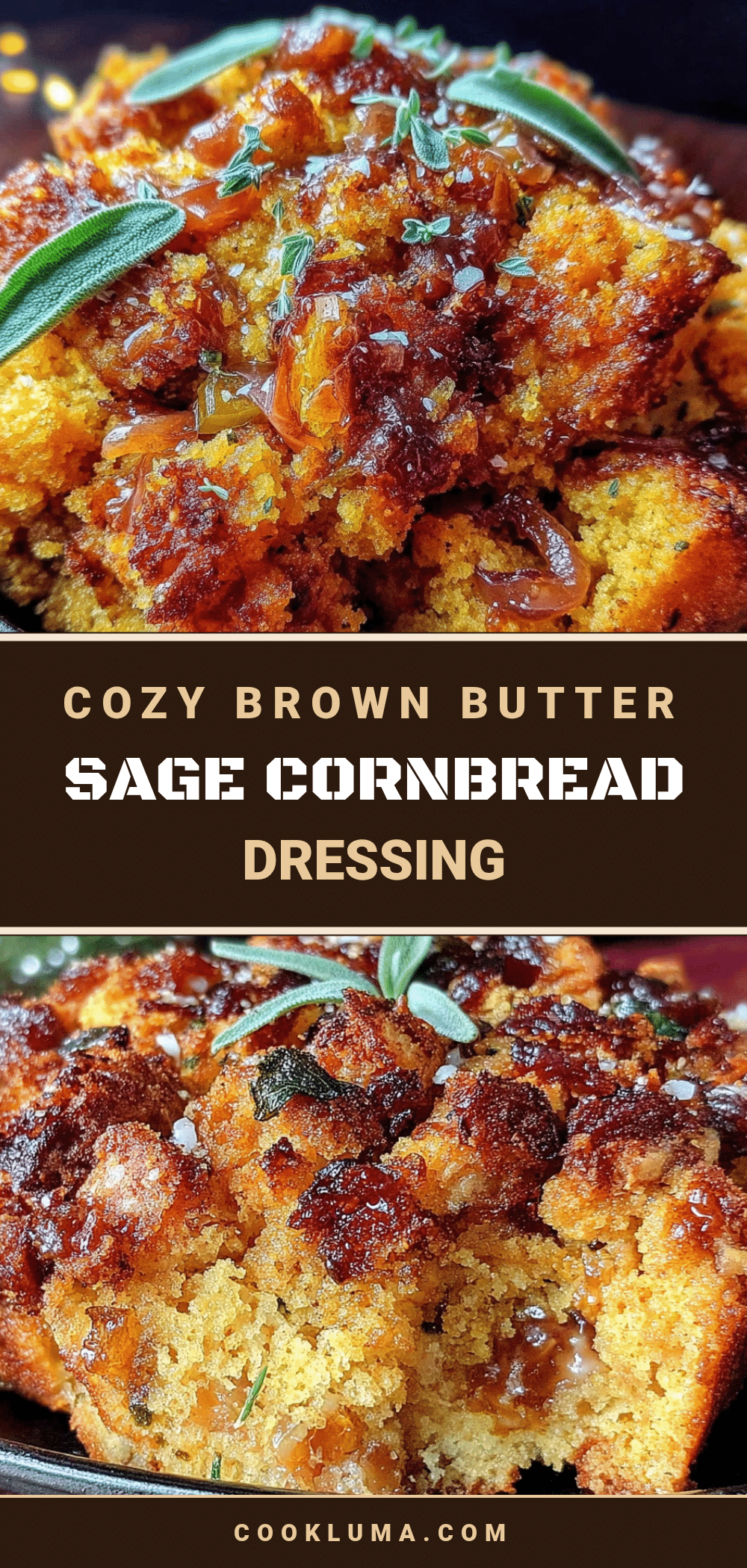
Brown Butter Sage Cornbread Dressing: Easy 4-Step Recipe

This brown butter sage cornbread dressing is a warm, buttery, sage-scented side dish perfect for Thanksgiving or any cozy night. The nutty brown butter and fresh herbs create a depth of flavor that makes it a crowd-pleaser.
- Prep Time: 20 minutes
- Cook Time: 30 minutes
- Total Time: 50 minutes
- Yield: 12 servings 1x
- Category: Side Dish
- Cuisine: American
Ingredients
- 1 cup yellow cornmeal
- 1 cup all-purpose flour (or gluten-free 1:1 blend)
- 1 tablespoon baking powder
- 1 teaspoon salt
- 1/4 cup granulated sugar
- 1 cup buttermilk (or whole milk + 1 tsp lemon juice)
- 2 large eggs, room temperature
- 1/4 cup unsalted butter, melted (or vegetable oil)
- 1/2 cup unsalted butter (for browning)
- 1 large yellow onion, diced (about 1 1/2 cups)
- 3 celery stalks, diced (about 1 cup)
- 4 cloves garlic, minced
- 2 tablespoons fresh sage, finely chopped (about 8–10 leaves)
- 1 teaspoon dried sage (or 1/2 teaspoon rubbed sage)
- 1 teaspoon dried thyme
- 1/2 teaspoon dried rosemary (crushed)
- 1/2 teaspoon black pepper
- 1 teaspoon salt (plus more to taste)
- 2 cups low-sodium chicken or vegetable broth
- 2 large eggs, lightly beaten
- Optional: 1/4 cup chopped fresh parsley (for garnish)
Instructions
- Make the cornbread: Preheat oven to 400°F (200°C). Grease an 8×8-inch baking pan or 10-inch cast-iron skillet. In a large bowl, whisk together cornmeal, flour, baking powder, salt, and sugar. In a separate bowl, whisk buttermilk, eggs, and melted butter until smooth. Pour wet into dry and stir until just combined. Pour batter into prepared pan and bake for 20-25 minutes until golden and a toothpick comes out clean. Cool completely on a wire rack. Crumble into a large bowl and let sit out overnig…
- Brown the butter: In a large skillet, melt 1/2 cup butter over medium heat, stirring constantly. Cook for 5-7 minutes until it foams, the foam subsides, and brown specks appear. When it smells nutty and turns deep amber, remove from heat and pour into a heatproof bowl. Set aside.
- Sauté the aromatics: In the same skillet, add a tablespoon of olive oil or butter. Add diced onion and celery and cook over medium heat for 8-10 minutes until soft and translucent. Add minced garlic and cook for 1 minute. Stir in fresh sage, dried sage, thyme, rosemary, salt, and pepper. Cook for 30 seconds until fragrant. Remove from heat.
- Assemble and bake: Preheat oven to 375°F (190°C). Grease a 9×13-inch baking dish. In a very large bowl, combine crumbled cornbread and sautéed vegetable-herb mixture. Pour in browned butter and toss gently. In a separate bowl, whisk together broth and beaten eggs. Pour over cornbread mixture and stir gently until moistened but not soggy. Transfer to prepared dish and spread evenly. Bake for 30-35 minutes until top is golden brown and crispy around edges. Let rest for 10 minutes before serving.
Notes
Don’t skip drying out the cornbread to avoid a gummy texture. Watch the butter closely when browning to prevent burning. Taste broth before adding to adjust salt. Let dressing rest after baking for best texture. Can be assembled ahead and refrigerated for up to 24 hours before baking.
Nutrition
- Serving Size: 1 serving
- Calories: 285
- Sugar: 5
- Sodium: 510
- Fat: 16
- Saturated Fat: 9
- Carbohydrates: 30
- Fiber: 2
- Protein: 6
Keywords: brown butter, sage, cornbread dressing, Thanksgiving, side dish, stuffing, holiday