I was picking up a custom order of antique doorknobs—don’t ask, it’s a whole thing—when the owner of the shop, a quiet man named Pete who usually just nods and hands me a receipt, started talking about salad. I wasn’t expecting cooking advice from a guy who spends his days cataloging vintage hardware, but there I was, standing between a stack of 1920s window sashes and a dusty chandelier, listening to him describe exactly how to make a winter citrus salad. He said his wife made it every January when they were both tired of heavy food and the gray sky outside their shop window. He described it with such detail—the way the pomegranate seeds looked like little jewels against the pale pink grapefruit, the specific honey he liked to use—that I actually wrote it down on the back of a receipt for a brass hinge. Honestly, it was the last place I’d expect to find a recipe I’d make on repeat, but here we are.
The first time I made it, I was skeptical. A salad of just citrus and greens? It sounded a little too simple, a little too… virtuous. But I was wrong. That first bite had this unexpected brightness that cut right through the January blah. The sweet oranges, the tart grapefruit, the little pop of sweetness from the pomegranate seeds, all tied together with a simple dressing that didn’t try too hard. I mean, maybe you’ve been there—stuck in a rut of roasted vegetables and heavy stews, craving something that feels fresh without being a sad, limp side salad. This was it. I messed up the dressing the first time (added way too much salt, had to start over), but even that mistake taught me something about balance.
This Bright Winter Citrus Pomegranate Salad has become my go-to for those weeks between New Year’s and spring when everything feels a little beige. It’s the recipe that reminds me that simple, fresh ingredients don’t need a lot of fuss. And honestly, I keep making it because it’s the one dish that makes me feel like I’m doing something good for myself without it tasting like a punishment. It’s bright, it’s beautiful, and it came from a guy who sells doorknobs. You can’t make this stuff up.
Why You’ll Love This Recipe
Let me tell you why this salad is different from every other winter salad you’ve tried. I’ve tested this version at least a dozen times, tweaking the citrus-to-greens ratio, adjusting the dressing, and even trying different types of honey. What I landed on is a salad that checks every box for a health-minded eater who still wants food to feel like a treat.
- Quick & Easy: This salad comes together in under 15 minutes. Seriously. If you can segment an orange, you can make this. It’s perfect for those busy weeknights when you want something fresh but don’t have the energy for a complicated recipe.
- Simple Ingredients: You don’t need to hunt down any fancy ingredients at a specialty store. Everything on the list is something you can find at your regular grocery store, and most of it is in season right now. No trips to three different markets required.
- Perfect for Winter: When the produce section looks like a sea of root vegetables and kale, this salad is a breath of fresh air. It’s the perfect antidote to heavy winter meals, and it’s great for everything from a light lunch to a holiday brunch.
- Crowd-Pleaser: I’ve brought this to potlucks and family dinners, and it always gets rave reviews. Even people who say they don’t like salads end up going back for seconds. The bright colors and sweet-tart flavors are universally appealing.
- Unbelievably Delicious: The texture and flavor combo here is next-level. You get the crunch of the greens, the juicy burst of citrus, the pop of pomegranate seeds, and the creamy tang of feta cheese. It’s a party in your mouth, and everyone’s invited.
What makes this recipe different from the rest? It’s the balance. I spent a lot of time getting the dressing just right—not too sweet, not too tart, with just enough shallot to give it a little bite. And the technique of layering the citrus on top of the greens instead of mixing it all together means every bite has the perfect ratio of ingredients. It’s not just another winter salad; it’s the winter salad you’ll make on repeat.
This recipe is the kind that makes you close your eyes after the first bite. It’s comfort food reimagined—healthier, faster, but with the same soul-soothing satisfaction. It’s perfect for impressing guests without stress, or turning a simple weekday lunch into something memorable.
What Ingredients You Will Need
This recipe uses simple, wholesome ingredients to deliver bold flavor and satisfying texture without the fuss. Most of these are pantry staples or easy winter produce finds, and I’ve included notes on substitutions where I can.
For the Salad
- Mixed greens (5 ounces or about 5 cups): I prefer a mix of baby spinach, arugula, and butter lettuce for a good balance of textures. The spinach holds up well, the arugula adds a little peppery kick, and the butter lettuce is just so tender. You can use any mix you like, though.
- Navel oranges (2 large): Look for ones that feel heavy for their size—that means they’re juicy. I recommend organic if you can find them, since you’ll be eating the peel-adjacent flesh.
- Blood oranges (2 medium): These add that gorgeous deep red color and a slightly more complex, berry-like flavor. If you can’t find blood oranges, you can use two more navel oranges or one grapefruit.
- Ruby Red grapefruit (1 large): The tartness of the grapefruit is essential for balancing the sweetness of the oranges and the honey in the dressing. Make sure to get a ripe one that gives slightly when you press it.
- Pomegranate (1 large): You’ll need about 1/2 cup of seeds. I prefer to seed a fresh pomegranate myself—it’s cheaper and the seeds are more flavorful. But you can absolutely use pre-seeded pomegranate arils from the produce section to save time.
- Feta cheese (1/2 cup, crumbled): The salty, creamy feta is the perfect counterpoint to the bright, tart citrus. I like to use a block of feta and crumble it myself—it’s creamier than the pre-crumbled stuff. For a dairy-free option, you can use a vegan feta or just skip it.
- Red onion (1/4 of a medium): Thinly sliced. The sharpness of the red onion adds a nice bite, but if you’re sensitive to raw onion, you can soak the slices in cold water for 10 minutes to mellow them out.
- Toasted almonds (1/4 cup, sliced): For crunch. I like to toast them in a dry pan for a minute or two until they’re fragrant. You can substitute with walnuts, pecans, or even pumpkin seeds for a nut-free option.
For the Dressing
- Extra-virgin olive oil (1/4 cup): Use a good quality one here—it’s the base of the dressing. I like the brand California Olive Ranch for a reliable, everyday olive oil.
- Fresh orange juice (2 tablespoons): Squeezed from one of the oranges you’re already using for the salad. Fresh is non-negotiable here; bottled juice just doesn’t have the same brightness.
- Fresh lemon juice (1 tablespoon): Again, fresh is best. The lemon adds a little extra acidity that brightens everything up.
- Honey (1 tablespoon): This balances the tartness. I like a mild honey like clover or orange blossom. For a vegan option, you can use maple syrup or agave nectar.
- Dijon mustard (1 teaspoon): This acts as an emulsifier to help the dressing come together, and it adds a little tangy depth. Don’t skip it—it makes a difference.
- Shallot (1 small, finely minced): Adds a mild, sweet onion flavor that’s much gentler than using raw garlic. If you don’t have a shallot, you can use a small piece of red onion, minced very fine.
- Salt and black pepper (to taste): I use about 1/4 teaspoon of salt and a few grinds of pepper. Season to your preference.
Equipment Needed
You don’t need a lot of fancy equipment for this salad, which is part of its charm. Here’s what you’ll need:
- Chef’s knife and cutting board: A sharp knife makes all the difference when you’re segmenting citrus. A dull knife will crush the fruit and make a mess.
- Small bowl or jar for the dressing: A mason jar works great for shaking up the dressing. If you don’t have one, a small bowl and a whisk will do just fine.
- Large salad bowl or platter: I like to use a wide, shallow bowl or a platter so the salad doesn’t get too crowded. This helps keep the citrus slices from getting buried.
- Citrus juicer (optional but helpful): A simple hand-held juicer makes squeezing the orange and lemon much easier and gets more juice out.
- Sharp paring knife: For segmenting the citrus. A paring knife gives you more control than a chef’s knife for this task.
If you don’t have a citrus juicer, you can just squeeze the fruit by hand over a bowl—just make sure to strain out any seeds. A good, sharp knife is really the most important tool here. I’ve used a cheap knife before and ended up with bruised, ragged citrus segments. It’s worth using your best knife for this.
Preparation Method
This salad comes together quickly, but the key is in the preparation of the citrus. Here’s how to do it right.
- Make the dressing (5 minutes): In a small bowl or a mason jar, combine the 1/4 cup of extra-virgin olive oil, 2 tablespoons of fresh orange juice, 1 tablespoon of fresh lemon juice, 1 tablespoon of honey, 1 teaspoon of Dijon mustard, and the finely minced shallot. Season with a pinch of salt and a few grinds of black pepper. Whisk or shake vigorously until the dressing is emulsified and looks creamy. Taste it and adjust the seasoning—you might want a little more honey or a little more lemon juice depending on your preference. Set it aside.
- Prepare the citrus (10 minutes): This is the most important step. Using a sharp chef’s knife, cut off the top and bottom of each orange and grapefruit so they sit flat on the cutting board. Then, following the curve of the fruit, slice off the peel and white pith in strips, working your way around the fruit. You want to remove all the white pith, as it’s bitter. Once the fruit is peeled, hold it over a bowl to catch the juice, and use a paring knife to cut between the membranes to release the segments. This is called “supreming,” and it gives you beautiful, clean pieces of citrus without any of the tough membrane. Don’t worry if it’s not perfect—it takes practice. Just do your best. Repeat with all the oranges and the grapefruit. Save any juice that collects in the bowl—you can use it in the dressing or just drink it!
- Seed the pomegranate (5 minutes): If you’re using a fresh pomegranate, here’s the easiest way to seed it. Cut the pomegranate in half crosswise (through the equator). Hold one half over a bowl, cut-side down, and hit the back of it firmly with a wooden spoon. The seeds should fall right out. It’s oddly satisfying. Pick out any bits of white pith that fall in. You should get about 1/2 cup of seeds from one large pomegranate.
- Assemble the salad (2 minutes): Place the 5 ounces of mixed greens in a large bowl or on a platter. Arrange the citrus segments on top of the greens. Don’t just dump them in—take a moment to fan them out a bit so they’re visible. Scatter the pomegranate seeds, crumbled feta cheese, thinly sliced red onion, and toasted sliced almonds over the top.
- Dress and serve (1 minute): Give the dressing a final shake or whisk, then drizzle it over the salad. Start with about half of it, toss gently, and add more if needed. You want the greens to be lightly coated, not drowning. Serve immediately. The greens will wilt quickly if they sit in the dressing for too long.
A note on timing: The dressing can be made up to a day in advance and stored in the fridge. The citrus can be segmented a few hours ahead and kept in the fridge in a covered bowl. But once you dress the salad, serve it right away. There’s nothing sadder than a soggy, wilted salad.
Cooking Tips & Techniques
Over the many times I’ve made this salad, I’ve learned a few things the hard way. Let me share them so you don’t have to make the same mistakes.
Don’t skip the supreme step. I know it seems fussy, but removing the pith and membranes from the citrus makes a huge difference. The pith is bitter, and the membranes are tough and chewy. When you supreme the fruit, you get these beautiful, juicy, tender pieces that just melt in your mouth. The first time I made this, I was lazy and just sliced the oranges into rounds. It was fine, but it wasn’t great. Trust me on this one.
Toast your nuts. This is a small step that adds a world of flavor. Just toss the sliced almonds in a dry skillet over medium heat for 1-2 minutes, shaking the pan frequently, until they’re fragrant and lightly golden. Keep an eye on them—they can go from toasted to burnt in seconds. Toasted nuts have a deeper, nuttier flavor that really complements the citrus.
Balance your dressing. The dressing should be a balance of sweet, tart, and savory. Taste it before you pour it on the salad. If it’s too tart, add a little more honey. If it’s too sweet, add a squeeze more lemon. If it’s flat, add a pinch more salt. A well-balanced dressing is what makes this salad sing.
Don’t overdress. You can always add more dressing, but you can’t take it away. Start with half the dressing, toss gently, and then add more if needed. The goal is to lightly coat the greens, not to drown them. You want to taste the citrus and the other ingredients, not just the dressing.
Serve immediately. This salad does not keep well once dressed. The citrus will release its juice and make the greens soggy. If you’re making this for a party, prep all the components separately and dress the salad right before serving. Your guests will thank you.
Variations & Adaptations
One of the things I love about this recipe is how flexible it is. Here are a few variations I’ve tried and loved.
Make it a meal: Add some protein to turn this into a main course salad. Grilled chicken, seared shrimp, or even some crumbled cooked bacon would all be delicious. I’ve also added a can of drained chickpeas for a vegetarian protein boost—they soak up the dressing beautifully.
Swap the greens: If you’re not a fan of mixed greens, you can use all spinach, all arugula, or even shredded kale. If you use kale, massage it with a little olive oil and salt first to soften it up. It changes the texture completely.
Try different citrus: This recipe is very forgiving when it comes to the citrus. You can use all navel oranges, or try cara cara oranges (they’re pink and sweeter), or add some slices of tangelo or clementine. In the spring, I sometimes swap in blood oranges for a stunning color contrast.
Go dairy-free: Skip the feta cheese or use a vegan feta alternative. You can also add some avocado for creaminess instead. The healthy fats from the avocado will help you absorb the fat-soluble vitamins from the greens.
Add some herbs: Fresh mint or basil would be a lovely addition. Just chop a few leaves and sprinkle them over the top before serving. The herbs add a fresh, aromatic note that pairs beautifully with the citrus.
Serving & Storage Suggestions
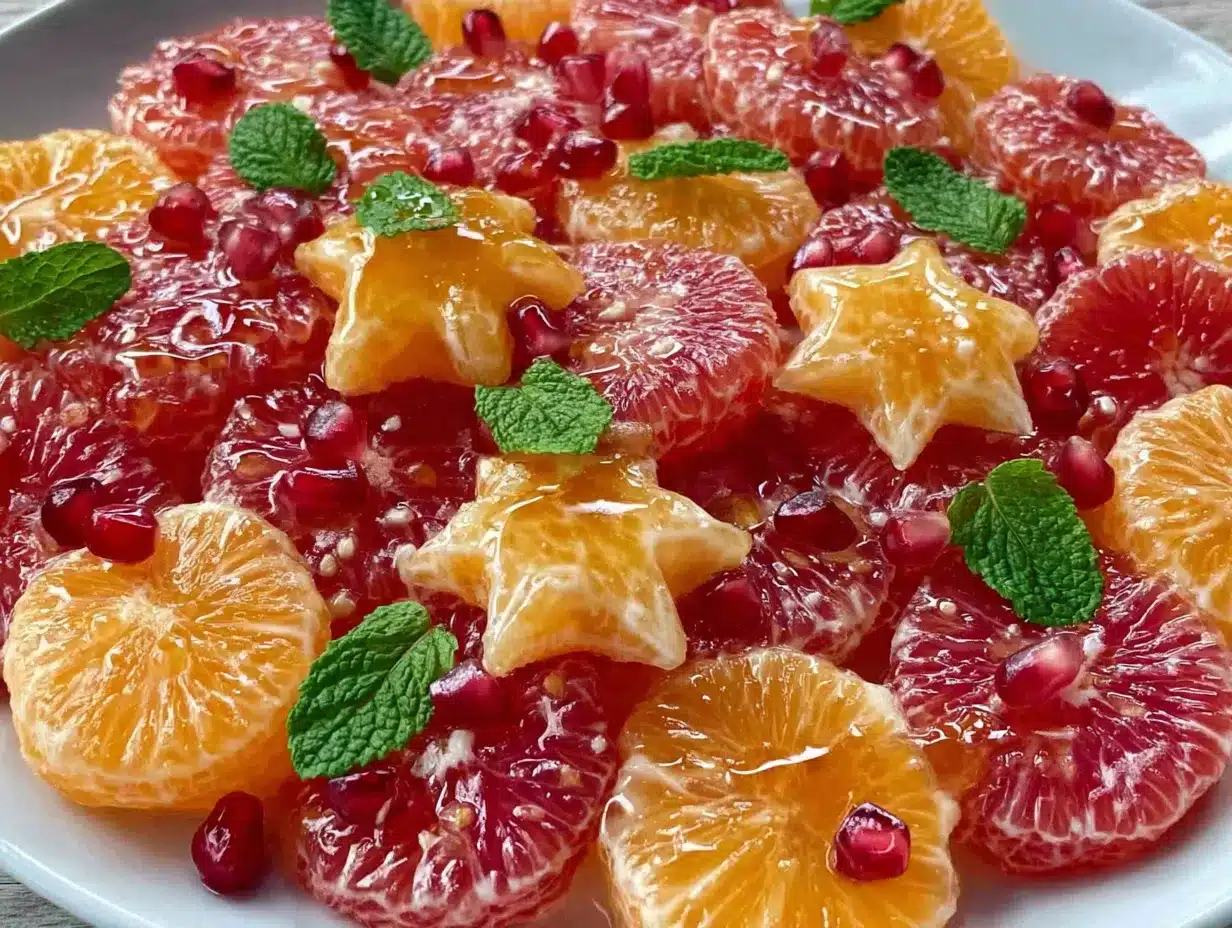
This salad is best served immediately, at room temperature or slightly chilled. I like to serve it on a large platter so everyone can see the beautiful layers of citrus and pomegranate seeds. It’s a showstopper on a holiday table or a simple weeknight dinner.
What to serve with it: This salad pairs beautifully with lighter proteins. I love it alongside some grilled fish or a simple roasted chicken. It’s also great with a bowl of soup on a cold winter night—try it with a creamy tomato soup or a hearty lentil soup. For a drink, a crisp white wine like Sauvignon Blanc or a sparkling water with a slice of lemon would be perfect.
Storage: If you have leftovers (which is rare in my house), store the undressed salad components separately from the dressing. The greens will keep in the fridge for a day, but they will start to wilt. The citrus segments and pomegranate seeds can be stored in an airtight container in the fridge for up to 2 days. The dressing will keep in the fridge for up to a week. Give it a good shake before using.
Reheating: This is a cold salad, so no reheating needed! If you’ve stored the components separately, just assemble and dress them when you’re ready to eat. The flavors actually meld together a bit after sitting for an hour or so, but the texture of the greens is best right after dressing.
Nutritional Information & Benefits
This salad is not just beautiful—it’s packed with nutrients that are especially welcome in the winter months.
Here are the estimated nutritional values per serving (based on 4 servings):
- Calories: 285
- Fat: 18g (mostly healthy fats from olive oil and almonds)
- Carbohydrates: 28g
- Fiber: 6g
- Protein: 7g
- Vitamin C: 85% of the Daily Value (DV)
- Vitamin A: 50% of the DV
Health benefits: The citrus fruits are loaded with vitamin C, which is great for your immune system during cold and flu season. Pomegranate seeds are packed with antioxidants that help fight inflammation. The mixed greens provide fiber and a range of vitamins and minerals. And the healthy fats from the olive oil and almonds help your body absorb the fat-soluble vitamins from the greens. It’s a nutritional powerhouse that tastes like a treat.
Dietary considerations: This recipe is naturally gluten-free and can be made dairy-free by omitting the feta cheese. It’s also vegetarian and can be made vegan by using maple syrup instead of honey and skipping the cheese. The main allergen to be aware of is tree nuts (almonds), but you can easily swap in pumpkin seeds or sunflower seeds for a nut-free version.
Conclusion
I hope you give this Bright Winter Citrus Pomegranate Salad a try. It’s one of those recipes that feels special enough for company but is simple enough for a Tuesday night. The bright colors and fresh flavors are like a little ray of sunshine on a cold winter day, and it’s a great way to use the beautiful citrus that’s in season right now.
I love this salad because it reminds me that eating well doesn’t have to be complicated or boring. It’s proof that a handful of simple, fresh ingredients can come together to create something truly memorable. And honestly, it’s just so pretty. There’s something deeply satisfying about setting a platter of this salad on the table and watching people’s faces light up.
So go ahead and make it your own. Swap in your favorite citrus, add some protein, or toss in some fresh herbs. The recipe is a starting point, not a rulebook. And when you make it, I’d love to hear how it turned out. Leave a comment below and let me know what variations you tried, or share a photo of your creation on social media. Happy cooking, and here’s to bright, beautiful winter salads!
Frequently Asked Questions
Can I make this salad ahead of time?
You can prep the components ahead of time—segment the citrus, seed the pomegranate, and make the dressing up to a day in advance. But wait to dress the salad until right before you serve it. Once dressed, the greens will wilt and the citrus will release too much juice.
What can I use instead of pomegranate seeds?
If you can’t find pomegranates or just don’t like them, you can substitute with dried cranberries, fresh raspberries, or even some chopped dried apricots. The key is to have something with a little sweetness and a pop of color.
Can I use bottled lemon and orange juice for the dressing?
I really don’t recommend it. Fresh citrus juice has a brightness and complexity that bottled juice just can’t match. Since the dressing is so simple, the quality of each ingredient really matters. It’s worth squeezing a fresh lemon and orange.
How do I get the pith off the citrus without making a mess?
A sharp knife is your best friend here. Make sure your knife is sharp, and take your time. Cut off the top and bottom first so the fruit sits flat, then slice the peel off in strips, following the curve of the fruit. Don’t worry if it’s not perfect—a little pith left behind won’t ruin the salad.
Is this salad good for meal prep?
It’s not the best for full meal prep because the greens will wilt. But you can prep the citrus, pomegranate seeds, and dressing in advance, and then just assemble the salad when you’re ready to eat. Store the components separately in the fridge for up to 2 days.
Pin This Recipe!
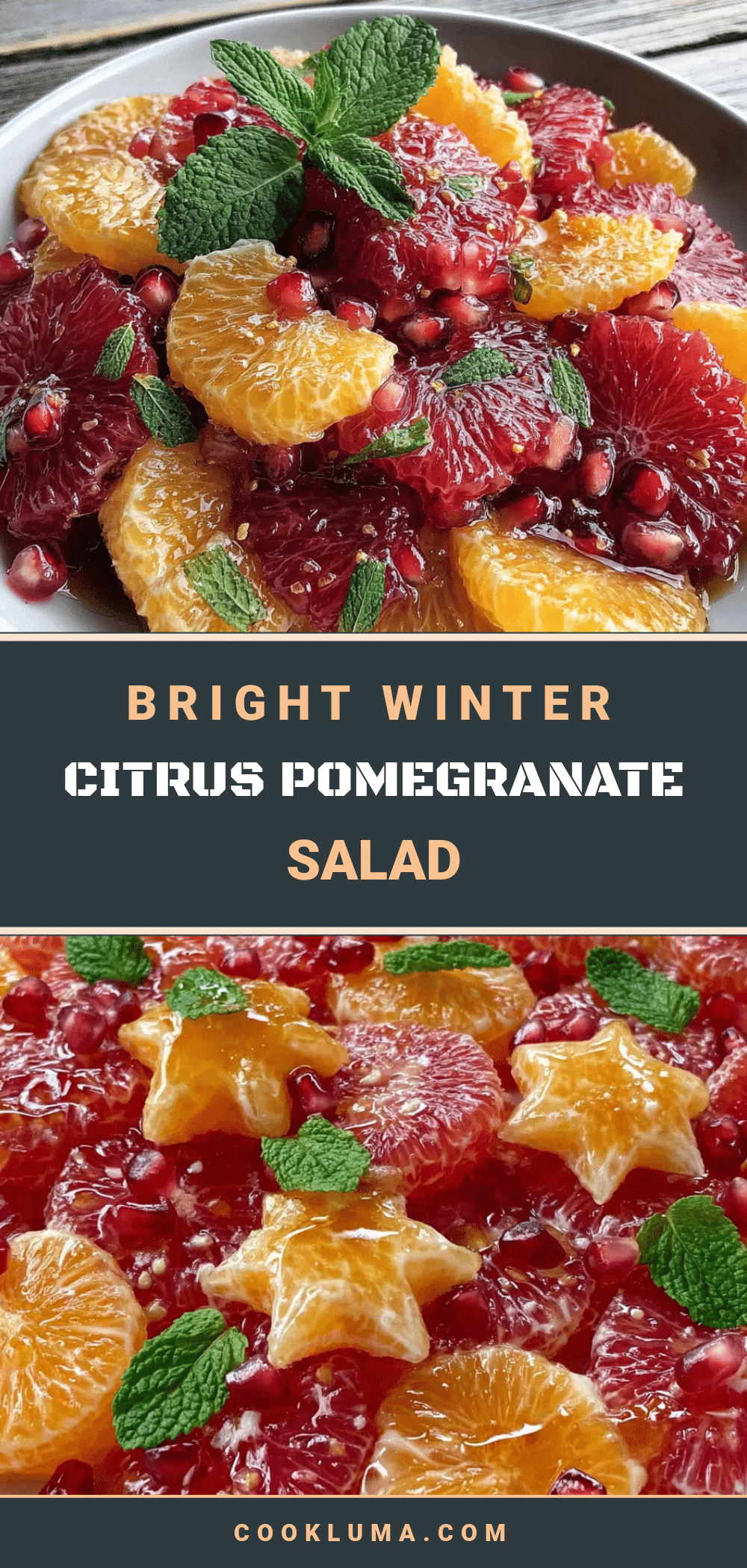
Bright Winter Citrus Pomegranate Salad
A quick and easy winter salad featuring bright citrus, pomegranate seeds, and a simple honey-Dijon dressing. Perfect for a light lunch or holiday brunch.
- Prep Time: 15 minutes
- Cook Time: 0 minutes
- Total Time: 15 minutes
- Yield: 4 servings
- Category: Salad
- Cuisine: American
Ingredients
- Mixed greens (5 ounces or about 5 cups)
- Navel oranges (2 large)
- Blood oranges (2 medium)
- Ruby Red grapefruit (1 large)
- Pomegranate (1 large, about 1/2 cup seeds)
- Feta cheese (1/2 cup, crumbled)
- Red onion (1/4 of a medium, thinly sliced)
- Toasted almonds (1/4 cup, sliced)
- Extra-virgin olive oil (1/4 cup)
- Fresh orange juice (2 tablespoons)
- Fresh lemon juice (1 tablespoon)
- Honey (1 tablespoon)
- Dijon mustard (1 teaspoon)
- Shallot (1 small, finely minced)
- Salt and black pepper (to taste)
Instructions
- Make the dressing: In a small bowl or mason jar, combine olive oil, orange juice, lemon juice, honey, Dijon mustard, and minced shallot. Season with salt and pepper. Whisk or shake until emulsified. Set aside.
- Prepare the citrus: Using a sharp knife, cut off the top and bottom of each orange and grapefruit. Slice off the peel and white pith in strips. Hold the fruit over a bowl and cut between the membranes to release the segments (supreme). Repeat with all citrus.
- Seed the pomegranate: Cut the pomegranate in half crosswise. Hold one half cut-side down over a bowl and hit the back firmly with a wooden spoon to release the seeds. Pick out any pith.
- Assemble the salad: Place mixed greens in a large bowl or on a platter. Arrange citrus segments on top. Scatter pomegranate seeds, crumbled feta, sliced red onion, and toasted almonds over the top.
- Dress and serve: Give the dressing a final shake, then drizzle over the salad. Start with half, toss gently, and add more if needed. Serve immediately.
Notes
The dressing can be made up to a day in advance. Citrus can be segmented a few hours ahead. Once dressed, serve immediately to prevent wilting. For a dairy-free version, omit feta or use vegan feta. For a vegan version, use maple syrup instead of honey.
Nutrition
- Serving Size: 1 serving
- Calories: 285
- Sugar: 18
- Sodium: 320
- Fat: 18
- Saturated Fat: 4
- Carbohydrates: 28
- Fiber: 6
- Protein: 7
Keywords: winter salad, citrus salad, pomegranate salad, quick salad, healthy salad, holiday salad