It was 11:47 PM on a random Wednesday in mid-December, and I had a desperate craving for the smell of bread baking. The house was finally quiet—kids asleep, dishes done, Christmas lights still blinking on the tree in the living room. I didn’t have the strength for a full sourdough boule with all its folding and waiting, but I had a jar of bubbly starter in the fridge and a bag of bread flour that was staring at me from the pantry. The idea hit me like a tired, impulsive thought: focaccia. Flat, forgiving, and fast enough for a midnight project. I grabbed a baking sheet, drizzled what felt like half a bottle of olive oil into it, and just started mixing. No recipe book, no phone propped up—just me, the quiet hum of the refrigerator, and dough that felt alive under my fingers. Honestly, I forgot to set a timer for the first rise and just left it on the counter while I scrolled through my phone. But that focaccia came out of the oven at 1:30 AM looking like a golden pillow, all dimpled and crisp, with fresh rosemary crackling on top. Maybe you’ve been there—that weird, wonderful moment when a recipe just works because you stopped overthinking it. This is that recipe. The one that makes holiday baking feel less like a chore and more like a gift you give yourself. I keep making it because it proves that even at the end of a long day, you can pull something beautiful out of thin air.
Why You’ll Love This Recipe
Let me tell you why this rosemary sourdough focaccia has earned a permanent spot on my holiday table. I’ve tested this recipe about seven times—yes, seven—and each batch taught me something new. The first one came out too dense. The second burned on the bottom. But by batch five, I had cracked the code. This is the version I’d serve to my mother-in-law without sweating.
- Simple Ingredients: You need bread flour, water, olive oil, salt, rosemary, and your sourdough starter. That’s it. No yeast packets to hunt down at the store.
- Perfect for the Holiday Table: It looks fancy with those herb-studded dimples, but it’s actually one of the easiest breads you’ll ever make. Great for Thanksgiving, Christmas dinner, or just a cozy weekend gathering.
- Crowd-Pleaser: My kids fight over the crispy edges, and my dad—who claims he doesn’t like sourdough—ate half a pan last Christmas Eve.
- Unbelievably Delicious: The texture is soft and airy inside with a shatteringly crisp bottom crust. The rosemary gets toasty and fragrant, and that olive oil flavor soaks into every bite.
What makes this recipe different from all the other focaccia recipes out there is the timing. I use a cold, slow fermentation that develops deep sourdough flavor without making you babysit the dough all day. You mix it at night, let it sit on the counter for a few hours, then pop it in the fridge. The next day, you’re twenty minutes away from warm bread. It’s comfort food reimagined—healthier with that fermented tang, faster than traditional sourdough loaves, but with the same soul-soothing satisfaction. Perfect for impressing guests without stress, or turning a simple holiday meal into something memorable.
What Ingredients You Will Need
This recipe uses simple, pantry-friendly ingredients to deliver that signature sourdough tang and pillowy texture. Most of these are probably already in your kitchen, which makes this perfect for last-minute holiday baking.
- Bread flour, 500 grams (about 4 cups) — I prefer King Arthur for its higher protein content, which gives the focaccia better structure and chew
- Water, 400 grams (about 1 ¾ cups), lukewarm — tap water works fine; just make sure it’s not too hot or it’ll kill the natural yeast
- Sourdough starter, 150 grams (about ⅔ cup), active and bubbly — this is your leavening agent; feed it 4-6 hours before mixing for best results
- Olive oil, 80 grams (about ⅓ cup), plus extra for the pan — use a good quality extra virgin here; the flavor really comes through
- Fine sea salt, 10 grams (about 2 teaspoons) — don’t skip this; salt controls fermentation and adds flavor
- Fresh rosemary, 2 tablespoons, finely chopped — you can use dried in a pinch, but fresh gives that piney, aromatic kick that makes this focaccia special
- Flaky sea salt, for topping — Maldon is my go-to; those little crunchy crystals make a big difference
For the rosemary, look for bunches with bright green, fragrant needles—avoid any that look wilted or brown. If you’re using dried rosemary, crush it between your fingers before adding to release the oils. I’ve also made this with a mix of rosemary and fresh thyme, and it was gorgeous. Feel free to experiment.
One substitution tip: if you don’t have bread flour, all-purpose flour works in a pinch. The texture will be slightly less chewy and more tender, but it’s still delicious. For a gluten-free version, I’ve had success with a 1:1 gluten-free flour blend, though the dough won’t be as stretchy.
Equipment Needed
You don’t need a fancy bakery setup for this focaccia. Here’s what I use every time:
- Large mixing bowl — glass or ceramic works best; avoid metal if your starter is very acidic
- Baking sheet, 9×13 inches (half-sheet pan) — a rimmed sheet is crucial to hold all that olive oil
- Kitchen scale — honestly, this is non-negotiable for consistent results; measuring flour by volume is too unreliable
- Bench scraper — makes handling the sticky dough so much easier; a plastic dough scraper costs about five dollars
- Plastic wrap or a damp kitchen towel — for covering the dough during rises
- Cooling rack — keeps the bottom from getting soggy
If you don’t have a 9×13 pan, a 10-inch cast iron skillet works beautifully. The focaccia will be thicker and round, with even crispier edges. Just adjust the baking time by about 5 minutes.
Preparation Method

This recipe takes about 24 hours from start to finish, but don’t let that scare you. Most of that time is the dough just sitting there doing its thing. Your active work is maybe 20 minutes total.
- Mix the dough (Day 1, evening): In your large bowl, combine the bread flour and fine sea salt. Add the lukewarm water and active sourdough starter. Mix with your hand or a sturdy spatula until no dry bits remain. The dough will look shaggy and rough—that’s okay. Cover the bowl with plastic wrap and let it rest for 30 minutes. This is called the autolyse, and it helps the flour absorb water and develop gluten naturally.
- Stretch and fold (Day 1, evening): After the rest, wet your hand with a little water to prevent sticking. Grab one side of the dough, stretch it up, and fold it over the center. Rotate the bowl a quarter turn and repeat. Do this four times total (one full rotation). Cover and rest 30 minutes. Repeat this stretch-and-fold process three more times, with 30-minute rests in between. After the fourth set, the dough should feel smoother and more elastic. Don’t worry if it’s still a bit sticky—that’s normal for high-hydration dough.
- Bulk fermentation (Day 1, overnight): Cover the bowl tightly with plastic wrap and place it in the refrigerator. Let it cold ferment for 12 to 18 hours. This slow rise develops that tangy sourdough flavor and makes the dough easier to handle. I usually do this step before bed and come back to it the next morning.
- Prepare the pan (Day 2, morning or afternoon): About 3 to 4 hours before you want to bake, take the dough out of the fridge. Pour about 3 tablespoons of olive oil into your 9×13 baking sheet. Use your fingers to spread it all over the bottom and up the sides. The oil should pool a little—this is what gives focaccia its crispy, golden bottom.
- Transfer and dimple (Day 2, morning or afternoon): Tip the cold dough into the oiled pan. Don’t try to stretch it yet—just let it sit for 10 minutes to warm up slightly. Then, using oiled fingertips, gently press the dough out toward the edges of the pan. If it resists, let it rest another 10 minutes and try again. The goal is an even layer, about 1 inch thick. Cover the pan with plastic wrap and let it rise at room temperature for 2 to 3 hours, until the dough is puffy and jiggly and has nearly doubled in height.
- Dimple and top (Day 2, before baking): Preheat your oven to 425°F (220°C) with a rack in the middle. Drizzle another 2 tablespoons of olive oil over the puffy dough. Now for the fun part: using your fingertips, press deep dimples all across the surface of the dough. Don’t be shy—go all the way down to the bottom of the pan. This isn’t just for looks; those dimples trap the oil and create crispy, golden pockets. Sprinkle the chopped fresh rosemary evenly over the top, followed by a generous pinch of flaky sea salt.
- Bake (Day 2, afternoon): Place the pan in the preheated oven and bake for 22 to 28 minutes, until the focaccia is deep golden brown on top and sounds hollow when you tap the bottom. If the top is browning too fast but the bottom isn’t done, tent loosely with foil for the last 5 minutes.
- Cool and serve: Let the focaccia cool in the pan for 5 minutes, then transfer it to a wire rack. Don’t skip this—if you leave it in the pan, the steam will make the bottom soggy. Let it cool for at least 15 minutes before slicing. The wait is hard, I know, but the texture will be so much better.
Cooking Tips & Techniques
After making this focaccia more times than I can count, I’ve collected a few hard-earned lessons. Let me save you some trouble.
Don’t skip the stretch and folds. The first time I made this, I got lazy and skipped two of the four sets. The dough was flat and dense, like a sad pancake. Those folds build structure so the focaccia can hold all those air bubbles. Set a timer on your phone if you have to.
Watch your water temperature. If your kitchen is cold in winter, use slightly warmer water (around 80°F) to help the fermentation along. In summer, use cool water. The dough should feel like a comfortable bath, not a hot tub. I learned this after a batch that over-fermented overnight and tasted like sour nail polish.
The dimpling technique matters. I used to poke the dough gently, and the result was a flat top with no texture. Now I press firmly and confidently—almost aggressively—until my fingers hit the pan. Those deep wells fill with olive oil and create those irresistible crispy bits. Don’t be shy.
Let it cool completely. I know the smell is intoxicating, and you want to tear into it immediately. But cutting hot focaccia compresses the crumb and makes it gummy. Give it at least 15 minutes. Use that time to set the table or pour yourself a glass of wine.
Double the batch if you’re feeding a crowd. One 9×13 pan serves about 8 people as a side. For a holiday dinner, I always make two. The second one never lasts past the next morning—it makes incredible breakfast sandwiches with leftover turkey and cranberry sauce.
Variations & Adaptations
This rosemary sourdough focaccia is a great base for experimentation. Here are some variations I’ve tried and loved.
Garlic and Herb Focaccia: Add 4 cloves of thinly sliced garlic to the olive oil in the pan before adding the dough. The garlic infuses the oil and gets sweet and tender during baking. Top with the rosemary plus a tablespoon of fresh thyme leaves. I made this for a New Year’s Eve party, and people asked for the recipe before they even sat down.
Everything Bagel Focaccia: After dimpling and oiling, sprinkle the top with 2 tablespoons of everything bagel seasoning (poppy seeds, sesame seeds, dried garlic, dried onion, and salt). This version is amazing for breakfast or alongside a bowl of soup. My kids call it “the crunchy bread” and request it for school lunches.
Gluten-Free Adaptation: Substitute the bread flour with a high-quality gluten-free all-purpose blend that contains xanthan gum. Increase the water by 50 grams, as gluten-free flours absorb more liquid. The dough will be more like a thick batter—don’t try to stretch it. Just spread it gently in the pan with a spatula. The texture won’t be as airy, but the flavor is still wonderful.
Roasted Tomato and Rosemary: Press halved cherry tomatoes into the dough before the final rise, cut-side up. They’ll roast and caramelize in the oven, adding little bursts of sweetness. This is my go-to summer version when tomatoes are at their peak.
Serving & Storage Suggestions
This focaccia is best served warm, fresh from the oven, with the olive oil still glistening. Set it out on a wooden board with a small bowl of extra virgin olive oil for dipping. It’s perfect alongside a holiday roast, a big bowl of pasta, or a simple salad of bitter greens and lemon vinaigrette.
For a holiday appetizer, slice the focaccia into thin strips and serve with whipped ricotta, a drizzle of honey, and a crack of black pepper. I did this last Thanksgiving, and it disappeared before the turkey even came out of the oven.
Storage: Leftover focaccia keeps at room temperature for up to 2 days, wrapped loosely in foil. Do not store it in plastic—the crust will get soft and sad. If you need to keep it longer, slice and freeze it. Wrap individual pieces in foil, then place them in a freezer bag. They’ll keep for up to 3 months.
Reheating: The best way to revive focaccia is in a 350°F oven for 5 to 7 minutes. It comes back crispy on the outside and soft inside. The microwave works in a pinch, but the texture will be chewy. Honestly, I’ve also eaten it cold straight from the fridge at midnight, and it was still pretty great.
The flavor actually deepens after a day. The sourdough tang becomes more pronounced, and the rosemary mellows into something almost sweet. If you can resist eating it all fresh, save a piece for the next day.
Nutritional Information & Benefits
One serving (about 1/8 of the pan) contains approximately 280 calories, 10 grams of fat, 40 grams of carbohydrates, 2 grams of fiber, and 7 grams of protein. These values are estimates and will vary based on your specific ingredients.
The sourdough fermentation process offers some benefits over conventional yeast bread. The natural fermentation breaks down phytic acid, which can make the minerals in the flour more available for absorption. Some people find sourdough easier to digest than other breads. I can’t make medical claims, but I can tell you that I feel less bloated after eating this focaccia compared to a store-bought loaf.
Olive oil provides healthy monounsaturated fats, and rosemary contains antioxidants like rosmarinic acid. This isn’t health food, but it’s a more wholesome version of the bread you’d buy at the store. Plus, you control exactly what goes into it—no preservatives, no dough conditioners, just real ingredients.
If you’re watching your sodium, reduce the flaky salt topping or skip it entirely. The dough itself only has a modest amount of salt.
Conclusion
This rosemary sourdough focaccia has become my signature holiday contribution, and I think it deserves a spot on your table too. It’s the kind of bread that makes people close their eyes when they take a bite—the kind that gets passed around with murmured compliments and requests for the recipe. And the best part? It’s forgiving. If you forget a fold, if your starter isn’t at peak activity, if you leave it in the fridge a little too long—it still works. That midnight batch I made on that Wednesday in December? It was messy and imperfect, and it was the best thing I baked all season.
I’d love to hear how yours turns out. Did you add garlic? Try it with tomatoes? Serve it with something unexpected? Drop a comment below and tell me about your version. And if you share a photo on Pinterest, tag me—I want to see that golden, dimpled beauty. Happy baking, friend. You’ve got this.
Frequently Asked Questions
Can I use active dry yeast instead of sourdough starter?
Yes, but it won’t have the same tangy flavor. Substitute 1 teaspoon of active dry yeast for the starter. Dissolve it in the warm water with a pinch of sugar and let it sit for 5 minutes until foamy. Reduce the water by 50 grams to account for the liquid difference. The texture will be softer and more like traditional focaccia.
Why is my focaccia dough so sticky?
High-hydration doughs are naturally sticky. That’s normal and actually desirable for a light, airy crumb. Resist the urge to add more flour. Use wet hands or oiled fingertips when handling the dough, and trust the process. The stretch and folds will develop the gluten and make it more manageable.
Can I make this without a kitchen scale?
You can, but I don’t recommend it. Flour measurement by volume is notoriously inconsistent—you could end up with 20% more or less flour than the recipe needs. A kitchen scale costs about $15 and will transform your baking. If you must use cups, spoon the flour into the cup and level it off without packing it down.
How do I know when my starter is active enough?
Your starter should have doubled in size within 4 to 6 hours of feeding. It should look bubbly and smell pleasantly sour, like yogurt or ripe fruit. If it’s flat and smells like nail polish remover, it’s too hungry—give it another feeding and wait a few more hours. A float test works: drop a small spoonful of starter into a glass of water. If it floats, it’s ready.
Can I freeze the unbaked dough?
Yes! After the cold fermentation, you can freeze the dough in the oiled pan, tightly wrapped in plastic wrap and then foil. It will keep for up to 1 month. To bake, thaw it in the refrigerator overnight, then let it come to room temperature and finish the second rise before dimpling and baking. The texture might be slightly less airy, but it’s a great time-saver for busy holidays.
Pin This Recipe!

Best Rosemary Sourdough Focaccia Recipe for Holidays
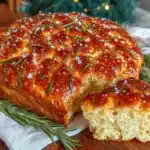
This rosemary sourdough focaccia is a forgiving, delicious bread that’s perfect for holiday tables. With a cold, slow fermentation for deep flavor and a crispy, golden crust, it’s easy to make and sure to impress.
- Prep Time: 20 minutes
- Cook Time: 25 minutes
- Total Time: 24 hours (includes fermentation)
- Yield: 8 servings 1x
- Category: Bread
- Cuisine: Italian
Ingredients
- 500 grams (about 4 cups) bread flour
- 400 grams (about 1 ¾ cups) lukewarm water
- 150 grams (about ⅔ cup) active sourdough starter
- 80 grams (about ⅓ cup) olive oil, plus extra for the pan
- 10 grams (about 2 teaspoons) fine sea salt
- 2 tablespoons fresh rosemary, finely chopped
- Flaky sea salt, for topping
Instructions
- Mix the dough (Day 1, evening): In a large bowl, combine bread flour and fine sea salt. Add lukewarm water and active sourdough starter. Mix until no dry bits remain. Cover and let rest for 30 minutes (autolyse).
- Stretch and fold (Day 1, evening): After rest, wet your hand and stretch one side of the dough up and fold over the center. Rotate bowl and repeat for a full turn. Cover and rest 30 minutes. Repeat stretch-and-fold three more times with 30-minute rests.
- Bulk fermentation (Day 1, overnight): Cover bowl tightly and refrigerate for 12 to 18 hours for cold fermentation.
- Prepare the pan (Day 2): About 3-4 hours before baking, pour 3 tablespoons olive oil into a 9×13 baking sheet and spread evenly.
- Transfer and dimple (Day 2): Tip cold dough into oiled pan. Let rest 10 minutes, then gently press dough to edges using oiled fingertips. Cover and let rise at room temperature for 2-3 hours until puffy and nearly doubled.
- Dimple and top (Day 2): Preheat oven to 425°F (220°C). Drizzle 2 tablespoons olive oil over dough. Press deep dimples all over surface with fingertips. Sprinkle with chopped rosemary and flaky sea salt.
- Bake (Day 2): Bake for 22-28 minutes until deep golden brown and hollow-sounding when tapped. Tent with foil if browning too fast.
- Cool and serve: Let cool in pan for 5 minutes, then transfer to a wire rack. Cool at least 15 minutes before slicing.
Notes
For best results, use a kitchen scale for accurate measurements. The dough is naturally sticky; resist adding extra flour. For a gluten-free version, use a 1:1 gluten-free flour blend and increase water by 50 grams. Leftover focaccia keeps at room temperature for up to 2 days wrapped in foil; reheat in a 350°F oven for 5-7 minutes.
Nutrition
- Serving Size: 1/8 of pan
- Calories: 280
- Sodium: 400
- Fat: 10
- Saturated Fat: 1.5
- Carbohydrates: 40
- Fiber: 2
- Protein: 7
Keywords: sourdough focaccia, rosemary focaccia, holiday bread, sourdough bread, easy focaccia, Christmas bread, Thanksgiving bread