I was standing in line at the hardware store—of all places—holding a bag of sand and a new paintbrush, when the woman behind me started talking about clams. She was maybe seventy, wearing a worn-out Red Sox cap and holding a single can of cream-style corn. “You know what makes a chowder taste like it came from Maine?” she asked, completely unprompted. I didn’t. I’d never even made clam chowder before. But for the next ten minutes, while the guy at the counter rang up my sand, she told me exactly how to do it—no cookbook, no measurements, just a lifetime of Sunday suppers and dock-side fish shacks. I scribbled her instructions on the back of a receipt. Honestly, I almost threw it away. But something made me keep that crumpled piece of paper, and let me tell you—it changed the way I think about soup entirely.
This Creamy Homemade New England Clam Chowder isn’t fancy. It doesn’t have truffle oil or a foam or any of that stuff. It’s the kind of chowder that makes you close your eyes after the first spoonful. The kind that fills your kitchen with the smell of bacon and cream and something deeply comforting. I’ve made it for sick friends, for cold winter nights, and for times when I just needed a hug in a bowl. And every single time, I think about that woman at the hardware store. Maybe you’ve been there—where the best recipe you’ve ever made came from the most unexpected place. This is that recipe for me.
I’ve been making this chowder for years now, tweaking it here and there, but honestly, her original version was pretty much perfect. I just added a little more bacon (because, come on) and figured out the exact timing so the clams stay tender instead of turning into rubber. It’s one of those recipes that feels like it’s been in my family forever, even though it technically came from a stranger in a checkout line. That’s the funny thing about food—it finds you when you need it most. And if you need a bowl of something warm, creamy, and deeply satisfying, this chowder is about to find you too.
Why You’ll Love This Recipe
Let me be straight with you—I’ve tested a lot of clam chowder recipes over the years. Some were too thin, some were gluey, and some just tasted like salty milk. But this one? It’s the Goldilocks of chowders. It’s rich without being heavy, creamy without being gloppy, and packed with clam flavor without being fishy. Here’s why this version stands out:
- Quick & Easy: From start to finish, this comes together in about 45 minutes. No all-day simmering required. Perfect for a weeknight when you need comfort food fast.
- Simple Ingredients: You’ll find everything at a regular grocery store. No special trips to a seafood market or obscure spice aisle. Bacon, onions, potatoes, cream, and canned clams—that’s the backbone.
- Perfect for Cold Weather: This is the ultimate rainy-day, snowy-afternoon, “I-don’t-want-to-leave-the-house” kind of meal. It warms you from the inside out.
- Crowd-Pleaser: I’ve served this to clam chowder purists from New England and they gave it the nod. My kids devour it. It’s one of those rare recipes that makes everyone happy.
- Unbelievably Delicious: The secret is in the technique—rendering the bacon fat, using half-and-half instead of heavy cream (trust me on this), and adding the clams at the very end so they stay plump and tender. The result is a chowder that tastes like you spent hours on it, when you really didn’t.
This isn’t just another chowder recipe. It’s the one I’ve made for dinner parties where people asked for seconds, and for solo nights on the couch where I ate it straight from the pot (no judgment). It’s comfort food that actually delivers on its promise—warm, creamy, and so satisfying you’ll want to lick the bowl.
What Ingredients You Will Need
This recipe uses simple, pantry-friendly ingredients that come together to create something truly special. The beauty of this chowder is that nothing is complicated—it’s all about how you put it together. Let’s break down what you’ll need and why each ingredient matters.
For the Chowder Base
- 6 slices thick-cut bacon, chopped (the smoky flavor is non-negotiable—don’t use turkey bacon here)
- 1 large yellow onion, diced (about 1½ cups; sweet onions work too if that’s what you have)
- 2 celery stalks, diced (adds that subtle savory backbone)
- 3 cloves garlic, minced (fresh only—skip the jarred stuff for this)
- 4 tablespoons all-purpose flour (this thickens the chowder without making it pasty)
- 4 cups low-sodium chicken broth (or clam juice if you want extra briny flavor; I use Swanson’s)
- 2 cups half-and-half (the Goldilocks choice—not too heavy, not too thin; I’ve tested this with whole milk and it’s not the same)
- 4 medium Yukon Gold potatoes, peeled and diced into ½-inch cubes (about 3 cups; they hold their shape better than Russets)
- 2 bay leaves (remove before serving—trust me, nobody wants to bite into one)
- 1 teaspoon dried thyme (or 1 tablespoon fresh if you have it)
- ½ teaspoon smoked paprika (my little addition—adds depth without being obvious)
- Salt and freshly ground black pepper to taste (go easy on the salt since the clams and bacon are already salty)
For the Clams
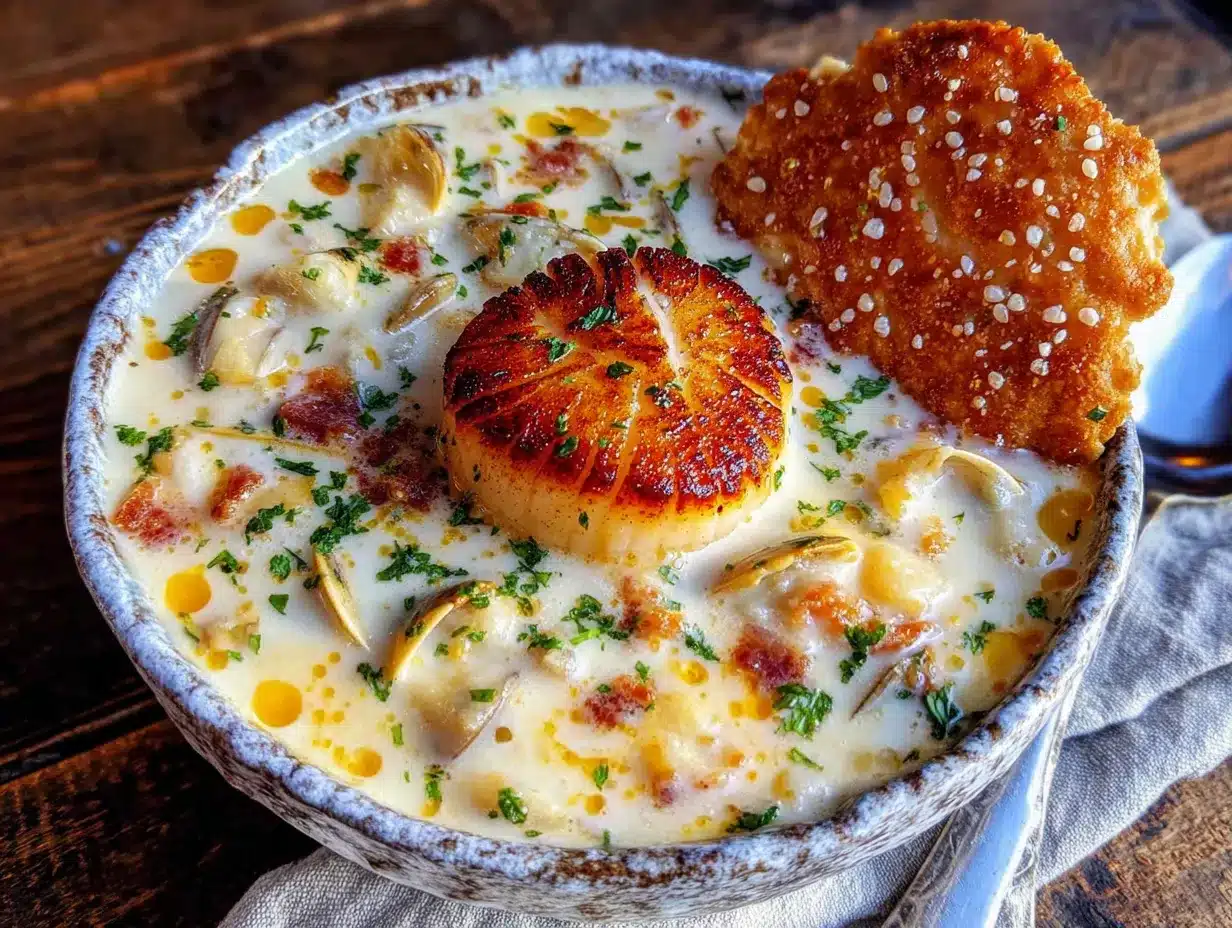
- 3 cans (6.5 ounces each) chopped clams, drained with juice reserved (I prefer Snow’s or Bumble Bee; look for “chopped” not “minced” for better texture)
- Reserved clam juice from the cans (this is liquid gold—don’t you dare throw it away)
For Garnish (Optional but Recommended)
- Fresh parsley, chopped (adds color and freshness)
- Oyster crackers or crusty bread for serving
- Extra bacon crumbles (because more bacon is always the right answer)
Ingredient Selection Tips: When buying canned clams, look for brands that pack them in their own juice rather than water. The juice has way more flavor. For the potatoes, Yukon Golds are my go-to because they’re buttery and hold their shape during simmering. Russets will break down more and make the chowder starchier—which isn’t necessarily bad, but it changes the texture. If you’re feeling fancy, you can use fresh clams (about 2 pounds of littlenecks), but honestly, the canned version is so good that I only bother with fresh when I’m trying to impress someone.
Equipment Needed
You don’t need a lot of fancy equipment for this chowder, which is part of why I love it. Here’s what you’ll need:
- Large Dutch oven or heavy-bottomed pot (at least 5-quart; I use my Le Creuset, but a Lodge enameled cast iron works beautifully too)
- Sharp chef’s knife (for dicing onions, celery, and potatoes—a dull knife makes everything harder)
- Cutting board (wood or plastic, doesn’t matter)
- Wooden spoon or silicone spatula (for stirring; avoid metal if you’re using enameled cookware)
- Measuring cups and spoons (you’ll be measuring broth, cream, and seasonings)
- Vegetable peeler (for the potatoes)
- Fine-mesh strainer (optional, for rinsing clams if you want to remove any grit—I usually skip this step)
- Ladle (for serving)
Budget-Friendly Note: If you don’t have a Dutch oven, a large soup pot works fine. Just make sure it’s heavy-bottomed so the chowder doesn’t scorch. I’ve made this in a cheap stainless steel pot and it turned out great—just stir more frequently. Also, don’t rush out to buy a fancy chef’s knife. A decent $15 knife from the grocery store, sharpened regularly, will do the job.
Personal Experience: I once tried making this in a nonstick skillet because all my pots were dirty. Don’t do it. The chowder needs room to simmer and the flour needs space to cook properly. Use the biggest pot you have. Trust me on this one—I learned the hard way when my chowder boiled over and made a mess on the stove that took forever to clean up.
Preparation Method
Alright, let’s get cooking. This chowder comes together in stages, but none of them are hard. I’ll walk you through every step so you feel confident, even if this is your first time making chowder.
Step 1: Cook the Bacon
Place your Dutch oven over medium heat and add the chopped bacon. Cook, stirring occasionally, until the bacon is crispy and the fat has rendered—about 6 to 8 minutes. Use a slotted spoon to transfer the bacon to a paper towel-lined plate, leaving the rendered fat in the pot. You should have about 3 to 4 tablespoons of bacon fat left. If you have less, add a little butter to make up the difference. Resist the urge to eat all the bacon right now. You’ll need it for garnish later.
Step 2: Sauté the Aromatics
Reduce the heat to medium-low and add the diced onion and celery to the pot with the bacon fat. Cook, stirring occasionally, until the vegetables are soft and translucent—about 5 to 7 minutes. Don’t rush this step. You want them to sweat, not brown. If they start to brown, your heat is too high. Add the minced garlic and cook for another minute until fragrant. Your kitchen should smell amazing at this point—like a cozy seafood shack.
Step 3: Make the Roux
Sprinkle the flour over the cooked vegetables and stir constantly for 2 minutes. This cooks out the raw flour taste and creates a smooth base for the chowder. The mixture will look pasty and slightly golden—that’s exactly what you want. Keep stirring; if the flour burns, you’ll have to start over.
Step 4: Add the Liquids
Slowly pour in the chicken broth while whisking constantly to prevent lumps. Add the reserved clam juice too—this is where all that briny flavor comes from. Whisk until the mixture is smooth and begins to thicken slightly, about 3 to 4 minutes. Then pour in the half-and-half and whisk again. The base should look creamy and pale beige.
Step 5: Add Potatoes and Seasonings
Add the diced potatoes, bay leaves, thyme, and smoked paprika to the pot. Stir everything together. Bring the chowder to a gentle simmer—not a rolling boil, just a few lazy bubbles breaking the surface. Reduce the heat to low, cover the pot, and let it cook for 15 to 20 minutes, or until the potatoes are fork-tender. Check the potatoes after 15 minutes by piercing one with a fork. It should slide in easily but the potato should still hold its shape.
Step 6: Add the Clams
Once the potatoes are tender, remove the bay leaves and discard them. Stir in the drained chopped clams. Cook for just 2 to 3 minutes—you want the clams to heat through, not turn into rubber. Overcooking clams is the number one mistake people make. They’re already cooked in the can; you’re just warming them up.
Step 7: Season and Serve
Taste the chowder and add salt and pepper as needed. Remember, the bacon and clams are already salty, so go easy. If the chowder is thicker than you like, stir in a splash of milk or broth. If it’s too thin, let it simmer uncovered for a few more minutes. Ladle into bowls, top with the reserved crispy bacon and fresh parsley, and serve with oyster crackers or crusty bread. Pro tip: let the chowder sit for 5 minutes before serving—it thickens up beautifully as it cools slightly.
Cooking Tips & Techniques
After making this chowder probably fifty times (I’m not exaggerating), I’ve picked up a few tricks that make a real difference. Here are the ones I wish someone had told me from the start:
Don’t boil the dairy. This is the most important rule of creamy soups. Once you add the half-and-half, keep the heat at a gentle simmer. If you let it boil, the dairy can separate and you’ll end up with a grainy, greasy mess. I learned this the hard way when I got distracted by my phone and came back to a pot of curdled chowder. Heartbreaking.
Reserve that clam juice. I know I said it before, but it bears repeating. The clam juice from the cans is concentrated flavor. Pour it through a fine-mesh strainer if you’re worried about grit, but whatever you do, don’t throw it away. It’s the difference between chowder that tastes like the ocean and chowder that just tastes like creamy potato soup.
Cut your potatoes evenly. This sounds basic, but it matters. If some pieces are bigger than others, you’ll end up with mushy potatoes and undercooked potatoes in the same bowl. Aim for ½-inch cubes, and try to keep them uniform. I use a ruler sometimes. No shame.
Let it rest. Chowder is one of those dishes that actually gets better after sitting for a while. The flavors meld, the texture thickens, and everything comes together. If you can, make it an hour ahead of time and reheat gently. It’s even better the next day—if it lasts that long.
Multitask wisely. While the chowder is simmering, use that time to clean up your cutting board, chop the parsley, and set the table. It keeps the kitchen tidy and saves you from a mountain of dishes later. Plus, you’ll feel like a pro.
Variations & Adaptations
One of the best things about this chowder is how flexible it is. Here are some variations I’ve tried and loved:
Dairy-Free Version
Swap the half-and-half for full-fat coconut milk or a good-quality unsweetened oat creamer. Use olive oil instead of bacon fat (or use dairy-free bacon if that’s your thing). The texture will be slightly different—a bit thinner and less rich—but it’s still delicious. I’ve made this for a friend with lactose intolerance and she said it was the best chowder she’d had in years.
Gluten-Free Adaptation
Replace the all-purpose flour with a gluten-free all-purpose blend (I like Bob’s Red Mill 1-to-1) or use 2 tablespoons of cornstarch mixed with 2 tablespoons of cold water to make a slurry. Add the slurry at the end instead of making a roux. It thickens just as well, though the texture is slightly less velvety.
Seafood Medley Version
Add ½ pound of raw shrimp (peeled and deveined) or scallops along with the clams. Cook them just until they’re pink and opaque—about 3 to 4 minutes. This turns your chowder into a full-blown seafood feast. I did this for a dinner party once and everyone lost their minds.
Smoky Chipotle Twist
Add 1 to 2 teaspoons of minced chipotle peppers in adobo sauce along with the garlic. It adds a smoky, spicy kick that’s unexpected but amazing. My husband, who’s not a spicy food person, actually loved this version. It’s weirdly perfect with the creamy base.
Vegetarian Option
Omit the bacon and clams entirely. Use vegetable broth instead of chicken broth. Add 2 cups of chopped mushrooms (cremini or oyster work best) and 1 can of cannellini beans for protein. Sauté the mushrooms with the onions and celery until they release their liquid and start to brown. It’s not clam chowder anymore, but it’s a fantastic creamy mushroom chowder in its own right.
Serving & Storage Suggestions
This chowder is at its best when served piping hot in deep bowls. Here’s how to make the most of it:
Serving Temperature: Ladle the chowder into warm bowls (run them under hot water for a minute and dry them off—it keeps the soup hot longer). Garnish with the reserved bacon, a sprinkle of fresh parsley, and a crack of black pepper. Serve with oyster crackers, crusty sourdough bread, or even a simple green salad on the side for contrast.
What to Drink With It: A crisp white wine like Sauvignon Blanc or a light lager beer pairs beautifully. For non-alcoholic options, sparkling water with a squeeze of lemon cuts through the richness perfectly.
Storage: Let the chowder cool completely before transferring it to an airtight container. It will keep in the refrigerator for up to 4 days. The flavors actually deepen and meld overnight, so leftovers are a gift.
Freezing: I don’t recommend freezing this chowder. The dairy can separate and the potatoes get grainy when thawed. If you absolutely must freeze it, leave out the potatoes and add fresh ones when you reheat. But honestly, it’s so good that it never lasts long enough to freeze in my house.
Reheating: Reheat gently on the stovetop over medium-low heat, stirring occasionally. Add a splash of milk or broth if it’s too thick. Avoid the microwave if you can—it heats unevenly and can make the chowder curdle. If you must use the microwave, do it in 30-second bursts, stirring between each.
Nutritional Information & Benefits
Here’s the honest truth: this is not a diet food. But it’s real food made with whole ingredients, and there’s something to be said for that. Here’s a rough breakdown per serving (based on 6 servings):
- Calories: Approximately 420
- Protein: 18g
- Fat: 24g (mostly from bacon and half-and-half)
- Carbohydrates: 34g
- Fiber: 3g
- Sodium: 680mg (varies based on broth and clam brands)
Health Highlights: Clams are an excellent source of lean protein, iron, and vitamin B12—great for energy and red blood cell production. Potatoes provide potassium and vitamin C, especially if you leave the skins on (though I peel them for texture). The celery and onions add fiber and antioxidants. And honestly, there’s something to be said for the mental health benefits of a warm, comforting bowl of soup on a cold day. Sometimes that’s the most important nutrient of all.
Dietary Considerations: This recipe contains dairy and gluten. It can be adapted for dairy-free and gluten-free diets (see variations above). It’s naturally nut-free and egg-free.
Conclusion
I’ve made this Creamy Homemade New England Clam Chowder more times than I can count, and it never gets old. Every time I make it, I think about that woman at the hardware store—how she shared her recipe with a stranger for no reason other than kindness. That’s the thing about good food, isn’t it? It connects us. It travels from one kitchen to another, from one story to the next, and somehow it gets better along the way.
This chowder is worth making. It’s worth the chopping and the stirring and the waiting. It’s the kind of meal that makes a rainy afternoon feel cozy, that turns a regular Tuesday into something special. And the best part? You can make it your own. Add more bacon, throw in some shrimp, go heavy on the black pepper—whatever makes your heart happy. That’s the beauty of cooking from scratch.
I’d love to hear how yours turns out. Did you add a twist? Did it remind you of someone or somewhere? Drop a comment below and let me know. And if you share a photo on Pinterest, tag me—I want to see your beautiful bowls of chowder. Until next time, happy cooking, and may your kitchen always smell like bacon and cream.
Frequently Asked Questions
Can I use fresh clams instead of canned?
Absolutely. Use about 2 pounds of littleneck clams. Steam them in ½ cup of water or white wine until they open (about 5 to 7 minutes). Remove the meat, chop it, and strain the steaming liquid through a coffee filter or fine-mesh strainer. Use that liquid in place of the reserved clam juice. Add the chopped clams at the same point in the recipe.
Why is my chowder too thin?
It probably needs more simmering time. Let it cook uncovered for an additional 5 to 10 minutes, stirring occasionally. The starch from the potatoes will help thicken it. If it’s still too thin, mix 1 tablespoon of cornstarch with 2 tablespoons of cold water and stir it in. Simmer for 2 more minutes.
Can I make this in a slow cooker?
Yes, with some adjustments. Cook the bacon on the stovetop, then sauté the onions and celery in the bacon fat. Transfer everything to the slow cooker. Add the broth, clam juice, potatoes, and seasonings. Cook on low for 4 to 5 hours. Stir in the half-and-half and clams during the last 30 minutes. Don’t cook the clams for too long or they’ll get tough.
How do I prevent the dairy from curdling?
Keep the heat low and gentle after adding the half-and-half. Never let the chowder boil. Also, make sure your half-and-half is at room temperature before adding it—cold dairy is more likely to curdle when it hits hot liquid. If you’re worried, temper the half-and-half by slowly adding a cup of hot chowder base to it while whisking, then pour the mixture back into the pot.
Can I add corn to this chowder?
You sure can. Add 1 cup of frozen or fresh corn kernels along with the potatoes. It adds a touch of sweetness and extra texture. I’ve done this many times and it’s always a hit. Just make sure to thaw frozen corn first and drain any excess liquid so it doesn’t thin out the chowder.
Pin This Recipe!
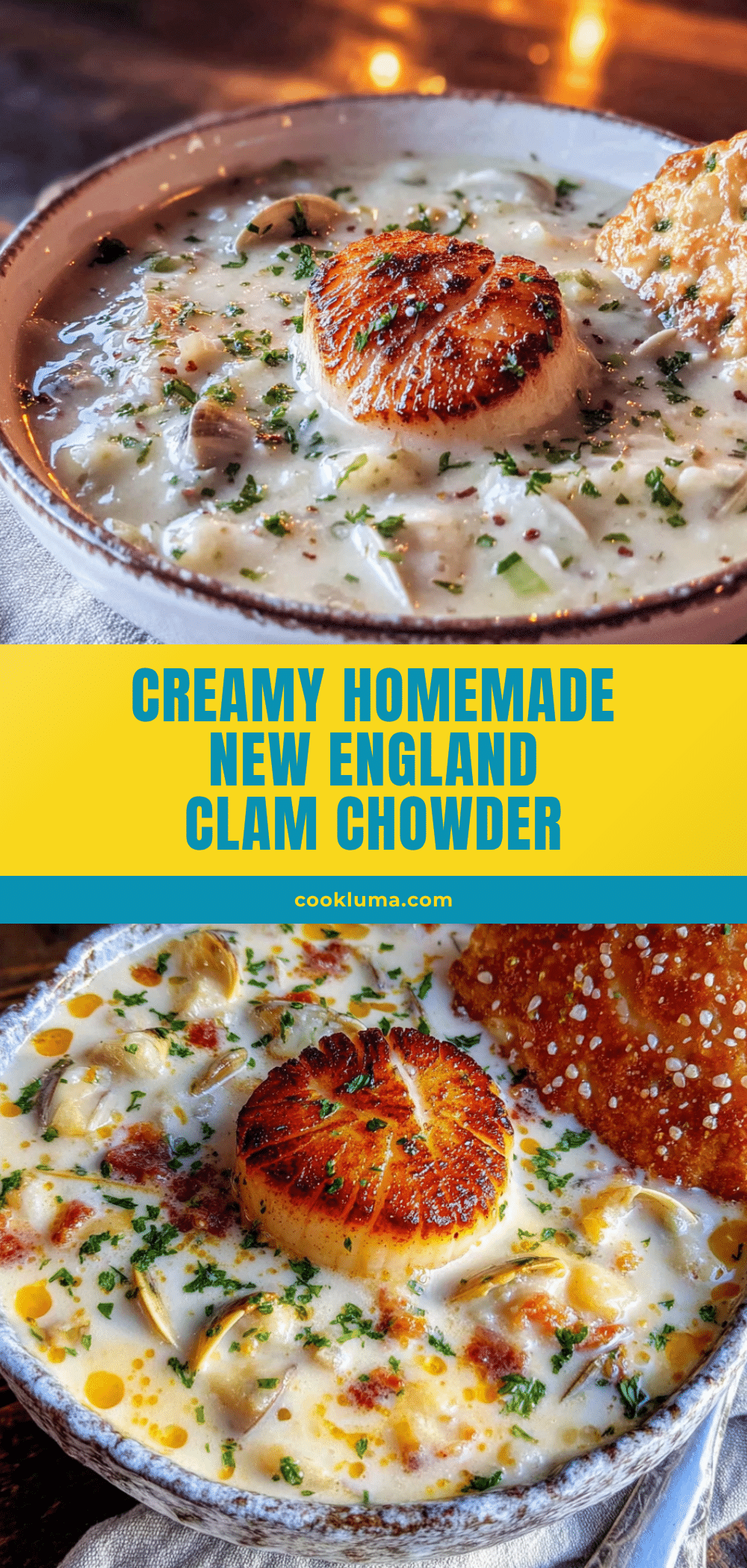
Best Creamy Homemade New England Clam Chowder Recipe

This creamy New England clam chowder is rich, comforting, and packed with clam flavor. Made with simple ingredients like bacon, potatoes, and half-and-half, it comes together in about 45 minutes for a perfect weeknight meal.
- Prep Time: 15 minutes
- Cook Time: 30 minutes
- Total Time: 45 minutes
- Yield: 6 servings 1x
- Category: Main Course
- Cuisine: American
Ingredients
- 6 slices thick-cut bacon, chopped
- 1 large yellow onion, diced (about 1½ cups)
- 2 celery stalks, diced
- 3 cloves garlic, minced
- 4 tablespoons all-purpose flour
- 4 cups low-sodium chicken broth
- 2 cups half-and-half
- 4 medium Yukon Gold potatoes, peeled and diced into ½-inch cubes (about 3 cups)
- 2 bay leaves
- 1 teaspoon dried thyme (or 1 tablespoon fresh)
- ½ teaspoon smoked paprika
- Salt and freshly ground black pepper to taste
- 3 cans (6.5 ounces each) chopped clams, drained with juice reserved
- Reserved clam juice from the cans
- Fresh parsley, chopped (for garnish)
- Oyster crackers or crusty bread (for serving)
- Extra bacon crumbles (for garnish)
Instructions
- Cook the bacon: Place a large Dutch oven over medium heat and add the chopped bacon. Cook, stirring occasionally, until crispy and the fat has rendered, about 6 to 8 minutes. Use a slotted spoon to transfer the bacon to a paper towel-lined plate, leaving the rendered fat in the pot (about 3 to 4 tablespoons).
- Sauté the aromatics: Reduce heat to medium-low. Add the diced onion and celery to the pot with the bacon fat. Cook, stirring occasionally, until soft and translucent, about 5 to 7 minutes. Add the minced garlic and cook for another minute until fragrant.
- Make the roux: Sprinkle the flour over the cooked vegetables and stir constantly for 2 minutes until the mixture is pasty and slightly golden.
- Add the liquids: Slowly pour in the chicken broth while whisking constantly to prevent lumps. Add the reserved clam juice. Whisk until smooth and slightly thickened, about 3 to 4 minutes. Then pour in the half-and-half and whisk again.
- Add potatoes and seasonings: Add the diced potatoes, bay leaves, thyme, and smoked paprika. Stir to combine. Bring to a gentle simmer, then reduce heat to low, cover, and cook for 15 to 20 minutes until the potatoes are fork-tender.
- Add the clams: Remove the bay leaves and discard. Stir in the drained chopped clams. Cook for just 2 to 3 minutes to heat through.
- Season and serve: Taste and add salt and pepper as needed. Ladle into bowls, top with reserved crispy bacon and fresh parsley. Serve with oyster crackers or crusty bread. Let the chowder sit for 5 minutes before serving for best texture.
Notes
Don’t boil the dairy—keep at a gentle simmer to prevent curdling. Reserve the clam juice for maximum flavor. Cut potatoes evenly (½-inch cubes) for uniform cooking. Let the chowder rest for 5 minutes before serving to thicken. For a dairy-free version, use full-fat coconut milk or unsweetened oat creamer. For gluten-free, use a gluten-free all-purpose flour blend or a cornstarch slurry.
Nutrition
- Serving Size: 1 bowl (about 1½ cup
- Calories: 420
- Sugar: 5
- Sodium: 680
- Fat: 24
- Saturated Fat: 10
- Carbohydrates: 34
- Fiber: 3
- Protein: 18
Keywords: clam chowder, New England clam chowder, creamy chowder, seafood soup, comfort food, easy chowder recipe