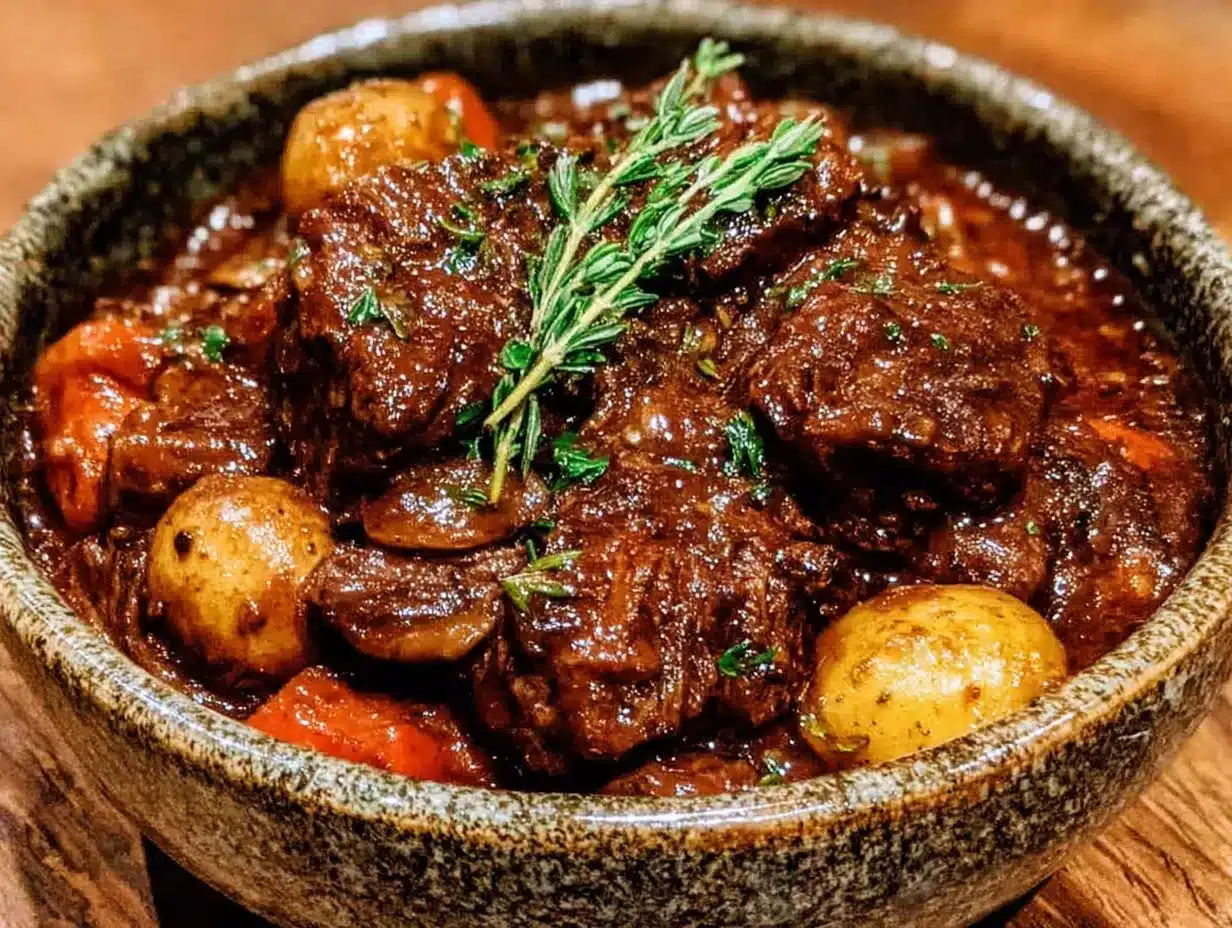
I had claimed for years that I “didn’t do” red meat stews. Too heavy, too fussy, too much like something my grandmother would serve at a church potluck where the Jell-O molds outnumbered the vegetables. That was my story, and I was sticking to it. Then a friend invited me over for a “casual” dinner party last November—the kind where you show up thinking it’s pizza and board games, and instead find a table set with cloth napkins and a bottle of something that costs more than your weekly coffee budget. I walked into her kitchen and caught her mid-stir, spoon hovering over this pot of what I can only describe as edible dark velvet. “Oh, I just threw together a beef stew,” she said, totally deadpan. I stood there, coat still on, watching her pour a glass of the same wine she’d just dumped into the pot. Something cracked in my brain that night. Maybe I’d been wrong. Maybe I’d been very, very wrong.
This Perfect Red Wine Beef Stew became my dinner party redemption arc. I mean, honestly—there’s something about serving a dish that looks like you spent six hours slaving over it when you actually just let a Dutch oven do all the heavy lifting. The first time I made it for guests, I forgot to buy fresh thyme and had to use the dried stuff from the back of my spice drawer. My neighbors probably heard me yell “good enough!” at the stove. But you know what? Nobody noticed. They were too busy going back for thirds and asking for the recipe. That’s the kind of magic we’re talking about here. Let me show you how to pull it off without breaking a sweat.
Why You’ll Love This Recipe
I’ve tested this stew more times than I care to admit—through one disastrous batch where I used cheap cooking wine (please don’t), a vegan version that made my husband look at me with genuine pity, and finally, this version that got the nod from my friend who literally wrote a cookbook on braised meats. This is the one.
- Make-Ahead Magic : This stew actually tastes better the next day. You can prep it completely the day before your party, and just reheat gently while you focus on more important things—like whether your playlist is too loud or too sad.
- Panty-Staples with a Twist : Carrots, onions, beef, and a bottle of red wine you’d happily drink. No weird ingredients that require a specialty grocery run.
- Perfect for Impressing a Crowd : It serves 8-10 people easily, and it’s the kind of dish that makes people use words like “decadent” and “sublime” without irony.
- Unbelievably Tender Meat : The low-and-slow braising breaks down the chuck roast until it falls apart with a fork. No chewing required.
- Stress-Free Hosting : Once it’s in the oven, you have two hours to set the table, greet guests, and pretend you’re totally calm.
What makes this recipe different from every other beef stew out there is the technique of searing the beef in batches and deglazing the pan with wine twice—once at the beginning and once after the vegetables soften. It builds layers of flavor that you just can’t get from dumping everything in a pot. Plus, I add a splash of balsamic vinegar at the end. It sounds weird, I know. Trust me. It’s the secret that makes people close their eyes after the first bite.
This isn’t just good stew. It’s the kind that makes you want to invite people over just so you have an excuse to make it again.
What Ingredients You Will Need
This recipe uses simple, honest ingredients to deliver deep, rich flavor without any fuss. Most of these are probably already in your kitchen, minus maybe the fresh herbs. Let’s break it down so you know exactly what to grab at the store.
- Beef chuck roast (3 pounds / 1.4 kg), cut into 2-inch cubes—this cut has the right amount of marbling for long braising. Don’t use stew meat from the package; it’s usually cut too small and dries out.
- All-purpose flour (1/3 cup / 40 g)—for dredging the beef. It helps thicken the stew and creates that gorgeous brown crust during searing.
- Olive oil (2 tablespoons / 30 ml)—use a good quality one for searing. I prefer extra-virgin, but regular works fine.
- Bacon (4 slices, chopped)—optional but highly recommended. It adds a smoky depth that makes the stew taste like it cooked all day. I use thick-cut applewood smoked.
- Yellow onions (2 large, diced)—they melt into the sauce and add sweetness. Don’t rush the browning here.
- Carrots (4 medium, peeled and cut into 1-inch chunks)—they hold their shape beautifully and add natural sweetness.
- Celery (3 stalks, diced)—the classic aromatic backbone.
- Garlic (4 cloves, minced)—fresh only, please. The jarred stuff won’t cut it here.
- Tomato paste (2 tablespoons / 30 g)—concentrated umami. I recommend the tube kind so you can use what you need without opening a can.
- Dry red wine (1 bottle / 750 ml)—use something you’d actually drink. A Cabernet Sauvignon or Merlot works beautifully. Avoid “cooking wine” at all costs; it’s salty and artificial.
- Beef broth (2 cups / 480 ml)—low-sodium so you control the salt. I like Better Than Bouillon mixed with water for the richest flavor.
- Fresh thyme (4 sprigs)—adds that earthy, floral note that makes stew taste like Sunday dinner.
- Bay leaves (2)—for subtle depth. Remove before serving.
- Balsamic vinegar (1 tablespoon / 15 ml)—my secret weapon. Adds brightness and rounds out the wine’s acidity.
- Frozen peas (1 cup / 150 g)—stirred in at the end for a pop of color and sweetness.
- Salt and black pepper—to taste. Go easy on the salt early; the bacon and broth add plenty.
- Fresh parsley (for garnish)—optional but makes it look fancy.
Substitution Guidance : If you’re gluten-free, use cornstarch instead of flour for dredging (about 3 tablespoons). For a dairy-free version, skip the butter in the roux and use additional olive oil. You can swap the bacon for pancetta or omit it entirely—the stew will still be delicious, just slightly less smoky.
Equipment Needed
You don’t need a professional kitchen for this, but a few key tools make the process much smoother.
- Dutch oven (6-7 quart / 5.7-6.6 L)—this is non-negotiable. The heavy bottom distributes heat evenly, and the tight lid traps steam for tender meat. I use a Le Creuset that I saved up for years to buy, but a Lodge enameled cast iron works just as well for a fraction of the price.
- Sharp chef’s knife—for cutting beef and vegetables. A dull knife makes everything harder and more dangerous.
- Cutting board—preferably wood or plastic. Have one for meat and one for vegetables to avoid cross-contamination.
- Tongs—for flipping the beef during searing. Silicone-tipped ones won’t scratch your pot.
- Wooden spoon—for stirring and scraping up the browned bits (the fond) from the bottom of the pot.
- Measuring cups and spoons—for accuracy. I keep a set of dry and liquid measures separate.
- Large bowl—for dredging the beef in flour.
- Paper towels—for patting the beef dry. This is crucial for a good sear.
If you don’t have a Dutch oven, you can use a heavy-bottomed pot with a tight-fitting lid, or even a slow cooker after searing the beef on the stovetop. The oven method gives you the most consistent results, though.
Preparation Method
Let’s get cooking. This takes about 30 minutes of active prep, then the oven does the rest. Here’s the step-by-step.
- Preheat your oven to 325°F (165°C). Position the rack in the lower third. This gentle heat is what breaks down the collagen in the beef.
- Pat the beef cubes dry with paper towels. This is the most important step for a good sear. Wet meat steams instead of browning. Season generously with salt and pepper.
- Place the flour in a large bowl. Add the beef cubes and toss until evenly coated. Shake off any excess flour—you want a light dusting, not a thick paste.
- Heat 1 tablespoon of olive oil in your Dutch oven over medium-high heat. Add the chopped bacon and cook until crispy, about 5 minutes. Use a slotted spoon to transfer the bacon to a plate, leaving the rendered fat in the pot.
- Sear the beef in batches. Add half the beef cubes to the hot oil (don’t overcrowd—they need space to brown). Cook without moving for 3-4 minutes per side, until deeply browned. Transfer to a plate. Repeat with the remaining beef, adding the second tablespoon of oil if needed.
- Reduce heat to medium. Add the diced onions, carrots, and celery to the pot. Cook, stirring occasionally, for 8-10 minutes until the vegetables soften and the onions turn translucent. Scrape up any browned bits from the bottom—that’s pure flavor.
- Add the minced garlic and tomato paste. Cook for 1 minute until fragrant. The tomato paste will darken slightly—that’s good.
- Pour in about 1/2 cup of the red wine and use your wooden spoon to deglaze the pot completely, scraping up every last bit of fond. Let it simmer for 2 minutes until reduced by half.
- Add the remaining wine and the beef broth. Stir in the fresh thyme sprigs, bay leaves, and the cooked bacon. Return the beef and any accumulated juices to the pot. The liquid should almost cover the meat—if it doesn’t, add a splash more broth or water.
- Bring the stew to a gentle simmer on the stovetop (you’ll see small bubbles around the edges). Cover with the lid and transfer to the preheated oven.
- Braise for 2 to 2.5 hours, until the beef is fork-tender. Check at the 1.5-hour mark—if the liquid is reducing too quickly, add a splash of water and reduce the oven temperature to 300°F (150°C).
- Remove from the oven and stir in the balsamic vinegar and frozen peas. Let it sit uncovered for 10 minutes. The peas will warm through and the stew will thicken slightly as it rests. Taste and adjust salt and pepper.
- Remove the thyme sprigs and bay leaves before serving. Garnish with fresh parsley if you’re feeling fancy.
Sensory Cue : The stew should be thick enough to coat the back of a spoon, with the beef so tender it breaks apart with gentle pressure. The aroma at this point is ridiculous—rich, winey, and deeply savory.
Cooking Tips & Techniques
I’ve made this stew more times than I can count, and I’ve learned a few things the hard way. Here’s what I wish someone had told me.
Don’t skip the sear. I know it’s tempting to just dump everything in the pot and walk away, but that brown crust on the beef is where the flavor lives. It’s the difference between a good stew and a memorable one. Take the extra 10 minutes.
Watch your wine choice. I once used a bottle of cheap Pinot Noir that my friend brought to a party and nobody wanted to drink. The stew turned out thin and sour. Use something with structure—a Cabernet Sauvignon or a bold Merlot. If you wouldn’t drink it, don’t cook with it.
Beware of over-salting early. Bacon is salty. Broth is salty. Wine reduces and concentrates flavors. Wait until the end to adjust your seasoning. I’ve ruined batches by being heavy-handed with salt at the beginning.
Patience with the vegetables. Don’t rush the onion-celery-carrot step. Give them a full 10 minutes to soften and release their sugars. That sweetness balances the wine’s acidity beautifully.
The balsamic trick. I discovered this by accident when I ran out of Worcestershire sauce. A tablespoon of balsamic vinegar stirred in at the end brightens everything without making it taste like salad dressing. It’s my favorite hack now.
Make it ahead. If you’re hosting, make this stew 1-2 days in advance. The flavors meld and deepen overnight. Reheat gently on the stovetop over low heat, adding a splash of broth if it’s too thick.
Variations & Adaptations
This stew is flexible. Here are a few ways to make it your own.
Herb Swap : If you don’t have fresh thyme, use 1 teaspoon of dried thyme. Rosemary also works beautifully—add a sprig along with the thyme. Just remember to remove it before serving.
Vegetable Add-Ins : Mushrooms are a natural fit here. Add 8 ounces of cremini mushrooms, halved, along with the other vegetables. Parsnips or turnips can replace half the carrots for a more rustic flavor.
Slow Cooker Version : After searing the beef and sautéing the vegetables, transfer everything to a slow cooker. Cook on low for 8 hours or high for 4-5 hours. Stir in the peas and balsamic at the end.
Dairy-Free Adaptation : Skip the butter in the roux and use an extra tablespoon of olive oil. The stew will still be rich and satisfying.
Spicy Twist : Add 1 teaspoon of smoked paprika and a pinch of cayenne pepper along with the tomato paste. It adds warmth without overwhelming the wine flavor.
Personal Variation : I once added a parmesan rind to the pot during braising (I save them in the freezer). It added an umami depth that made my husband ask what I’d done differently. Try it if you have one handy.
Serving & Storage Suggestions
This stew is a showstopper at any dinner party. Here’s how to serve it like a pro.
Serving Temperature : Serve hot, straight from the pot. Ladle into wide, shallow bowls so the broth has room to shine. A generous sprinkle of fresh parsley on top adds color and freshness.
What to Serve Alongside : Crusty bread for soaking up the sauce is non-negotiable. A loaf of sourdough or a French baguette, warmed in the oven, is perfect. For a side dish, try mashed potatoes (the stew ladled over them is heaven) or buttered egg noodles. A simple green salad with a lemony vinaigrette cuts the richness beautifully.
Wine Pairing : Serve the same wine you used in the stew—a Cabernet Sauvignon or Merlot. It’s a classic pairing that makes the meal feel cohesive.
Storage : Leftovers keep in the refrigerator for up to 5 days in an airtight container. The flavors actually improve after a day or two. Reheat gently on the stovetop over low heat, adding a splash of broth or water if needed.
Freezing : This stew freezes beautifully for up to 3 months. Let it cool completely, then transfer to freezer-safe containers or zip-top bags. Thaw overnight in the refrigerator before reheating.
Flavor Development : Honestly, this stew is even better the next day. The wine mellows, the meat becomes more tender, and the flavors meld into something truly special. If you can, make it a day ahead.
Nutritional Information & Benefits
Here’s the rough nutritional breakdown per serving (based on 8 servings):
- Calories : 485
- Protein : 42 g
- Fat : 22 g
- Carbohydrates : 18 g
- Fiber : 4 g
- Sugar : 8 g
- Sodium : 680 mg
Health Benefits : Beef is an excellent source of protein, iron, and B vitamins, which support energy production and red blood cell health. Carrots provide beta-carotene (converted to vitamin A in the body), and onions and garlic offer anti-inflammatory compounds. The red wine contains resveratrol, an antioxidant linked to heart health (in moderation, of course).
Dietary Considerations : This recipe is naturally gluten-free if you use cornstarch instead of flour for dredging. It’s also dairy-free if you skip the butter. For a lower-sodium version, use unsalted broth and omit the bacon.
Allergens : Contains wheat (flour) and potential sulfites from the wine. Adjust as needed for your guests.
Conclusion
This Perfect Red Wine Beef Stew has become my go-to for dinner parties, holiday gatherings, and those cozy weekends when I want the house to smell like a French bistro. It’s forgiving, it’s impressive, and it’s downright delicious. The first time I made it for a crowd, I was nervous—what if they didn’t like it? What if the wine was too strong? But watching everyone go quiet for that first bite, then reach for more bread to soak up the sauce, I knew I’d found something special.
I hope you make this stew your own. Add more vegetables, swap the herbs, serve it over polenta instead of potatoes. The beauty of a good braise is that it welcomes your personal touch. And if you forget the fresh thyme like I did that first time? Don’t stress. It’ll still be amazing.
I’d love to hear how it turns out for you. Drop a comment below and let me know what you served alongside it, or tag me in your photos if you share them. Happy cooking, friend. You’ve got this.
Frequently Asked Questions
Can I use a different cut of beef for this stew?
Absolutely. Chuck roast is ideal because of its marbling, but brisket or bottom round also work well. Avoid lean cuts like sirloin—they’ll dry out during the long braise.
Do I have to use a whole bottle of wine?
Yes, for the best flavor. The alcohol cooks off during the braising, leaving behind deep, complex notes. If you’re concerned about the wine flavor being too strong, use a lighter red like a Pinot Noir and reduce the cooking time by 30 minutes.
Can I make this stew in an Instant Pot?
You can! Use the sauté function to sear the beef and cook the vegetables, then pressure cook on high for 35 minutes with a natural release. Stir in the peas and balsamic after releasing the pressure. The texture won’t be quite as tender as the oven method, but it’s a great time-saver.
How do I thicken the stew if it’s too thin?
Mix 1 tablespoon of cornstarch with 2 tablespoons of cold water to make a slurry. Stir it into the simmering stew and cook for 2-3 minutes until thickened. Alternatively, you can mash some of the cooked vegetables against the side of the pot to thicken it naturally.
Can I leave out the bacon?
Sure. The stew will still be delicious without it—the bacon adds smoky depth, but the wine and beef provide plenty of flavor. If you’re skipping the bacon, add an extra tablespoon of olive oil for searing.
Pin This Recipe!
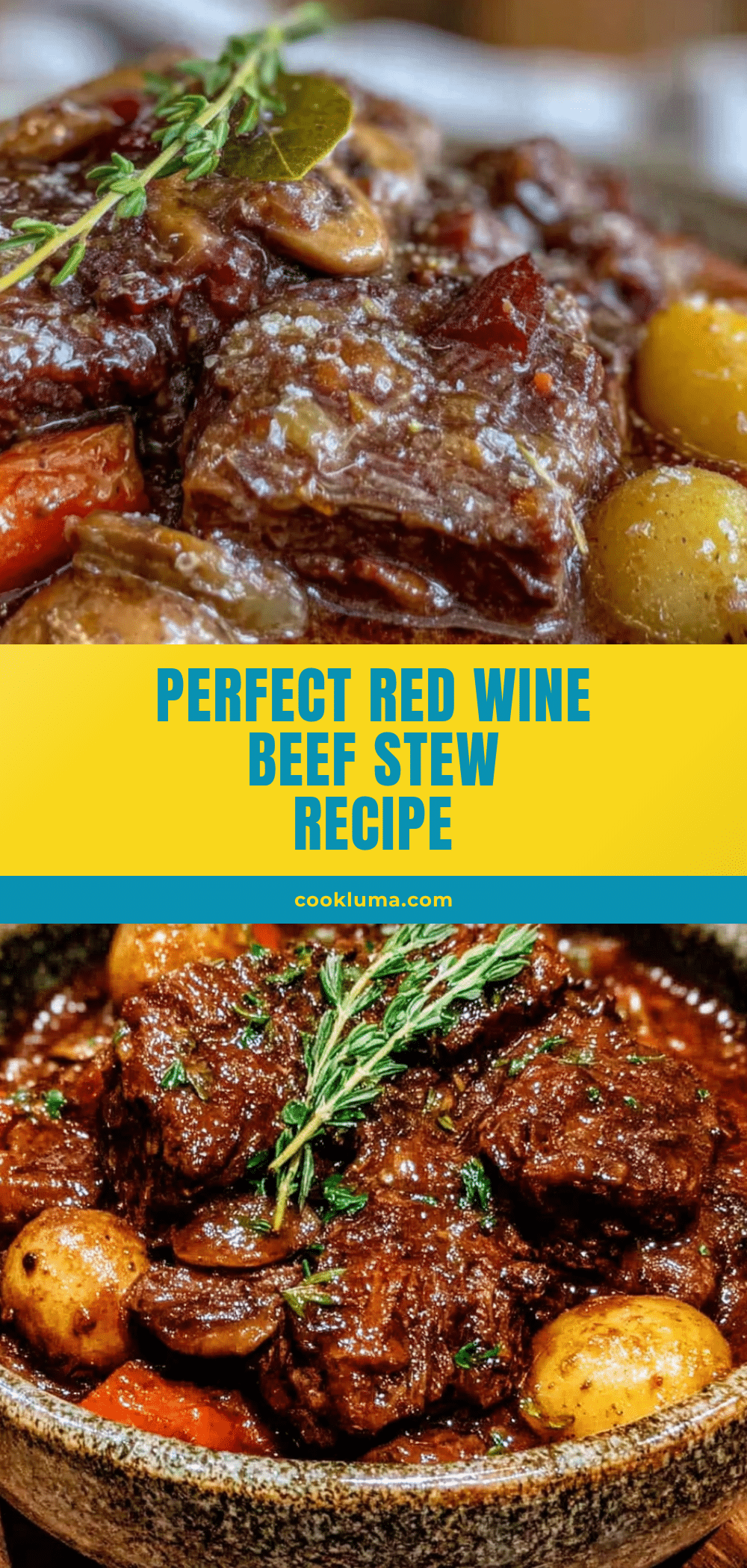
Perfect Red Wine Beef Stew: Easy Dinner Party Recipe
This Perfect Red Wine Beef Stew is a dinner party showstopper that looks like you spent hours slaving over it, but actually just lets a Dutch oven do all the heavy lifting. With tender beef, rich wine sauce, and a secret splash of balsamic vinegar, it’s the kind of dish that makes people go back for thirds.
- Prep Time: 30 minutes
- Cook Time: 2 hours 30 minutes
- Total Time: 3 hours
- Yield: 8 servings 1x
- Category: Main Course
- Cuisine: American
Ingredients
- 3 pounds (1.4 kg) beef chuck roast, cut into 2-inch cubes
- 1/3 cup (40 g) all-purpose flour
- 2 tablespoons (30 ml) olive oil
- 4 slices bacon, chopped (optional but recommended)
- 2 large yellow onions, diced
- 4 medium carrots, peeled and cut into 1-inch chunks
- 3 stalks celery, diced
- 4 cloves garlic, minced
- 2 tablespoons (30 g) tomato paste
- 1 bottle (750 ml) dry red wine (Cabernet Sauvignon or Merlot)
- 2 cups (480 ml) low-sodium beef broth
- 4 sprigs fresh thyme
- 2 bay leaves
- 1 tablespoon (15 ml) balsamic vinegar
- 1 cup (150 g) frozen peas
- Salt and black pepper to taste
- Fresh parsley for garnish (optional)
Instructions
- Preheat your oven to 325°F (165°C). Position the rack in the lower third.
- Pat the beef cubes dry with paper towels. Season generously with salt and pepper.
- Place the flour in a large bowl. Add the beef cubes and toss until evenly coated. Shake off any excess flour.
- Heat 1 tablespoon of olive oil in your Dutch oven over medium-high heat. Add the chopped bacon and cook until crispy, about 5 minutes. Use a slotted spoon to transfer the bacon to a plate, leaving the rendered fat in the pot.
- Sear the beef in batches. Add half the beef cubes to the hot oil (don’t overcrowd). Cook without moving for 3-4 minutes per side, until deeply browned. Transfer to a plate. Repeat with the remaining beef, adding the second tablespoon of oil if needed.
- Reduce heat to medium. Add the diced onions, carrots, and celery to the pot. Cook, stirring occasionally, for 8-10 minutes until the vegetables soften and the onions turn translucent. Scrape up any browned bits from the bottom.
- Add the minced garlic and tomato paste. Cook for 1 minute until fragrant.
- Pour in about 1/2 cup of the red wine and use your wooden spoon to deglaze the pot completely, scraping up every last bit of fond. Let it simmer for 2 minutes until reduced by half.
- Add the remaining wine and the beef broth. Stir in the fresh thyme sprigs, bay leaves, and the cooked bacon. Return the beef and any accumulated juices to the pot. The liquid should almost cover the meat—if it doesn’t, add a splash more broth or water.
- Bring the stew to a gentle simmer on the stovetop (small bubbles around the edges). Cover with the lid and transfer to the preheated oven.
- Braise for 2 to 2.5 hours, until the beef is fork-tender. Check at the 1.5-hour mark—if the liquid is reducing too quickly, add a splash of water and reduce the oven temperature to 300°F (150°C).
- Remove from the oven and stir in the balsamic vinegar and frozen peas. Let it sit uncovered for 10 minutes. Taste and adjust salt and pepper.
- Remove the thyme sprigs and bay leaves before serving. Garnish with fresh parsley if desired.
Notes
This stew tastes even better the next day. Make it 1-2 days ahead for best flavor. For gluten-free version, use 3 tablespoons cornstarch instead of flour for dredging. For dairy-free, skip butter and use additional olive oil. Don’t skip searing the beef—it’s where the flavor lives. Use a wine you’d actually drink; avoid cooking wine. Wait until the end to adjust salt as bacon and broth add plenty. The balsamic vinegar at the end is the secret ingredient that brightens everything.
Nutrition
- Serving Size: 1 serving (about 1.5
- Calories: 485
- Sugar: 8
- Sodium: 680
- Fat: 22
- Saturated Fat: 8
- Carbohydrates: 18
- Fiber: 4
- Protein: 42
Keywords: beef stew, red wine stew, dinner party recipe, braised beef, comfort food, winter recipe, Dutch oven recipe