I swore I hated squash. For years. The whole category—butternut, spaghetti, acorn—I’d politely push it around my plate at holiday dinners and claim I was full. My mom would give me that look, the one that said she knew exactly what I was doing. And honestly, I was fine with that. Some foods just aren’t for you, right?
Then last October, I found myself standing in the produce aisle of a tiny grocery store in Vermont, holding an acorn squash like it was some kind of puzzle I had to solve. It was the Tuesday before Thanksgiving, and the power had flickered twice already that morning. I had a bag of wild rice in my cart, a handful of dried cranberries, and absolutely no plan. I bought the squash anyway, mostly out of spite. I was determined to make myself like it, or at least tolerate it in a dish that felt more like dinner and less like a side dish nobody asked for.
Back in my friend’s cramped rental kitchen, I roasted that squash until the edges caramelized, stuffed it with a savory-sweet wild rice mixture, and threw it in the oven for a final bake. When I pulled it out, the kitchen smelled like actual autumn—warm, woody, a little bit like someone had bottled a crisp afternoon. I took a bite, and let me tell you, I almost dropped the fork. It wasn’t just good. It was the kind of good that makes you text your mom and admit she was right about something. Maybe you’ve been there, stubbornly avoiding a food for years only to have one version completely change your mind. This is that version. This is the recipe that made me a squash person, and I keep making it because it reminds me that some of the best meals come from proving yourself wrong.
Why You’ll Love This Recipe
This isn’t just another stuffed squash recipe that leaves you hungry twenty minutes later. I tested this one four times before I got the texture exactly right—the wild rice needs to be tender but not mushy, the cranberries need to burst just a little, and the filling needs to hold together without turning into paste. It’s the kind of recipe that makes you look like you spent hours in the kitchen when really, the oven does most of the work.
- Simple Ingredients : No fancy grocery trips needed. You probably already have wild rice, dried cranberries, and a few pantry spices in your kitchen right now.
- Perfect for Fall Gatherings : This dish is made for Thanksgiving, Friendsgiving, or any cozy dinner where you want to impress without stress.
- Crowd-Pleaser : I’ve served this to confirmed squash skeptics (like my former self) and watched them go back for seconds.
- Unbelievably Delicious : The combination of nutty wild rice, sweet-tart cranberries, and tender roasted squash is next-level comfort food.
- Make-Ahead Friendly : You can prep the filling a day ahead and stuff the squash right before baking. It actually gets better as the flavors meld together.
What makes this recipe different from the rest? It’s the balance. So many stuffed squash recipes lean too sweet or too savory, but this one hits that perfect middle ground where every bite feels intentional. The wild rice gives it a chewy, earthy base, the cranberries add brightness, and a touch of maple syrup in the filling ties everything together without making it dessert-like. It’s comfort food reimagined—healthier, faster, but with the same soul-soothing satisfaction you want from a meal that feels like a hug.
What Ingredients You Will Need
This recipe uses simple, wholesome ingredients to deliver bold flavor and satisfying texture without the fuss. Most of these are pantry staples or easy to find at any grocery store, especially during the fall season when squash is at its peak.
- Acorn squash (2 medium, halved and seeded) — Look for squash that feels heavy for its size with a deep green color and a patch of orange on the side. That orange patch means it’s ripe and sweet.
- Wild rice (1 cup, uncooked) — I prefer Lundberg brand for consistent texture. Don’t confuse wild rice with a wild rice blend; pure wild rice has a distinct chewy texture and nutty flavor that holds up beautifully in this dish.
- Dried cranberries (½ cup) — Use unsweetened or lightly sweetened if you can find them. The tartness balances the sweetness of the squash and maple syrup.
- Yellow onion (1 medium, diced) — Adds a savory base to the filling. You can substitute with shallots for a milder flavor.
- Celery (2 stalks, diced) — Classic aromatic that adds freshness and crunch to the filling.
- Garlic (3 cloves, minced) — Because everything is better with garlic.
- Maple syrup (2 tablespoons) — Use real maple syrup, not pancake syrup. It adds a subtle sweetness that complements the squash and cranberries.
- Vegetable broth (2 cups, plus more for roasting) — Use low-sodium so you can control the salt level. Chicken broth works too if you’re not keeping it vegetarian.
- Fresh sage (1 tablespoon, chopped) — Sage and squash are a classic pairing. Dried sage works in a pinch (use 1 teaspoon), but fresh really shines here.
- Fresh thyme (1 teaspoon, chopped) — Adds an earthy, slightly floral note. You can substitute with ½ teaspoon dried thyme.
- Pecans (½ cup, chopped) — Toasted for extra crunch. Walnuts or almonds work well too. Leave them out if you’re nut-free.
- Olive oil (3 tablespoons) — For sautéing the vegetables and brushing the squash.
- Salt and black pepper (to taste) — Don’t be shy with the seasoning; squash needs a good amount of salt to bring out its sweetness.
- Optional garnish — Fresh parsley or pomegranate seeds for a pop of color and freshness.
Substitution notes : For a gluten-free option, this recipe is naturally gluten-free as written. To make it vegan, simply use maple syrup instead of honey (if you were considering it) and ensure your vegetable broth is vegan-friendly. If you can’t find wild rice, use a wild rice blend or even farro for a similar chewy texture—just adjust the cooking time accordingly.
Equipment Needed
You don’t need a lot of fancy tools for this recipe, which is part of what makes it so approachable. Here’s what you’ll need:
- Baking sheet (rimmed, preferably) — For roasting the squash halves. A half-sheet pan works perfectly.
- Medium saucepan — For cooking the wild rice. A heavy-bottomed pot works best to prevent sticking.
- Large skillet — For sautéing the vegetables and combining the filling. A 12-inch skillet gives you plenty of room.
- Sharp chef’s knife — Acorn squash can be tough to cut. A sharp, heavy knife makes the job safer and easier.
- Mixing bowl — For combining the filling ingredients.
- Measuring cups and spoons — Accurate measurements matter, especially for the rice-to-liquid ratio.
- Cutting board — A sturdy board that won’t slip while you’re cutting the squash.
- Aluminum foil — For tenting the squash during the final bake to prevent the filling from drying out.
If you don’t have a rimmed baking sheet, any oven-safe dish will work—just be careful of spillover. And if you’re using a nonstick skillet, you’ll need less oil for sautéing. I’ve made this in a cast-iron skillet before and honestly, it added a nice crust to the filling. Budget-friendly tip: a sharp knife is more important than expensive cookware. A $10 knife you keep sharp will outperform a $100 dull one every time.
Preparation Method
Let’s get cooking. This recipe comes together in about an hour and fifteen minutes, but most of that is hands-off oven time. I’ve broken it down so you can work efficiently without feeling rushed.
- Preheat your oven to 400°F (200°C). Line a rimmed baking sheet with parchment paper or foil for easier cleanup.
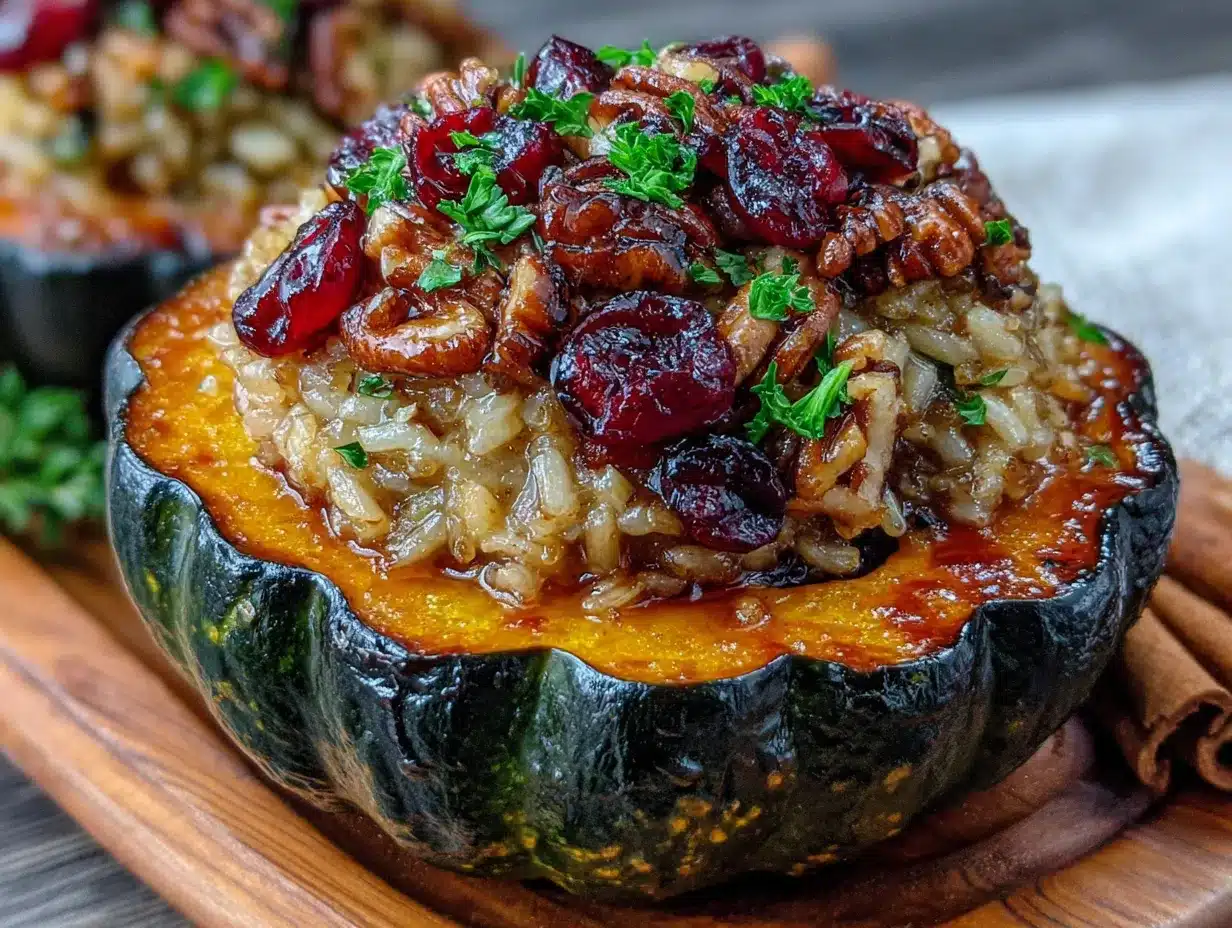
- Prepare the acorn squash. Using a sharp chef’s knife, carefully cut each acorn squash in half from stem to tip. Scoop out the seeds and stringy pulp with a spoon. You can save the seeds and roast them separately if you like—they make a great snack. Brush the cut sides and cavities with 1 tablespoon of olive oil and season with a pinch of salt and pepper. Place the squash halves cut-side down on the prepared baking sheet. Roast for 25 minutes, until the flesh is fork-tender but still holds its shape.
- Cook the wild rice. While the squash roasts, rinse the wild rice under cold water in a fine-mesh strainer. In a medium saucepan, combine the rice with 2 cups of vegetable broth and a pinch of salt. Bring to a boil over high heat, then reduce the heat to low, cover, and simmer for 40-45 minutes, until the rice is tender and most of the liquid is absorbed. Some grains will split open—that’s normal and desirable. Drain any excess liquid and set aside.
- Sauté the aromatics. While the rice cooks, heat 1 tablespoon of olive oil in a large skillet over medium heat. Add the diced onion and celery and cook for 5-6 minutes, stirring occasionally, until softened and translucent. Add the minced garlic and cook for 1 more minute until fragrant. You should smell the garlic but it shouldn’t brown.
- Toast the pecans. In a dry skillet over medium heat, toast the chopped pecans for 2-3 minutes, shaking the pan frequently to prevent burning. They’re done when they smell nutty and have darkened slightly. Transfer to a plate to cool.
- Combine the filling. In a large mixing bowl, combine the cooked wild rice, sautéed vegetables, dried cranberries, toasted pecans, chopped sage, and chopped thyme. Drizzle with 2 tablespoons of maple syrup and 1 tablespoon of olive oil. Season with salt and pepper to taste—I usually start with ½ teaspoon of salt and ¼ teaspoon of pepper, then adjust. Stir everything gently until well combined. The mixture should be moist but not wet; if it seems dry, add a splash of vegetable broth.
- Stuff the squash. Remove the pre-roasted squash from the oven and flip each half over so the cut side is facing up. Divide the filling evenly among the four squash cavities, mounding it slightly. Don’t pack it too tightly—you want some air circulation for even heating. Drizzle any remaining maple syrup over the tops.
- Final bake. Return the stuffed squash to the oven and bake for 15-20 minutes, until the filling is heated through and the tops are slightly golden. If the filling starts to brown too quickly, tent the baking sheet loosely with aluminum foil for the last 5 minutes.
- Rest and serve. Remove from the oven and let the squash rest for 5 minutes before serving. This allows the flavors to settle and makes the squash easier to handle. Garnish with fresh parsley or pomegranate seeds if you’re feeling fancy.
Sensory cues : When you flip the roasted squash, the cut edges should be golden brown and the flesh should yield easily to a fork. The filling should smell savory-sweet, with the sage and thyme coming through clearly. When you take a bite, the squash should be tender but not mushy, the rice should have a pleasant chew, and the cranberries should burst with tartness against the sweetness of the maple syrup.
Cooking Tips & Techniques
I’ve made this recipe enough times to know where things can go wrong, and let me tell you, I’ve made every mistake in the book. Here are the lessons I learned the hard way so you don’t have to.
Don’t overcook the squash in the first roast. The first time I made this, I roasted the squash for 35 minutes instead of 25, thinking more time would make it softer. It did—too soft. The squash collapsed when I tried to stuff it, and the filling just slid right off. You want the squash to be fork-tender but still firm enough to hold its shape. Test it at the 20-minute mark and adjust from there.
Season the squash cavities before roasting. A little salt and pepper inside the squash before the first roast makes a huge difference. The first time I skipped this step, the squash tasted flat no matter how much I seasoned the filling. The squash itself needs direct seasoning because the filling doesn’t penetrate deeply enough to flavor the whole thing.
Toast the pecans separately. I tried to save time once by just tossing raw pecans into the filling. They turned soft and slightly rubbery during the final bake. Toasting them first gives them that essential crunch that makes every bite texturally interesting. Plus, toasting brings out their natural oils and deepens their flavor.
Watch your liquid ratio for the wild rice. Wild rice needs more liquid and longer cooking time than white rice. If you substitute with a wild rice blend, check the package instructions because blends often cook faster. I once used a blend without adjusting the liquid and ended up with soupy rice that made the filling too wet. Not a disaster, but definitely not ideal.
Multitasking is your friend. Start the rice first, then prep the squash while it cooks. By the time the rice is done, the squash should be ready for its first roast. This way, everything comes together at the same time and you’re not waiting around. The whole process takes about an hour and fifteen minutes, but active time is only about 20 minutes.
Variations & Adaptations
One of the best things about this recipe is how flexible it is. I’ve tried several variations over the years, and here are my favorites:
Vegan and dairy-free version : This recipe is already vegan as written, but if you want to add a creamy element, try stirring in ¼ cup of coconut cream or cashew cream into the filling. It adds richness without any dairy. I tested this last Thanksgiving and it was a hit with everyone, not just the vegans at the table.
Protein-packed version : Add 1 cup of cooked chickpeas or crumbled vegan sausage to the filling for extra protein and heartiness. I like using spicy Italian-style vegan sausage because it adds a nice kick that contrasts with the sweet squash. If you’re not keeping it vegetarian, cooked Italian sausage or shredded rotisserie chicken works beautifully too.
Seasonal swap : In the summer, swap the dried cranberries for fresh cherries or chopped apricots. In the winter, try dried figs or dates for extra sweetness. I made a version with dried cherries and toasted almonds last December and it felt like a completely different dish—still cozy, but with a brighter, more festive vibe.
Grain substitution : If you don’t have wild rice, farro, barley, or even quinoa work well. Just adjust the cooking time and liquid ratio accordingly. Farro needs about 30 minutes, while quinoa cooks in 15. The texture will be different, but the flavor profile still works beautifully.
Spice it up : Add ½ teaspoon of smoked paprika or a pinch of cayenne pepper to the filling for a subtle warmth. I tried this on a whim one night and now I can’t go back. The smokiness complements the roasted squash in a way that feels unexpected but totally right.
Serving & Storage Suggestions
This dish is best served warm, straight from the oven, when the squash is tender and the filling is piping hot. I like to plate each squash half on its own plate and garnish with a sprinkle of fresh parsley or pomegranate seeds for color. The bright red against the deep orange and green is gorgeous for holiday tables.
What to serve with it : This stuffed squash is hearty enough to be a main dish, but it also works beautifully as a side. Pair it with a simple green salad with lemon vinaigrette for a complete meal, or serve it alongside roasted Brussels sprouts or a crusty loaf of bread. For a holiday spread, it goes great with mashed potatoes and roasted turkey or a lentil loaf.
Storage : Leftover stuffed squash keeps well in the refrigerator for up to 4 days. Store the squash halves in an airtight container. The filling will absorb some moisture from the squash, but it still tastes delicious. I actually think the flavors meld together even more overnight.
Reheating : The best way to reheat is in the oven at 350°F (175°C) for 10-15 minutes, covered with foil to prevent drying out. You can also microwave individual portions for 2-3 minutes, but the squash will be softer. If you’re meal-prepping, I recommend storing the filling and roasted squash separately and assembling just before reheating.
Freezing : You can freeze the assembled but unbaked stuffed squash for up to 3 months. Wrap each half tightly in plastic wrap and then foil. To bake from frozen, add 15-20 minutes to the final bake time. The texture of the squash will be slightly softer after freezing, but the flavor holds up well.
Nutritional Information & Benefits
This recipe is packed with nutrients that make it as good for you as it is delicious. Here’s a rough estimate per serving (one stuffed squash half):
| Nutrient | Amount |
|---|---|
| Calories | 380 |
| Total Fat | 14g |
| Saturated Fat | 2g |
| Carbohydrates | 58g |
| Fiber | 8g |
| Sugar | 16g |
| Protein | 8g |
| Sodium | 480mg |
Health benefits : Acorn squash is rich in vitamin A, vitamin C, and potassium, which support immune function and heart health. Wild rice is a whole grain that provides more protein and fiber than white rice, keeping you fuller longer. Cranberries are packed with antioxidants, and pecans offer healthy fats that support brain health. This dish is naturally gluten-free, dairy-free, and vegan, making it suitable for a wide range of dietary needs. The only potential allergen to note is tree nuts from the pecans—simply omit them for a nut-free version.
I love that this recipe feels indulgent but is actually packed with whole foods. It’s the kind of meal that leaves you satisfied without that heavy, overstuffed feeling. Perfect for when you want comfort food that also makes you feel good about what you’re eating.
Conclusion
This cozy stuffed acorn squash with wild rice and cranberries is the recipe that changed my mind about an entire category of food. If that’s not a recommendation, I don’t know what is. It’s simple enough for a weeknight dinner but impressive enough for a holiday table, and it uses ingredients that are easy to find and budget-friendly. The balance of sweet, savory, nutty, and tart is something I keep coming back to, season after season.
I’d love for you to try this and make it your own. Maybe you’ll add more spice, swap the nuts, or stuff it into a different squash variety. That’s the beauty of a recipe like this—it’s a starting point, not a rulebook. If you make it, let me know how it turns out. Drop a comment below, share your twist, or tag me in your photos. I genuinely love seeing how people adapt recipes to fit their own kitchens and tastes.
Here’s to cozy meals, second chances, and the unexpected joy of proving yourself wrong. Happy cooking!
Frequently Asked Questions
Can I use a different type of squash?
Absolutely! Butternut squash, delicata squash, or even small sugar pumpkins work well. Just adjust the roasting time based on the size and density of the squash. Delicata cooks faster, while butternut may need a few extra minutes.
Can I make this recipe ahead of time?
Yes, this is a great make-ahead dish. You can cook the wild rice and sauté the vegetables up to two days in advance and store them separately in the refrigerator. You can also roast the squash halves a day ahead and stuff them just before baking. The final bake time will be the same.
How do I cut acorn squash safely?
Acorn squash can be tricky because of its shape and tough skin. Start by cutting off a small slice from the bottom and top to create flat surfaces. Then stand the squash upright and cut down through the center from top to bottom. Use a sharp chef’s knife and take your time. If it feels too difficult, you can microwave the whole squash for 2-3 minutes to soften it slightly before cutting.
Can I freeze the stuffed squash?
Yes, you can freeze the assembled but unbaked stuffed squash for up to 3 months. Wrap each half tightly in plastic wrap and then foil. To bake from frozen, add 15-20 minutes to the final bake time and cover with foil to prevent over-browning. The texture of the squash will be slightly softer after freezing, but the flavor holds up well.
What can I use instead of wild rice?
Farro, barley, quinoa, or even brown rice work well as substitutes. Each will give a slightly different texture—farro and barley are chewy like wild rice, while quinoa is lighter and fluffier. Adjust the cooking time and liquid ratio according to the grain you choose. For a lower-carb option, try cauliflower rice, but reduce the baking time since it cooks faster.
Pin This Recipe!
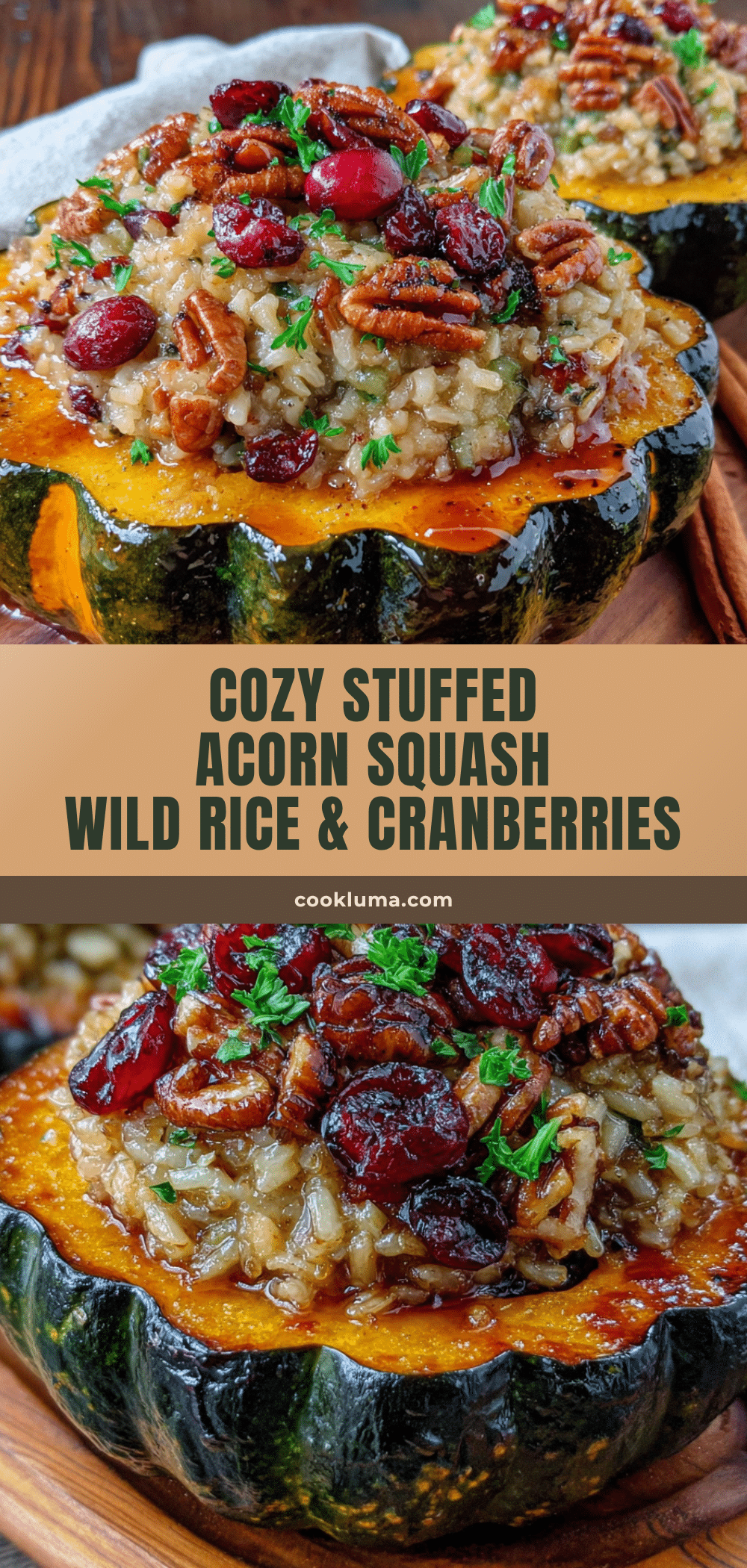
Cozy Stuffed Acorn Squash with Wild Rice and Cranberries
This stuffed acorn squash features a savory-sweet filling of wild rice, dried cranberries, toasted pecans, and aromatic herbs, all roasted to perfection. It’s a hearty, comforting dish that’s perfect for fall gatherings and holiday tables.
- Prep Time: 20 minutes
- Cook Time: 55 minutes
- Total Time: 1 hour 15 minutes
- Yield: 4 servings 1x
- Category: Main Course
- Cuisine: American
Ingredients
- 2 medium acorn squash, halved and seeded
- 1 cup wild rice, uncooked
- ½ cup dried cranberries
- 1 medium yellow onion, diced
- 2 stalks celery, diced
- 3 cloves garlic, minced
- 2 tablespoons maple syrup
- 2 cups vegetable broth, plus more for roasting
- 1 tablespoon fresh sage, chopped
- 1 teaspoon fresh thyme, chopped
- ½ cup pecans, chopped
- 3 tablespoons olive oil
- Salt and black pepper to taste
- Optional garnish: fresh parsley or pomegranate seeds
Instructions
- Preheat your oven to 400°F (200°C). Line a rimmed baking sheet with parchment paper or foil.
- Prepare the acorn squash: Cut each squash in half from stem to tip, scoop out seeds and pulp. Brush cut sides and cavities with 1 tablespoon olive oil, season with salt and pepper. Place cut-side down on baking sheet. Roast for 25 minutes until fork-tender but still holds shape.
- Cook the wild rice: Rinse rice under cold water. In a medium saucepan, combine rice with 2 cups vegetable broth and a pinch of salt. Bring to a boil, reduce heat to low, cover, and simmer for 40-45 minutes until tender and liquid is absorbed. Drain any excess liquid and set aside.
- Sauté the aromatics: Heat 1 tablespoon olive oil in a large skillet over medium heat. Add diced onion and celery, cook for 5-6 minutes until softened. Add minced garlic and cook for 1 minute until fragrant.
- Toast the pecans: In a dry skillet over medium heat, toast chopped pecans for 2-3 minutes, shaking frequently, until fragrant and slightly darkened. Transfer to a plate to cool.
- Combine the filling: In a large mixing bowl, combine cooked wild rice, sautéed vegetables, dried cranberries, toasted pecans, chopped sage, and chopped thyme. Drizzle with 2 tablespoons maple syrup and 1 tablespoon olive oil. Season with salt and pepper to taste. Stir gently until well combined.
- Stuff the squash: Remove pre-roasted squash from oven and flip each half cut-side up. Divide filling evenly among the four cavities, mounding slightly. Drizzle any remaining maple syrup over tops.
- Final bake: Return stuffed squash to oven and bake for 15-20 minutes until filling is heated through and tops are slightly golden. If browning too quickly, tent loosely with foil for last 5 minutes.
- Rest and serve: Remove from oven and let rest for 5 minutes before serving. Garnish with fresh parsley or pomegranate seeds if desired.
Notes
Don’t overcook the squash in the first roast; it should be fork-tender but still hold its shape. Season the squash cavities before roasting for best flavor. Toast pecans separately to maintain crunch. Watch liquid ratio for wild rice; if using a blend, adjust cooking time. Multitask by starting rice first, then prepping squash.
Nutrition
- Serving Size: 1 stuffed squash hal
- Calories: 380
- Sugar: 16
- Sodium: 480
- Fat: 14
- Saturated Fat: 2
- Carbohydrates: 58
- Fiber: 8
- Protein: 8
Keywords: stuffed acorn squash, wild rice, cranberries, fall recipe, Thanksgiving, vegetarian, vegan, gluten-free