This was supposed to be a layer cake. A tall, elegant, three-tiered thing with perfectly smooth sides and rosettes piped on top like something from a bakery window. I had it all planned out for my nephew’s sixth birthday party. I’d spent the morning measuring, sifting, creaming — the whole nine yards. Then I realized my cake pans were still at my sister’s house from the last family get-together. I mean, honestly. I stood there staring at the mixing bowl, buttercream already made, and felt that familiar wave of kitchen panic. The party was in four hours. I grabbed the only pan I had — a half-sheet pan I use for roasting vegetables — and just poured the batter in. Let me tell you, I was already imagining the disappointed faces. But what came out was nothing like the plan. It was better.
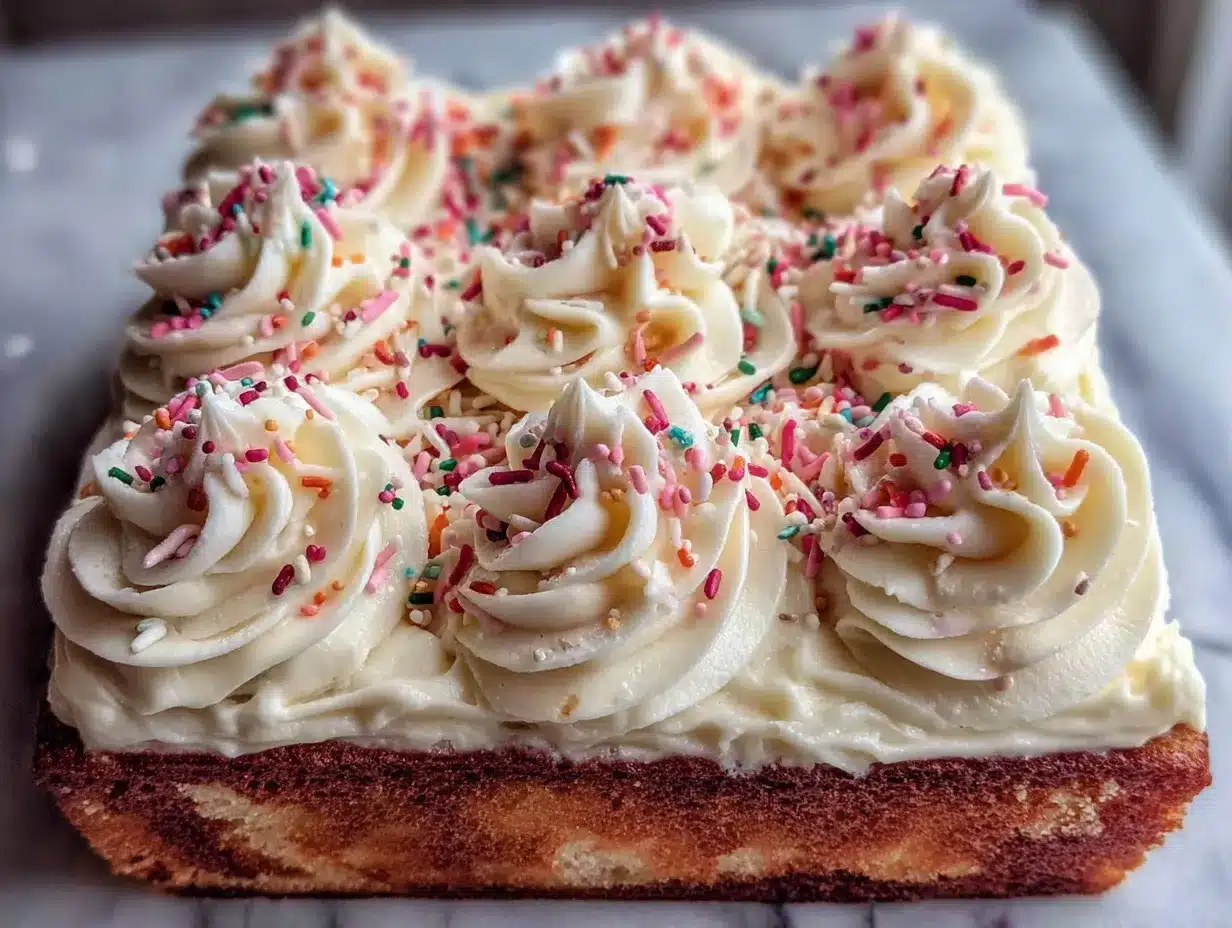
That sheet cake cooled on the counter while I tried to figure out how to salvage the frosting situation. I’d made a double batch of vanilla buttercream, and without tall sides to cover, I just spread it all over the top in thick, swooping swirls. My nephew wandered in, saw the expanse of white frosting, and asked if we could dump the entire container of rainbow sprinkles on top. “The whole thing?” I asked. He nodded with the serious conviction only a six-year-old can muster. So we did. We dumped, we laughed, we made a glorious mess. When I cut that first square and handed it out, the room went quiet for exactly one second before everyone asked for seconds. That cake became the legend of every birthday after.
Maybe you’ve been there — the moment when a baking disaster turns into something you didn’t know you needed. This is that recipe. It’s the one I’ve made for every birthday since, and honestly, I’ve never gone back to the fussy layer cakes. There’s something about the simplicity of a sheet cake that just works. It’s generous, it’s forgiving, and it feeds a crowd without any drama. The cake itself is tender and moist with that perfect crumb, and the buttercream? Thick, creamy, and just sweet enough to balance the rainbow of sprinkles on top. Every time I make it, I remember that panicked afternoon and the happy accident that became a family tradition.
Why You’ll Love This Recipe
Let me tell you why this sheet cake has earned its spot as the reigning champion of birthday desserts in my kitchen. I’ve tested this recipe at least a dozen times — tweaking the flour ratio, adjusting the baking time, even trying different butter brands — and this version is the one that never fails. It’s been crowd-approved at backyard parties, classroom celebrations, and even a wedding shower where someone asked for the recipe before the cake was gone.
- Quick & Easy : From start to finish, this cake comes together in under an hour. No chilling, no stacking, no stress. Perfect for those mornings when you realize the birthday party is today.
- Simple Ingredients : You probably have everything in your pantry right now. Butter, sugar, eggs, flour, vanilla — no fancy extracts or specialty flours required. The sprinkles are the only thing you might need to grab.
- Perfect for Parties : This cake feeds a crowd effortlessly. One pan serves 24 generous squares, and it travels beautifully. No worrying about a tiered cake sliding around in the car.
- Crowd-Pleaser : I’ve watched kids and adults alike go back for thirds. The texture is soft without being crumbly, and the buttercream is the kind of silky that makes people close their eyes.
- Unbelievably Delicious : The secret is in the buttermilk and the extra egg yolk. They create a crumb that’s tender and rich, with a flavor that tastes bakery-made but better.
What makes this recipe different from every other birthday cake out there? It’s the texture, honestly. Most sheet cakes lean toward dense or dry, but this one stays moist for days. The buttercream is also a game-changer — I use a technique where I beat the butter for a full five minutes before adding the sugar. It makes the frosting light and airy, almost like a cloud, so it doesn’t feel heavy even when you spread it thick. And the sprinkles? They’re not just for looks. The little pops of crunch against the creamy frosting create that perfect bite every time.
This is the cake that makes you feel like a hero without breaking a sweat. It’s the kind you bring to a gathering and watch people’s faces light up. It’s comfort food with a party hat on — and honestly, isn’t that what birthdays are all about?
What Ingredients You Will Need
This recipe uses simple, everyday ingredients to create something truly special. Each one plays a specific role in building that tender crumb and rich flavor. Here’s what you’ll need, along with a few notes from my years of testing.
For the Cake
- 2 ¾ cups (345g) all-purpose flour — I use Gold Medal or King Arthur for consistent results. Spoon and level your flour; don’t scoop straight from the bag or you’ll end up with a dry cake.
- 2 ½ teaspoons baking powder — Make sure it’s fresh. If your baking powder is older than six months, it might not give the cake the lift it needs.
- ½ teaspoon baking soda — Helps the cake brown beautifully and balances the acidity of the buttermilk.
- 1 teaspoon salt — I prefer fine sea salt. It dissolves evenly and enhances the sweetness without making the cake taste salty.
- 1 cup (227g) unsalted butter, softened — Let it sit out for at least an hour. Cold butter won’t cream properly and will leave you with a dense cake.
- 1 ½ cups (300g) granulated sugar — Regular white sugar works perfectly. Don’t substitute with a coarse sugar or the texture will be off.
- 3 large eggs, room temperature — Plus one extra egg yolk. The extra yolk adds richness and tenderness. If you forgot to take eggs out early, place them in a bowl of warm water for 5 minutes.
- 1 tablespoon vanilla extract — Use pure vanilla if you can. Imitation works in a pinch, but pure gives that warm, authentic flavor.
- 1 cup (240ml) buttermilk, room temperature — This is the secret to a moist crumb. If you don’t have buttermilk, add 1 tablespoon of lemon juice to regular milk and let it sit for 5 minutes.
For the Rainbow Sprinkle Buttercream
- 1 ½ cups (340g) unsalted butter, softened — This is non-negotiable. Margarine or spreads will make the frosting greasy and unstable.
- 5 cups (600g) powdered sugar — Sift it if you can. Lumps in the sugar mean lumps in your frosting, and nobody wants that.
- 3 tablespoons heavy cream — Or whole milk if that’s what you have. Heavy cream makes the frosting extra luxurious.
- 2 teaspoons vanilla extract — I sometimes add a tiny pinch of salt here to balance the sweetness.
- ⅔ cup rainbow sprinkles — Use jimmies, not nonpareils. The little rod-shaped sprinkles hold their color and don’t bleed into the frosting. Trust me on this one.
Equipment Needed
You don’t need a fancy bakery setup for this cake. Here’s what I use every time I make it.
- Half-sheet pan (18×13 inches) — This is the standard size for a sheet cake. If you only have a 9×13 pan, the cake will be thicker and need about 10 extra minutes of baking time.
- Stand mixer or hand mixer — A hand mixer works fine, but you’ll need to beat the butter for a full five minutes for the frosting. Your arm might get a workout.
- Large mixing bowls — At least two. One for dry ingredients, one for wet.
- Whisk and rubber spatula — The whisk for combining dry ingredients, the spatula for scraping the bowl and folding in sprinkles.
- Parchment paper — Line your pan with it. Leave some overhang on the sides so you can lift the cake out easily. I learned this the hard way after a stuck cake incident.
- Cooling rack — A wire rack lets air circulate so the cake cools evenly. If you don’t have one, you can use the inverted pan method, but it’s trickier.
- Offset spatula — For spreading the buttercream in those beautiful swoops. A butter knife works in a pinch, but the offset spatula gives you more control.
If you’re on a budget, skip the stand mixer and use a hand mixer. Skip the offset spatula and use the back of a spoon. The cake will still taste incredible — I promise.
Preparation Method
Let’s walk through this step by step. I’ve included all the little details I wish someone had told me the first time I made this.
- Preheat your oven to 350°F (175°C). Position the rack in the center of the oven. Line your half-sheet pan with parchment paper, leaving a 2-inch overhang on the long sides. Lightly grease the parchment and the exposed sides of the pan with butter or non-stick spray.
- Whisk the dry ingredients together. In a medium bowl, combine the flour, baking powder, baking soda, and salt. Whisk for about 20 seconds to aerate and distribute everything evenly. Set aside.
- Cream the butter and sugar. In a large bowl (or the bowl of your stand mixer), beat the softened butter on medium speed for 2 minutes until it’s pale and fluffy. Add the granulated sugar and beat for another 3 minutes. Scrape the sides and bottom of the bowl with your spatula. The mixture should look light and almost grainy.
- Add the eggs and vanilla. Add the eggs one at a time, beating well after each addition. Add the extra egg yolk and the vanilla extract. Beat on medium speed for another minute until the mixture is smooth and glossy. It might look slightly curdled at this point — that’s normal. Don’t panic.
- Alternate adding dry ingredients and buttermilk. With the mixer on low speed, add one-third of the flour mixture. Mix until just combined. Add half of the buttermilk. Mix. Repeat with another third of flour, then the remaining buttermilk, then the final third of flour. Stop mixing as soon as the last streaks of flour disappear. Overmixing will make the cake tough.
- Pour and spread the batter. Scrape the batter into your prepared pan. Use your spatula to spread it evenly into all corners. The batter will be thick, so take your time. Give the pan a gentle tap on the counter to release any air bubbles.
- Bake for 22-26 minutes. Start checking at 22 minutes. The cake is done when the top is golden brown and a toothpick inserted in the center comes out with a few moist crumbs. Don’t overbake — dry cake is sad cake. Let the cake cool in the pan on a wire rack for 15 minutes, then use the parchment overhang to lift it out. Cool completely before frosting. This takes about 1 hour.
- Make the buttercream. While the cake cools, make the frosting. In a large bowl, beat the softened butter on medium-high speed for 5 full minutes. It should look pale, fluffy, and almost white. Reduce speed to low and gradually add the powdered sugar, about 1 cup at a time. Add the heavy cream and vanilla. Increase speed to medium-high and beat for another 2-3 minutes until the frosting is light and airy. If it’s too thick, add another tablespoon of cream. If it’s too thin, add a little more powdered sugar.
- Fold in the sprinkles. Gently fold the rainbow sprinkles into the buttercream with your spatula. Don’t overmix or the colors might bleed. Spread the frosting over the completely cooled cake in thick, swooping swirls. Add extra sprinkles on top for that celebratory look.
Cooking Tips & Techniques
After making this cake more times than I can count, I’ve picked up a few tricks that make a real difference. Here’s what I’ve learned the hard way so you don’t have to.
Room temperature ingredients matter more than you think. I used to skip this step when I was in a hurry, and the cake always came out slightly dense. Cold eggs and cold buttermilk don’t emulsify properly with the butter, which means the batter doesn’t hold air the way it should. Set everything out an hour before you start. Your cake will thank you.
Don’t overmix the batter. This is the most common mistake I see. Once you add the flour, gluten starts developing. If you keep mixing, you’ll end up with a tough, rubbery cake. Mix until the flour disappears, then stop. A few tiny lumps are fine — they’ll bake out.
The five-minute butter trick for frosting. I learned this from a pastry chef friend, and it changed my frosting game completely. Beating the butter alone for five minutes before adding anything else creates a silky, aerated base that makes the frosting taste lighter and creamier. Don’t skip this step, even if you’re impatient. Set a timer.
Cool the cake completely. I know it’s tempting to rush, but warm cake and buttercream do not mix. The frosting will melt into a greasy mess, and you’ll be left with a sad, soggy top. If you’re short on time, pop the cake in the fridge for 30 minutes after it’s cooled to room temperature.
Use jimmies, not nonpareils. I made this mistake exactly once. Nonpareils are those tiny round sprinkles that look pretty in the jar but bleed color everywhere once they hit the frosting. Jimmies — the long rod-shaped ones — hold their shape and color perfectly. They also give that satisfying little crunch.
Plan your timing. This cake is perfect for make-ahead prep. Bake the cake the day before, let it cool completely, wrap it tightly in plastic wrap, and store it at room temperature. Make the frosting the day of and frost just before serving. The cake actually tastes better the next day — the flavors have time to meld together.
Variations & Adaptations
One of the things I love about this recipe is how flexible it is. Here are a few variations I’ve tried and loved.
Chocolate Birthday Sheet Cake : Swap ½ cup of the flour for ½ cup of unsweetened cocoa powder. Add an extra 2 tablespoons of buttermilk to compensate for the cocoa’s absorbency. The chocolate version is rich and fudgy, and it pairs beautifully with the vanilla buttercream. My nephew actually requests this version now for his birthday.
Lemon Birthday Sheet Cake : Add the zest of 2 lemons to the sugar and rub it in with your fingers before creaming with the butter. Replace the vanilla extract in the cake with 1 tablespoon of lemon juice. The frosting stays vanilla, but you can add a teaspoon of lemon extract for extra zing. This version is bright and fresh — perfect for spring birthdays.
Gluten-Free Version : Substitute the all-purpose flour with a 1:1 gluten-free baking flour blend that contains xanthan gum. I’ve had good results with Bob’s Red Mill. The texture is slightly more tender, so be gentle when lifting the cake from the pan. Let it cool completely before handling.
Dairy-Free Version : Use vegan butter sticks (not tub margarine) and replace the buttermilk with 1 cup of unsweetened almond milk mixed with 1 tablespoon of apple cider vinegar. For the frosting, use vegan butter and replace the heavy cream with full-fat coconut cream. The flavor is slightly different but still delicious.
Funfetti Inside Out : Fold ½ cup of rainbow sprinkles directly into the cake batter before baking. The sprinkles will melt slightly and create little pockets of color throughout the cake. Top with the usual sprinkle buttercream for double the funfetti effect. This version is my personal favorite for kids’ parties.
Serving & Storage Suggestions
This cake is best served at room temperature, so take it out of the fridge about 30 minutes before you plan to cut it. The buttercream softens slightly and the cake becomes incredibly tender. Cut into squares — I usually go for 24 pieces from a half-sheet pan, but you can cut them smaller or larger depending on your crowd.
For presentation, I like to serve the cake directly on the parchment-lined pan or transfer it to a large cutting board. Add a few extra sprinkles on top just before serving for that fresh, celebratory look. If you’re feeling fancy, pipe a border of buttercream around the edges using a star tip. It takes an extra two minutes and makes the cake look professionally done.
Storage : Leftover cake keeps well at room temperature for up to 3 days. Cover it tightly with plastic wrap or store it in an airtight container. Don’t refrigerate it unless you have to — the fridge dries out the cake and hardens the buttercream. If you do refrigerate, let the cake sit at room temperature for 20 minutes before serving.
Freezing : This cake freezes beautifully. Wrap the unfrosted cake tightly in plastic wrap, then in foil, and freeze for up to 3 months. Thaw at room temperature overnight before frosting. You can also freeze the frosted cake — just place it in the freezer unwrapped for 1 hour until the frosting hardens, then wrap it tightly. Thaw in the refrigerator overnight and bring to room temperature before serving.
The flavors actually develop and deepen over the first 24 hours. I’ve found the cake tastes even better on day two, so don’t hesitate to make it a day ahead.
Nutritional Information & Benefits
Let’s be honest — this is a celebration cake, not a health food. But knowing what’s in it can help you enjoy it mindfully. Per serving (based on 24 servings): approximately 380 calories, 18g fat, 52g carbohydrates, 3g protein, and 35g sugar. These are estimates and will vary based on your specific ingredients and portion sizes.
The butter provides vitamin A and healthy fats that help your body absorb fat-soluble vitamins. Eggs add protein and choline, which supports brain health. Buttermilk contains probiotics and calcium, though the amounts are small after baking. The sprinkles? Let’s just say they’re for the soul.
If you’re watching your sugar intake, you can reduce the sugar in the cake to 1 cup without affecting the texture too much. The frosting is harder to adjust — powdered sugar is structural in buttercream. You can try a Swiss meringue buttercream for a less sweet option, but that’s a whole different recipe.
This cake contains gluten, dairy, and eggs. For allergen-friendly versions, check the variations section above.
Conclusion
This birthday sheet cake has become more than just a recipe in my kitchen. It’s the cake I bring to every party, the one friends request for their own celebrations, and the one that reminds me that sometimes the best things come from happy accidents. The tender crumb, the creamy buttercream, the burst of rainbow sprinkles — every bite feels like a celebration.
I hope you make this cake for your next birthday, potluck, or Tuesday that needs a little cheering up. Don’t be afraid to make it your own — add different sprinkles, try a different extract, or pile on extra frosting. That’s the beauty of a sheet cake. It’s forgiving, it’s generous, and it always delivers.
When you make it, I’d love to hear how it turned out. Drop a comment below and tell me about your favorite birthday memory or your own kitchen happy accident. Share a photo of your cake on Pinterest and tag me — I love seeing your creations. And if you customize it with a fun variation, definitely let me know. Happy baking, friend. You’ve got this.
Frequently Asked Questions
Can I use a different pan size for this sheet cake?
Yes, but the baking time will change. A 9×13 pan will give you a thicker cake that needs about 30-35 minutes of baking time. A 9×9 pan will need even longer — around 40-45 minutes. Just keep an eye on it and test with a toothpick.
Why did my buttercream turn out greasy?
This usually happens when the butter is too soft or you overbeat it. Make sure your butter is softened but still cool to the touch. If your kitchen is warm, chill the frosting for 10 minutes before using it.
Can I make this cake ahead of time?
Absolutely. Bake the cake a day ahead, cool it completely, wrap it tightly, and store it at room temperature. Make the frosting the day you plan to serve. The cake actually tastes better on day two.
Do I have to use buttermilk?
Not necessarily. You can make a quick buttermilk substitute by adding 1 tablespoon of lemon juice or white vinegar to 1 cup of regular milk. Let it sit for 5 minutes before using. The cake won’t be quite as tender, but it will still be delicious.
How do I prevent the sprinkles from bleeding in the frosting?
Use jimmies instead of nonpareils. Jimmies are the long rod-shaped sprinkles that hold their color and shape. Fold them into the frosting gently and don’t overmix. Add extra sprinkles on top right before serving for the best look.
Pin This Recipe!
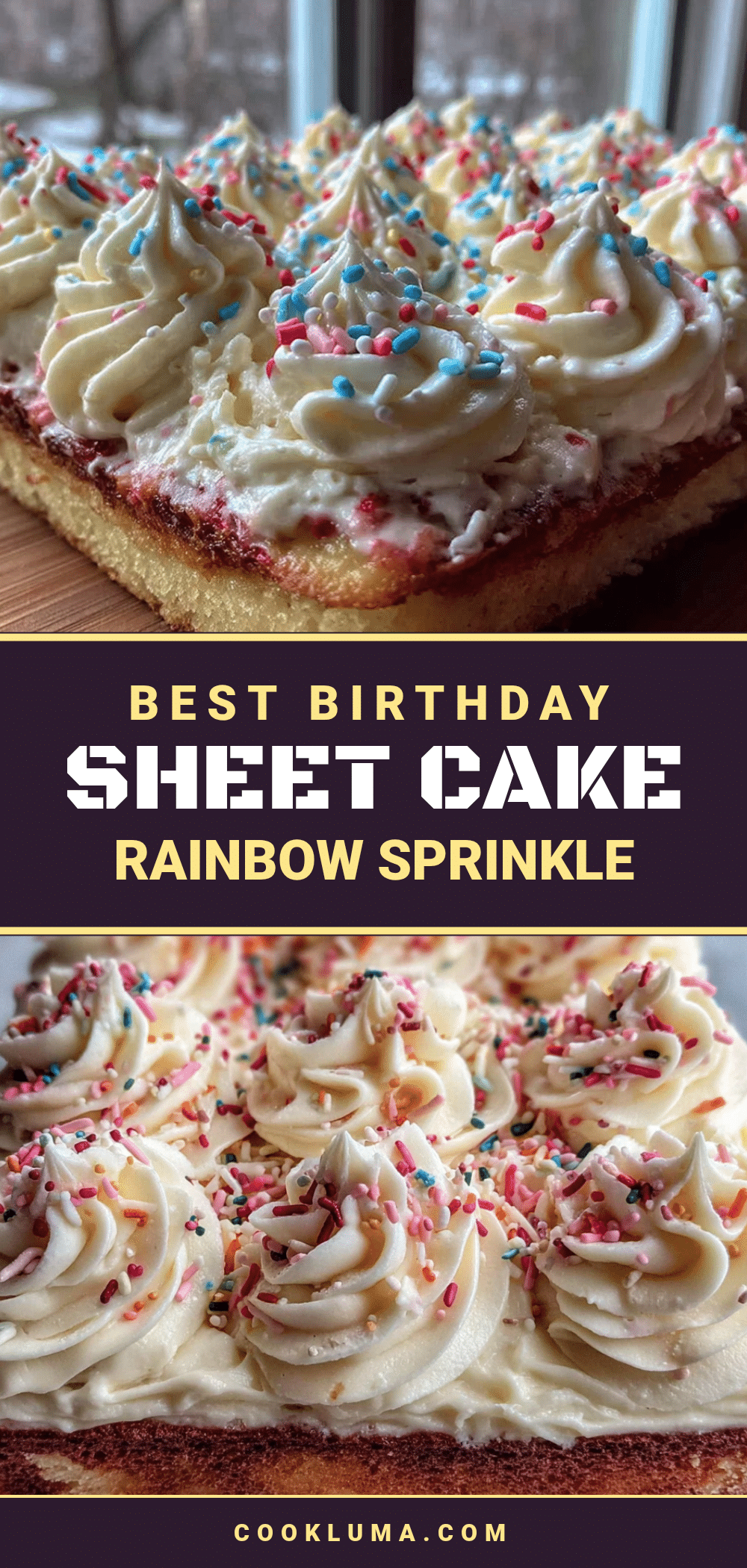
The Best Birthday Sheet Cake with Rainbow Sprinkle Buttercream
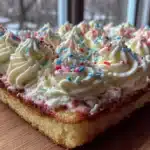
A tender, moist sheet cake topped with thick, creamy vanilla buttercream and a generous shower of rainbow sprinkles. This easy, crowd-pleasing birthday cake comes together in under an hour and feeds a crowd with no fuss.
- Prep Time: 20 minutes
- Cook Time: 25 minutes
- Total Time: 45 minutes
- Yield: 24 servings 1x
- Category: Dessert
- Cuisine: American
Ingredients
- 2 ¾ cups (345g) all-purpose flour
- 2 ½ teaspoons baking powder
- ½ teaspoon baking soda
- 1 teaspoon fine sea salt
- 1 cup (227g) unsalted butter, softened
- 1 ½ cups (300g) granulated sugar
- 3 large eggs, room temperature
- 1 extra egg yolk, room temperature
- 1 tablespoon pure vanilla extract
- 1 cup (240ml) buttermilk, room temperature
- 1 ½ cups (340g) unsalted butter, softened (for frosting)
- 5 cups (600g) powdered sugar, sifted
- 3 tablespoons heavy cream (or whole milk)
- 2 teaspoons vanilla extract (for frosting)
- ⅔ cup rainbow sprinkles (jimmies)
Instructions
- Preheat oven to 350°F (175°C). Position rack in center. Line a half-sheet pan (18×13 inches) with parchment paper, leaving 2-inch overhang on long sides. Lightly grease parchment and exposed pan sides with butter or non-stick spray.
- In a medium bowl, whisk together flour, baking powder, baking soda, and salt for about 20 seconds. Set aside.
- In a large bowl, beat softened butter on medium speed for 2 minutes until pale and fluffy. Add sugar and beat for another 3 minutes. Scrape sides and bottom of bowl. Mixture should look light and almost grainy.
- Add eggs one at a time, beating well after each addition. Add extra egg yolk and vanilla extract. Beat on medium speed for 1 minute until smooth and glossy (mixture may look slightly curdled).
- With mixer on low speed, add one-third of flour mixture, mixing until just combined. Add half of buttermilk and mix. Repeat with another third of flour, remaining buttermilk, then final third of flour. Stop mixing as soon as last streaks of flour disappear.
- Scrape batter into prepared pan and spread evenly. Tap pan gently on counter to release air bubbles.
- Bake for 22-26 minutes, until top is golden brown and a toothpick inserted in center comes out with a few moist crumbs. Cool in pan on wire rack for 15 minutes, then use parchment overhang to lift cake out. Cool completely before frosting (about 1 hour).
- For buttercream: In a large bowl, beat softened butter on medium-high speed for 5 full minutes until pale, fluffy, and almost white. Reduce speed to low and gradually add powdered sugar, about 1 cup at a time. Add heavy cream and vanilla. Increase speed to medium-high and beat for 2-3 minutes until light and airy. If too thick, add another tablespoon of cream; if too thin, add more powdered sugar.
- Gently fold rainbow sprinkles into buttercream with a spatula. Do not overmix. Spread frosting over completely cooled cake in thick, swooping swirls. Add extra sprinkles on top.
Notes
Use jimmies (rod-shaped sprinkles), not nonpareils, to prevent color bleeding. Room temperature ingredients are crucial for best texture. Cake can be made a day ahead; wrap tightly and store at room temperature. Frosting can be made day of. For a 9×13 pan, bake 30-35 minutes. For gluten-free, use a 1:1 gluten-free flour blend with xanthan gum. For dairy-free, use vegan butter and almond milk with apple cider vinegar.
Nutrition
- Serving Size: 1 square (1/24 of ca
- Calories: 380
- Sugar: 35
- Sodium: 220
- Fat: 18
- Saturated Fat: 11
- Carbohydrates: 52
- Fiber: 0.5
- Protein: 3
Keywords: birthday cake, sheet cake, sprinkle cake, funfetti, buttercream, easy cake, party cake, rainbow sprinkles