There used to be a diner on the corner of 5th and Main in my hometown—a no-frills place with cracked vinyl booths and a jukebox that only played songs from the 80s. They made this meatloaf that was, honestly, the stuff of legend. When they closed three years ago—a “for lease” sign taped to the door one Tuesday morning—I felt like I’d lost a friend. After a dozen tries—some dry, some too dense, one that fell apart completely—I finally got it. This is that meatloaf. The one with the sticky, caramelized brown sugar glaze that made you fight for the corner pieces. I mean, maybe you’ve been there—a dish that haunts you long after the place that served it is gone. This recipe brings it back.
I still remember the first time I ordered it. The waitress, a woman named Dottie who called everyone “hon,” slid the plate in front of me and said, “You’re gonna dream about this, hon.” She wasn’t wrong. The meatloaf was tender without being mushy, savory in all the right places, and that glaze—that sweet, tangy, almost-burnt sugar crust—was the kind of thing you’d close your eyes for. I spent weeks trying to figure out what made it so good. Was it the ratio of beef to pork? The tiny dice on the onion? The way the glaze bubbled in the oven? Turns out, it was all of it. And now, it’s all right here in your kitchen.
Let me tell you, this version isn’t just a copycat. It’s better. Because you’re making it in your own home, with your own hands, and that makes all the difference. No cracked vinyl booths required.
Why You’ll Love This Recipe
This meatloaf earned its spot as my most-requested recipe for a reason. It’s the kind of dinner that makes a Tuesday feel like a Sunday supper. Here’s why it works so hard for you:
- Quick & Easy: From fridge to table in just over an hour, with only 15 minutes of active prep. Perfect for those nights when you’re racing the clock.
- Simple Ingredients: No fancy grocery trips needed. Ground beef, breadcrumbs, an egg, ketchup, brown sugar—you probably have most of this in your pantry right now.
- Perfect for Weeknights: It’s the ultimate “set it and forget it” dinner. Pop it in the oven, make a salad or roast some veggies, and dinner practically makes itself.
- Crowd-Pleaser: Kids devour it. Adults ask for seconds. Leftovers are a lunchtime goldmine. I’ve never met a person who didn’t love this meatloaf.
- Unbelievably Delicious: The texture is tender and juicy, never dry. And that brown sugar glaze? It caramelizes into a sticky, sweet-tangy crust that’s genuinely addictive.
What makes this recipe different from the rest? It’s the technique. I spent years tweaking the ratios—too much breadcrumb and it’s dry, not enough and it falls apart. The secret is a panade (a paste of breadcrumbs and milk) that keeps the meatloaf incredibly moist. Plus, the glaze isn’t just painted on top; it’s layered on thick so it bakes into a jammy, caramelized shell. This isn’t just another version—it’s the one I’d serve to anyone who thinks they don’t like meatloaf. It’s that good.
Honestly, there’s something about pulling a golden-brown loaf out of the oven. The smell fills the whole house. It’s comfort food at its finest—familiar, forgiving, and deeply satisfying. This recipe is the one that makes you close your eyes after the first bite.
What Ingredients You Will Need
This recipe uses simple, wholesome ingredients that work together to create a tender, flavorful meatloaf with that signature sticky-sweet glaze. Most of these are pantry staples, which makes this a perfect last-minute dinner.
For the Meatloaf
- Ground beef (80/20): 2 pounds. I prefer 80/20 for the best balance of flavor and moisture. Too lean and the meatloaf will be dry. (I use ground sirloin or chuck from my local butcher for the best results.)
- Breadcrumbs: 1 cup, plain or Italian-style. Panko works great too for a lighter texture. If you’re gluten-free, use gluten-free breadcrumbs or crushed pork rinds.
- Milk: ½ cup, whole milk preferred. This creates the panade that keeps the meatloaf tender. You can use oat milk or almond milk in a pinch.
- Egg: 2 large eggs, lightly beaten. These bind everything together. No egg substitute needed—just use two eggs.
- Yellow onion: 1 medium, finely diced. Sauté it first for sweetness, or use it raw if you’re in a hurry. I always sauté—it makes a difference in texture.
- Garlic: 3 cloves, minced. Fresh is best, but jarred minced garlic works in a pinch.
- Ketchup: ⅓ cup. This adds moisture and a tangy base note. I prefer Heinz, but any brand works.
- Worcestershire sauce: 2 tablespoons. Adds that deep umami flavor. Lea & Perrins is my go-to.
- Dijon mustard: 1 tablespoon. Don’t skip it—it cuts through the richness and adds a subtle tang.
- Dried thyme: 1 teaspoon. Or use 1 tablespoon fresh, finely chopped.
- Salt: 1 teaspoon, plus more to taste. I use kosher salt.
- Black pepper: ½ teaspoon, freshly ground.
For the Brown Sugar Glaze
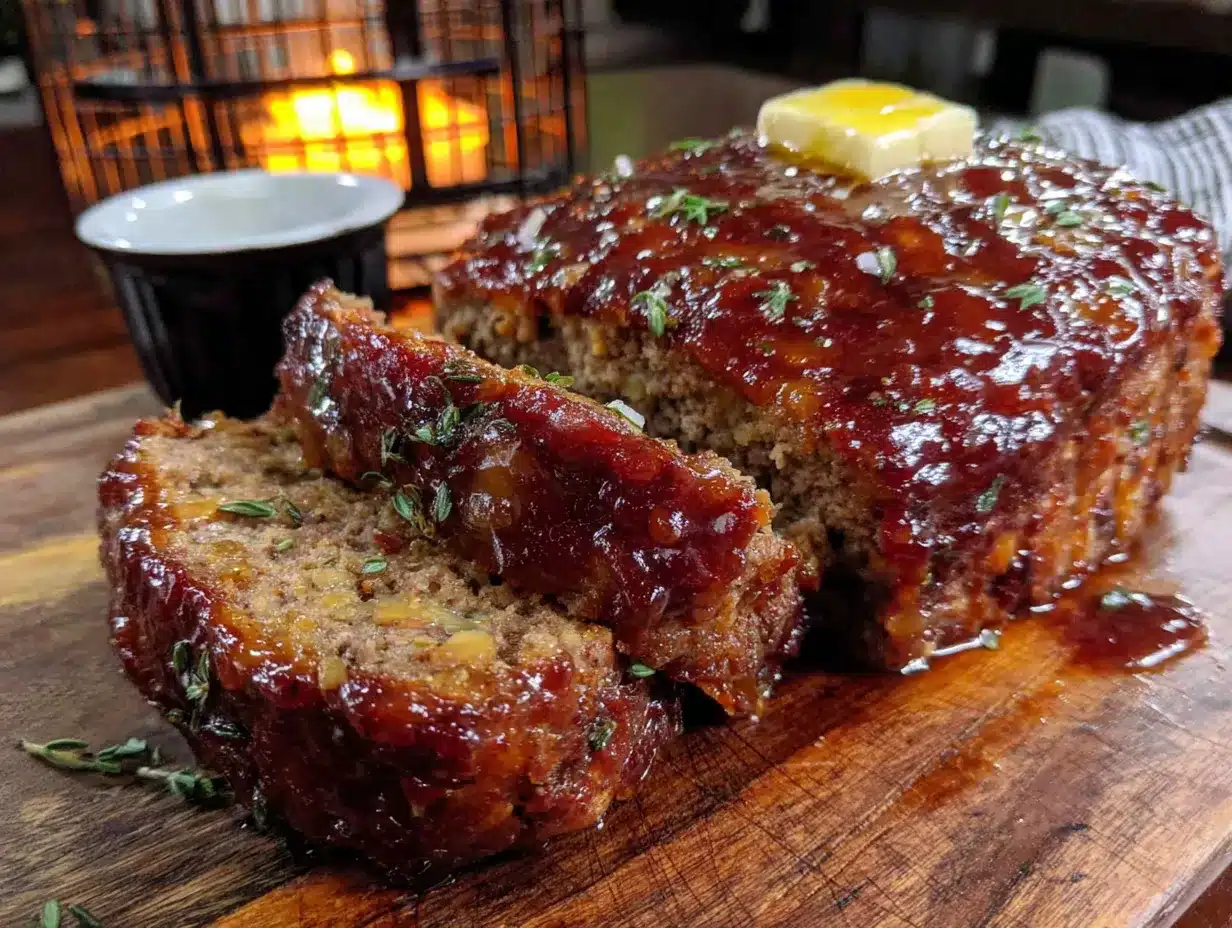
- Ketchup: ½ cup. The base of the glaze.
- Brown sugar: ⅓ cup, packed. Light or dark both work. Dark brown sugar gives a deeper molasses flavor.
- Apple cider vinegar: 1 tablespoon. Balances the sweetness with acidity.
- Worcestershire sauce: 1 teaspoon. Adds complexity.
- Garlic powder: ½ teaspoon. Not the same as fresh, but perfect for the glaze.
Ingredient Selection Tips: For the best texture, use ground beef that isn’t too lean. An 80/20 blend ensures the meatloaf stays moist during baking. If you only have lean ground beef (like 93/7), add a tablespoon of olive oil or an extra egg yolk to compensate. For the breadcrumbs, I like to use plain panko because it gives a lighter, less dense texture. If you’re out of breadcrumbs, crushed saltine crackers or rolled oats work surprisingly well.
Substitution Guidance: Need a dairy-free option? Use oat milk in the panade and dairy-free breadcrumbs. For a gluten-free version, swap in gluten-free breadcrumbs or almond flour. If you don’t have Worcestershire sauce, a splash of soy sauce or balsamic vinegar will add similar depth. And if you’re out of Dijon, yellow mustard works—it’s just a little milder.
Equipment Needed
You don’t need a fancy kitchen to make this meatloaf. Here’s what you’ll need:
- 9×5-inch loaf pan: The classic shape. If you don’t have one, you can shape the meatloaf free-form on a rimmed baking sheet (line it with foil for easy cleanup).
- Large mixing bowl: For combining the ingredients. I use a sturdy stainless steel bowl—it’s easy to clean and doesn’t hold odors.
- Measuring cups and spoons: For accuracy. Baking is science, even if cooking is art.
- Small skillet: For sautéing the onion and garlic. A non-stick or stainless steel pan works fine.
- Small bowl: For mixing the glaze.
- Pastry brush or spoon: For applying the glaze. A spoon works just as well if you don’t have a brush.
- Aluminum foil: To tent the meatloaf while it rests. This keeps it warm and moist.
Budget-Friendly Options: Don’t have a loaf pan? No problem. Shape the meatloaf into a free-form loaf on a baking sheet lined with parchment paper. The edges will get extra crispy—which is honestly a bonus. If you don’t have a pastry brush, just use the back of a spoon to spread the glaze.
Personal Note: I’ve made this meatloaf in everything from a fancy ceramic loaf pan to a disposable aluminum one. The aluminum pan actually gives slightly crispier edges, so don’t feel like you need the expensive stuff. Just make sure whatever you use is oven-safe.
Preparation Method
- Preheat your oven to 350°F (175°C). Position the rack in the middle of the oven. This ensures even cooking. While it’s heating, start prepping your ingredients.
- Sauté the onion and garlic. Heat 1 tablespoon of olive oil in a small skillet over medium heat. Add the finely diced onion and cook for 4-5 minutes, until soft and translucent. Add the minced garlic and cook for 30 seconds more, until fragrant. Remove from heat and let it cool slightly. (Hot onion will cook the egg, so don’t skip the cooling step.)
- Make the panade. In a large mixing bowl, combine the breadcrumbs and milk. Stir and let it sit for 5 minutes. The breadcrumbs will absorb the milk and form a paste. This is the secret to a tender meatloaf—it keeps the meat from getting tough.
- Combine the meatloaf ingredients. To the panade, add the ground beef, beaten eggs, sautéed onion and garlic, ketchup, Worcestershire sauce, Dijon mustard, dried thyme, salt, and pepper. Use your hands to gently mix everything together. Don’t overmix—just until combined. Overworking the meat will make the meatloaf dense and tough. You want it to come together but still feel light.
- Shape the meatloaf. If using a loaf pan, lightly grease it with oil or non-stick spray. Press the meat mixture into the pan evenly, smoothing the top. If you’re going free-form, shape the mixture into a loaf shape on a parchment-lined baking sheet. (The free-form method gives you more caramelized edges, which I personally love.)
- Make the glaze. In a small bowl, whisk together the ketchup, packed brown sugar, apple cider vinegar, Worcestershire sauce, and garlic powder. It should be smooth and slightly thick. Taste it—it should be sweet with a tangy kick.
- Apply the glaze. Spread about half the glaze evenly over the top of the meatloaf using a pastry brush or the back of a spoon. Reserve the remaining glaze for later. Don’t be shy—cover the whole top surface generously.
- Bake the meatloaf. Place the loaf pan on a baking sheet (to catch any drips) and bake at 350°F for 45 minutes. After 45 minutes, remove the meatloaf from the oven and spread the remaining glaze on top. Return to the oven and bake for another 15-20 minutes, until the internal temperature reaches 160°F (71°C) when measured with an instant-read thermometer inserted into the center.
- Rest the meatloaf. This is crucial. Remove the meatloaf from the oven and let it rest in the pan for 10-15 minutes. Tent it loosely with foil. Resting allows the juices to redistribute, so every slice is moist. If you cut into it too soon, the juices will run out and you’ll end up with dry meatloaf. I know it’s hard to wait—the smell is incredible—but trust me on this.
- Slice and serve. After resting, carefully transfer the meatloaf to a cutting board. Slice into 1-inch thick pieces. The glaze should be sticky and caramelized. Serve warm with your favorite sides.
Time Estimates: Prep takes about 15 minutes, sautéing adds 5 minutes, and baking takes about 1 hour. Total time: about 1 hour 20 minutes, including resting time.
Sensory Cues: The meatloaf is done when the glaze is bubbling and dark golden-brown, almost caramelized at the edges. The internal temperature should read 160°F. The aroma will be sweet, savory, and deeply comforting—like Sunday dinner, any day of the week.
Cooking Tips & Techniques
I’ve made this meatloaf more times than I can count, and I’ve made every mistake in the book. Here’s what I’ve learned:
Don’t overmix the meat. This is the number one mistake. Mix just until everything is combined. Overworking the ground beef activates the proteins and makes the meatloaf tough. Use your hands—it’s the best way to feel when it’s ready. It should come together but still feel light and a little crumbly.
Sauté the onion first. I know it’s an extra step, but it’s worth it. Raw onion releases water as it cooks, which can make the meatloaf soggy. Sautéing removes some of that moisture and concentrates the flavor. Plus, it softens the onion so you don’t get crunchy bits in your meatloaf.
Use an instant-read thermometer. Guessing when meatloaf is done is a recipe for disaster. The safe internal temperature is 160°F. Pull it out at exactly that temp, and it’ll be perfectly cooked. Any higher, and it starts to dry out. I use a Thermapen, but any reliable thermometer works.
Let it rest. I cannot stress this enough. The resting period is not optional. It’s when the magic happens. The juices that have been pushed to the center during cooking redistribute evenly throughout the loaf. Cut into it too soon, and you’ll have a dry, crumbly mess. Give it at least 10 minutes.
Double the glaze. The recipe makes plenty, but I always make extra. You can serve it on the side for people who want more, or brush it on leftover slices when you reheat them. It’s that good.
My biggest failure: The first time I made this, I forgot to sauté the onion. I just threw it in raw, thinking, “How bad could it be?” Bad. The meatloaf was watery, and the onion bits were still crunchy. I learned my lesson. Don’t skip the sauté.
Variations & Adaptations
This recipe is incredibly forgiving. Here are some ways to make it your own:
- Turkey Meatloaf: Swap the ground beef for ground turkey (93/7 works best). Add 2 tablespoons of olive oil or an extra egg yolk to keep it moist. Turkey is leaner, so it needs a little help. The glaze is still the star.
- Cheesy Meatloaf: Cube 4 ounces of cheddar or mozzarella and fold it into the meat mixture before shaping. The cheese melts into little pockets of gooey goodness. Pro tip: Freeze the cheese cubes for 10 minutes before adding so they don’t melt completely into the meat.
- BBQ Meatloaf: Swap the ketchup-based glaze for your favorite barbecue sauce. Add 1 teaspoon of smoked paprika to the meat mixture for extra depth. This version is perfect for summer cookouts.
- Veggie-Packed Meatloaf: Finely grate 1 carrot and 1 zucchini, squeeze out the excess moisture, and add them to the meat mixture. You won’t taste them, but they add moisture and nutrients. Great for sneaking veggies into picky eaters’ dinners.
- Spicy Meatloaf: Add 1-2 teaspoons of sriracha or chipotle powder to the glaze, and mix ½ teaspoon of cayenne into the meat mixture. The sweet-spicy combo is addictive.
Dietary Adaptations: For a low-carb version, skip the breadcrumbs and use almond flour or crushed pork rinds instead. For dairy-free, use oat milk in the panade and check that your Worcestershire sauce is dairy-free (most are).
Personal Variation: My favorite twist is the “breakfast meatloaf”—I add ½ cup of cooked, crumbled bacon and ¼ cup of maple syrup to the glaze. It’s ridiculous and wonderful.
Serving & Storage Suggestions
Serving: Serve the meatloaf warm, straight from the oven. Slice it into thick pieces and arrange on a platter. The glaze should be sticky and slightly caramelized. I like to serve it with mashed potatoes (the gravy situation is real) and a simple green vegetable like steamed green beans or roasted broccoli. The richness of the meatloaf pairs beautifully with something bright and acidic, like a side salad with a lemon vinaigrette.
Complementary Dishes: Mashed potatoes are the classic choice, but roasted sweet potatoes or a simple rice pilaf work too. For a lighter option, try cauliflower mash. And don’t forget the bread—a slice of crusty bread to soak up any extra glaze is a must.
Storage: Leftover meatloaf keeps beautifully. Store slices in an airtight container in the refrigerator for up to 4 days. The flavors actually meld and deepen overnight, so leftovers might be even better the next day. I love it cold on a sandwich with a little extra ketchup and some pickles.
Freezing: You can freeze the whole cooked meatloaf or individual slices. Wrap tightly in plastic wrap, then foil, and freeze for up to 3 months. To reheat, thaw overnight in the refrigerator, then warm slices in a 350°F oven for 10-15 minutes, or in the microwave for 1-2 minutes. The glaze might be a little less sticky after freezing, but the flavor is still there.
Reheating: For best results, reheat slices in a skillet over medium heat with a splash of water or beef broth. Cover the pan to trap steam, and cook for 3-4 minutes per side. This revives the moisture without drying it out. If you’re in a hurry, the microwave works—just cover the plate with a damp paper towel to keep it from drying out.
Flavor Development: Like many comfort foods, this meatloaf tastes even better the next day. The flavors have time to meld, and the texture firms up just enough for perfect sandwich slices. If you can resist eating it all the first night, you’re in for a treat.
Nutritional Information & Benefits
This recipe makes 8 generous servings. Here are the approximate nutritional values per serving (based on 80/20 ground beef):
- Calories: 420
- Protein: 28g
- Fat: 24g
- Carbohydrates: 22g
- Fiber: 1g
- Sugar: 15g (from the glaze and ketchup)
- Sodium: 680mg
Health Benefits: This meatloaf is a good source of protein, iron, and B vitamins from the beef. The onions and garlic provide antioxidants and anti-inflammatory compounds. While it’s not a “health food,” it’s a balanced meal when paired with vegetables and a whole grain. The moderate carbohydrate content comes mostly from the breadcrumbs and glaze, so it fits into a balanced diet.
Dietary Considerations: This recipe contains gluten (breadcrumbs) and dairy (milk). For gluten-free, use gluten-free breadcrumbs. For dairy-free, use oat milk. It’s not suitable for a low-sodium diet without modifications (use low-sodium ketchup and Worcestershire sauce).
Personal Wellness Perspective: I believe in balance. This meatloaf is a comfort food, meant to be enjoyed without guilt. Pair it with a big salad or roasted vegetables, and you’ve got a satisfying, nourishing meal. Food is about pleasure and connection, not just numbers.
Conclusion
This easy classic meatloaf with brown sugar glaze is more than just a recipe—it’s a piece of my history, brought back to life in my own kitchen. It’s the dinner I turn to when I need something reliable, something that fills the house with that unmistakable aroma of home. The tender, juicy meat, the sticky-sweet glaze, the way it makes even a Tuesday feel special—it’s everything I loved about that diner, minus the cracked vinyl booths.
I hope you make this meatloaf your own. Maybe you’ll add a little extra garlic, or swap in your favorite BBQ sauce for the glaze. Maybe you’ll serve it with mashed potatoes, or slice it cold for sandwiches the next day. However you make it, I know you’ll love it. It’s the kind of recipe that earns a permanent spot in your rotation—the one friends ask for, the one that gets requested for birthdays and potlucks.
So go ahead. Preheat that oven, get your hands a little messy, and bring a little comfort to your table. And when you take that first bite, close your eyes. That’s the taste of something good.
I’d love to hear how yours turns out! Leave a comment below and tell me about your meatloaf memories. Did you add a twist? Serve it with something unexpected? Share your story—I read every single one. And if you loved this recipe, please share it with someone who needs a little comfort tonight. Happy cooking!
Frequently Asked Questions
Can I make this meatloaf ahead of time?
Absolutely. You can assemble the meatloaf (without the glaze) up to 24 hours in advance. Cover and refrigerate. When you’re ready to bake, add the glaze and follow the baking instructions. You may need to add 10-15 minutes to the baking time since you’re starting from cold.
Why is my meatloaf falling apart?
This usually happens for one of two reasons: either the mixture was too dry (not enough egg or milk) or it wasn’t allowed to rest after baking. The panade (breadcrumb and milk mixture) is crucial for binding. Also, make sure you’re letting the meatloaf rest for at least 10 minutes before slicing—this allows it to set.
Can I use ground pork or a meatloaf mix?
Yes! A mix of ground beef, pork, and veal (often sold as “meatloaf mix”) is traditional and delicious. The pork adds extra fat and flavor. If using all pork, be aware it will be richer and slightly softer in texture. Adjust cooking time as needed—pork should reach 160°F internally.
How do I prevent the glaze from burning?
If you notice the glaze getting too dark before the meatloaf is fully cooked, tent the loaf loosely with foil for the last 15-20 minutes of baking. This will protect the glaze while allowing the meat to finish cooking. Every oven runs a little differently, so keep an eye on it.
Can I cook this in a slow cooker?
Yes, but the texture will be different—softer and more like a pâté. Shape the meatloaf to fit your slow cooker, apply the glaze, and cook on low for 4-6 hours or on high for 2-3 hours. The internal temperature should reach 160°F. For a firmer texture, you can finish it under the broiler for 3-5 minutes after cooking.
Pin This Recipe!
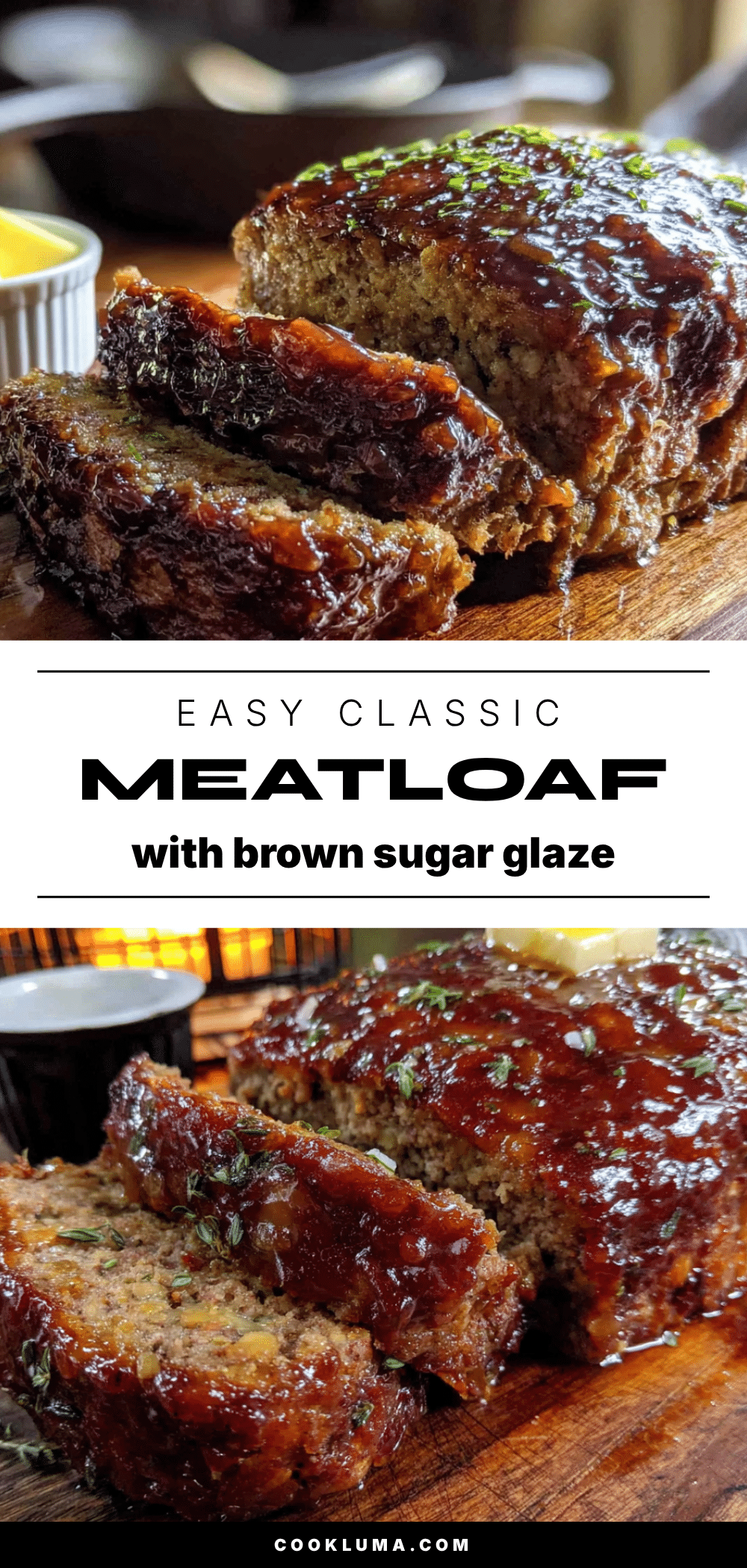
Easy Classic Meatloaf with Brown Sugar Glaze
This tender, juicy meatloaf with a sticky-sweet brown sugar glaze is a nostalgic comfort food that brings back memories of a beloved diner. It’s quick to prepare with simple ingredients and perfect for weeknight dinners.
- Prep Time: 15 minutes
- Cook Time: 1 hour
- Total Time: 1 hour 20 minutes
- Yield: 8 servings 1x
- Category: Main Course
- Cuisine: American
Ingredients
- 2 pounds ground beef (80/20)
- 1 cup breadcrumbs (plain or Italian-style)
- ½ cup whole milk
- 2 large eggs, lightly beaten
- 1 medium yellow onion, finely diced
- 3 cloves garlic, minced
- ⅓ cup ketchup
- 2 tablespoons Worcestershire sauce
- 1 tablespoon Dijon mustard
- 1 teaspoon dried thyme
- 1 teaspoon kosher salt
- ½ teaspoon freshly ground black pepper
- ½ cup ketchup (for glaze)
- ⅓ cup packed brown sugar (light or dark)
- 1 tablespoon apple cider vinegar
- 1 teaspoon Worcestershire sauce (for glaze)
- ½ teaspoon garlic powder
Instructions
- Preheat your oven to 350°F (175°C). Position the rack in the middle of the oven.
- Sauté the onion and garlic: Heat 1 tablespoon of olive oil in a small skillet over medium heat. Add the finely diced onion and cook for 4-5 minutes, until soft and translucent. Add the minced garlic and cook for 30 seconds more, until fragrant. Remove from heat and let it cool slightly.
- Make the panade: In a large mixing bowl, combine the breadcrumbs and milk. Stir and let it sit for 5 minutes until the breadcrumbs absorb the milk and form a paste.
- Combine the meatloaf ingredients: To the panade, add the ground beef, beaten eggs, sautéed onion and garlic, ketchup, Worcestershire sauce, Dijon mustard, dried thyme, salt, and pepper. Use your hands to gently mix everything together until just combined. Do not overmix.
- Shape the meatloaf: Lightly grease a 9×5-inch loaf pan with oil or non-stick spray. Press the meat mixture into the pan evenly, smoothing the top. Alternatively, shape the mixture into a loaf on a parchment-lined baking sheet for more caramelized edges.
- Make the glaze: In a small bowl, whisk together the ketchup, packed brown sugar, apple cider vinegar, Worcestershire sauce, and garlic powder until smooth.
- Apply the glaze: Spread about half the glaze evenly over the top of the meatloaf using a pastry brush or the back of a spoon. Reserve the remaining glaze.
- Bake the meatloaf: Place the loaf pan on a baking sheet and bake at 350°F for 45 minutes. Remove from the oven, spread the remaining glaze on top, and return to the oven for another 15-20 minutes, until the internal temperature reaches 160°F (71°C).
- Rest the meatloaf: Remove from the oven and let it rest in the pan for 10-15 minutes, tented loosely with foil.
- Slice and serve: After resting, transfer the meatloaf to a cutting board and slice into 1-inch thick pieces. Serve warm.
Notes
Don’t overmix the meat to avoid toughness. Sauté the onion first to prevent sogginess. Use an instant-read thermometer to ensure the internal temperature reaches 160°F. Let the meatloaf rest for at least 10 minutes before slicing to keep it moist. Double the glaze if you want extra for serving.
Nutrition
- Serving Size: 1 slice (1/8 of meat
- Calories: 420
- Sugar: 15
- Sodium: 680
- Fat: 24
- Saturated Fat: 9
- Carbohydrates: 22
- Fiber: 1
- Protein: 28
Keywords: meatloaf, brown sugar glaze, classic meatloaf, comfort food, easy dinner, ground beef