My neighbor wasn’t trying to impress anyone. I’d stopped by to borrow a ladder—our fence had finally given up after that last storm—and the smell hit me before I even got to her porch. It was warm and earthy, with this unmistakable hint of sage that made me stop mid-step. She opened the door holding a mug, completely nonchalant, like she hadn’t just created the most comforting thing I’d smelled in weeks.
“Oh, that’s just acorn squash soup,” she said when I asked. “I had one sitting on the counter.”
Just acorn squash soup. Like it was nothing. Like she hadn’t just roasted that thing until it was caramelized and sweet, then blended it into something so velvety I honestly couldn’t stop thinking about it for days. I stood there holding my ladder, trying to ask normal questions about the fence while mentally taking notes on every word she said about that soup. Maybe you’ve been there—that moment when something so simple stops you cold because it’s just that good.
She let me try a sip from her mug, and I mean it when I say I went out and bought three acorn squashes the next day. This easy roasted acorn squash soup with sage has been in my regular rotation ever since. It’s the kind of recipe that makes you wonder why you ever bought soup in a can. And the best part? It’s genuinely easy. No complicated steps, no weird ingredients, just a few things you probably already have making something that feels way more special than it should.
Why You’ll Love This Recipe
Let me tell you why this soup has earned a permanent spot in my weeknight dinner lineup. It’s not just good—it’s the kind of good that makes you close your eyes after that first spoonful.
- Quick & Easy: This comes together in under an hour, and most of that time is hands-off roasting. Perfect for those nights when you walk in the door starving and need something real fast.
- Simple Ingredients: No fancy grocery trips here. You need an acorn squash, some aromatics, broth, and sage. That’s it. I bet you’ve got most of it already.
- Perfect for Weeknights: This is the definition of a low-effort, high-reward dinner. It feels like you spent hours in the kitchen, but you really didn’t.
- Crowd-Pleaser: I’ve served this to my picky-eating nephew and my food-snob uncle, and both asked for seconds. It’s magic, I swear.
- Unbelievably Delicious: The roasting brings out this natural sweetness in the squash that pairs perfectly with the earthy sage. It’s comfort in a bowl, no question.
What makes this version different from all the others? It’s the roasting. A lot of recipes just boil the squash, but roasting it first changes everything. You get this deep, caramelized flavor that you just can’t get any other way. Plus, I’ve nailed the sage-to-squash ratio after about six attempts—trust me, it’s perfect.
This isn’t just another soup recipe. It’s the one you’ll make when you’re tired, when you need something warm, when you want to feel like you’ve got your act together even on a chaotic Tuesday. It’s comfort food that respects your time, and honestly, that’s the best kind.
What Ingredients You Will Need
This easy roasted acorn squash soup with sage uses simple, wholesome ingredients to deliver big flavor without any fuss. Most of these are pantry staples or easy to find at any grocery store.
- Acorn squash (2 medium, about 2 pounds each) — Look for ones that feel heavy for their size with firm, unblemished skin. The orange-fleshed ones are sweeter.
- Yellow onion (1 large, roughly chopped) — Adds a savory base that balances the sweetness of the squash.
- Garlic cloves (4-5, smashed) — Roasting them mellows out the sharpness and adds a subtle sweetness. I use more than most recipes call for, and it’s worth it.
- Fresh sage leaves (about 10-12 leaves) — This is non-negotiable for the flavor. Dried sage works in a pinch, but fresh really shines here.
- Olive oil (3 tablespoons, divided) — Use a good quality one for roasting. It makes a difference.
- Vegetable broth (4 cups) — I prefer Pacific Foods brand for its clean flavor, but any low-sodium broth works. Chicken broth is fine too if you’re not keeping it vegetarian.
- Coconut milk (1/2 cup, full-fat) — This adds a silky richness without making it heavy. You can also use heavy cream or leave it out entirely.
- Maple syrup (1 tablespoon) — Just a touch to enhance the natural sweetness. Optional, but I love it.
- Salt and black pepper (to taste) — Don’t be shy with the salt. It makes all the flavors pop.
- Pumpkin seeds (for garnish, optional) — Adds a nice crunch on top.
Substitution guidance: If you can’t find acorn squash, butternut squash or even kabocha works beautifully—just adjust roasting time based on size. For a dairy-free version, this recipe is already there thanks to the coconut milk. If you want a nut-free garnish, skip the pumpkin seeds or use crispy chickpeas instead.
Equipment Needed
You don’t need much for this one, which is part of the beauty. Here’s what you’ll need:
- Baking sheet (half-sheet size) — For roasting the squash. A rimmed one is best to catch any juices.
- Parchment paper — Makes cleanup a breeze. I’ve forgotten it before and spent way too long scrubbing.
- Chef’s knife — A sharp one is key for cutting through that tough acorn squash skin.
- Large pot or Dutch oven — For sautéing the aromatics and simmering the soup. I use my trusty Le Creuset, but any heavy-bottomed pot works.
- Immersion blender — This is my preferred method for blending the soup right in the pot. Less cleanup, less hassle. If you don’t have one, a regular blender works fine—just work in batches and be careful with the hot liquid.
- Measuring cups and spoons — For accuracy, especially with the broth and coconut milk.
Budget-friendly tip: That immersion blender? You can find decent ones for under $30, and they’re worth every penny for soups like this. But if you’re not ready to invest, a standard blender does the job—just let the soup cool slightly before blending.
Preparation Method

Alright, let’s get cooking. This easy roasted acorn squash soup with sage comes together in a few simple steps. I’ve timed everything so you can multitask like a pro.
- Preheat your oven to 400°F (200°C). Line a baking sheet with parchment paper. Trust me on the parchment—you’ll thank me later when you’re not scrubbing caramelized squash off the pan.
- Prepare the acorn squash. Carefully cut each squash in half from stem to tip. Scoop out the seeds and stringy bits with a spoon. You can save the seeds and roast them later if you’re feeling ambitious—they make a great snack. Brush the cut sides with 1 tablespoon of olive oil and season with a pinch of salt and pepper. Place them cut-side down on the prepared baking sheet. This helps them steam slightly as they roast, keeping them tender.
- Roast the squash. Pop the squash in the oven and roast for 35-40 minutes, until the flesh is fork-tender and the edges are starting to caramelize. The skin should look slightly wrinkled and the flesh should give easily when pierced. While that’s happening, move on to step 4.
- Sauté the aromatics. While the squash roasts, heat the remaining 2 tablespoons of olive oil in a large pot over medium heat. Add the chopped onion and cook for 5-6 minutes, stirring occasionally, until it’s soft and translucent. Don’t rush this—you want the onion to sweeten up, not just cook through. Add the smashed garlic cloves and cook for another minute until fragrant. Your kitchen should smell amazing right about now.
- Add the sage. Toss in the fresh sage leaves and cook for 30 seconds, just until they start to wilt and release their oil. The smell at this point is unreal—earthy and warm and everything good about fall.
- Combine everything. Once the squash is done, let it cool for a few minutes until you can handle it. Scoop the flesh out of the skin—it should come away easily. Add the roasted squash flesh to the pot with the onions and sage. Pour in the vegetable broth and stir to combine. Bring it to a gentle simmer over medium heat, then reduce the heat to low and let it cook for 10 minutes. This lets all the flavors get to know each other.
- Blend until smooth. Remove the pot from heat. Use an immersion blender to puree the soup until it’s completely smooth and velvety. If you’re using a regular blender, work in batches—fill it no more than halfway, hold the lid down with a towel, and blend carefully. Hot soup expands, and I’ve learned this the messy way.
- Finish with coconut milk and maple syrup. Stir in the coconut milk and maple syrup. Taste and adjust seasoning with salt and pepper. I usually add about a teaspoon of salt and a good few grinds of pepper, but go with what tastes right to you. If the soup is too thick, add a splash more broth or water until it reaches your preferred consistency.
- Serve and garnish. Ladle the soup into bowls. Top with pumpkin seeds, a few fresh sage leaves, and maybe a drizzle of coconut milk if you’re feeling fancy. The contrast of the creamy soup and the crunchy seeds is everything.
Sensory cue check: At the end, your soup should be a beautiful warm orange color, smooth as velvet, with that unmistakable sage aroma. The texture should be thick enough to coat the back of a spoon but still pourable. If it’s too thick, thin it out. If it’s too thin, let it simmer a few more minutes to reduce.
Cooking Tips & Techniques
I’ve made this easy roasted acorn squash soup with sage more times than I can count, and I’ve definitely made my share of mistakes along the way. Here are the things I wish I’d known from the start.
Don’t skip the roasting. I know it’s tempting to just boil the squash to save time, but roasting is where the magic happens. That caramelization adds a depth of flavor you simply cannot get any other way. If you’re really in a hurry, you can microwave the squash for a few minutes to soften it before roasting—it cuts the time down without sacrificing too much flavor.
Cut the squash safely. Acorn squash has that tough, ridged skin that can be a pain to cut through. Here’s my trick: microwave the whole squash for 2-3 minutes first. It softens the skin just enough to make cutting easier. And always use a sharp knife—a dull one is more dangerous because it can slip.
Toast your sage. For an extra flavor boost, fry a few sage leaves in butter or oil until crispy and use them as a garnish. It takes about 30 seconds and adds this incredible texture and intensified sage flavor. I do this almost every time now.
Season as you go. Don’t wait until the end to add all your salt. Season the squash before roasting, season the onions as they cook, and adjust again at the end. Layering the seasoning makes everything taste more integrated.
The one mistake I keep making: Overfilling the blender. I know better, but sometimes I get impatient and try to blend too much at once. Hot soup expands, and the lid can pop off—trust me, it’s a mess you don’t want to clean. Work in batches, and let the soup cool slightly before blending if you’re using a countertop blender.
Variations & Adaptations
One of the best things about this easy roasted acorn squash soup with sage is how adaptable it is. Here are some ways I’ve tweaked it depending on what I have on hand or who I’m feeding.
Vegan and dairy-free: This recipe is already both, thanks to the coconut milk. But if you want to skip the coconut flavor, use unsweetened oat milk or cashew cream instead. It stays creamy without the coconut taste.
Spicy version: Add a pinch of red pepper flakes or a small diced jalapeño when you sauté the onions. The heat cuts through the sweetness beautifully. I did this on a whim one night when I had a cold, and it was surprisingly perfect.
Protein boost: Stir in a cup of cooked white beans or shredded rotisserie chicken after blending. It makes the soup heartier and turns it into a full meal. My husband loves this version—he says it actually fills him up.
Seasonal swap: In the fall, use fresh sage and maybe add a diced apple to the roasting pan with the squash. In winter, swap the sage for thyme and add a pinch of nutmeg. In spring, use fresh basil instead—it’s a completely different soup, but equally good.
Different squash: Butternut, kabocha, or even pumpkin all work here. Just adjust the roasting time based on the size and density. Kabocha is my secret favorite—it’s naturally sweeter and creamier than acorn.
Serving & Storage Suggestions
This soup is incredibly versatile when it comes to serving. Here’s how I like to do it.
Serving temperature: Serve it hot, but not boiling. Let it sit for a minute or two after ladling—it allows the flavors to settle. I’ve also had it at room temperature on a warm day, and it’s surprisingly good that way too.
What to serve with it: A crusty bread or grilled cheese sandwich is my go-to. The soup is creamy and the bread is crunchy—perfect contrast. A simple green salad with a tangy vinaigrette also works great to cut through the richness. For a heartier meal, serve it alongside a roasted chicken or a simple grain bowl.
Storage: Let the soup cool completely, then transfer it to an airtight container. It will keep in the refrigerator for up to 5 days. The flavors actually get better after a day or two—the sage mellows out and everything melds together beautifully.
Freezing: This soup freezes like a dream. Pour it into freezer-safe containers or zip-top bags, leaving a little room for expansion. It will keep for up to 3 months. Thaw overnight in the refrigerator before reheating.
Reheating: Reheat gently on the stovetop over medium-low heat, stirring occasionally. Add a splash of broth or water if it’s too thick after freezing. You can also microwave it in 30-second bursts, stirring in between. Just don’t boil it—it can cause the coconut milk to separate.
Nutritional Information & Benefits
This easy roasted acorn squash soup with sage isn’t just delicious—it’s packed with good stuff too. Here’s a rough breakdown per serving (about 1.5 cups).
| Nutrient | Amount per Serving |
|---|---|
| Calories | 220 |
| Total Fat | 12g |
| Saturated Fat | 5g |
| Carbohydrates | 28g |
| Fiber | 5g |
| Sugar | 8g |
| Protein | 4g |
| Vitamin A | 180% DV |
| Vitamin C | 25% DV |
| Potassium | 15% DV |
Health benefits: Acorn squash is loaded with vitamin A for eye health and immune function. The fiber keeps you full and helps digestion. Sage has anti-inflammatory properties and adds flavor without extra salt or fat. Coconut milk provides healthy fats that help your body absorb the fat-soluble vitamins in the squash.
Dietary considerations: This soup is naturally gluten-free, dairy-free, and vegan. It’s also relatively low in calories for how satisfying it is. If you’re watching your sodium, use low-sodium broth and adjust the salt at the end.
Conclusion
This easy roasted acorn squash soup with sage has become my weeknight hero. It’s the recipe I turn to when I need something warm and comforting but don’t have the energy for a complicated project. It’s the one I make when friends come over and I want to look like I’ve got it together without actually trying that hard.
I love that it starts with a simple acorn squash and ends with something that feels special. I love that I can make it on a Tuesday and eat leftovers on Thursday and it somehow tastes even better. And I love that it reminds me of that afternoon on my neighbor’s porch, when something so simple stopped me in my tracks.
I really hope you give this one a try. Customize it, make it your own—add more sage if you’re bold, skip the maple syrup if you prefer it savory, top it with whatever crunchy thing you have on hand. And when you do, I’d love to hear about it. Drop a comment below and let me know how it turned out, or share your own twist on it. Happy cooking, friend!
Frequently Asked Questions
Can I make this soup ahead of time?
Absolutely! In fact, I think it tastes even better the next day. Make it up to 3 days ahead and store it in the fridge. Reheat gently on the stovetop when you’re ready to serve.
Can I use dried sage instead of fresh?
You can, but fresh sage really does make a difference here. If you’re using dried, use about 1 teaspoon and add it with the broth rather than sautéing it. The flavor won’t be quite as bright, but it’ll still be good.
How do I make this soup thicker?
If you want a thicker soup, let it simmer a bit longer after blending to reduce some of the liquid. You can also add a peeled and diced potato when you sauté the onions—it breaks down and adds natural thickness.
Can I freeze this soup?
Yes! It freezes beautifully for up to 3 months. Just let it cool completely, pour it into freezer-safe containers, and leave a little room for expansion. Thaw overnight in the fridge before reheating.
What can I use instead of coconut milk?
Heavy cream, oat milk, or cashew cream all work well. If you’re avoiding coconut, oat milk is the closest in texture without adding flavor. Just avoid skim milk—it can make the soup watery.
Pin This Recipe!
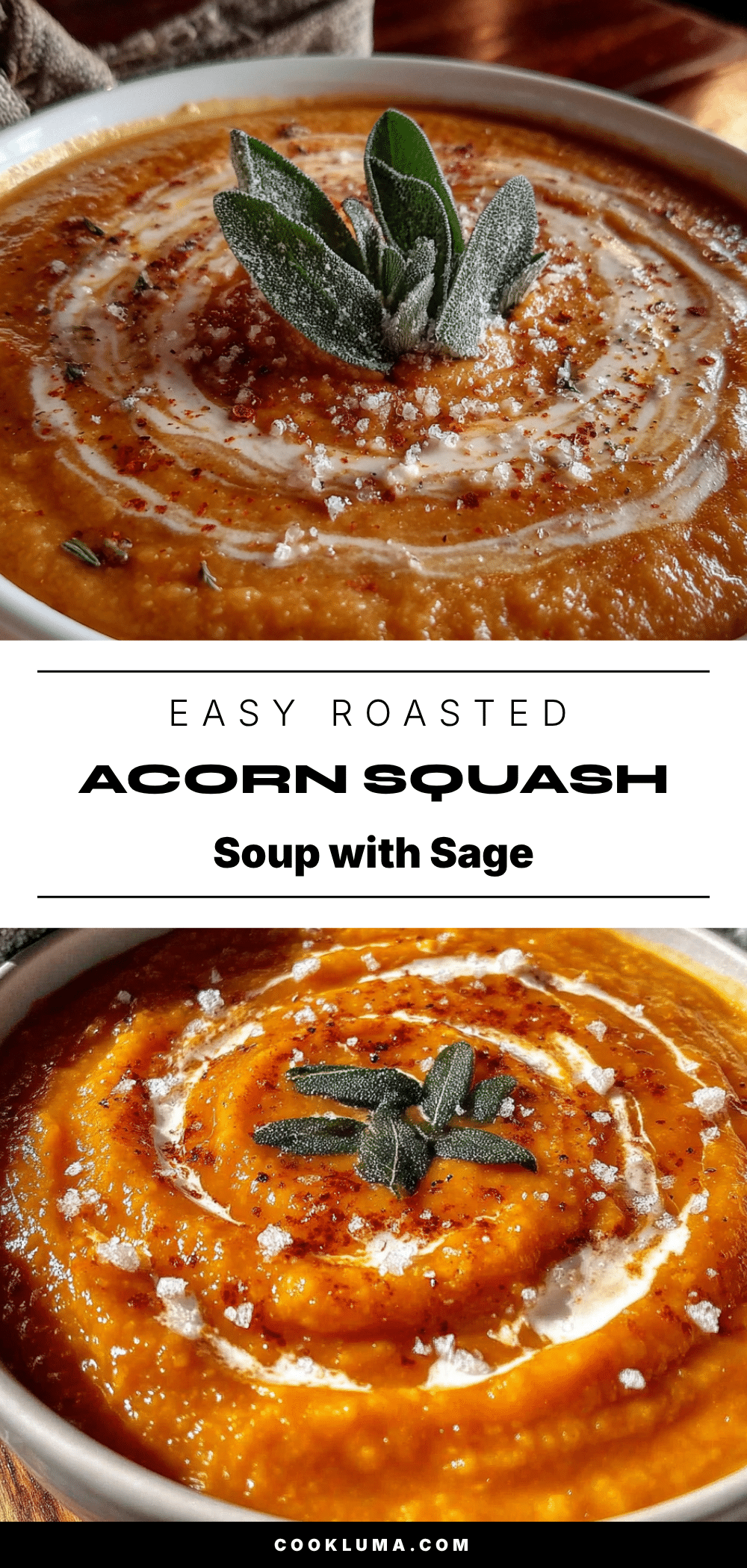
Easy Roasted Acorn Squash Soup with Sage

This easy roasted acorn squash soup with sage is a comforting, velvety soup made with simple ingredients. Roasting the squash brings out its natural sweetness, which pairs perfectly with earthy sage for a low-effort, high-reward weeknight dinner.
- Prep Time: 15 minutes
- Cook Time: 40 minutes
- Total Time: 55 minutes
- Yield: 4 servings 1x
- Category: Soup
- Cuisine: American
Ingredients
- 2 medium acorn squash (about 2 pounds each)
- 1 large yellow onion, roughly chopped
- 4–5 garlic cloves, smashed
- 10–12 fresh sage leaves
- 3 tablespoons olive oil, divided
- 4 cups vegetable broth (low-sodium preferred)
- 1/2 cup full-fat coconut milk
- 1 tablespoon maple syrup (optional)
- Salt and black pepper to taste
- Pumpkin seeds for garnish (optional)
Instructions
- Preheat your oven to 400°F (200°C). Line a baking sheet with parchment paper.
- Carefully cut each acorn squash in half from stem to tip. Scoop out the seeds and stringy bits. Brush the cut sides with 1 tablespoon of olive oil and season with a pinch of salt and pepper. Place cut-side down on the prepared baking sheet.
- Roast the squash for 35-40 minutes, until fork-tender and edges are caramelized.
- While the squash roasts, heat the remaining 2 tablespoons of olive oil in a large pot over medium heat. Add the chopped onion and cook for 5-6 minutes until soft and translucent. Add the smashed garlic cloves and cook for another minute until fragrant.
- Add the fresh sage leaves and cook for 30 seconds until wilted.
- Once the squash is cool enough to handle, scoop the flesh out of the skin. Add the roasted squash to the pot with the onions and sage. Pour in the vegetable broth and stir. Bring to a gentle simmer over medium heat, then reduce heat to low and cook for 10 minutes.
- Remove the pot from heat. Use an immersion blender to puree the soup until smooth. If using a regular blender, work in batches, filling no more than halfway, and blend carefully.
- Stir in the coconut milk and maple syrup. Taste and adjust seasoning with salt and pepper. Add more broth or water if needed to reach desired consistency.
- Ladle the soup into bowls. Garnish with pumpkin seeds, fresh sage leaves, or a drizzle of coconut milk if desired.
Notes
Don’t skip the roasting step—it caramelizes the squash for deeper flavor. For easier cutting, microwave the whole squash for 2-3 minutes to soften the skin. Season in layers for best results. The soup can be stored in the refrigerator for up to 5 days or frozen for up to 3 months. Reheat gently on the stovetop.
Nutrition
- Serving Size: 1.5 cups
- Calories: 220
- Sugar: 8
- Sodium: 480
- Fat: 12
- Saturated Fat: 5
- Carbohydrates: 28
- Fiber: 5
- Protein: 4
Keywords: acorn squash soup, roasted squash soup, sage soup, fall soup, easy soup, vegetarian soup, gluten-free soup, dairy-free soup, vegan soup