My sister asked why I couldn’t just skip the béchamel and use butternut squash puree instead. I was halfway through explaining that lasagna needs a creamy sauce to hold it together, that the layers would slide apart, that it just wouldn’t work the same way. Then I stopped. I mean, honestly, I had no real reason why it wouldn’t work except that I’d never seen it done before. So I shrugged, grabbed a squash from the basket, and told her fine, we’d try it her way.
Let me tell you, I was so wrong. The squash puree didn’t just work, it made the whole thing better. It was silkier, more flavorful, and somehow held the layers together even more firmly than the traditional sauce. My sister just smiled and went back to her phone like she’d known all along. Which, I guess, she had.
I kept making it that way, adding sage brown butter because the nuttiness and the squash are a match made in kitchen heaven. This Easy Butternut Squash Lasagna with Sage Brown Butter has become my go-to for fall dinners, weeknight comfort, and even holiday gatherings. Maybe you’ve been there, convinced a recipe had to be made a certain way, only to discover the simpler version was better all along. That’s this lasagna. It’s the shortcut that turned into the main event.
Why You’ll Love This Recipe
This isn’t just another lasagna recipe. It’s the one that saves your weeknight while making you look like you spent hours in the kitchen. Here’s why it works so well for busy cooks like us.
- Quick & Easy: Comes together in under an hour with no complicated steps. The no-boil noodles do the hard work for you.
- Simple Ingredients: You probably have most of these in your pantry right now. No fancy cheese shops or specialty stores required.
- Perfect for Weeknights: This is real food on a Tuesday. It reheats beautifully and tastes even better the next day.
- Crowd-Pleaser: Even people who swear they don’t like squash ask for seconds. I’ve seen it happen more times than I can count.
- Unbelievably Delicious: The sage brown butter adds this nutty, aromatic depth that makes the whole dish feel special without any extra effort.
What makes this recipe different? It’s the way the roasted squash puree replaces the heavy béchamel, cutting down on butter and flour while adding real vegetable flavor. The brown butter brings a richness you usually only get from hours of simmering. Together, they create a lasagna that’s lighter, more flavorful, and somehow more satisfying than the classic version. It’s the kind of dish that makes you close your eyes after the first bite, not because it’s fancy, but because it just tastes right.
What Ingredients You Will Need
This recipe uses simple, wholesome ingredients that come together to create something truly special. Most of these are pantry staples you likely already have on hand.
- For the Butternut Squash Puree:
- 1 medium butternut squash, peeled and cubed (about 4 cups) – look for one that feels heavy for its size with firm, unblemished skin
- 2 tablespoons olive oil – a good quality extra virgin adds more flavor here
- Salt and black pepper to taste
- 1/2 cup vegetable broth or chicken broth – adds moisture and helps the puree come together smoothly
- For the Sage Brown Butter:
- 6 tablespoons unsalted butter – I prefer Kerrygold for its richer flavor, but any good butter works
- 10-12 fresh sage leaves – the fresher the better, they should smell fragrant and slightly peppery
- For the Lasagna Layers:
- 12 no-boil lasagna noodles – Barilla is my go-to, they hold up perfectly without pre-cooking
- 15 ounces ricotta cheese – whole milk gives the creamiest result, but part-skim works too
- 1 large egg – helps bind the ricotta mixture
- 3 cups shredded mozzarella cheese – low-moisture part-skim shreds best without getting greasy
- 1 cup grated Parmesan cheese – freshly grated is non-negotiable here, the pre-shredded stuff just doesn’t melt the same
- 1/2 teaspoon nutmeg – freshly grated if you have it, it makes a real difference
- Salt and black pepper to taste
You can swap the butternut squash for frozen puree if you’re short on time, just thaw it completely and drain any excess liquid first. For a dairy-free version, use cashew ricotta and dairy-free mozzarella, though the brown butter is harder to replace. I’ve tried it with vegan butter and it works, but the flavor isn’t quite as rich. If you can’t find fresh sage, dried sage works in a pinch, just use half the amount and add it to the butter early so it can rehydrate.
Equipment Needed
You don’t need a lot of fancy tools for this recipe, which is exactly how I like it on a busy weeknight.
- Baking sheet – for roasting the squash
- 9×13-inch baking dish – glass or ceramic works best, metal can cook the edges too quickly
- Large skillet – for making the sage brown butter
- Food processor or blender – for the squash puree, an immersion blender works too if you’re careful
- Mixing bowls – one large, one medium
- Cheese grater – please grate your own Parmesan, it melts so much better
- Sharp knife and cutting board
- Aluminum foil – for covering while baking
If you don’t have a food processor, you can mash the roasted squash with a potato masher or even a fork. It won’t be as smooth, but it’ll still taste great. My first time making this, I used a hand mixer in a deep bowl and it worked fine, just a little splattery. Learn from my mess, use a deep enough container.
Preparation Method
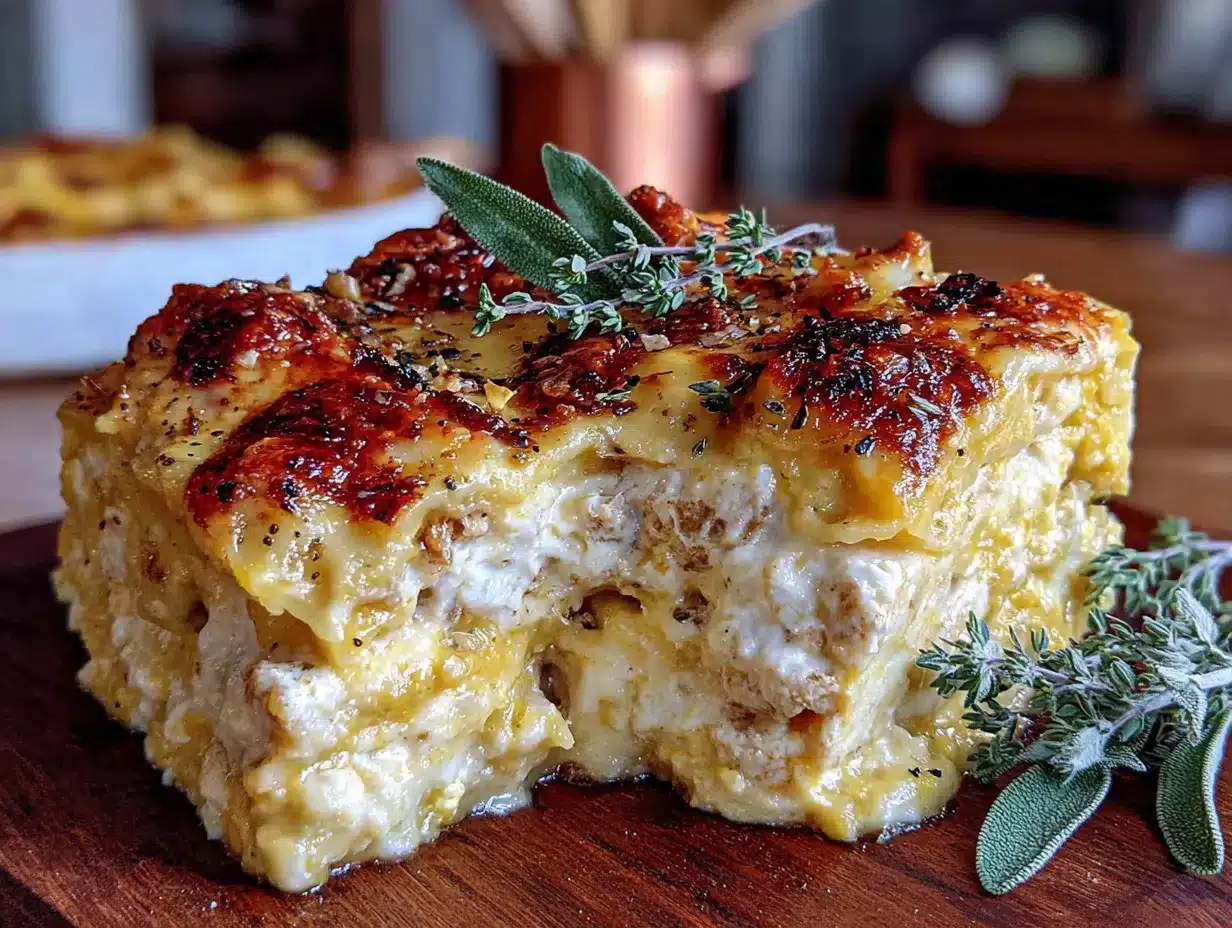
- Preheat your oven to 400°F (200°C). Line a baking sheet with parchment paper for easy cleanup. Trust me on this, roasted squash can be sticky.
- Prepare the squash. Peel the butternut squash, cut it in half lengthwise, and scoop out the seeds. Cut into 1-inch cubes. Toss with olive oil, salt, and pepper. Spread in a single layer on the prepared baking sheet. Roast for 25-30 minutes, until fork-tender and slightly caramelized around the edges. The squash should be soft enough to mash easily but not mushy.
- Make the squash puree. Transfer the roasted squash to a food processor. Add the broth and blend until completely smooth. You’re looking for a consistency similar to thick pudding. If it seems too thick, add another tablespoon of broth. Set aside.
- Make the sage brown butter. While the squash roasts, melt the butter in a large skillet over medium heat. Add the sage leaves and cook, swirling the pan occasionally, until the butter turns golden brown and smells nutty. This takes about 5-7 minutes. Watch it carefully, brown butter can go from perfect to burnt in seconds. The sage leaves will crisp up as they cook. Remove from heat and set aside.
- Prepare the ricotta mixture. In a medium bowl, combine the ricotta, egg, 1/2 cup of the Parmesan, nutmeg, and a pinch of salt and pepper. Stir until well combined. This is your creamy layer that adds richness between the noodles.
- Lower the oven temperature to 375°F (190°C). You want a gentler heat for the lasagna to cook evenly without burning the edges.
- Assemble the lasagna. Spread a thin layer of the squash puree (about 1/2 cup) on the bottom of your 9×13-inch baking dish. This prevents the noodles from sticking and adds flavor from the start. Layer in this order:
- 4 no-boil lasagna noodles (they’ll expand as they cook, so leave a tiny gap between them)
- 1/3 of the remaining squash puree
- 1/3 of the ricotta mixture, dolloped and gently spread
- 1/3 of the mozzarella
- Drizzle with some of the sage brown butter, including a few crispy sage leaves
- Repeat the layers two more times
- Top with the remaining mozzarella and the rest of the Parmesan
- Bake covered for 30 minutes. Cover the dish tightly with aluminum foil. This traps steam and helps the no-boil noodles cook through properly. Don’t skip this step, I learned the hard way that uncovered no-boil noodles stay crunchy in the middle.
- Bake uncovered for 15-20 minutes. Remove the foil and continue baking until the cheese is bubbly and golden brown on top. If you want extra browning, switch to broil for the last 2 minutes, but watch it like a hawk.
- Rest before serving. Let the lasagna sit for 10-15 minutes after it comes out of the oven. This is crucial, it lets the layers set so you get clean slices instead of a messy pile. I know it’s hard to wait, but your patience will be rewarded.
Cooking Tips & Techniques
I’ve made this lasagna more times than I can count, and I’ve made just about every mistake possible along the way. Here’s what I’ve learned so you don’t have to repeat my failures.
Don’t skip roasting the squash. I tried using steamed squash once because I was in a hurry, and the puree was watery and flavorless. Roasting concentrates the natural sugars and gives you that deep, sweet flavor that makes this dish special. It’s worth the extra 10 minutes.
Watch the brown butter like it’s a toddler near a pool. It goes from perfect to burnt in about 30 seconds. Swirl the pan constantly and look for the moment when the butter turns a warm amber color and smells like toasted nuts. If you see black specks, you’ve gone too far. Start over, it’s cheaper than ruining the whole dish.
No-boil noodles need moisture to cook properly. That’s why the squash puree and the covered baking time are so important. If you’re nervous about them, you can soak the noodles in hot water for 5 minutes before assembling. I do this when I’m using a brand I haven’t tried before, just to be safe.
Let the lasagna rest. I know, you’re hungry, the kitchen smells amazing, and everyone is hovering. But cutting into a hot lasagna is like trying to build a sandcastle in the tide. Give it 15 minutes, I promise it’s worth the wait. The layers will hold together, the flavors will meld, and you’ll get those beautiful, clean slices that make people think you’re a professional.
Make extra brown butter. I always double the sage brown butter recipe and save half for drizzling over the finished dish. It adds a final punch of nutty, herby flavor that takes the lasagna from great to unforgettable. Plus, it’s amazing on roasted vegetables the next day.
Variations & Adaptations
This recipe is surprisingly flexible, and I’ve tried several variations depending on what I have in the kitchen or who I’m cooking for.
Vegetarian and Hearty: Add a layer of sautéed mushrooms and spinach between the squash and ricotta. The earthiness of the mushrooms pairs beautifully with the sage, and the spinach adds color and nutrients. Cook the mushrooms first to release their moisture, otherwise you’ll end up with a watery lasagna.
Gluten-Free: Use gluten-free no-boil lasagna noodles. I’ve had good luck with the Tinkyada brand, they hold up well and don’t get mushy. Just make sure to check the cooking time on the package, some gluten-free noodles need a few extra minutes covered.
Add Protein: Brown 1 pound of Italian sausage or ground turkey and layer it with the squash puree. The savory meat balances the sweetness of the squash perfectly. I did this for a Super Bowl party once and the pan was empty in 20 minutes.
Dairy-Free Version: Replace the ricotta with a cashew-based ricotta (soaked cashews blended with lemon juice and salt) and use dairy-free mozzarella. The brown butter is harder to replace, but a good quality olive oil drizzled over the top with fresh sage works surprisingly well.
Make it Ahead: Assemble the lasagna completely, cover it, and refrigerate for up to 24 hours before baking. You may need to add 10-15 minutes to the covered baking time since it’s starting from cold. This is my favorite trick for dinner parties or busy weeks.
Serving & Storage Suggestions
This lasagna is incredibly versatile when it comes to serving. Here’s how I handle it from the pan to the table and beyond.
Serving Temperature: Serve it warm, not piping hot. Letting it rest for those 15 minutes after baking brings it to the perfect temperature where the cheese is still melty but the layers have set. A final drizzle of the reserved sage brown butter right before serving adds a beautiful sheen and an extra hit of flavor.
What to Serve With It: A simple green salad with a lemon vinaigrette cuts through the richness perfectly. I also love serving it with crusty bread to soak up any extra sauce from the plate. For a full fall meal, roasted Brussels sprouts or a simple apple and fennel slaw are fantastic.
Storage: Leftovers keep beautifully in the refrigerator for up to 5 days. Store them in an airtight container, or better yet, leave the lasagna in the baking dish, cover it tightly with foil, and just reheat portions as needed. The flavors actually deepen and meld more overnight, so leftovers often taste even better than the first serving.
Freezing: This lasagna freezes like a dream. Assemble it completely but don’t bake it. Wrap the dish tightly in plastic wrap, then foil, and freeze for up to 3 months. When you’re ready to bake, thaw it in the refrigerator overnight, then bake as directed, adding 10-15 minutes to the covered time. You can also freeze individual portions after baking for quick lunches.
Reheating: The microwave works in a pinch, but the oven gives you much better results. Place individual portions in a 350°F oven for 10-15 minutes, covered with foil to prevent drying out. If you’re in a hurry, the microwave for 2 minutes on medium power does the job, just know the noodles won’t be as firm.
Nutritional Information & Benefits
This lasagna is comfort food that actually brings something good to the table. Here’s a rough breakdown per serving (based on 8 servings).
- Calories: Approximately 450-500
- Protein: 22-25g
- Carbohydrates: 35-40g
- Fat: 25-30g
- Fiber: 4-6g
- Vitamin A: Over 200% of daily value (thanks to the butternut squash)
- Calcium: 35-40% of daily value
Butternut squash is loaded with vitamin A, which is great for your eyes and immune system. It also provides a good amount of fiber, which helps keep you full and supports digestive health. The sage in the brown butter isn’t just for flavor, it’s been used for centuries for its anti-inflammatory properties. And the ricotta and mozzarella add protein and calcium, making this a surprisingly balanced meal.
If you’re watching your sodium, use low-sodium broth and go easy on the added salt. The Parmesan adds plenty of salty flavor on its own. For a lower-calorie version, use part-skim ricotta and mozzarella, and reduce the butter to 4 tablespoons. It won’t be quite as rich, but it’ll still be delicious.
Conclusion
This Easy Butternut Squash Lasagna with Sage Brown Butter is proof that sometimes the best recipes come from questioning the rules. My sister’s suggestion that day in the kitchen turned into a dish I now make more often than the original, and honestly, I don’t think I’ll ever go back. It’s weeknight-friendly, company-worthy, and somehow both comforting and light at the same time.
I hope you give this a try and make it your own. Maybe you’ll add mushrooms, swap in a different squash, or find your own little twist that makes it perfect for your family. That’s the beauty of cooking, you know. The recipe is just a starting point. What you do with it is what makes it yours.
If you make this, I’d love to hear how it turned out. Leave a comment below, share your photos, or tell me what variation you tried. And if you’re looking for more weeknight-friendly comfort food, check out our creamy Tuscan chicken or one-pot garlic Parmesan pasta for more quick dinner ideas. Happy cooking!
Frequently Asked Questions
Can I use frozen butternut squash instead of fresh?
Yes, you can use frozen cubed butternut squash to save time. Just thaw it completely and pat it dry before roasting to remove excess moisture. Roast it a little longer to caramelize the edges, about 35-40 minutes, since frozen squash releases more water as it cooks.
Do I really need to use no-boil noodles?
No-boil noodles work best here because they absorb moisture from the squash puree as they cook. If you only have regular lasagna noodles, boil them until al dente first, then layer as directed. Just be careful not to overcook them, they’ll continue cooking in the oven.
Can I make this lasagna ahead of time?
Absolutely. Assemble the lasagna completely, cover it tightly, and refrigerate for up to 24 hours before baking. You may need to add 10-15 minutes to the covered baking time. This is actually my preferred method for dinner parties, the flavors meld beautifully overnight.
How do I prevent the lasagna from being watery?
Make sure your squash puree isn’t too thin. Roast the squash until it’s caramelized and the moisture has cooked off. If your puree seems thin, cook it in a skillet over medium heat for a few minutes to thicken it. Also, let the lasagna rest for 15 minutes after baking so the noodles can absorb any excess liquid.
Can I freeze this lasagna?
Yes, this lasagna freezes wonderfully. Assemble it completely but don’t bake it. Wrap tightly in plastic wrap and then foil, and freeze for up to 3 months. Thaw overnight in the refrigerator before baking. You can also freeze individual baked portions for quick lunches or dinners.
Pin This Recipe!
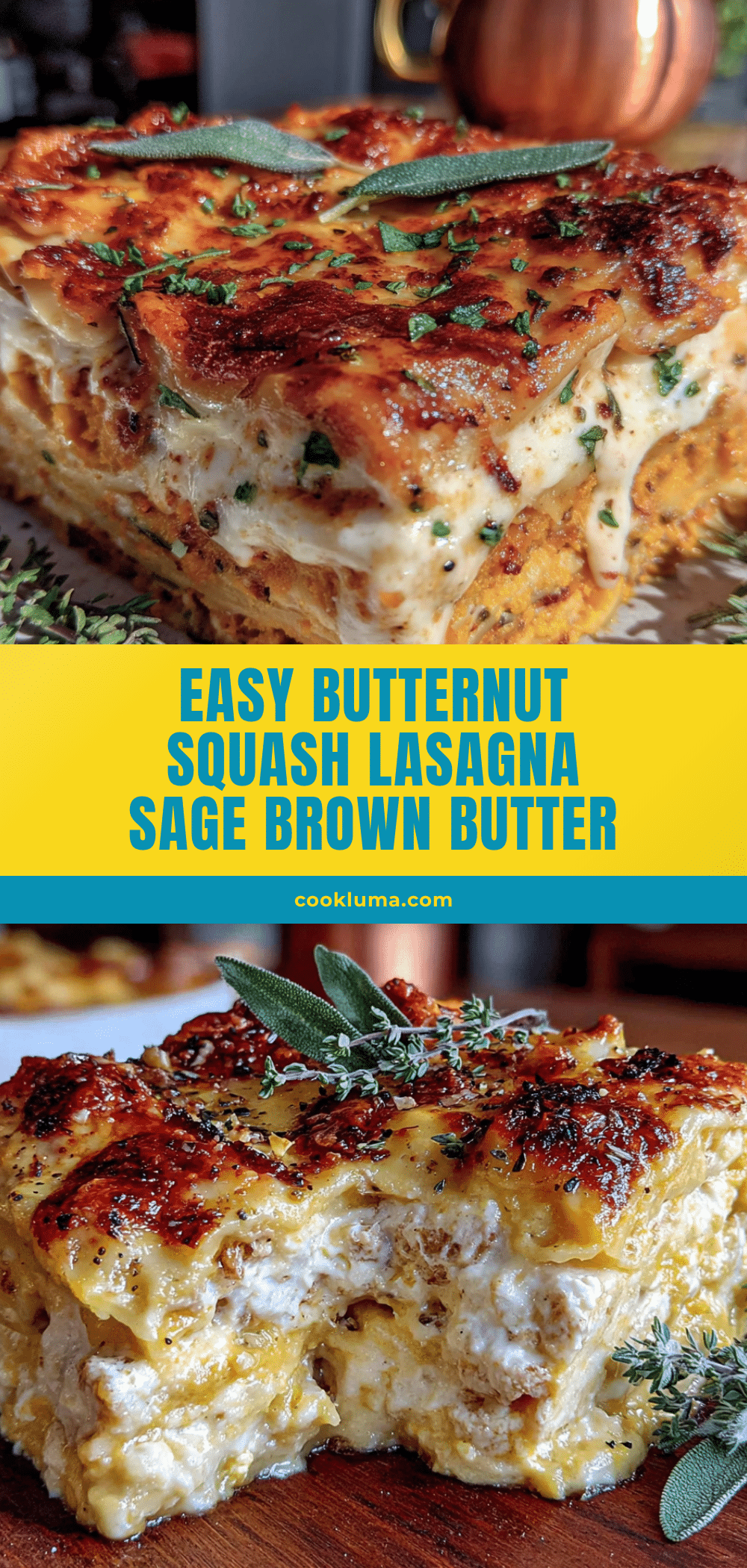
Easy Butternut Squash Lasagna with Sage Brown Butter

This easy butternut squash lasagna swaps traditional béchamel for a silky roasted squash puree, layered with sage brown butter, ricotta, and mozzarella. It’s a weeknight-friendly comfort dish that’s perfect for fall dinners and holiday gatherings.
- Prep Time: 20 minutes
- Cook Time: 60 minutes
- Total Time: 1 hour 20 minutes
- Yield: 8 servings 1x
- Category: Main Course
- Cuisine: Italian-American
Ingredients
- 1 medium butternut squash, peeled and cubed (about 4 cups)
- 2 tablespoons olive oil
- Salt and black pepper to taste
- 1/2 cup vegetable broth or chicken broth
- 6 tablespoons unsalted butter
- 10–12 fresh sage leaves
- 12 no-boil lasagna noodles
- 15 ounces ricotta cheese
- 1 large egg
- 3 cups shredded mozzarella cheese
- 1 cup grated Parmesan cheese
- 1/2 teaspoon nutmeg
- Salt and black pepper to taste
Instructions
- Preheat your oven to 400°F (200°C). Line a baking sheet with parchment paper.
- Prepare the squash: Peel the butternut squash, cut in half lengthwise, scoop out seeds, and cut into 1-inch cubes. Toss with olive oil, salt, and pepper. Spread in a single layer on the prepared baking sheet. Roast for 25-30 minutes, until fork-tender and slightly caramelized.
- Make the squash puree: Transfer the roasted squash to a food processor. Add the broth and blend until completely smooth, similar to thick pudding. Set aside.
- Make the sage brown butter: While the squash roasts, melt the butter in a large skillet over medium heat. Add the sage leaves and cook, swirling occasionally, until the butter turns golden brown and smells nutty (about 5-7 minutes). Remove from heat and set aside.
- Prepare the ricotta mixture: In a medium bowl, combine the ricotta, egg, 1/2 cup of the Parmesan, nutmeg, and a pinch of salt and pepper. Stir until well combined.
- Lower the oven temperature to 375°F (190°C).
- Assemble the lasagna: Spread a thin layer of squash puree (about 1/2 cup) on the bottom of a 9×13-inch baking dish. Layer in this order: 4 no-boil lasagna noodles, 1/3 of the remaining squash puree, 1/3 of the ricotta mixture, 1/3 of the mozzarella, and a drizzle of sage brown butter with some crispy sage leaves. Repeat layers two more times. Top with remaining mozzarella and Parmesan.
- Bake covered for 30 minutes: Cover the dish tightly with aluminum foil and bake for 30 minutes.
- Bake uncovered for 15-20 minutes: Remove the foil and continue baking until the cheese is bubbly and golden brown. For extra browning, broil for the last 2 minutes.
- Rest before serving: Let the lasagna sit for 10-15 minutes before slicing and serving.
Notes
Don’t skip roasting the squash; it concentrates the flavor. Watch the brown butter carefully as it can burn quickly. Let the lasagna rest for 15 minutes after baking to set the layers. For best results, use freshly grated Parmesan. You can make extra brown butter for drizzling over the finished dish.
Nutrition
- Serving Size: 1 slice (1/8 of lasa
- Calories: 475
- Sugar: 6
- Sodium: 620
- Fat: 28
- Saturated Fat: 16
- Carbohydrates: 38
- Fiber: 5
- Protein: 24
Keywords: butternut squash lasagna, sage brown butter, fall lasagna, easy lasagna, vegetarian lasagna, weeknight dinner