This was supposed to be a loaf cake. I had it all planned out—a classic gingerbread loaf, the kind you slice thick and slather with butter on a rainy Sunday afternoon. But somewhere between measuring the molasses and realizing my loaf pan was still at my sister’s house from Thanksgiving, the plan fell apart. I stood there, staring at a bowl of wet ingredients that smelled incredible, with no vessel to bake them in. The oven was already preheated, the kitchen was getting warm, and I was already running late for a phone call. I grabbed the wrong baking sheet—a quarter-sheet pan instead of a half-sheet—and just spooned the batter into rough mounds. Honestly, I figured they’d spread into a giant, ugly mess and I’d crumble them over ice cream later. What came out was nothing like the plan. They were these perfectly puffed, crackly-topped cookies with the softest centers I’d ever made. The edges were slightly crisp, the middles were practically fudgy, and the whole kitchen smelled like a holiday market. I stood there eating one straight off the tray, still warm, and realized I’d accidentally stumbled onto something better than the original idea. Maybe you’ve been there—the moment a kitchen disaster turns into a keeper recipe. These cookies are that moment, every single time.
Why You’ll Love This Recipe
I’ve tested a lot of gingerbread cookies over the years. Some were too dry, some were too hard, and some just didn’t have that deep, cozy molasses flavor I was chasing. These are the ones I keep coming back to, and here’s why they’ll win you over too:
- Soft and Chewy: These cookies stay soft for days. The secret is the perfect ratio of molasses to butter, plus a little trick I learned after one too many dry batches.
- Simple Ingredients: You probably have most of these in your pantry right now. No weird specialty items, no last-minute grocery store runs.
- Perfect for the Holidays: These are the cookies you bring to cookie swaps, leave out for Santa, or sneak with your morning coffee when nobody’s looking.
- Crowd-Pleaser: I brought a batch to my neighbor’s holiday party last year, and three people asked for the recipe before I even left.
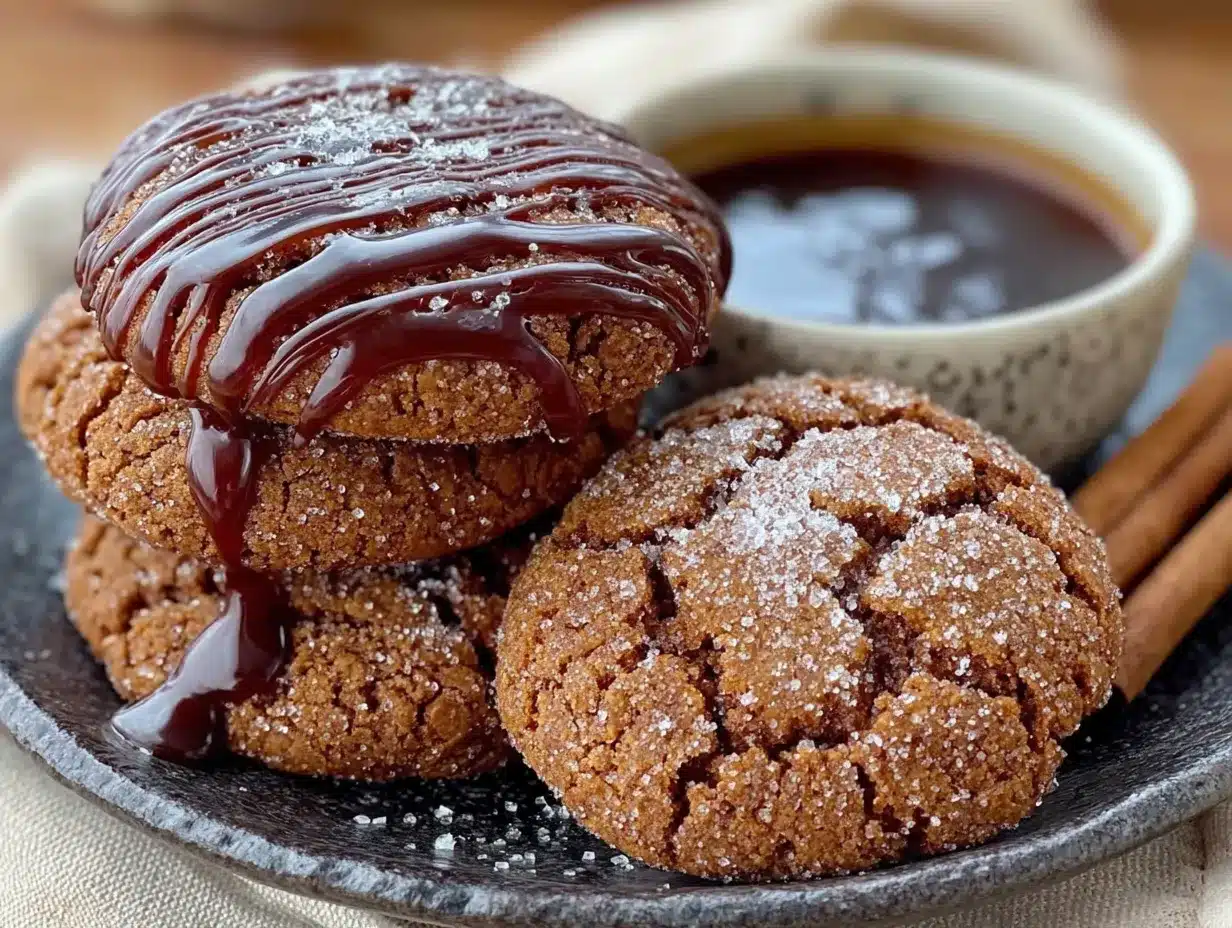
- That Cinnamon Glaze: The glaze is optional, but honestly, it’s what takes these from “really good cookies” to “I need the recipe right now” cookies. It adds just the right amount of sweetness and warmth.
What makes these different from every other gingerbread cookie recipe out there? It’s the texture. Most gingerbread cookies are either rock-hard cutouts or flat, crispy rounds. These are thick, pillowy, and almost cake-like in the center, with a slightly crackly top that gives them that classic bakery look. The glaze seeps into the cracks just a little, making every bite a mix of creamy cinnamon sweetness and deep, spicy molasses. This isn’t just another version—it’s the one I’ve been perfecting for years, and it’s finally ready to share.
What Ingredients You Will Need
This recipe uses simple, wholesome ingredients to deliver that deep, cozy gingerbread flavor and soft, tender texture. Most of these are pantry staples, which makes these cookies perfect for spontaneous baking when the craving hits.
For the Cookies
- Unsalted butter, softened (1 cup / 2 sticks) — Make sure it’s truly softened, not melted. Room temperature butter creams better with the sugar, giving the cookies their soft texture.
- Dark brown sugar, packed (1 cup / 200g) — I prefer dark brown sugar here for the extra molasses flavor, but light brown sugar works too.
- Unsulphured molasses (1/2 cup / 170g) — This is non-negotiable for the flavor. Don’t use blackstrap molasses—it’s too bitter. Grandma’s or Brer Rabbit are my go-to brands.
- Large egg (1, room temperature) — A room-temperature egg incorporates more evenly into the batter.
- Vanilla extract (1 teaspoon) — Pure vanilla extract makes a difference here, but imitation works in a pinch.
- All-purpose flour (2 1/2 cups / 315g) — Spoon and level your flour for the most accurate measurement. Scooping directly from the bag can add too much flour and dry out the cookies.
- Baking soda (2 teaspoons) — This helps the cookies spread just the right amount and gives them that crackly top.
- Ground ginger (2 teaspoons) — Freshly ground ginger is nice, but store-bought ground ginger works perfectly.
- Ground cinnamon (1 1/2 teaspoons) — I use Vietnamese cinnamon for its stronger, sweeter flavor.
- Ground cloves (1/2 teaspoon) — A little goes a long way. Cloves add that warm, almost peppery note that makes gingerbread taste like gingerbread.
- Salt (1/2 teaspoon) — Balances the sweetness and enhances the spices.
For the Cinnamon Glaze
- Powdered sugar (1 1/2 cups / 180g) — Sift it if it’s lumpy for the smoothest glaze.
- Ground cinnamon (1 teaspoon) — I like to use the same cinnamon I used in the cookies for consistency.
- Milk (2-3 tablespoons) — Whole milk gives the richest glaze, but any milk works. Add it slowly until you reach your desired consistency.
- Vanilla extract (1/2 teaspoon) — Optional, but it rounds out the flavor nicely.
Substitution Notes: For a dairy-free version, use vegan butter and plant-based milk in the glaze. For a gluten-free option, swap the all-purpose flour with a 1:1 gluten-free baking flour blend. I’ve tested both, and they work great—just don’t overmix the dough if using gluten-free flour.
Equipment Needed
- Large mixing bowls (at least 2) — You’ll need one for the wet ingredients and one for the dry ingredients.
- Electric hand mixer or stand mixer — A hand mixer works perfectly for creaming the butter and sugar. A stand mixer with the paddle attachment is even easier.
- Baking sheets (2-3) — I like light-colored baking sheets for even browning. Dark sheets can cause the bottoms to brown too quickly.
- Parchment paper or silicone baking mats — These prevent sticking and make cleanup a breeze. I prefer parchment paper because it’s disposable and gives the crispiest edges.
- Cookie scoop or tablespoon — A 1.5-tablespoon cookie scoop gives you perfectly uniform cookies every time.
- Cooling rack — Essential for letting the cookies cool completely before glazing.
- Whisk — For making the glaze smooth and lump-free.
If you don’t have a cookie scoop, just use two spoons to portion the dough. It’s a little messier, but the cookies will still taste amazing. I actually used a regular tablespoon for years before I finally bought a scoop—and honestly, the uneven sizes had their own charm.
Preparation Method
- Cream the butter and sugar: In a large mixing bowl, beat the softened butter and packed dark brown sugar together until light and fluffy, about 3-4 minutes with an electric mixer on medium speed. You want the mixture to look pale and airy. Scrape down the sides of the bowl halfway through.
- Add the wet ingredients: Beat in the molasses, egg, and vanilla extract until fully combined. The mixture might look a little separated at this point—that’s normal. Don’t worry, the dry ingredients will bring it all together.
- Whisk the dry ingredients: In a separate bowl, whisk together the all-purpose flour, baking soda, ground ginger, ground cinnamon, ground cloves, and salt. Whisking ensures the baking soda and spices are evenly distributed throughout the flour.
- Combine wet and dry: Gradually add the dry ingredients to the wet mixture, mixing on low speed or folding with a spatula until just combined. Stop mixing as soon as you no longer see streaks of flour. Overmixing will make the cookies tough.
- Chill the dough: Cover the bowl with plastic wrap and refrigerate for at least 1 hour, or up to 3 days. This step is crucial—chilled dough spreads less and gives you thicker, softer cookies. I learned this the hard way after making a flat, sad batch years ago.
- Preheat the oven: When you’re ready to bake, preheat your oven to 350°F (175°C). Line your baking sheets with parchment paper or silicone mats.
- Portion the dough: Use a 1.5-tablespoon cookie scoop to portion the dough into balls. Roll them between your palms until smooth. Place them 2 inches apart on the prepared baking sheets. They won’t spread too much, so you can fit about 12 per standard sheet.
- Bake: Bake for 10-12 minutes, rotating the baking sheet halfway through. The cookies should look puffed and set around the edges but still soft in the center. The tops will have a beautiful crackly pattern. Don’t overbake—they’ll continue to set on the baking sheet as they cool.
- Cool: Let the cookies cool on the baking sheet for 5 minutes, then transfer them to a cooling rack to cool completely. This resting time on the sheet is important—it lets the centers finish setting without drying out.
- Make the glaze: While the cookies cool, whisk together the powdered sugar, ground cinnamon, milk, and vanilla extract in a small bowl. Start with 2 tablespoons of milk and add more, one teaspoon at a time, until the glaze is thick but drizzle-able. It should fall off the whisk in a smooth ribbon.
- Glaze the cookies: Once the cookies are completely cool, drizzle the glaze over the tops using a spoon or a piping bag with a small tip. Let the glaze set for about 15-20 minutes before serving.
Pro tip: If you want a thicker glaze, add more powdered sugar. If you want a thinner, more transparent glaze, add a little more milk. I like mine thick enough to leave a visible white ribbon on top of the cookie.
Cooking Tips & Techniques
I’ve made these cookies more times than I can count, and I’ve definitely made my share of mistakes along the way. Here’s what I’ve learned so you don’t have to repeat my errors.
Don’t skip the chill time. I know it’s tempting to skip straight to baking, especially when the dough smells so good. But warm dough spreads like crazy in the oven, and you’ll end up with thin, crispy cookies instead of thick, soft ones. One time, I was in a hurry and only chilled the dough for 15 minutes. The cookies spread into flat discs that looked more like lace than gingerbread. They still tasted good, but they weren’t what I was going for.
Use room temperature ingredients. Cold butter doesn’t cream properly with sugar, and a cold egg can seize the batter. Take the butter and egg out of the fridge about 30 minutes before you start baking. If you forget, you can soften the butter in the microwave in 5-second bursts, but be careful not to melt it.
Measure your flour correctly. This is the number one mistake I see in cookie recipes. Scooping your measuring cup directly into the flour bag packs it down and adds extra flour, which makes cookies dry. Instead, spoon the flour into the measuring cup and level it off with a knife. It takes an extra 10 seconds and makes a huge difference.
Watch the bake time closely. Ovens vary, and these cookies go from perfectly soft to slightly overdone in about 60 seconds. Start checking at 10 minutes. The cookies are done when the edges look set and the centers are still slightly soft. If you press one gently, it should spring back just a little.
Let the glaze set completely. I know it’s hard to wait, but glazing warm cookies will result in a runny, messy situation. Trust me, I’ve done it. The glaze will slide right off and pool on your cooling rack. Patience pays off here.
Variations & Adaptations
These cookies are pretty perfect as-is, but I love playing around with variations depending on the season or who I’m baking for.
Spice it up: Add 1/4 teaspoon of black pepper or cardamom to the dry ingredients for a more complex, warming spice profile. I tried this last Christmas, and it gave the cookies a subtle heat that paired beautifully with the molasses.
Add-ins: Fold in 1 cup of white chocolate chips, chopped crystallized ginger, or toasted pecans after mixing the dough. The white chocolate version is my personal favorite—the sweetness balances the spicy molasses perfectly.
Vegan version: Substitute the butter with vegan butter and use a flax egg (1 tablespoon ground flaxseed mixed with 3 tablespoons water, let sit for 5 minutes). The texture will be slightly less tender, but the flavor is still fantastic.
Gluten-free version: Use a 1:1 gluten-free baking flour blend that contains xanthan gum. I’ve had good results with Bob’s Red Mill 1:1 Baking Flour. Just be careful not to overmix the dough, as gluten-free flours can get gummy.
No-glaze version: If you want a less sweet cookie, skip the glaze entirely. These cookies are delicious on their own, especially with a cup of hot coffee or tea. The glaze is really just the cherry on top.
Cutout version: If you want to make these into cutout cookies, increase the flour by 1/4 cup and chill the dough for at least 2 hours. Roll it out to 1/4-inch thickness and use your favorite cookie cutters. Bake for 8-10 minutes. They won’t be as soft as the drop version, but they’ll hold their shape beautifully for decorating.
Serving & Storage Suggestions
These cookies are best served at room temperature, with the glaze fully set. I love arranging them on a pretty plate with a dusting of extra cinnamon on top for a bakery-style presentation.
What to serve with them: A cold glass of milk is the classic pairing, but I also love them with a warm mug of chai tea, spiced apple cider, or a bold cup of coffee. For a dessert board, arrange them alongside fresh apple slices, sharp cheddar cheese, and a few dark chocolate squares. The combination of sweet, spicy, and savory is incredible.
Storage: Store the cookies in an airtight container at room temperature for up to 5 days. Place a piece of bread in the container to keep them extra soft—the cookies will absorb the moisture from the bread, and the bread will get stale. Replace the bread every couple of days if needed.
Freezing: These cookies freeze beautifully. You can freeze the unbaked dough balls for up to 3 months. Just scoop them onto a baking sheet, freeze until solid, then transfer to a freezer bag. Bake directly from frozen, adding 1-2 minutes to the bake time. You can also freeze the baked, unglazed cookies for up to 3 months. Thaw at room temperature, then glaze before serving. The flavors actually deepen after freezing, which is a happy little bonus.
Reheating: For that just-baked warmth, pop a cookie in the microwave for 10-15 seconds. It’ll be soft and almost gooey in the center. If you prefer a slightly crisper edge, reheat in a 300°F oven for 3-4 minutes.
Nutritional Information & Benefits
Each cookie (with glaze) contains approximately 180 calories, 7g fat, 28g carbohydrates, 2g protein, and 1g fiber. These numbers are estimates and will vary based on exact ingredients and portion sizes.
Health highlights: Molasses is a surprisingly good source of iron, calcium, and magnesium. One tablespoon of molasses provides about 20% of your daily recommended iron intake. The ginger and cinnamon in these cookies also have anti-inflammatory properties. So while these are definitely a treat, they’re not completely empty calories.
Dietary considerations: This recipe contains gluten, dairy, and eggs. For gluten-free and vegan adaptations, see the Variations section above. The cookies are nut-free as written, making them safe for school bake sales and parties.
I personally love that these cookies feel indulgent but still use real, recognizable ingredients. No artificial flavors, no preservatives—just butter, sugar, molasses, and spices. That’s the kind of baking I can feel good about sharing with my family.
Conclusion
These soft gingerbread molasses cookies with cinnamon glaze are everything I want in a holiday cookie—warm, spiced, soft, and just sweet enough. They started as a happy accident, but they’ve become my most-requested recipe year after year. There’s something about that first bite, with the crackly top giving way to the soft center and the cinnamon glaze melting on your tongue, that just feels like home.
I’d love for you to try these and make them your own. Maybe you’ll add extra ginger, or skip the glaze, or double the cinnamon. Whatever you do, I hope they bring a little warmth and coziness to your kitchen. If you make them, come back and let me know how they turned out—I read every comment, and I love hearing about your baking adventures.
Happy baking, friends. May your cookies be soft, your glaze be smooth, and your kitchen smell like the holidays.
Frequently Asked Questions
Can I use blackstrap molasses instead of regular molasses?
I wouldn’t recommend it. Blackstrap molasses is much more bitter and less sweet than regular unsulphured molasses. It will give your cookies a darker color and a stronger, almost harsh flavor. Stick with unsulphured molasses for the best balance of sweetness and depth.
Why did my cookies turn out flat?
Flat cookies usually mean the dough wasn’t chilled long enough, or the butter was too warm when you mixed it. Make sure your butter is softened but not melted, and always chill the dough for at least 1 hour. If your kitchen is warm, pop the scooped cookie dough balls in the fridge for 15 minutes before baking.
Can I make the dough ahead of time?
Absolutely! The dough can be refrigerated for up to 3 days. In fact, the flavors develop and deepen as it sits. You can also freeze the dough balls for up to 3 months for fresh cookies anytime.
How do I get the crackly tops?
The crackly tops come from the combination of molasses and baking soda, plus rolling the dough into smooth balls. The sugar on the surface of the dough crystallizes slightly as it bakes, creating those beautiful cracks. Don’t skip the rolling step—it makes a difference.
Can I double this recipe?
Yes, this recipe doubles beautifully. Just make sure you have enough space in your fridge to chill all the dough, and bake in batches to avoid overcrowding your oven. The bake time might increase by a minute or two if you’re baking multiple sheets at once.
Pin This Recipe!
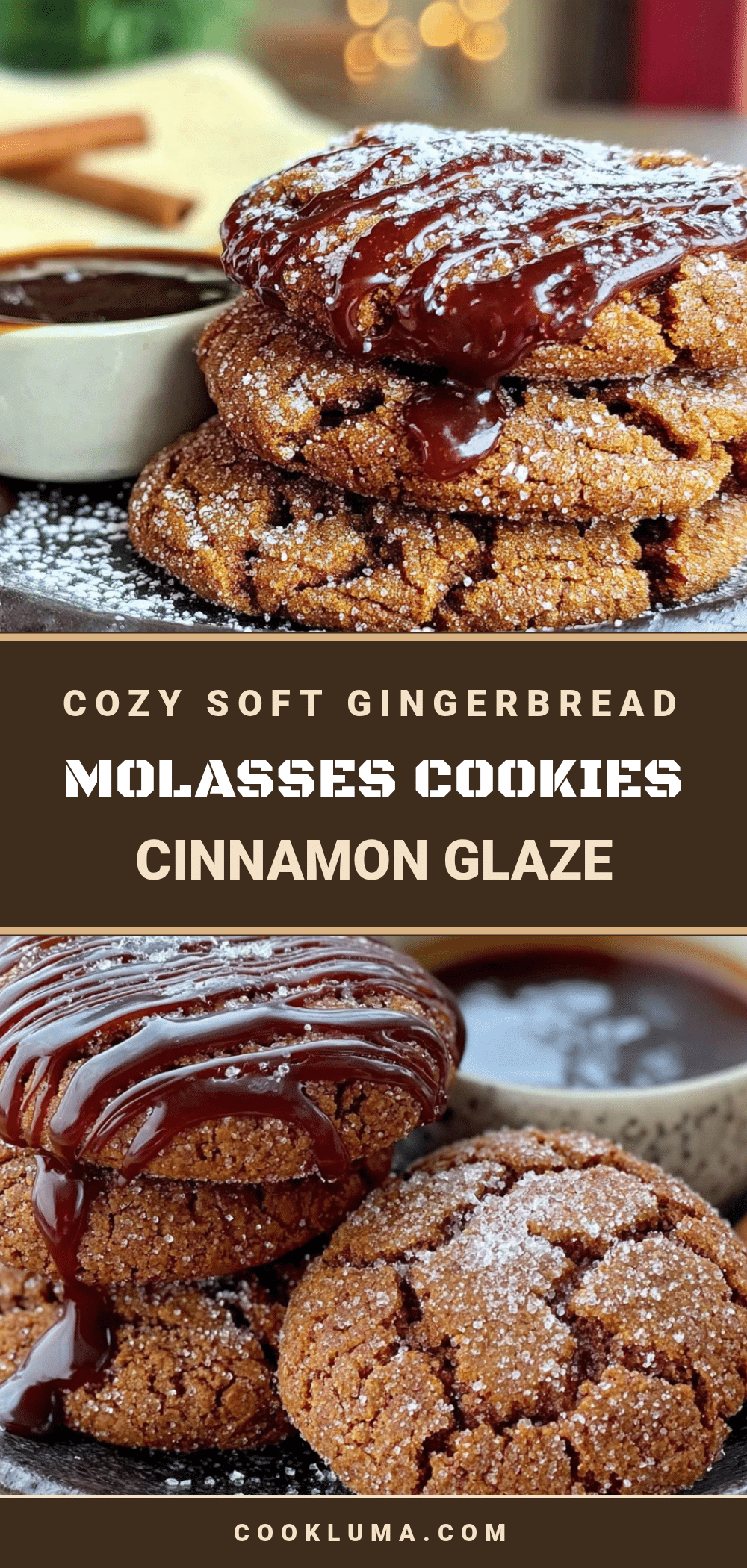
Cozy Soft Gingerbread Molasses Cookies with Cinnamon Glaze
These soft and chewy gingerbread molasses cookies with a crackly top and cinnamon glaze are a happy accident turned into a holiday favorite. Made with simple pantry ingredients, they stay soft for days and are perfect for cookie swaps, holiday parties, or a cozy treat with coffee.
- Prep Time: 15 minutes
- Cook Time: 12 minutes
- Total Time: 1 hour 27 minutes (includes 1 hour chilling)
- Yield: 24 servings 1x
- Category: Dessert
- Cuisine: American
Ingredients
- 1 cup (2 sticks) unsalted butter, softened
- 1 cup (200g) dark brown sugar, packed
- 1/2 cup (170g) unsulphured molasses
- 1 large egg, room temperature
- 1 teaspoon vanilla extract
- 2 1/2 cups (315g) all-purpose flour
- 2 teaspoons baking soda
- 2 teaspoons ground ginger
- 1 1/2 teaspoons ground cinnamon
- 1/2 teaspoon ground cloves
- 1/2 teaspoon salt
- 1 1/2 cups (180g) powdered sugar
- 1 teaspoon ground cinnamon (for glaze)
- 2–3 tablespoons milk
- 1/2 teaspoon vanilla extract (for glaze)
Instructions
- Cream the butter and sugar: In a large mixing bowl, beat the softened butter and packed dark brown sugar together until light and fluffy, about 3-4 minutes with an electric mixer on medium speed. Scrape down the sides of the bowl halfway through.
- Add the wet ingredients: Beat in the molasses, egg, and vanilla extract until fully combined. The mixture might look a little separated—that’s normal.
- Whisk the dry ingredients: In a separate bowl, whisk together the all-purpose flour, baking soda, ground ginger, ground cinnamon, ground cloves, and salt.
- Combine wet and dry: Gradually add the dry ingredients to the wet mixture, mixing on low speed or folding with a spatula until just combined. Stop mixing as soon as you no longer see streaks of flour.
- Chill the dough: Cover the bowl with plastic wrap and refrigerate for at least 1 hour, or up to 3 days.
- Preheat the oven: When ready to bake, preheat oven to 350°F (175°C). Line baking sheets with parchment paper or silicone mats.
- Portion the dough: Use a 1.5-tablespoon cookie scoop to portion the dough into balls. Roll them between your palms until smooth. Place them 2 inches apart on the prepared baking sheets.
- Bake: Bake for 10-12 minutes, rotating the baking sheet halfway through. The cookies should look puffed and set around the edges but still soft in the center.
- Cool: Let the cookies cool on the baking sheet for 5 minutes, then transfer them to a cooling rack to cool completely.
- Make the glaze: While the cookies cool, whisk together the powdered sugar, ground cinnamon, milk, and vanilla extract in a small bowl. Start with 2 tablespoons of milk and add more, one teaspoon at a time, until the glaze is thick but drizzle-able.
- Glaze the cookies: Once the cookies are completely cool, drizzle the glaze over the tops using a spoon or a piping bag with a small tip. Let the glaze set for about 15-20 minutes before serving.
Notes
Don’t skip the chill time—it prevents spreading and ensures thick, soft cookies. Use room temperature ingredients for best results. Measure flour by spooning and leveling to avoid dry cookies. Watch bake time closely; start checking at 10 minutes. Let glaze set completely before serving.
Nutrition
- Serving Size: 1 cookie
- Calories: 180
- Sugar: 18
- Sodium: 180
- Fat: 7
- Saturated Fat: 4
- Carbohydrates: 28
- Fiber: 1
- Protein: 2
Keywords: gingerbread cookies, molasses cookies, soft gingerbread, cinnamon glaze, holiday cookies, Christmas cookies, chewy gingerbread