This was supposed to be a simple weeknight salmon dish. Nothing fancy, just a quick sear with salt and pepper, maybe a squeeze of lemon. I had the fillets laid out, the pan heating up, and my whole plan mapped out in my head. But then the fridge door swung open, and I spotted the dill I’d bought for a salad I never made, and the half-stick of butter sitting there, looking at me. I grabbed them both without thinking, honestly, without any plan at all. The butter hit the pan, the dill went in after it, and I just stood there watching it melt into this fragrant pool while the salmon sizzled on top. I was already running late for dinner, the kitchen was a mess, and I had absolutely no idea if this would work.
Let me tell you, that first bite was a shock. The butter had soaked into the salmon, the dill had mellowed into something warm and almost sweet, and the lemon cut through it all like a bright little note. I mean, I actually stopped chewing for a second. My husband asked if something was wrong, and I just pointed at the plate with my fork. He took a bite, raised his eyebrows, and said, “You have to make this again.” That was three months ago, and I’ve made it at least twice a week since. Maybe you’ve been there—staring at ingredients you didn’t plan to use, wondering if you’re about to ruin dinner. This salmon is proof that sometimes the best things come from not knowing what you’re doing.
Why You’ll Love This Recipe
I’ve tested this lemon dill butter salmon more times than I can count, tweaking the butter temperature, the lemon ratio, the cooking time. What I landed on is a recipe that feels like a secret weapon. It’s the kind of dish that makes you look like you spent an hour in the kitchen when you really spent fifteen minutes. Here’s why it works.
- Quick & Easy: From start to finish, this comes together in under 15 minutes. Perfect for those nights when you’re tired, hungry, and need something good fast.
- Simple Ingredients: You probably have butter, lemon, and garlic in your kitchen right now. The dill is the only “special” thing, and it’s easy to find at any grocery store.
- Perfect for Cozy Nights: This is comfort food that happens to be healthy. It’s warm, buttery, and feels like a hug on a plate—ideal for cold weather or a rough day.
- Crowd-Pleaser: I’ve served this to picky kids, seafood skeptics, and dinner guests. Everyone loves it. The butter sauce is the real star.
- Unbelievably Delicious: The combination of rich butter, fresh dill, and bright lemon creates a flavor that’s both simple and impressive. It’s next-level comfort food without the fuss.
What makes this recipe different from the rest is the technique. Instead of just topping the salmon with butter, I let the butter melt and bubble in the pan first, infusing it with garlic and dill. The salmon then cooks in that fragrant butter, absorbing all that flavor. It’s not just another salmon recipe—it’s the one I keep coming back to because it works every single time.
What Ingredients You Will Need
This recipe uses simple, wholesome ingredients to deliver bold flavor without the fuss. Most of these are pantry staples or easy to find at any grocery store. The key is using fresh ingredients where it counts.
- Salmon Fillets (4 fillets, about 6 oz / 170g each): Look for fillets that are similar in thickness so they cook evenly. I prefer wild-caught salmon for its firmer texture and richer flavor, but farm-raised works great too. Pat them dry with paper towels before cooking for the best sear.
- Unsalted Butter (4 tablespoons / 56g): Use unsalted so you can control the salt level. The butter is the base of the sauce, so use a good quality brand. I like Kerrygold for its creamy richness.
- Fresh Dill (2 tablespoons, chopped): Fresh dill is non-negotiable here. Dried dill just won’t give you that same bright, slightly sweet flavor. Look for dill that’s perky and bright green, not wilted.
- Lemon (1 large lemon): You’ll need both the zest and the juice. Zest the lemon before you juice it—it’s much easier. Use a microplane for the zest to get fine, fragrant pieces without the bitter pith.
- Garlic (3 cloves, minced): Fresh garlic is best. Pre-minced garlic from a jar can be bitter and won’t infuse the butter as well. Take the extra minute to mince it yourself.
- Salt (1 teaspoon / 5g): I use kosher salt for its clean flavor. If you’re using table salt, reduce to 3/4 teaspoon.
- Black Pepper (1/2 teaspoon / 1g): Freshly ground black pepper makes a difference. Pre-ground pepper can taste flat.
- Olive Oil (1 tablespoon / 15ml): A little oil helps the butter from burning and gives the salmon a nice crust. Use a neutral-tasting olive oil, not extra-virgin.
Substitution Guidance: If you don’t have fresh dill, you can use fresh parsley or chives for a different but still delicious flavor. For a dairy-free option, use vegan butter or ghee. Salmon can be swapped with trout or arctic char if needed.
Equipment Needed
You don’t need much for this recipe, which is part of the beauty. Here’s what I use every time.
- Large Skillet (12-inch / 30cm): A non-stick or well-seasoned cast iron skillet works best. You need enough room for all four fillets without crowding them. I’ve used both, and cast iron gives a better sear, but non-stick is easier to clean.
- Fish Spatula: This thin, slotted spatula is perfect for flipping delicate salmon fillets without breaking them. If you don’t have one, a regular spatula works, but be gentle.
- Microplane or Zester: For zesting the lemon. A box grater works too, but a microplane gives you finer, more aromatic zest.
- Cutting Board and Knife: For mincing garlic and chopping dill. A sharp chef’s knife makes quick work of both.
- Paper Towels: For patting the salmon dry. This step is crucial for getting a good sear, so don’t skip it.
- Small Bowl: For mixing the salt and pepper before seasoning the salmon. It’s a small step that helps distribute the seasoning evenly.
If you don’t have a fish spatula, you can use a thin metal spatula. Just be careful when flipping. And if your skillet isn’t large enough, cook the salmon in two batches. Crowding the pan will steam the fish instead of searing it.
Preparation Method
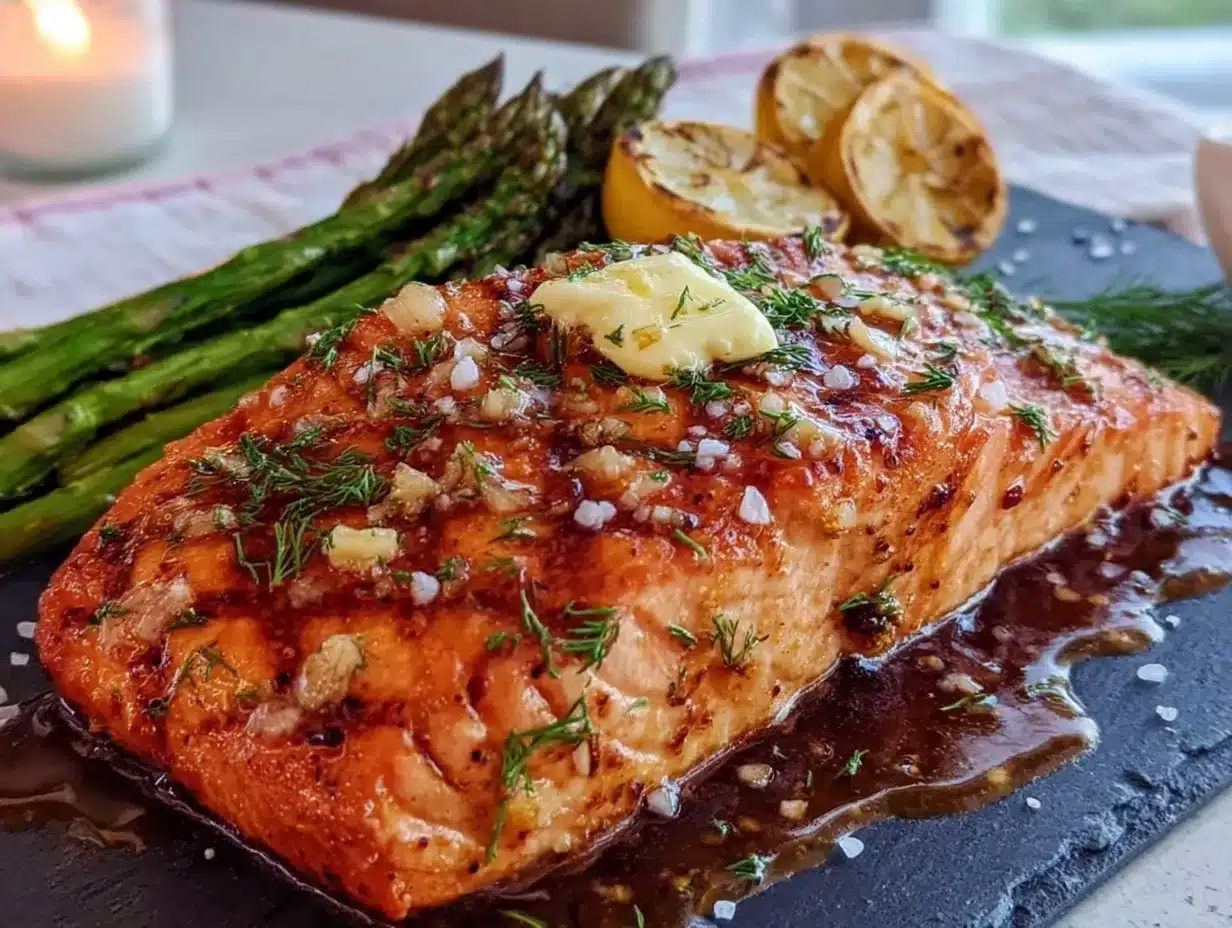
This comes together fast, so have everything ready before you start. I learned that the hard way—standing at the stove, butter smoking, while I frantically chopped dill. Prep first, cook second.
- Prep the salmon (2 minutes): Take your salmon fillets out of the fridge and let them sit at room temperature for 10 minutes. This helps them cook evenly. Pat each fillet dry with paper towels—this is the most important step for a good sear. Season both sides with the salt and pepper.
- Zest and juice the lemon (1 minute): Zest the lemon using a microplane, being careful to only get the yellow part. The white pith is bitter. Then cut the lemon in half and juice it. You’ll need about 2 tablespoons of juice.
- Mince the garlic and chop the dill (2 minutes): Peel and mince the garlic cloves as finely as you can. Chop the fresh dill, stems and all. The stems have lots of flavor.
- Heat the pan (1 minute): Place your skillet over medium-high heat. Add the olive oil and let it shimmer for about 30 seconds. You want the pan hot but not smoking.
- Sear the salmon (4 minutes): Place the salmon fillets in the hot pan, skin-side down if they have skin. Don’t move them. Let them cook undisturbed for 4 minutes. You’ll see the edges turning opaque and the bottom getting golden brown. If your fillets are thinner, check at 3 minutes.
- Flip the salmon (1 minute): Carefully flip each fillet using your fish spatula. The skin should be crispy and golden. Cook for another 1 minute on the other side.
- Make the butter sauce (2 minutes): Reduce the heat to low. Add the butter, minced garlic, and lemon zest to the pan around the salmon. Let the butter melt slowly, swirling the pan occasionally. The garlic will become fragrant in about 30 seconds. Be careful not to burn the garlic—it turns bitter quickly.
- Add the dill and lemon juice (1 minute): Sprinkle the chopped dill over the salmon and into the butter. Squeeze the lemon juice over everything. Let it bubble gently for 30 seconds, spooning the butter sauce over the salmon as it cooks.
- Check for doneness (30 seconds): The salmon is done when it flakes easily with a fork and is opaque all the way through. For medium, the internal temperature should be 125°F (52°C) at the thickest part. For well-done, go to 135°F (57°C).
- Rest and serve (1 minute): Remove the pan from the heat. Let the salmon rest for 1 minute. This lets the juices redistribute. Serve immediately with extra butter sauce spooned over the top.
Sensory Cues: When you flip the salmon, the bottom should be a deep golden brown with crispy edges. The butter should be bubbling gently, not sizzling aggressively. The dill will turn bright green and release a fresh, herbal aroma. The lemon juice will make the butter sauce hiss slightly as it hits the hot pan.
Cooking Tips & Techniques
I’ve made this salmon more times than I can count, and I’ve made every mistake you can imagine. Here’s what I’ve learned so you don’t have to learn the hard way.
Don’t skip the pat-dry step. I know it seems fussy, but wet salmon won’t sear. It’ll steam and turn pale and sad. Take the extra 30 seconds to really dry those fillets. Your taste buds will thank you.
Watch the heat. Medium-high is the sweet spot. If your pan is too hot, the butter will burn before you get the garlic in. Too low, and the salmon won’t get that golden crust. I keep the heat at medium-high for the sear, then drop it to low for the butter sauce. That temperature change is everything.
One time, I forgot to zest the lemon before juicing it. I had a slippery, half-juiced lemon and a microplane, and I just stood there for a minute, defeated. Now I always zest first. It’s a small thing, but it saves you from that moment of frustration.
Use a timer. This recipe cooks fast, and it’s easy to get distracted. I set a timer for each step. Four minutes for the first sear, one minute after flipping, two minutes for the butter sauce. It keeps me on track, especially on busy nights.
If your butter starts to brown too quickly, lift the pan off the heat for a few seconds. The residual heat will keep cooking the garlic without burning it. I’ve saved many a butter sauce this way.
Variations & Adaptations
This recipe is flexible, and I’ve tried a few twists over the months. Here are my favorites.
Garlic Herb Butter: Swap the dill for fresh parsley and thyme. The flavors are more savory and earthy. I did this when I ran out of dill, and it was surprisingly good. Use 1 tablespoon each of chopped parsley and thyme.
Spicy Lemon Salmon: Add 1/4 teaspoon of red pepper flakes with the garlic. The heat cuts through the butter beautifully. I like this version on cold nights when I want something warming. Just be careful—the heat builds as you eat.
Dairy-Free Version: Use ghee or a good quality vegan butter. Ghee works best because it has a similar richness and doesn’t burn easily. I’ve tried coconut oil, and it changes the flavor too much. Stick with ghee if you can.
Oven-Baked Version: If you don’t want to stand at the stove, bake the salmon at 400°F (200°C) for 12-15 minutes. Melt the butter with the garlic, dill, and lemon in a small saucepan, then pour it over the salmon before baking. It’s not quite as crispy, but it’s just as flavorful.
Lemon Dill Butter Shrimp: Swap the salmon for large shrimp. Cook them for 2 minutes per side instead of 4. The butter sauce works perfectly with shrimp. I’ve done this for quick lunches, and it’s always a hit.
Serving & Storage Suggestions
This salmon is best served fresh, but leftovers are still good if you handle them right.
Serving: Serve the salmon hot, straight from the pan. Spoon the butter sauce over each fillet generously. I like to serve it with lemon herb rice pilaf to soak up all that buttery sauce. A simple side of steamed green beans or roasted asparagus works beautifully too. For a cozy night, I’ll add a side of crusty bread to mop up the leftover sauce. Don’t judge—it’s too good to waste.
Storage: Store leftover salmon in an airtight container in the refrigerator for up to 3 days. The butter sauce will solidify, but that’s fine. Reheat gently to bring it back to life.
Reheating: The best way to reheat is in a skillet over low heat. Add a splash of water or chicken broth to loosen the sauce. Cover the pan and heat for 3-4 minutes, until warmed through. The microwave works in a pinch, but it can dry out the salmon. If you use the microwave, cover the plate with a damp paper towel and heat in 30-second bursts.
Freezing: I don’t recommend freezing cooked salmon. The texture changes when thawed—it becomes watery and less flaky. If you have extra raw salmon, freeze it before cooking. Then thaw overnight in the fridge before making this recipe.
Flavor Development: The flavors actually deepen overnight. The dill and lemon meld together in the fridge, creating a more mellow, unified taste. I sometimes make extra just for leftovers the next day. It’s perfect on a salad or flaked into pasta.
Nutritional Information & Benefits
This recipe is as good for you as it tastes. Here’s a rough breakdown per serving (one fillet with sauce).
| Nutrient | Amount |
|---|---|
| Calories | 380 |
| Protein | 35g |
| Fat | 24g |
| Saturated Fat | 10g |
| Carbohydrates | 2g |
| Fiber | 0g |
| Sugar | 1g |
| Sodium | 480mg |
Health Benefits: Salmon is packed with omega-3 fatty acids, which are great for heart health and reducing inflammation. Dill is rich in antioxidants and can aid digestion. Lemon provides a good dose of vitamin C. This is comfort food that actually supports your health.
Dietary Considerations: This recipe is naturally gluten-free and low-carb. For a dairy-free version, use ghee. It’s also keto-friendly with its high fat and low carb content. The only allergen to watch for is dairy from the butter.
I love that this recipe feels indulgent but is actually good for you. It’s the kind of meal that makes you feel nourished, not heavy. That’s a win in my book.
Conclusion
This lemon dill butter salmon has become my go-to for so many reasons. It’s fast, it’s forgiving, and it tastes like something you’d order at a nice restaurant. But more than that, it’s the recipe I turn to when I need a win in the kitchen. When the day has been long and I just want something that works, this salmon delivers every time.
I hope you give it a try—and I hope you make it your own. Add a little more dill if you love it like I do. Squeeze extra lemon if you want it brighter. That’s the beauty of a simple recipe: it leaves room for you. If you make it, come back and let me know how it turned out. Did you try a variation? Did your family love it? I genuinely want to hear about it.
So go ahead, grab that salmon, and let yourself enjoy a cozy, comforting dinner in just 15 minutes. You deserve it.
Frequently Asked Questions
Can I use frozen salmon for this recipe?
Yes, but thaw it completely in the refrigerator overnight first. Pat it very dry before cooking—frozen salmon holds more moisture, so you need to be extra thorough. The cooking time will be about the same once it’s thawed.
What if I don’t have fresh dill?
Fresh dill is best, but in a pinch, you can use 1 teaspoon of dried dill. The flavor will be less bright and more earthy. Alternatively, try fresh parsley or chives for a different but still delicious result.
How do I know when the salmon is cooked through?
The salmon is done when it flakes easily with a fork and is opaque all the way through. For medium, the internal temperature should be 125°F (52°C). For well-done, go to 135°F (57°C). If you don’t have a thermometer, look for the flesh to turn from translucent to opaque.
Can I make this recipe with other types of fish?
Absolutely. Trout, arctic char, or even thick white fish like cod or halibut work well. Adjust cooking times based on thickness. Thinner fillets cook faster, thicker ones need a few extra minutes.
How do I keep the butter from burning?
Keep the heat at medium-high for the sear, then reduce to low when you add the butter. If the butter starts to brown too quickly, lift the pan off the heat for a few seconds. Adding the garlic and lemon zest also helps cool the butter slightly.
Pin This Recipe!
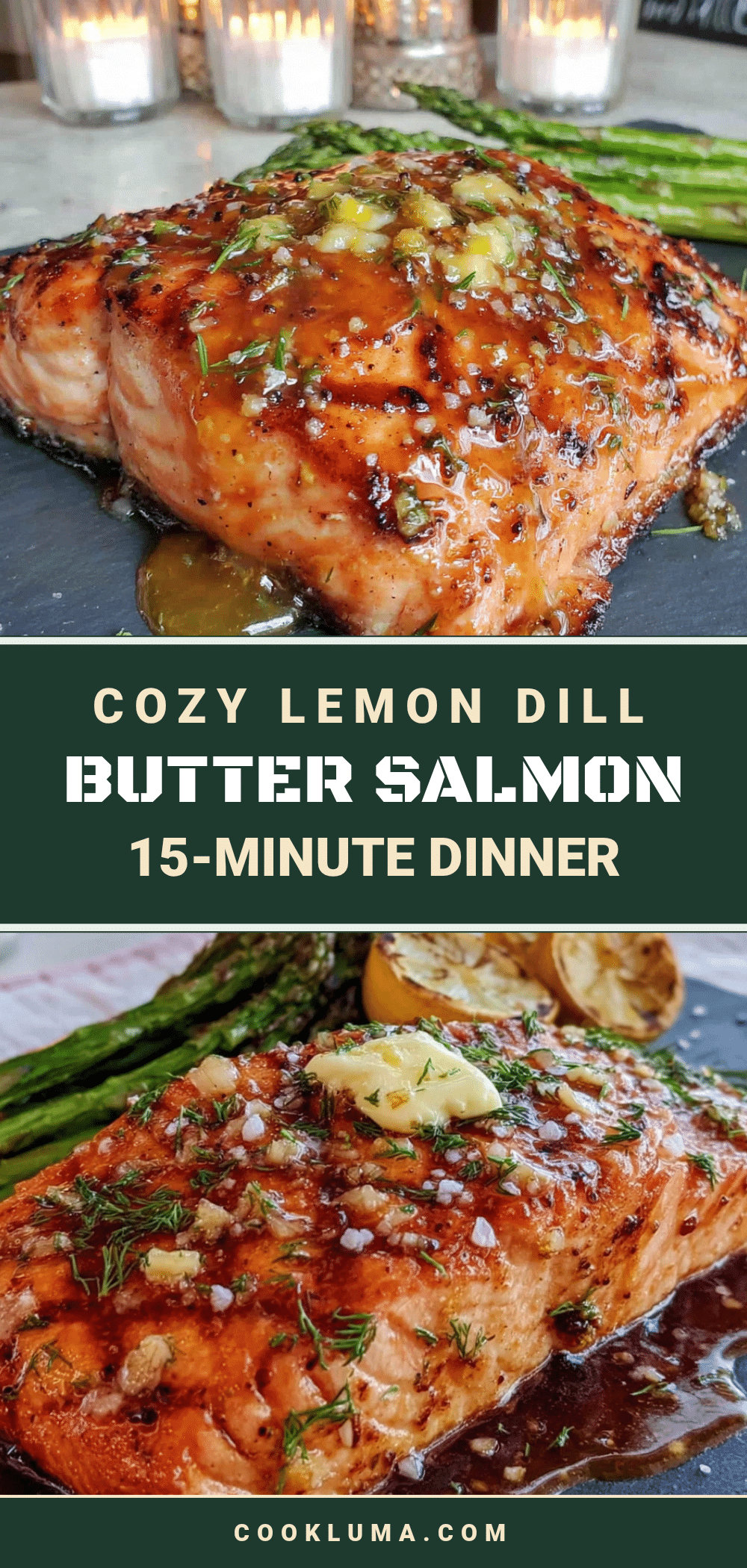
15-Minute Lemon Dill Butter Salmon – Easy Cozy Dinner
This quick and easy salmon recipe features a rich butter sauce infused with fresh dill and lemon, creating a comforting and impressive meal in just 15 minutes. Perfect for busy weeknights or cozy dinners.
- Prep Time: 5 minutes
- Cook Time: 10 minutes
- Total Time: 15 minutes
- Yield: 4 servings 1x
- Category: Main Course
- Cuisine: American
Ingredients
- 4 salmon fillets (about 6 oz / 170g each)
- 4 tablespoons unsalted butter (56g)
- 2 tablespoons fresh dill, chopped
- 1 large lemon (zest and juice)
- 3 cloves garlic, minced
- 1 teaspoon kosher salt (5g)
- 1/2 teaspoon black pepper (1g)
- 1 tablespoon olive oil (15ml)
Instructions
- Prep the salmon: Let salmon fillets sit at room temperature for 10 minutes. Pat each fillet dry with paper towels. Season both sides with salt and pepper.
- Zest and juice the lemon: Zest the lemon using a microplane, then cut in half and juice (about 2 tablespoons juice).
- Mince the garlic and chop the dill: Peel and mince garlic cloves. Chop fresh dill, stems included.
- Heat the pan: Place a large skillet over medium-high heat. Add olive oil and let it shimmer for about 30 seconds.
- Sear the salmon: Place salmon fillets in the hot pan, skin-side down if they have skin. Cook undisturbed for 4 minutes until edges turn opaque and bottom is golden brown.
- Flip the salmon: Carefully flip each fillet using a fish spatula. Cook for another 1 minute on the other side.
- Make the butter sauce: Reduce heat to low. Add butter, minced garlic, and lemon zest around the salmon. Let butter melt slowly, swirling occasionally, until garlic is fragrant (about 30 seconds).
- Add the dill and lemon juice: Sprinkle chopped dill over salmon and into butter. Squeeze lemon juice over everything. Let bubble gently for 30 seconds, spooning butter sauce over salmon.
- Check for doneness: Salmon is done when it flakes easily with a fork and is opaque. For medium, internal temperature should be 125°F (52°C); for well-done, 135°F (57°C).
- Rest and serve: Remove pan from heat. Let salmon rest for 1 minute. Serve immediately with extra butter sauce spooned over the top.
Notes
Pat salmon dry for best sear. Adjust heat to prevent butter from burning. For dairy-free, use ghee or vegan butter. Leftovers keep in fridge for up to 3 days; reheat gently in a skillet.
Nutrition
- Serving Size: 1 fillet with sauce
- Calories: 380
- Sugar: 1
- Sodium: 480
- Fat: 24
- Saturated Fat: 10
- Carbohydrates: 2
- Protein: 35
Keywords: salmon, lemon dill butter salmon, easy salmon recipe, 15-minute dinner, weeknight dinner, healthy salmon, butter salmon